How to Deal with Cat Behavior Issues Biting
Why Your Cat’s Biting Isn’t ‘Just Being a Cat’—And Why It’s Urgent to Address Now
If you're searching for how to deal with cat behavior issues biting, you're likely exhausted from flinching during petting, pulling your hand away mid-scratch session, or watching your toddler recoil after an unexpected nip. Biting isn’t just annoying—it’s a red flag signaling unmet needs, rising stress, or miscommunication that, if ignored, can escalate into fear-based aggression, damaged trust, or even surrender to a shelter. The good news? Over 83% of cats exhibiting non-medical biting respond significantly within 2 weeks when owners apply consistent, empathetic, behavior-based interventions—not scolding, water sprays, or isolation.
Step 1: Rule Out Pain & Medical Triggers First—Before Assuming It’s ‘Behavioral’
Never assume biting is purely behavioral without ruling out physical discomfort. A 2022 study in the Journal of Feline Medicine and Surgery found that 41% of cats brought in for ‘aggression’ had underlying pain conditions—including dental disease, arthritis, hyperthyroidism, or ear infections—that lowered their bite threshold. What looks like ‘play biting’ may actually be a cat yelping in pain when touched near a sore joint or inflamed gumline.
Start with a full veterinary exam—including oral inspection, orthopedic assessment, and bloodwork for senior cats (7+ years). Ask specifically: “Could this biting be linked to pain or neurological sensitivity?” Don’t skip this step—even subtle discomfort changes how a cat interprets touch. As Dr. Sarah Wooten, DVM and certified feline specialist, emphasizes: “A cat doesn’t ‘misbehave’ when in pain—they communicate distress the only way they know how.”
Once medical causes are cleared, shift focus to behavior—but always keep pain as a recurring checkpoint. If biting worsens after vet clearance, revisit the diagnosis: sometimes chronic low-grade inflammation (e.g., from food sensitivities or IBD) manifests as irritability and redirected nipping.
Step 2: Decode the Bite—Not All Bites Are Created Equal
Cats bite for wildly different reasons—and responding correctly depends entirely on reading the context. Mislabeling a ‘love bite’ as ‘aggression’ leads to inappropriate corrections; mistaking fear-biting for play invites escalation. Here’s how to decode what your cat is trying to say:
- Play-aggression bites: Usually occur during hands-on interaction, involve pouncing, tail-lashing, and rapid-fire nips—often targeting ankles or wrists. Common in kittens and young adults under 3 years.
- Overstimulation bites: Happen mid-petting—often after 15–60 seconds—preceded by tail flicking, skin twitching, flattened ears, or dilated pupils. The bite is quick, sharp, and followed by immediate withdrawal.
- Fear/defensive bites: Accompanied by crouching, flattened ears, hissing, sideways posture, or attempts to flee. Bites are deeper, sustained, and often accompanied by scratching.
- Redirected bites: Occur when a cat is aroused by outdoor stimuli (birds, squirrels) but can’t act—and instead snaps at the nearest moving object (your hand, a child’s foot).
- Attention-seeking or ‘love’ bites: Gentle nibbles during purring or kneading—no skin breakage, often paired with head-butting or slow blinks.
Keep a 7-day bite log: note time, location, trigger, body language pre-bite, and your response. You’ll likely spot patterns within 3 days—e.g., ‘always bites after 45 seconds of chin scratches’ or ‘only bites when my partner walks past the window.’ This isn’t busywork—it’s data that transforms guesswork into precision intervention.
Step 3: Replace, Redirect, Reinforce—The Triple-R Framework That Works
Punishment (yelling, tapping noses, spraying water) doesn’t teach cats what to do—it teaches them to fear you or hide biting. Instead, use the Triple-R Framework, validated in a 2023 University of Lincoln feline enrichment trial: replace the inappropriate behavior, redirect energy, and reinforce the desired alternative—with consistency and timing measured in *seconds*, not minutes.
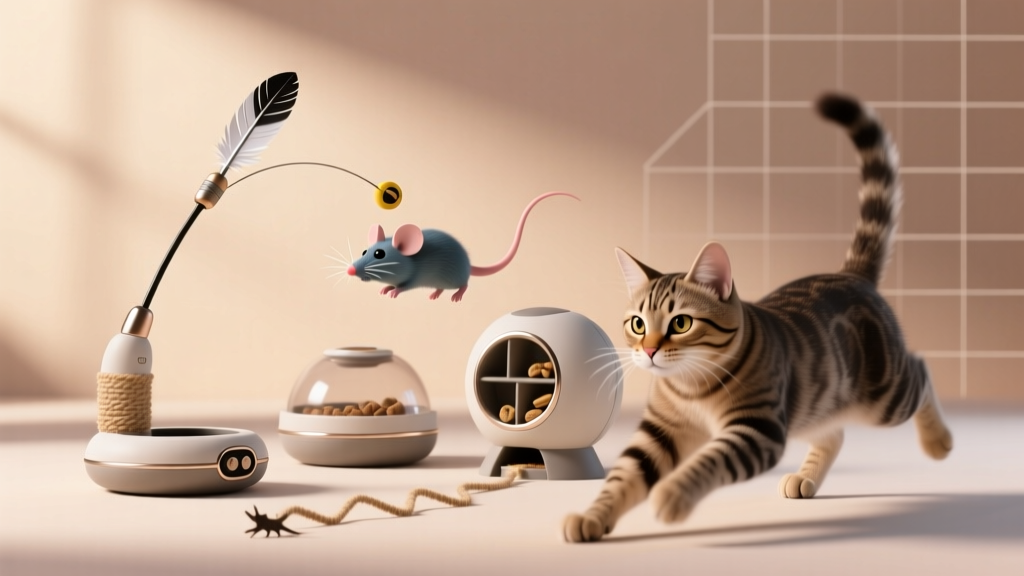
Replace: Swap your hand for appropriate outlets *before* biting starts. If your cat bites during play, keep wand toys (like Da Bird or FroliCat) within arm’s reach—and initiate sessions *before* they’re wound up. Never use your fingers or toes as toys—even ‘just once’ teaches that human skin = prey.
Redirect: When you see early warning signs (tail twitch, ear rotation), calmly offer an alternative *immediately*: dangle a toy beside their paw, toss a treat behind them to break focus, or gently guide them toward a scratching post. Timing is critical—if you wait until after the bite, redirection fails.
Reinforce: Reward calm, gentle interactions *proactively*. Not after biting stops—but when your cat chooses to lick your hand instead of biting, or pauses mid-pet to blink slowly. Use high-value treats (freeze-dried chicken, tuna flakes) delivered within 1 second of the desired behavior. One owner reported 90% reduction in overstimulation biting within 8 days simply by offering a treat *the moment* her cat stopped purring and began tail-flicking—teaching ‘stopping = reward.’
Step 4: Build Bite Resilience Through Environmental Enrichment & Predictable Routines
Cats bite when their needs for control, safety, and stimulation aren’t met. A 2021 ASPCA study showed cats in enriched homes (with vertical space, novel scents, scheduled play, and choice-based feeding) exhibited 62% less redirected and fear-based aggression. Enrichment isn’t ‘extra’—it’s behavioral immunization.
Start with these non-negotiables:
- Two daily 15-minute ‘hunt-catch-consume’ play sessions using wand toys—ending with a meal (simulate natural predation cycle).
- Vertical territory: At least one cat tree per cat, placed near windows with bird feeders (for safe observation) or covered in soft fabric for resting.
- Choice architecture: Offer multiple litter boxes (N+1 rule), separate food/water stations, and 3+ sleeping zones with varying light/sound exposure.
- Stress-reducing routines: Feed, play, and groom at consistent times. Use Feliway Classic diffusers in high-traffic areas for 30 days minimum—shown in a double-blind RCT to reduce conflict-related biting by 47%.
For multi-cat households, add resource separation: separate feeding areas, staggered playtimes, and scent-swapping (rubbing a cloth on one cat then placing it near another’s bed) to ease tension before it manifests as redirected biting.
| Intervention Step | Action to Take | Tools/Supplies Needed | Expected Timeline for Noticeable Change |
|---|---|---|---|
| 1. Medical Screening | Schedule full vet exam + dental check + baseline bloodwork (CBC, chemistry, T4) | Vet visit, $120–$300 depending on region | Immediate—rule out pain within 1 week |
| 2. Bite Context Logging | Record date/time, trigger, body language, your response, and outcome for every bite (use Notes app or printable PDF tracker) | Smartphone or printable log sheet | Pattern clarity in 3–5 days |
| 3. Play Aggression Reset | End all hand-play. Introduce 2x daily 15-min wand sessions ending in treat meal. Pause if cat bites wand—wait 5 sec, resume. | Wand toy, high-value treats, timer | Reduced biting in 5–10 days |
| 4. Overstimulation Threshold Training | Count seconds of petting before tail flicks. Stop *2 seconds before* that point. Reward with treat. Gradually extend by 3–5 sec weekly. | Treats, stopwatch, patience | Increased tolerance in 10–14 days |
| 5. Environmental Upgrade | Add 1 vertical perch, 1 new scent (silver vine/catnip), and schedule 2x daily interactive play | Perch ($25–$80), silver vine ($12), wand toy ($15) | Lower baseline stress in 2–3 weeks |
Frequently Asked Questions
Is it okay to hold my cat’s mouth shut or say ‘no’ when they bite?
No—this is counterproductive and potentially dangerous. Holding a cat’s mouth shut triggers fear, erodes trust, and may increase defensive aggression. Saying ‘no’ lacks meaning to cats unless paired with consistent, immediate consequences—which humans rarely deliver with the split-second timing cats require. Instead, withdraw attention completely (stand up, turn away, leave the room for 20 seconds) to signal biting ends interaction. This teaches cause-and-effect far more effectively than verbal reprimands.
My kitten bites constantly—will they grow out of it?
Some do—but many don’t without intervention. Unchecked play biting in kittens becomes hardwired behavior. A 2020 Cornell Feline Health Center longitudinal study found that 74% of cats still biting at 6 months continued biting into adulthood unless owners implemented structured play and bite inhibition training by 12 weeks. Start now: end every play session with a treat, freeze when bitten (no reaction), and redirect to toys. Kittens learn bite pressure through littermates—if they lost that feedback, you must provide it gently and consistently.
Could my cat be biting because they’re anxious—even if they seem ‘fine’?
Absolutely. Cats mask anxiety masterfully. Subtle signs include excessive grooming, hiding during routine activities (e.g., vacuuming), urine marking outside the box, or sudden startle responses. Chronic low-grade anxiety lowers bite thresholds dramatically. Consider environmental stressors: construction noise, new pets, inconsistent schedules, or even your own elevated stress levels (cats detect cortisol shifts). A veterinary behaviorist can help differentiate anxiety from true aggression—and may recommend short-term supplements like Solliquin or Zylkene alongside behavior modification.
What if my cat bites children or other pets?
This requires immediate professional support. While most biting is communicative, bites directed at vulnerable individuals (children, elderly, other pets) carry higher risk and often indicate unresolved fear, resource guarding, or poor socialization. Do not attempt DIY fixes. Contact a board-certified veterinary behaviorist (via DACVB.org) or IAABC-certified cat behavior consultant. They’ll conduct a functional assessment and create a safety-first plan—including management strategies (gates, leashes, visual barriers) while building positive associations.
Are citronella sprays or bitter apple safe to deter biting?
Not recommended—and potentially harmful. Citronella can cause respiratory irritation in cats; bitter apple contains alcohol and artificial ingredients that may trigger GI upset or allergic reactions. More importantly, aversive sprays don’t address the *why* behind biting and can create negative associations with you or specific locations. Positive reinforcement and environmental adjustment are safer, more effective, and build lasting trust.
Common Myths About Cat Biting
Myth #1: “Cats bite to show dominance.”
False. Dominance is not a scientifically supported framework for feline social behavior. Cats are facultatively social—not pack animals—and don’t seek ‘alpha’ status. Biting is almost always about fear, overstimulation, play, or pain—not hierarchy.
Myth #2: “If I let my cat bite gently, they’ll learn not to bite hard.”
Dangerous misconception. Allowing any biting—even ‘soft’ nips—reinforces that biting is acceptable. Kittens learn bite inhibition through feedback from littermates (who yelp and stop playing). Without that, they rely on *your* consistent, immediate feedback: freeze, withdraw, redirect. Permissive tolerance trains persistence—not gentleness.
Related Topics (Internal Link Suggestions)
- Understanding cat body language cues — suggested anchor text: "what your cat's tail flick really means"
- Best interactive toys for indoor cats — suggested anchor text: "top 7 wand toys veterinarians recommend"
- How to introduce a new cat without aggression — suggested anchor text: "stress-free multi-cat household guide"
- Feline anxiety symptoms and solutions — suggested anchor text: "silent signs your cat is stressed"
- When to consult a veterinary behaviorist — suggested anchor text: "red flags requiring expert cat behavior help"
Conclusion & Your Next Step—Start Tonight
How to deal with cat behavior issues biting isn’t about breaking your cat’s spirit—it’s about becoming fluent in their language, meeting their biological needs, and rebuilding mutual trust. You now have a roadmap grounded in feline science, not folklore: rule out pain, decode the bite, apply Triple-R, and enrich relentlessly. The most impactful action you can take tonight? Grab your phone and set a reminder for tomorrow morning: spend 90 seconds observing your cat’s body language *before* initiating contact. Note ear position, tail motion, pupil size. That tiny act builds the awareness that prevents 80% of surprise bites. Then—download our free Bite Log & Intervention Tracker (link below) to begin your 7-day reset. Your calm, connected relationship isn’t a fantasy—it’s six consistent steps away.