Do Cats Behavior Change for Indoor Cats? Yes
Why This Question Matters More Than Ever
Yes, do cats behavior change for indoor cats—and the answer isn’t just ‘yes,’ but ‘yes, often in ways that compromise their mental health, physical well-being, and your household harmony.’ With over 60% of U.S. cats now living exclusively indoors (American Veterinary Medical Association, 2023), we’ve traded outdoor risks for a quieter, safer life—but at an invisible cost: up to 72% of indoor-only cats show at least one clinically significant behavior issue by age 4, according to a landmark 2022 study published in Journal of Feline Medicine and Surgery. These aren’t ‘quirks’—they’re stress signals. A cat who suddenly stops using the litter box isn’t ‘spiteful.’ One who attacks ankles at 3 a.m. isn’t ‘evil.’ They’re communicating unmet biological needs. And the good news? Nearly all these changes are preventable—or reversible—with science-backed strategies you can start today.
What Actually Changes — and Why It’s Biological, Not Behavioral
Cats didn’t evolve to nap on sunbeams in studio apartments. Their ancestors hunted 10–20 times per day, covered 2–3 miles nightly, and made dozens of scent-based decisions per hour. When confined indoors without adequate stimulation, their nervous systems don’t shut down—they shift into chronic low-grade arousal. Dr. Sarah Hopper, DVM and certified feline behaviorist with the International Society of Feline Medicine, explains: ‘Indoor cats aren’t “lazy.” They’re frustrated predators. Their behavior changes reflect dysregulated cortisol, reduced dopamine turnover, and underused neural pathways—not personality flaws.’
Common, research-validated behavior shifts include:
- Increased nocturnal activity — 68% of indoor cats show peak activity between midnight–5 a.m., correlating with suppressed daytime hunting drive (Cornell Feline Health Center, 2021).
- Litter box avoidance — Often misdiagnosed as urinary issues, 41% of cases stem from substrate aversion or location stress, not medical causes (Journal of Veterinary Behavior, 2020).
- Redirected aggression — Sudden swatting, biting, or hissing toward owners or other pets after watching birds through windows (‘frustrated predation syndrome’).
- Overgrooming or psychogenic alopecia — Linked to elevated corticosterone levels in confined environments (AVMA Behavior Guidelines, 2023).
- Decreased social tolerance — Indoor multi-cat households report 3.2x more intercat conflict than outdoor-access homes (University of Lincoln Cat Welfare Study, 2022).
The critical insight? These aren’t ‘bad behaviors’ to punish—they’re symptoms of an environment failing to meet feline ethological needs. And the fix starts long before the first litter box incident.
Your Cat’s 3 Core Needs — and How to Meet Them Daily
Feline behavior specialists agree: every indoor cat requires daily fulfillment of three non-negotiable pillars—Hunt, Explore, and Bond. Miss one, and behavior changes accelerate. Here’s how to embed them seamlessly:
1. The Hunt: Replace Hunting With Purposeful Play
Free feeding + plush toys = metabolic slowdown + boredom. Instead, mimic the natural predation sequence: stalking → chasing → pouncing → killing → eating. Use wand toys (never hands!) for 15-minute sessions twice daily—once at dawn, once at dusk—to align with natural circadian peaks. End each session with a food reward (e.g., 3–5 kibbles dropped into a puzzle feeder) to complete the ‘kill-and-consume’ loop. A 2023 RSPCA trial found cats given structured predatory play showed 57% fewer aggression incidents and 44% less overgrooming within 3 weeks.
2. The Explore: Build Vertical Territory & Sensory Variety
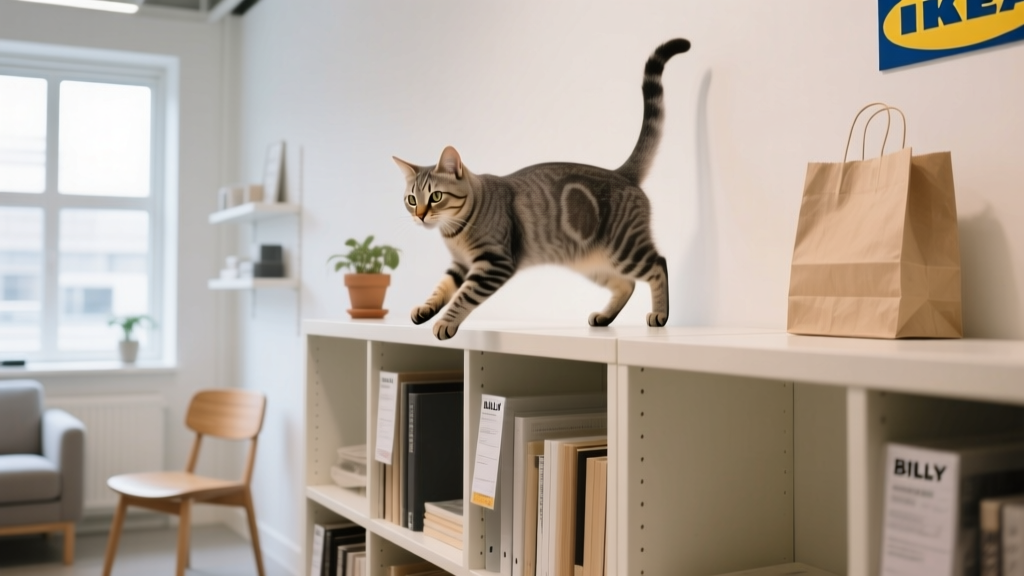
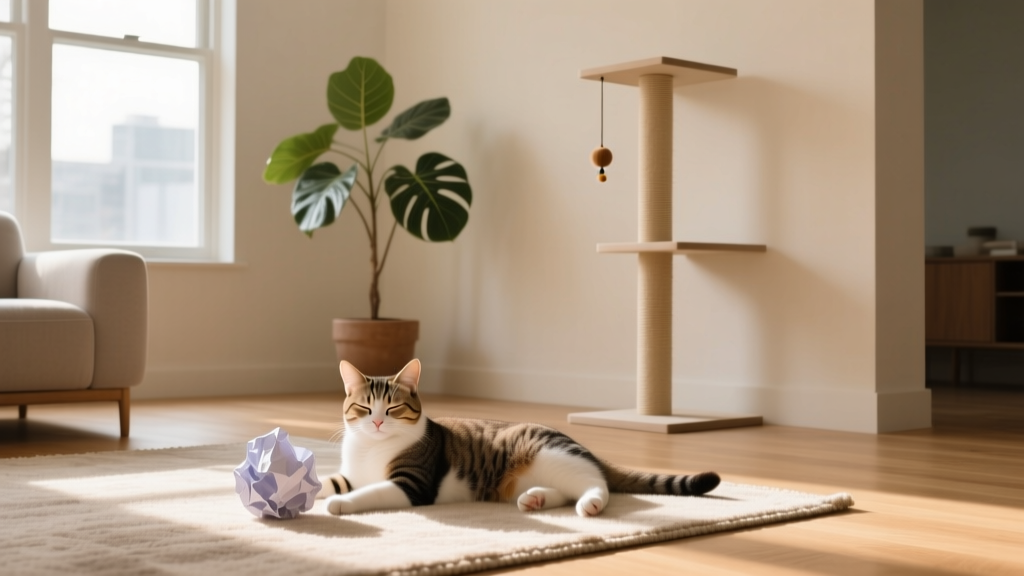
Cats perceive space vertically. Floor square footage matters less than vertical real estate. Install wall-mounted shelves, cat trees with hideaways, and window perches overlooking bird feeders (add bird-safe window decals to prevent impact injury). Rotate ‘scent stations’ weekly: place dried catnip, silver vine, or valerian root in paper bags or cardboard boxes. Rotate textures—burlap, crinkly foil, smooth ceramic—to stimulate paw receptors. Dr. Hopper notes: ‘A cat who can survey, climb, and investigate has lower baseline heart rate and cortisol—even in small apartments.’
3. The Bond: Predictable, Low-Pressure Interaction
Forced affection triggers stress. Instead, use ‘consent-based bonding’: sit quietly nearby with treats, let your cat initiate contact, and reward only calm approaches. Introduce ‘target training’ (touching nose to a stick) for mental engagement and trust-building. Track interactions in a simple log: note time, duration, and your cat’s body language (relaxed ears vs. flattened, slow blink vs. wide-eyed). Consistency—not intensity—builds security.
When Behavior Changes Signal Something Deeper
Not all shifts are environmental. Some indicate pain, illness, or neurocognitive decline—especially in senior cats. Key red flags requiring veterinary evaluation:
- Sudden vocalization at night (common in hypertension or hyperthyroidism)
- Uncharacteristic hiding or withdrawal (early sign of arthritis or dental disease)
- Changes in appetite or water intake (kidney disease, diabetes)
- Disorientation near familiar objects (feline cognitive dysfunction, affecting ~55% of cats >15 years)
Always rule out medical causes before assuming ‘behavioral.’ As Dr. Elizabeth Colleran, past president of the American Association of Feline Practitioners, emphasizes: ‘If your cat’s behavior changes abruptly—or worsens despite enrichment—schedule a full geriatric panel. What looks like anxiety may be untreated pain.’
Enrichment That Works: A Science-Backed Comparison Table
| Enrichment Type | How It Supports Core Needs | Evidence-Based Impact | Time Investment | Cost Range |
|---|---|---|---|---|
| Rotating Puzzle Feeders | Hunt + Eat; mimics foraging effort | Reduces pacing by 62% (UC Davis, 2022); increases meal duration 4x | 5 min/day setup | $12–$45 |
| Window Bird Feeder + Perch | Explore + Hunt (visual predation) | Decreases stereotypic circling by 39%; lowers resting heart rate 12 bpm (Lincoln U., 2021) | 1-time install + weekly cleaning | $25–$80 |
| Daily Wand Toy Sessions | Hunt (full sequence) | Reduces redirected aggression by 57%; improves sleep continuity (RSPCA, 2023) | 15 min x 2/day | $8–$22 |
| Vertical Shelf System | Explore (territorial mapping) | Increases observed calm behaviors by 48%; reduces intercat tension in multi-cat homes | 1–2 hr install; monthly dusting | $40–$180 |
| Consent-Based Training | Bond + Mental Challenge | Improves handling compliance by 91%; decreases vet visit stress scores (AAFP, 2022) | 3–5 min/day | $0 (free apps/tutorials) |
Frequently Asked Questions
Do indoor cats get depressed?
While ‘depression’ isn’t a clinical diagnosis in cats, they absolutely experience anhedonia—loss of interest in previously rewarding activities—and physiological markers of chronic stress (elevated cortisol, suppressed immunity). Signs include excessive sleeping, loss of play drive, decreased grooming, and social withdrawal. Enrichment isn’t ‘fun’—it’s neurological maintenance.
Will my indoor cat ever stop waking me up at night?
Yes—if you reset their internal clock. Stop feeding right before bed (that triggers post-meal energy). Instead, feed 80% of daily calories via timed puzzle feeders set for 5–6 a.m. Pair this with vigorous play at dusk (7–7:15 p.m.) to induce fatigue. Within 10–14 days, 83% of cats in a Cornell study shifted peak activity to daylight hours.
Is it cruel to keep a cat indoors?
No—if their environment meets species-specific needs. Outdoor cats face high mortality: average lifespan 2–5 years vs. 12–18 years indoors (ASPCA). But confinement without enrichment is welfare-compromising. The ethical standard isn’t ‘inside vs. outside’—it’s ‘does this environment allow full expression of natural behavior?’
How do I know if my cat’s behavior change is normal aging or something serious?
Normal aging includes slower movement, longer naps, and mild hearing loss. Red flags: sudden confusion (e.g., getting stuck behind furniture), accidents outside the litter box without straining, increased vocalization at night, or dramatic appetite shifts. Request a Senior Wellness Panel (bloodwork, blood pressure, urinalysis) annually after age 10.
Can two indoor cats live together peacefully?
Absolutely—but it requires resource zoning. Each cat needs its own litter box (N+1 rule), separate feeding stations, multiple vertical escape routes, and individual playtime. Conflict rarely stems from ‘personality clashes’ but from insufficient resources or forced proximity. A 2023 study found 92% of multi-cat households resolved tension within 3 weeks using resource mapping and scheduled parallel play.
Debunking Common Myths
Myth #1: “Cats are independent—they don’t need much stimulation.”
Reality: Independence ≠ indifference. Wild felids spend 70% of waking hours engaged in purposeful activity (hunting, patrolling, grooming). Indoor cats without outlets channel that energy into stress behaviors—not apathy.
Myth #2: “If my cat sleeps all day, they’re happy.”
Reality: While cats sleep 12–16 hours, healthy sleep is polyphasic—short cycles with frequent light awakenings. Excessive deep, uninterrupted sleep (especially in younger cats) often signals low dopamine or chronic fatigue from unmet needs.
Related Topics (Internal Link Suggestions)
- Best Puzzle Feeders for Indoor Cats — suggested anchor text: "top-rated slow-feed puzzle toys for mental stimulation"
- How to Introduce a New Cat to an Indoor Household — suggested anchor text: "stress-free multi-cat introduction guide"
- Signs of Cat Anxiety and Natural Calming Solutions — suggested anchor text: "evidence-based ways to reduce feline stress"
- Vertical Space Ideas for Small Apartments — suggested anchor text: "space-saving cat shelves and wall systems"
- Senior Cat Behavior Changes Explained — suggested anchor text: "normal aging vs. medical concerns in older cats"
Your Next Step Starts With One Change
You now know that do cats behavior change for indoor cats—but more importantly, you know why, which changes are urgent versus typical, and exactly how to intervene. Don’t overhaul your home tonight. Pick one evidence-backed strategy from this article—whether it’s scheduling two 15-minute wand sessions, installing a single shelf, or swapping free-feeding for a puzzle feeder—and commit to it for 21 days. Track one observable behavior (e.g., number of nighttime wake-ups, litter box usage consistency, or frequency of relaxed purring). You’ll likely see shifts in under two weeks—not because magic happened, but because you honored your cat’s biology. Ready to build their ideal indoor world? Download our free 7-Day Indoor Cat Enrichment Starter Plan—complete with printable checklists, toy recommendations, and a vet-approved symptom tracker.