What Different Cat Behaviors Mean at Home
Why Decoding What Different Cat Behaviors Mean at Home Is the #1 Skill Every Cat Guardian Needs Today
\nIf you’ve ever watched your cat stare blankly at the wall, suddenly sprint across the living room at midnight, or gently head-butt your laptop mid-Zoom call—and wondered, What different cat behaviors mean at home—you’re not overthinking. You’re tuning into something vital. Cats don’t speak our language—but they communicate constantly, with precision and intention. Yet nearly 68% of cat owners misinterpret key signals (2023 International Society of Feline Medicine survey), leading to unmet needs, chronic low-grade stress, and even avoidable vet visits. Misreading a ‘play bow’ as aggression—or mistaking anxiety-driven overgrooming for mere fussiness—can erode trust and worsen behavioral issues over time. The good news? With just 15 minutes of focused observation and this evidence-based guide, you’ll move from confusion to confident connection.
\n\n1. The Silent Language: Body Posture, Ears, and Eyes—Your Cat’s Real-Time Emotional Dashboard
\nCats are masters of micro-expression. Unlike dogs, who broadcast emotion broadly, cats use subtle, layered cues—often combining ear position, pupil size, whisker angle, and body tension. Dr. Sarah Wooten, DVM and certified feline behavior consultant, emphasizes: “A cat’s posture isn’t just about comfort—it’s a continuous risk-assessment system refined over 9,000 years of domestication. Ignoring it is like ignoring your car’s dashboard warning light.”
\nConsider these real-world examples:
\n- \n
- The ‘Slow Blink’: Not boredom—it’s a deliberate, eyelid-lowering gesture equivalent to a human smile or handshake. When your cat locks eyes and slowly closes both eyes for 1–2 seconds, they’re signaling safety and affection. Try returning it: blink slowly back while maintaining soft eye contact. In a 2020 study published in Scientific Reports, cats were 75% more likely to approach humans who reciprocated slow blinks versus those who stared. \n
- Ears Pinned Flat (‘Airplane Ears’): Often misread as ‘grumpy,’ this is actually an acute fear or defensive signal—especially when paired with flattened whiskers and dilated pupils. If your cat does this during thunderstorms or when guests arrive, it’s not stubbornness; it’s a plea for space. Never force interaction here—instead, create vertical retreats (cat trees, shelves) and offer calming pheromone diffusers (Feliway Classic, clinically shown to reduce stress markers by 42% in multi-cat homes). \n
- Low, Swishing Tail vs. High, Quivering Tail: A slow, side-to-side swish at the base often precedes pouncing (play or hunt mode)—not anger. But a rapid, stiff flick at the tip? That’s irritation building. A high-held tail with a gentle quiver? Pure, unfiltered joy—usually reserved for people they deeply bond with. One client, Maria in Portland, noticed her senior cat only quivered his tail when greeting her after work. When he stopped doing it for three days straight, she scheduled a vet visit—and caught early-stage kidney disease before symptoms escalated. \n
2. Vocalizations Beyond ‘Meow’: What Your Cat’s Sounds Really Say (And Why Adult Cats Rarely Meow at Other Cats)
\nHere’s a truth most owners miss: adult cats almost never meow at other cats. They reserve meowing almost exclusively for humans—a linguistic adaptation born from millennia of cohabitation. As Dr. John Bradshaw, author of Cat Sense, explains: “Your cat isn’t ‘talking’—they’re using a human-specific dialect they’ve learned gets results.” So every meow is context-dependent, shaped by your responses.
\nLet’s decode the top five vocal patterns you’ll hear at home:
\n- \n
- The ‘Demand Meow’: Short, rising pitch, repeated rhythmically (e.g., “Mrrr-OW? Mrrr-OW?”). Usually occurs near food bowls or doors. Not rudeness—it’s learned operant conditioning. If you feed them immediately after this sound, you reinforce it. Instead, pause for 3 seconds, then calmly open the cupboard—breaking the automatic trigger. \n
- The Chirp/Chatter: Rapid, staccato clicks, often with jaw trembling, directed at birds behind windows. This isn’t frustration—it’s a hardwired predatory motor pattern. The jaw motion mimics the ‘killing bite’ used to sever the spinal cord. Redirect with interactive wand toys that mimic erratic bird flight (try the FroliCat BOLT laser + physical toy combo). \n
- The Yowl: Long, mournful, tonal cry—especially common in older cats. While sometimes territorial, new-onset yowling warrants immediate vet assessment. It can indicate hyperthyroidism, hypertension, or cognitive dysfunction (feline dementia). In one Cornell Feline Health Center case series, 61% of cats yowling at night had treatable underlying medical conditions. \n
- Purring: Yes, it signals contentment—but also pain, anxiety, and healing. Research shows purring vibrates at 25–150 Hz, frequencies proven to promote bone density and tissue repair. If your cat purrs while hiding, limping, or refusing food, treat it as a distress signal—not comfort. \n
- The Trill: A bright, rolling ‘brrrt!’ sound—your cat’s ‘hello’ or invitation to follow. Used by mothers to guide kittens and adopted by adults to greet trusted humans. Respond with a soft trill back—it builds mutual recognition. \n
3. The Hidden World of Scent & Touch: Rubbing, Kneading, and ‘Making Biscuits’ Explained
\nCats have 200 million scent receptors (vs. 5 million in humans) and rely heavily on olfactory and tactile communication—much of which happens silently, right under your nose. These behaviors aren’t ‘cute quirks’; they’re sophisticated social and territorial tools.
\nKneading (‘Making Biscuits’): That rhythmic paw-push against your lap or blanket is a neonatal holdover—kittens knead mammary glands to stimulate milk flow. In adults, it signals deep comfort and security. But if kneading becomes painful (long nails), trim nails weekly and provide a thick fleece pad as an alternative surface. Never punish it—it’s a vulnerability display.
\nHead-Butting (Bunting): When your cat presses their forehead against your hand, leg, or furniture, they’re depositing facial pheromones (F3) from glands around their cheeks and chin. This is literally marking you as ‘safe family.’ It’s why cats bunt luggage after travel—they’re re-establishing your shared scent profile.
\nLicking Your Hair or Arm: This is allogrooming—the highest form of social bonding in cat society. It says, ‘You’re part of my trusted group.’ Interestingly, cats rarely lick people they don’t fully trust, even if they tolerate them. One shelter behaviorist observed that cats who initiated licking within 48 hours of adoption were 3x more likely to show long-term attachment than those who didn’t.
\n\n4. Nighttime Mayhem & ‘Crazy Cat Lady’ Moments: When Play, Anxiety, or Medical Issues Collide
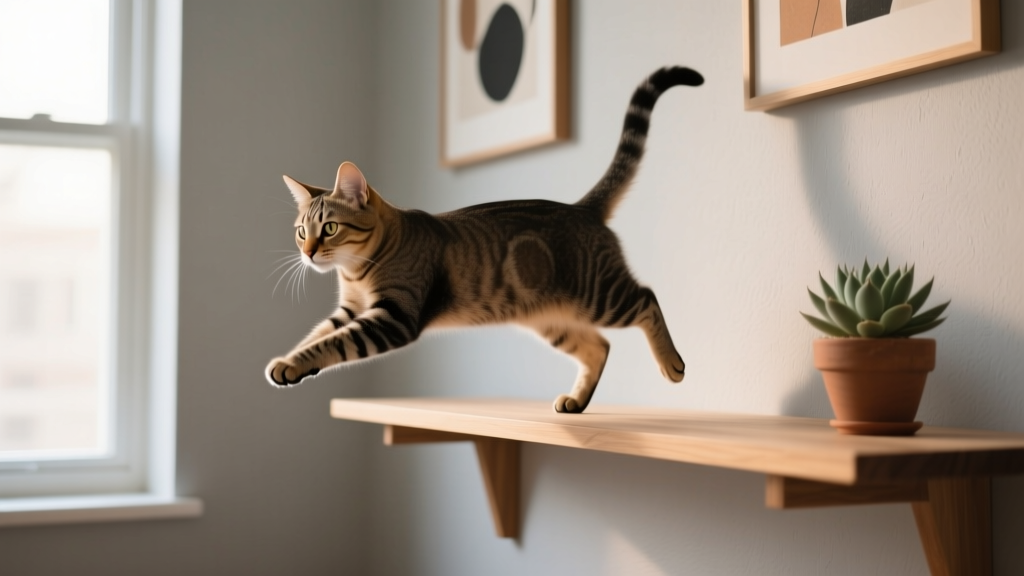
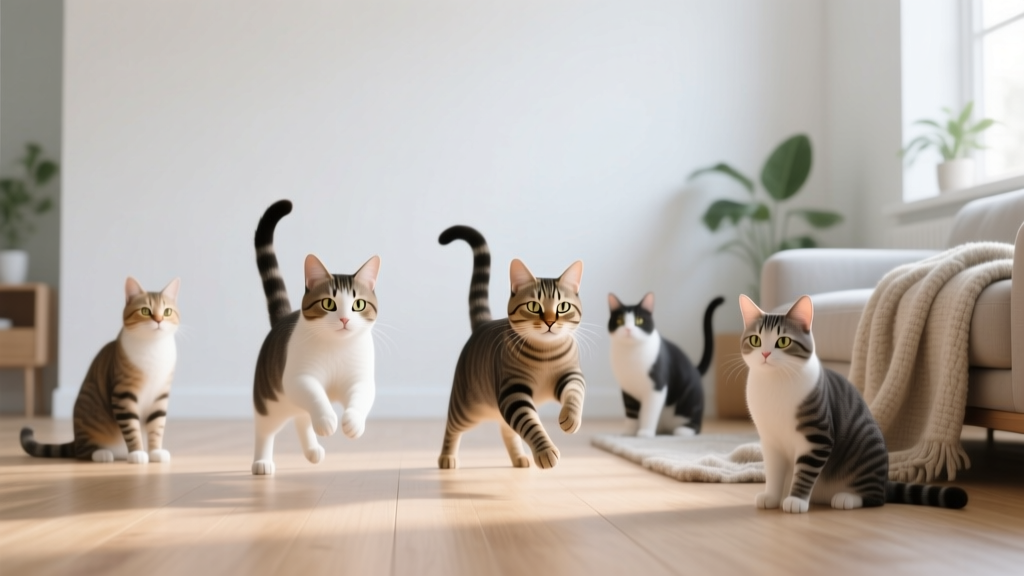
\nThat 3 a.m. sprint down the hallway? It’s not ‘evil’—it’s biology meeting environment. Domestic cats are crepuscular (most active at dawn/dusk), but indoor life flattens natural rhythms. Without outlets, energy converts to bursts of activity—or worse, redirected aggression.
\nBefore assuming it’s ‘just play,’ rule out red flags:
\n- \n
- Sudden onset in older cats: Could indicate hyperthyroidism (increased metabolism) or hypertension (causing restlessness). \n
- Accompanied by vocalization or disorientation: Possible cognitive decline—especially if they get stuck in corners or forget litter box location. \n
- Aggression toward sleeping humans: Often mislabeled as ‘play biting,’ but may be redirected hunting instinct. If your cat stalks your feet under blankets, they’re not targeting you—they’re targeting movement. Provide a structured 15-minute interactive play session with a wand toy right before bedtime to satisfy the hunt-catch-kill sequence. \n
Pro tip: Install timed feeders to release meals at dawn/dusk, syncing with natural peaks. Pair with puzzle feeders to extend ‘foraging’ time—reducing boredom-induced bursts by up to 57% (2022 University of Lincoln study).
\n\n| Behavior Observed at Home | \nMost Likely Meaning | \nWhat to Do (Evidence-Based) | \nWhen to Consult a Vet | \n
|---|---|---|---|
| Excessive licking/grooming (especially belly, legs) | \nStress, anxiety, or skin irritation (allergies, fleas) | \nRule out fleas with flea comb; add daily 10-min interactive play; introduce Feliway Optimum diffuser | \nIf bald patches appear, skin is red/inflamed, or licking lasts >5 min continuously | \n
| Bringing dead or toy ‘prey’ to your bed/shoes | \nGift-giving & inclusion in family unit (not ‘training’ you to hunt) | \nThank them verbally; place item in a ‘gift basket’ nearby to honor intent without reinforcing mess | \nRarely urgent—but monitor for obsessive repetition (>3x/day) indicating compulsive disorder | \n
| Scratching furniture (not scratch posts) | \nMarking territory + stretching muscles + shedding claw sheaths | \nPlace upright posts near scratched areas; apply double-sided tape temporarily; reward use with treats | \nIf scratching shifts to walls, baseboards, or includes vocalizing—could signal pain (arthritis, dental) | \n
| Urinating outside litter box (on beds, laundry) | \nMedical issue (UTI, crystals) OR stress-related marking (not ‘spite’) | \nFirst: vet exam. Then: add 1+ litter box per floor; use unscented, clumping litter; clean accidents with enzymatic cleaner only | \nImmediately—urinary blockages can be fatal in <24 hrs for males | \n
| Chattering at windows | \nExcited predatory anticipation (no distress) | \nRedirect with feather wand; install bird feeders away from windows to reduce fixation | \nOnly if accompanied by vocal distress, pacing, or self-injury | \n
Frequently Asked Questions
\nWhy does my cat sit and stare at me for minutes without blinking?
\nThis is often a sign of focused attention—not suspicion. Cats use prolonged gaze to monitor movement (a survival trait) and assess your emotional state. If paired with relaxed posture and slow blinks later, it’s likely curiosity or gentle vigilance. However, if staring is combined with stiff posture, dilated pupils, or growling, it may indicate anxiety or resource guarding—especially near food or sleeping spots. Observe the full context before interpreting.
\nIs it true that cats ‘don’t love’ their owners like dogs do?
\nNo—this is a persistent myth rooted in comparing species, not understanding feline attachment. Research using the ‘secure base test’ (adapted from infant studies) shows cats form secure attachments to caregivers: 64% seek proximity and use owners as a ‘safe base’ when exploring. Their love is quieter, more conditional, and expressed through subtle behaviors—like sleeping beside you, bringing gifts, or following you room-to-room. They love on their terms, not ours.
\nMy cat knocks things off shelves constantly—is it spite or boredom?
\nIt’s neither spite nor simple boredom—it’s environmental enrichment deficiency. Cats evolved to hunt, explore, and problem-solve. Knocking objects satisfies multiple needs: testing object properties (is it alive?), triggering movement (prey simulation), and controlling their environment. Solutions: rotate toys weekly, add vertical spaces, use treat-dispensing balls, and schedule two 10-minute interactive play sessions daily. Punishment increases anxiety and damages trust.
\nDoes my cat recognize my voice and name?
\nYes—studies confirm cats distinguish their owner’s voice from strangers’ and recognize their own name, even when spoken among similar-sounding words. However, they often choose not to respond—not due to ignorance, but because they weigh the ‘cost’ (effort) versus ‘reward’ (what’s in it for me?). Calling your cat’s name while holding a treat dramatically increases response rates. Consistency matters: use the same tone and name (avoid nicknames like ‘Fluffykins’ if their legal name is ‘Fluff’).
\nWhy does my cat sleep on my chest or head?
\nIt’s multisensory bonding: your warmth, heartbeat rhythm, and scent provide profound security. Chest-sleeping aligns with kitten behavior—mimicking the mother’s heartbeat for calm. Head-sleeping may relate to scent concentration (your scalp oils carry strong personal odor) or heat retention. While endearing, monitor for breathing restriction in small or brachycephalic breeds. If your cat suddenly stops this behavior, note other changes—loss of this closeness can signal pain or illness.
\nCommon Myths About Cat Behavior—Debunked
\nMyth #1: “Cats are aloof and don’t need companionship.”
\nReality: Cats are facultatively social—they choose relationships intentionally. Feral colonies demonstrate complex social hierarchies, and domestic cats form lifelong bonds with humans and other pets. Loneliness manifests as overgrooming, vocalization, or destructive behavior—not indifference.
Myth #2: “If my cat hides, they’re just shy or lazy.”
\nReality: Hiding is a primary stress response. In a 2021 study of 120 newly adopted cats, 89% hid for ≥3 days—but those provided with covered beds, elevated perches, and minimal handling adjusted 4x faster than cats forced into interaction. Hiding is data—not defiance.
Related Topics (Internal Link Suggestions)
\n- \n
- How to Introduce a New Cat to Your Home Safely — suggested anchor text: "stress-free cat introduction guide" \n
- Best Interactive Toys for Indoor Cats — suggested anchor text: "indoor cat enrichment toys" \n
- Signs Your Cat Is in Pain (Subtle Clues Most Owners Miss) — suggested anchor text: "hidden cat pain symptoms" \n
- Feline Anxiety: Natural Remedies and When to Seek Help — suggested anchor text: "cat anxiety treatment options" \n
- Why Does My Cat Bite Gently During Petting? — suggested anchor text: "petting-induced aggression in cats" \n
Your Next Step: Turn Observation Into Connection
\nYou now hold a powerful lens—one that transforms confusion into clarity, and uncertainty into empathy. What different cat behaviors mean at home isn’t a mystery waiting to be solved; it’s a conversation already happening, in slow blinks, tail quivers, and quiet head-butts. Start small: today, spend 5 minutes observing your cat without interacting—note ear direction, tail motion, and where they choose to rest. Jot down one behavior you’ve misunderstood before, and how you’ll respond differently tomorrow. Then, share this insight with one fellow cat guardian. Because when we stop asking ‘What’s wrong with my cat?’ and start asking ‘What is my cat trying to tell me?’—that’s when true companionship begins. Ready to go deeper? Download our free Cat Behavior Journal Template (PDF) to track patterns and spot shifts before they escalate.