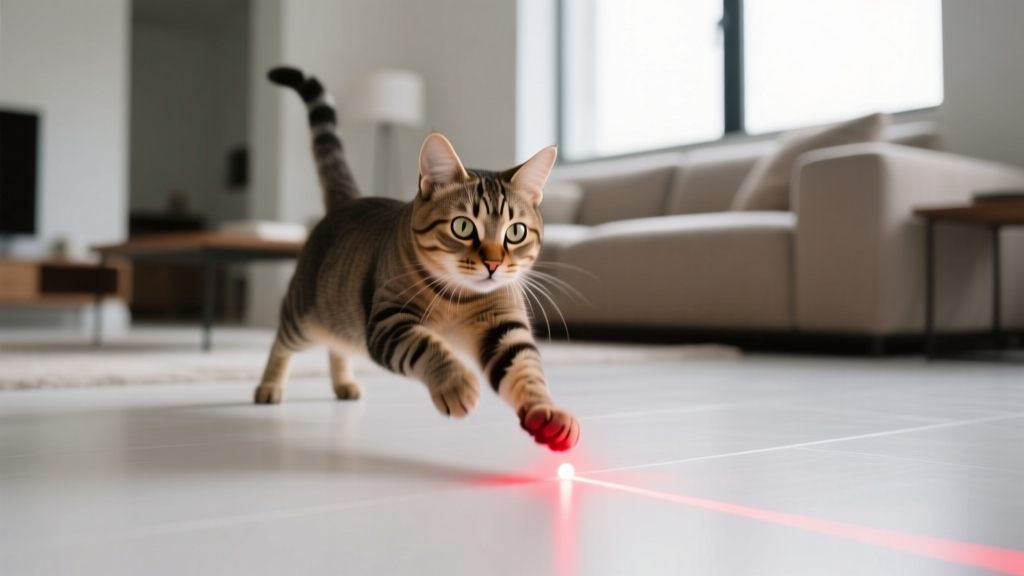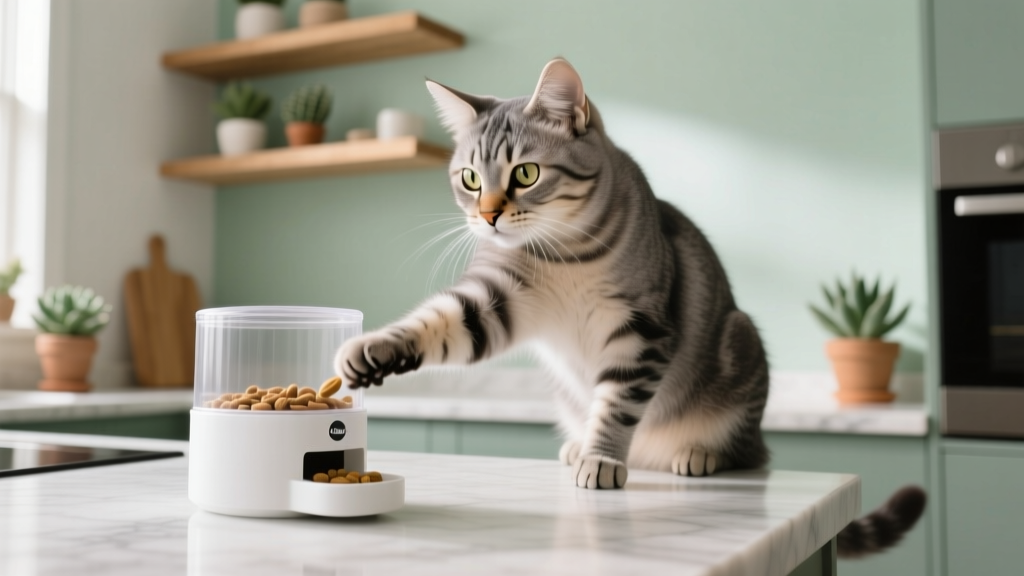
Cat Paw Pushing the Treat Dispenser: Learned Behavior
You know the scene. You set down a treat dispenser—maybe a wobble toy, a rolling ball with holes, or a little puzzle box—and your cat strolls over like they invented it. They sniff. They stare. Then, with the slow confidence of a tiny casino professional, they reach out one paw and push. The dispenser skitters across the floor. A treat rattles out. Your cat freezes for half a second, as if to say, “Yes. That worked exactly as planned.” Then they do it again. And again. Sometimes harder. Sometimes with one paw like a dainty pianist. Sometimes with a full-body shove that sends the toy under the couch.
If you’ve ever wondered whether your cat is being clever, stubborn, or just dramatic—good news: they’re likely being all three. Paw-pushing a treat dispenser is a classic example of learned behavior built on natural feline instincts, reinforced by the best teacher of all: snacks.
Why Cats Do This (The Instinct Behind the “Paw Push”)
Even though a treat dispenser isn’t prey, it behaves a bit like prey from your cat’s perspective. It moves unpredictably. It makes interesting sounds. It “rewards” interaction with something edible. In the wild, cats are solitary hunters designed to conserve energy, observe carefully, and strike with precision. A paw push is a low-energy test that answers a crucial feline question:
“If I touch this, what happens?”
This is rooted in a few instinctive tendencies:
- Object testing: Cats often tap or bat at something before committing to closer contact. It’s a safe way to gather information.
- Prey-style interaction: Cats use their paws to pin, rake, and manipulate prey. That controlled “push-and-watch” resembles how they handle small animals that might scurry.
- Cause-and-effect learning: Cats learn quickly when a behavior produces a result they like. If paw push = treat appears, the paw push becomes a reliable strategy.
So yes—your cat is learning. But they’re also doing something their brain is built to enjoy: hunting practice without the mess.
A Detailed Breakdown: Different Contexts You Might See
Not all paw pushes look the same. The way your cat uses their paw—and what happens around that moment—can tell you a lot about what’s motivating them.
1) The Gentle Tap (The “Scientist”)
Your cat approaches cautiously, extends one paw, and gives the dispenser a light touch. They pause, ears forward, eyes focused, waiting for movement or sound.
What it suggests: Curiosity, assessment, and a careful temperament. These cats tend to be “think first, act second.”
2) The Confident Bat (The “I’ve Got This”)
This is the seasoned puzzle-toy user. One quick smack and they’re already repositioning to catch the treat.
What it suggests: Prior learning and strong reward history. Your cat has formed a clear mental rule: “Bop toy = food.”
3) The Full-Body Shove (The “Bulldozer”)
Some cats skip finesse. They use paw, shoulder, and sometimes face. The dispenser slides across the kitchen like it owes them money.
What it suggests: High arousal, strong food motivation, and a playful, high-energy style. Sometimes it also means the toy is too hard to dispense treats with delicate taps, so your cat “turns up the force.”
4) The Scoop-and-Hold (The “Cheater”)
Your cat tries to pin the dispenser against the wall, hook it with a claw, or trap it under their paw while shaking it.
What it suggests: Problem-solving and persistence. Cats will invent new techniques if the old ones aren’t efficient.
5) The “Ask for Help” Push
Your cat paws the dispenser, then looks directly at you, then paws again—sometimes adding a meow that feels suspiciously like a complaint.
What it suggests: Your cat has learned that you are part of the puzzle system. If pawing doesn’t pay out fast enough, they recruit the treat dispenser’s manager (you).
What This Behavior Says About Your Cat’s Mood and Feelings
Paw pushing is often a happy, engaged behavior. But the emotional “flavor” can vary.
- Playful and confident: Loose posture, tail up or gently swishing, quick returns to the toy after each treat.
- Focused and determined: Intense staring, crouched body, slower movements. This is “hunt mode,” not stress.
- Frustrated: Sudden hard smacks, biting the dispenser, growling, or walking away and returning repeatedly. Frustration happens when effort doesn’t match reward.
- Anxious or uncertain: Approaches-and-retreats, ears rotating back, jumping at the dispenser’s noise, or only engaging when you’re nearby.
One of the best clues is what happens after the treat drops. A content cat typically eats and returns to the toy. A stressed cat may grab the treat and retreat, or stop engaging entirely.
Related Behaviors You Might Also Notice
If your cat is a dedicated dispenser-pusher, you may see other “paw-first” habits:
- Bopping your hand when you stop petting (a gentle “continue, please”).
- Knocking items off tables—often a mix of curiosity, attention-seeking, and object-testing.
- Fishing treats out of tight spots with impressive paw dexterity.
- Patting water before drinking (checking depth/movement, especially with reflective bowls).
- Pawing at cabinet doors where treats are stored (they remember).
These behaviors share a theme: cats learn that paws are useful tools for controlling their environment—and for training humans.
When It’s Normal (and When It Might Be a Concern)
In most cases, paw pushing a treat dispenser is a healthy enrichment behavior: mental stimulation, physical movement, and a satisfying “work-for-food” activity.
It’s likely normal if:
- Your cat eats normally and maintains a stable weight.
- The behavior happens mainly around play or treat time.
- Your cat can disengage and relax afterward.
- No aggression appears toward you or other pets.
Consider a closer look if you notice:
- Obsessive focus—your cat won’t stop, cries at the dispenser, or ignores other needs.
- Sudden change—a cat who never cared about food toys becomes frantic, which can signal stress or medical shifts.
- Dental pain signs—dropping food, pawing at the mouth, reluctance to chew (treat toys can highlight eating discomfort).
- Resource guarding in multi-cat homes—hissing, blocking access, or stalking other cats near the toy.
If the intensity feels new or extreme, a vet check is worth it—especially if appetite or behavior has changed. Sometimes “food motivation” ramps up due to diet changes, underlying illness, or anxiety.
How to Respond (Or Encourage It in a Healthy Way)
If you want to support this behavior—without creating a tiny treat-obsessed menace—aim for smart structure.
Choose the Right Difficulty
Too easy: your cat empties it in 30 seconds. Too hard: they get frustrated and may start biting or screaming. Look for a dispenser with adjustable openings, or start with larger holes and gradually increase difficulty.
Use Part of a Meal, Not Endless Extras
For food-motivated cats, portion control keeps enrichment from turning into weight gain. Many cats do great when you put a portion of their daily kibble allowance in the dispenser instead of adding extra treats.
Make the Environment Work for You
- Put the toy on a rug or mat to reduce loud skittering (and protect your sanity).
- Use a “toy zone” away from stairs or under-couch treat graveyards.
- Rotate puzzle types to keep novelty high without increasing calories.
Reinforce Calm Persistence
If your cat starts yelling at you when the dispenser is empty, avoid immediately refilling it on demand—otherwise you’ve trained a very effective “refill me” routine. Instead, set predictable times for puzzle feeding, and end sessions with a calm cue like placing the dispenser away and offering a different activity (a short wand play session works wonders).
In Multi-Cat Homes: Prevent Drama
Offer multiple dispensers in separate areas, or use puzzle time as a “cats in different rooms” activity. This lowers tension and reduces guarding.
Fun Facts and Research-Flavored Nuggets
- Cats are excellent at associative learning: when a specific action reliably produces a reward, many cats will repeat it with impressive consistency—especially if the reward is high value.
- Puzzle feeding taps into “contrafreeloading”: some animals will choose to work for food even when free food is available. Not every cat shows this strongly, but many enjoy the challenge when it’s matched to their skill level.
- Whiskers and paws work as a team: whiskers help cats judge space and movement up close, while paws handle the “hands-on” part of the investigation. When your cat stares at the dispenser and then pushes, they’re combining sensory data with action planning.
FAQ: Cat Paw Pushing the Treat Dispenser
Why does my cat push the treat dispenser and then look at me?
They’re checking whether you’ll participate—and whether the “system” is still working. Many cats learn that humans refill toys, unstick them from corners, or provide bonus treats. It’s part problem-solving, part communication.
Is my cat being aggressive when they smack the dispenser hard?
Usually it’s excitement or frustration, not aggression. If you see flattened ears, growling, or biting your hands when you approach, that’s different—reduce competition (especially with other cats), lower difficulty, and create calmer routines.
My cat only uses one paw. Does that mean they’re right- or left-handed?
Cats can show paw preferences, and some consistently favor one side. It’s not a perfect “handedness” test, but repeated one-paw use can be a real preference—especially if you see it across other activities like stepping first or batting toys.
Should I leave the treat dispenser out all day?
It depends on your cat. Some cats do great with all-day access if the toy is part of their measured daily food. Others become obsessive or start demanding refills. If your cat gets stuck in “snack mode,” schedule short sessions instead.
What if my cat gives up quickly and walks away?
That often means the puzzle is too difficult, the treats aren’t motivating enough, or your cat is unsure about the toy’s movement/noise. Start easier, use higher-value food temporarily, and reward small interactions (even one gentle tap) by choosing a dispenser that releases treats more readily.
Can puzzle toys reduce boredom and unwanted behaviors?
They can help, especially when boredom-driven behaviors (like nighttime zoomies, attention yowling, or mischief) are fueled by unmet hunting and foraging needs. Puzzle feeding works best paired with interactive play and predictable daily routines.
Your cat pushing a treat dispenser with their paw isn’t just a cute trick—it’s a little window into feline learning, hunting instincts, and the wonderfully practical way cats approach the world: test, observe, repeat what works.
Seen your cat invent a strange new dispenser technique—like flipping it, carrying it, or “asking” the dog for help? Share your cat’s funniest treat-toy moments with the Cat Lovers Base community at catloversbase.com. Your cat might just be the next great puzzle-solving legend.