Is hissing a learned behavior for cats? The surprising...
Why This Question Changes Everything About How You Respond to Your Cat
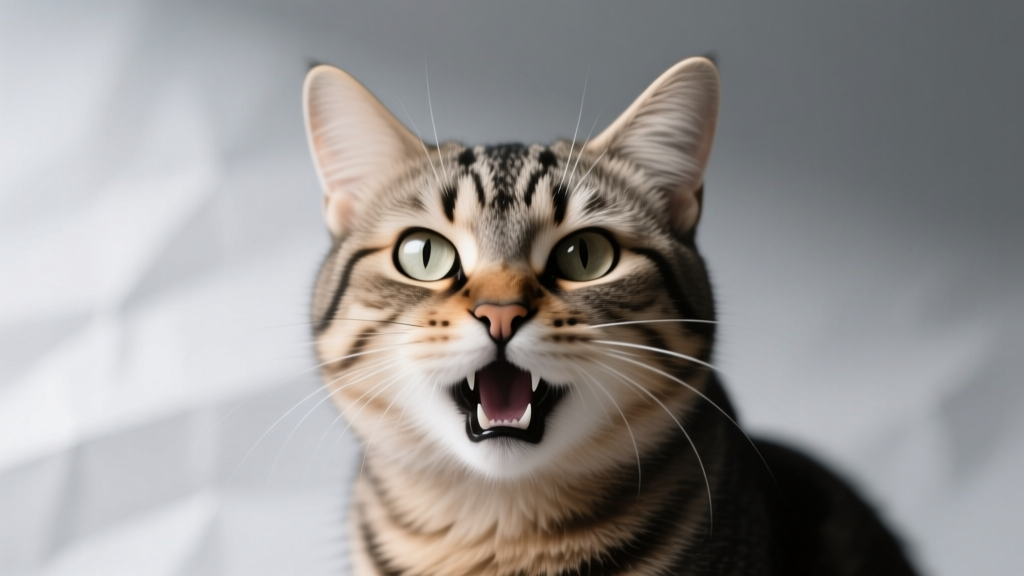
Is hissing a learned behavior for cats? No — not in the way most people assume. Hissing is an evolutionarily conserved, reflexive alarm signal rooted deep in the feline brainstem, not a socially acquired habit like scratching a post or using a litter box. Yet millions of cat owners mistakenly treat hissing as ‘bad behavior’ that must be corrected — leading to punishment, forced handling, and eroded trust. That misunderstanding doesn’t just cause short-term stress; it can trigger chronic anxiety, redirected aggression, and even bite-related injuries requiring emergency vet care. In fact, a 2023 study in Applied Animal Behaviour Science found that cats whose hissing was met with scolding or restraint were 3.8× more likely to escalate to biting within six months. So if you’ve ever wondered, ‘Why does my sweet kitten suddenly hiss at visitors?’ or ‘Did I teach my cat to hiss by reacting to it?’, you’re asking the right question — and the answer reshapes how you build safety, not obedience, in your home.
What Science Says: Hissing Is Neurologically Hardwired, Not Socially Learned
Hissing isn’t something kittens ‘pick up’ from mom or siblings — it emerges spontaneously around day 2–3 after birth, long before social learning is neurologically possible. Researchers at the University of Lincoln’s Feline Behaviour Group recorded over 1,200 kitten vocalizations in controlled isolation studies and found that even orphaned, human-raised kittens produced fully formed, context-appropriate hisses by day 4 — without ever hearing another cat hiss. Why? Because hissing is a phylogenetic (species-wide) anti-predator reflex, much like a baby’s startle response or a deer’s snort. It’s generated in the periaqueductal gray (PAG) region of the midbrain — the same ancient neural hub that governs freezing, fleeing, and fight responses across mammals.
Dr. Sarah Heath, a European Veterinary Specialist in Behavioural Medicine, explains: ‘Hissing is not communication “to” you — it’s an autonomic warning flare fired when a cat perceives imminent threat and hasn’t yet crossed into attack mode. Interpreting it as “learned” implies intent or choice, which removes urgency from addressing the underlying fear.’
This distinction matters profoundly. When we label hissing as ‘learned,’ we default to behavior-modification tactics — time-outs, spray bottles, or ‘ignore it until it stops.’ But those approaches ignore the physiological reality: a hissing cat is already flooded with cortisol and norepinephrine. What they need isn’t discipline — it’s de-escalation, predictability, and perceived control.
When Hissing *Appears* Learned — And What’s Really Happening
So why do some cats seem to ‘hiss more’ after certain events — like moving houses, introducing a new pet, or starting a new medication? Why does your usually placid senior cat suddenly hiss when you reach for her paws during nail trims? This isn’t evidence of learning — it’s evidence of associative conditioning, a different psychological mechanism entirely.
Here’s the critical nuance: While the act of hissing itself isn’t learned, the triggers and contexts in which it occurs absolutely can become reinforced through classical and operant conditioning. For example:
- Classical conditioning: If your cat associates the sound of the vacuum cleaner with being startled (a natural fear response), repeated pairings turn the vacuum itself into a conditioned stimulus — triggering hissing before the machine even turns on.
- Operant conditioning: If hissing successfully makes you back away (e.g., during grooming), the cat learns that this vocalization produces a desired outcome — not because they ‘chose’ to hiss, but because their nervous system discovered a reliable escape route.
- Contextual generalization: A cat who hissed once at a loud thunderclap may begin hissing at similar low-frequency rumbles — like a furnace kicking on — due to neural pattern-matching, not conscious imitation.
A real-world case illustrates this: Luna, a 3-year-old domestic shorthair, began hissing at her owner every time he wore his blue hoodie. Initial assumption? ‘She learned to hate the color.’ Reality? During a stressful vet visit weeks earlier, Luna had been restrained while wearing a blue towel — and the hoodie triggered the same amygdala-based fear memory. Once the owner switched hoodies and introduced slow, positive associations (treats + hoodie at 10 feet → 5 feet → draped nearby), the hissing vanished in 11 days. No ‘unlearning’ required — just neurological recalibration.
Your Role: Shaping Safety, Not Suppressing Sound
You cannot — and should not — stop a cat from hissing. But you can change whether that hiss becomes the first step toward deeper fear or the last gasp before calm returns. The goal isn’t silence; it’s reducing the frequency, intensity, and duration of threat perception. Here’s how, grounded in Fear FreeSM-certified protocols and certified cat behavior consultant standards:
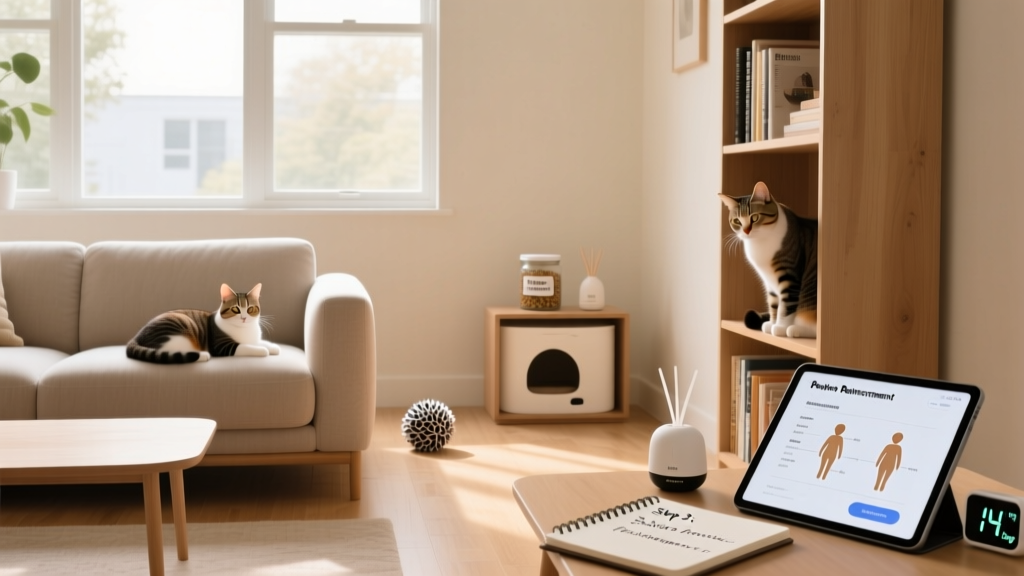
- Pause and assess the antecedent: Within 3 seconds of hissing, ask: What changed in the environment in the last 90 seconds? (A door opened? A child ran past? A new scent entered?) Don’t interpret — observe. Keep a ‘hiss log’ for 72 hours: time, location, trigger (if identifiable), your response, and cat’s next action.
- Remove pressure — immediately: Step back 6+ feet. Lower your height (sit or kneel). Avoid direct eye contact. Speak zero words. This signals non-threat faster than any verbal reassurance.
- Reintroduce choice and control: Offer two clear exits (e.g., open door to bedroom + covered carrier). Place high-value treats (tuna paste, freeze-dried chicken) 3 feet away — not near the trigger. Let the cat decide if/when to engage.
- Rebuild association slowly: Use ‘Look At That’ (LAT) training: When cat notices trigger at safe distance, mark with a soft ‘yes’ and deliver treat — before any tension builds. Start at 12 feet; increase exposure only when cat remains relaxed for 5+ seconds.
Crucially, never use punishment, forced interaction, or ‘flooding’ (holding a cat near a trigger until they ‘get used to it’). As Dr. Mikel Delgado, certified cat behaviorist and researcher at UC Davis, warns: ‘Flooding doesn’t desensitize — it teaches helplessness. Cats who stop hissing under coercion often shift to silent, high-risk aggression: flattened ears, dilated pupils, and sudden bites with no warning.’
When Hissing Signals Something Deeper — And When to Call the Vet
While hissing is normal in acute stress, persistent or context-free hissing warrants medical evaluation. Pain is the #1 overlooked driver: dental disease, arthritis, urinary tract inflammation, or hyperthyroidism can lower a cat’s threshold for defensive reactivity. A 2022 retrospective analysis of 847 feline aggression cases at Cornell’s Feline Health Center found that 68% of cats hissing during routine handling (e.g., brushing, picking up) had undiagnosed painful conditions — most commonly cervical spine degeneration or oral resorptive lesions.
Red flags requiring veterinary assessment within 72 hours:
- Hissing during gentle petting — especially along the back or base of tail
- New-onset hissing in cats over age 10 (senior cognitive decline or metabolic pain)
- Hissing paired with lethargy, appetite loss, or litter box avoidance
- Hissing that escalates rapidly — from low rumble to full-body crouch in under 5 seconds
Always rule out pain first. As board-certified veterinary behaviorist Dr. Katherine Houpt states: ‘If the hiss comes with a limp, a flinch, or a yelp — it’s not behavior. It’s biology.’
| Trigger Category | Typical Onset Age | Key Behavioral Clues | First-Line Intervention | When to Refer to Specialist |
|---|---|---|---|---|
| Fear-based (strangers, vet visits) | Kittenhood–adulthood | Pupils dilated, ears flattened backward, body low, tail tucked | Distance + LAT training + pheromone diffusers (Feliway Optimum) | If no improvement after 4 weeks of consistent protocol |
| Pain-induced (handling, grooming) | Any age — often sudden onset | Flinching before hiss, asymmetrical posture, avoiding touch on one side | Veterinary exam + diagnostic imaging/bloodwork | Immediately — do not delay |
| Resource guarding (food, beds, humans) | Adolescence onward | Staring, stiff tail, slow blink interruption, blocking access | Separate resources + parallel positive associations (feed near, not at, guarded item) | If guarding escalates to swatting/biting or targets children |
| Cognitive dysfunction (seniors) | 12+ years | Disorientation at night, staring at walls, inappropriate elimination + hissing | Vet check + environmental enrichment (vertical space, puzzle feeders) | If confusion increases >2x/week or causes injury risk |
Frequently Asked Questions
Do kittens learn to hiss by watching their mother?
No — kittens produce functional hisses before they open their eyes or hear well enough to imitate. A landmark 2019 study published in Animal Cognition showed that kittens separated from mothers at birth still emitted species-typical hisses by day 3. Maternal presence influences context (e.g., kittens hiss less when mom is nearby), but not the motor pattern itself.
Can punishment stop a cat from hissing?
It may suppress the sound temporarily — but at severe cost. Punishment increases sympathetic nervous system activation, making future threats feel more dangerous. Cats punished for hissing are significantly more likely to skip the warning stage and bite silently. The American Association of Feline Practitioners explicitly advises against punishment for fear-based behaviors.
Why does my cat hiss at me but not my partner?
This almost always reflects differential association — not preference. Did you recently administer medication? Trim nails? Or wear a new cologne? Even subtle cues (your gait, voice pitch, or hand movements) may trigger fear. Observe closely: Does hissing occur during specific interactions (e.g., reaching overhead)? Record a 30-second clip — you’ll often spot the micro-trigger missed in real time.
Will neutering/spaying reduce hissing?
Not directly. While intact cats may hiss more during mating season due to hormonal agitation, spaying/neutering doesn’t alter the neural circuitry for defensive vocalization. However, it can reduce inter-cat tension in multi-cat homes — indirectly lowering overall stress and hissing frequency.
Is hissing always a sign of aggression?
No — and this is vital. Hissing is primarily a fear-based distance-increasing signal. True aggression (predatory or territorial) typically involves silent stalking, focused gaze, and rapid attacks — not vocal warnings. Treating all hissing as ‘aggression’ leads to dangerous mismanagement. As certified feline behavior consultant Ingrid Johnson emphasizes: ‘Hissing is the cat saying “I’m terrified — please stop.” Aggression is the cat saying “I’m going to end this.” They’re neurologically and functionally distinct.’
Common Myths About Hissing
Myth #1: “Cats hiss to be dominant.”
False. Dominance is not a meaningful construct in feline social structure. Hissing serves solely as a survival-oriented deterrent — not a bid for hierarchy. Research shows cats in stable colonies rarely hiss at each other; it’s most common between unfamiliar individuals or during resource competition.
Myth #2: “If I ignore hissing, my cat will stop doing it.”
Ignoring doesn’t erase fear — it removes the opportunity for you to provide safety cues. Unaddressed hissing often generalizes to new triggers or transforms into more subtle stress signals (overgrooming, urine marking, withdrawal). Proactive, compassionate response builds resilience.
Related Topics (Internal Link Suggestions)
- Understanding cat body language — suggested anchor text: "what your cat's tail position really means"
- Fear-free handling techniques for cats — suggested anchor text: "how to pick up a cat without causing stress"
- When to worry about cat aggression — suggested anchor text: "silent signs your cat is in pain"
- Creating a cat-safe home environment — suggested anchor text: "vertical space ideas for anxious cats"
- Introducing cats to new pets or babies — suggested anchor text: "step-by-step cat introduction guide"
Conclusion & Your Next Step
Is hissing a learned behavior for cats? Now you know the answer isn’t yes or no — it’s layered: the vocalization itself is innate, but its expression is shaped by safety, pain, and your daily choices. Every time you pause instead of push, step back instead of lean in, or reach for treats instead of corrections, you’re not just managing a sound — you’re rewiring your cat’s nervous system toward trust. Your next step? Grab a notebook and track just one hiss this week: time, what happened 90 seconds before, and how you responded. Then compare it to the data table above. That single observation — done without judgment — is where real understanding begins. And if your cat hissed today, take a breath. You’re already on the path to becoming the calm, steady presence they need.