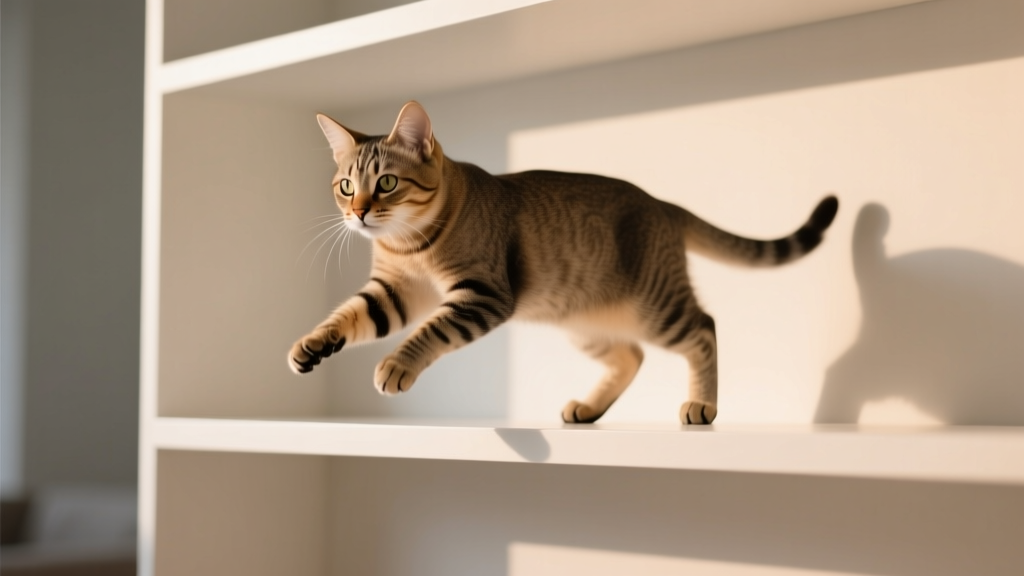
What Causes Behavior Changes in Cats? (2026)
Why Your Cat’s Personality Shift Might Be Screaming for Help
If you’ve ever asked yourself what causes behavior changes in cats, you’re not alone—and you’re already doing something vital: paying attention. Cats don’t ‘act out’ without reason. What looks like stubbornness, aloofness, or even spite is almost always a carefully calibrated signal: discomfort, fear, confusion, or unmet need. In fact, a 2023 study published in the Journal of Feline Medicine and Surgery found that over 82% of cats exhibiting new behavioral issues had at least one underlying medical condition—many undiagnosed for months. Ignoring these shifts isn’t just frustrating; it can delay critical care, erode trust, and worsen chronic conditions before they’re visible to the naked eye.
1. Medical Conditions: The Silent Culprits Behind ‘Personality Swaps’
Let’s start with the most urgent truth: behavior is often the first—and sometimes only—symptom of illness in cats. Their evolutionary survival instinct compels them to hide weakness, so by the time you notice your formerly affectionate cat hissing when petted, or your tidy kitten suddenly urinating beside the litter box, pain or disease may already be advanced.
According to Dr. Sarah Lin, DVM and feline behavior specialist at the Cornell Feline Health Center, “A sudden aversion to being touched, increased vocalization at night, or hiding for >24 hours should trigger an immediate veterinary exam—not a timeout or scolding.” Common culprits include:
- Dental disease: Severe gingivitis or resorptive lesions cause constant oral pain—leading to irritability, food refusal, or aggressive swatting when approached near the head.
- Hypertension (often secondary to kidney disease or hyperthyroidism): Causes disorientation, pacing, yowling at walls, and restlessness—mistaken for ‘senility’ but fully treatable with medication.
- Osteoarthritis: Affects up to 90% of cats over age 12 (per a landmark 2019 radiographic study), yet fewer than 15% receive treatment. Painful joints make jumping, scratching, or even using high-sided litter boxes unbearable—prompting avoidance behaviors that look like ‘laziness’ or ‘disobedience’.
- Urinary tract disease: Even mild cystitis causes burning sensations. Cats associate the litter box with pain and begin eliminating on cool, smooth surfaces (tile, bathtubs) instead—a classic red flag misread as ‘territorial marking’.
Pro tip: Always rule out medical causes *before* assuming behavioral origins. Request a full geriatric panel (CBC, chemistry, T4, urinalysis, blood pressure) for cats over age 7—or any age if changes are abrupt.
2. Environmental Stressors: When ‘Home’ Stops Feeling Safe
Cats are exquisitely sensitive to their environment—not just physically, but socially and temporally. A change you consider minor (e.g., new laundry detergent, rearranged furniture, or even a neighbor’s outdoor cat visible through the window) can spike cortisol levels for days. Unlike dogs, cats don’t habituate easily; they assess safety continuously.
Dr. Mikel Delgado, certified cat behavior consultant and researcher at UC Davis, explains: “Cats don’t have ‘low-stress tolerance’—they have high-stakes risk assessment. What we call ‘stress’ is their brain calculating whether resources (food, shelter, escape routes) are reliably accessible. When that calculation shifts, behavior shifts.”
Real-world case: Luna, a 5-year-old domestic shorthair, began spraying doorframes after her owner installed smart blinds that lowered automatically at dusk. The sudden shadow movement triggered a freeze-flight response. Once the blinds were manually locked open for two weeks, spraying ceased completely—no medication, no pheromone diffusers, no retraining.
Key environmental triggers include:
- New pets or people in the home (including babies or roommates)
- Construction noise or vibrations (even from upstairs neighbors)
- Litter box location changes or type switches (clay vs. silica vs. pine)
- Loss of vertical territory (e.g., removing a favorite perch or cat tree)
- Unpredictable routines (especially feeding or play times)
Solution: Conduct a ‘stress audit’. Map your cat’s daily path—where do they eat, sleep, eliminate, and observe? Identify choke points: Is the litter box next to the washer? Does their sunbathing spot now face a busy street? Small, targeted adjustments yield faster results than blanket ‘calming’ strategies.
3. Cognitive Decline & Sensory Loss: Aging Isn’t Just Gray Fur
When your senior cat starts staring blankly at walls, forgets how to find the litter box, or seems confused by familiar voices, it’s easy to dismiss it as ‘just getting old’. But feline cognitive dysfunction syndrome (CDS) affects an estimated 28% of cats aged 11–14 and 50% of those over 15 (per the 2022 International Society of Feline Medicine consensus guidelines). Crucially, CDS is *not* inevitable—and it’s often compounded by untreated vision/hearing loss.
Early signs are subtle: delayed response to name, reduced interest in play, nighttime vocalization (due to disorientation + anxiety), or ‘forgetting’ trained behaviors like using a cat flap. Importantly, these changes develop gradually—but owners often notice them abruptly because they cross a threshold of functional impact.
Intervention works: A 6-month clinical trial (published in Veterinary Record, 2021) showed cats receiving antioxidant-rich diets + environmental enrichment (novel toys, scent games, gentle interactive play) improved orientation scores by 41% versus controls. Even simple adaptations—adding tactile cues (rugs leading to food bowls), nightlights in hallways, or warming pads on favorite beds—reduce confusion-related stress.
Don’t wait for ‘advanced’ symptoms. If your cat is over 10, ask your vet about a CDS screening during annual exams—including vision testing (Schirmer tear test, fundic exam) and hearing evaluation (BAER testing if indicated).
4. Social Dynamics & Unseen Conflicts
In multi-cat households, behavior changes are rarely about ‘one cat’. They’re about invisible hierarchies, resource competition, and silent communication breakdowns. A cat who suddenly stops grooming may be avoiding contact due to tension with a housemate. One who grooms excessively might be self-soothing after a threat display. And yes—even ‘friendly’ cats engage in covert aggression: blocking access to food, staring down rivals, or urine-marking shared spaces.
A telling sign: behavior changes occur *only* when certain cats are present—or improve dramatically when one cat is temporarily away (e.g., at the vet). Yet owners often miss this link because cats rarely fight openly; conflict is expressed through displacement (hiding), redirected activity (attacking ankles), or subtle avoidance.
Action plan:
- Resource mapping: Ensure ≥ (number of cats + 1) of each resource: litter boxes, food/water stations, sleeping spots, and vertical perches.
- Separation trials: For 72 hours, separate suspected ‘stress catalyst’ cats—monitor behavior logs for improvement.
- Positive association training: Feed cats simultaneously on opposite sides of a closed door, then gradually open it while offering high-value treats. This rebuilds positive neural pathways faster than forced interaction.
Remember: Cats don’t ‘get along’—they tolerate coexistence when resources feel abundant and predictable. Your job isn’t to force friendship; it’s to engineer peace.
| Cause Category | Top 3 Red Flag Behaviors | First Action Step | Vet Visit Urgency |
|---|---|---|---|
| Medical Pain (e.g., arthritis, dental, UTI) | Aggression when touched, litter box avoidance, decreased grooming | Schedule full physical + diagnostic panel within 72 hours | Urgent (within 3 days) |
| Environmental Stress (e.g., new pet, construction, routine shift) | Overgrooming, hiding >12 hrs/day, spraying on vertical surfaces | Conduct stress audit; restore 1–2 key resources (e.g., safe perch, quiet litter box) | Routine (within 2 weeks if no improvement) |
| Cognitive/Sensory Decline (e.g., CDS, vision loss) | Disorientation at night, vocalizing without apparent cause, forgetting litter box location | Install nightlights, add tactile cues, schedule senior wellness exam | Routine (but include CDS screening) |
| Social Conflict (multi-cat tension) | Blocking access to resources, staring contests, sudden hissing between ‘friends’ | Add +1 litter box/food station; separate cats for 72-hour observation | Consult (behaviorist referral recommended) |
Frequently Asked Questions
Can behavior changes in cats be caused by diet?
Yes—but indirectly. While no commercial diet causes aggression or anxiety outright, nutritional deficiencies (e.g., inadequate taurine or B vitamins) or food sensitivities can contribute to neurological irritation or gut-brain axis disruption. More commonly, diet-related issues manifest as medical problems that *then* drive behavior shifts: obesity → arthritis → reluctance to jump → litter box avoidance. Always discuss dietary changes with your vet before switching foods, especially for cats with known health conditions.
How long should I wait before seeing a vet for behavior changes?
For any sudden, severe, or progressive change—especially involving elimination, appetite, mobility, or sociability—seek veterinary evaluation within 72 hours. ‘Sudden’ means onset within 24–72 hours; ‘progressive’ means worsening over days or weeks (e.g., increasing hiding, declining interaction). Don’t wait for ‘other symptoms’—behavior *is* the symptom. Delaying care risks irreversible damage (e.g., chronic kidney disease progression, untreated dental abscesses).
Is my cat depressed? Can cats get depression?
Cats don’t experience clinical depression as humans do—but they absolutely suffer from chronic stress, anxiety, and learned helplessness, which mimic depressive symptoms: lethargy, appetite loss, social withdrawal, and diminished curiosity. These states are biologically real, linked to elevated cortisol and altered neurotransmitter function. The solution isn’t antidepressants (except in rare, vet-supervised cases) but environmental restoration: predictability, choice, control, and species-appropriate stimulation. Think of it as ‘feline emotional wellness’—not human pathology.
Will getting another cat fix my cat’s loneliness-driven behavior changes?
Almost never—and often makes things worse. Cats are facultatively social, meaning they *can* coexist but don’t require companionship. Introducing a new cat without careful, weeks-long protocol frequently triggers territorial stress, resource guarding, and chronic anxiety—especially in cats over age 3. If your cat seems withdrawn, first rule out medical causes and environmental deficits (e.g., lack of play, vertical space, or mental enrichment). A single 15-minute interactive play session daily reduces stress markers more effectively than adding a second cat.
Are behavior changes in older cats always irreversible?
No. While some age-related changes (e.g., mild cognitive slowing) are progressive, many drivers—pain, hypertension, thyroid imbalance, sensory loss—are highly treatable or manageable. A 2020 retrospective study found 68% of cats over age 12 with documented behavior changes showed significant improvement within 4–8 weeks of targeted intervention (pain management, environmental modification, or medication). Early action is the strongest predictor of positive outcomes.
Common Myths About Cat Behavior Changes
Myth #1: “Cats act out to get revenge.”
Cats lack the cognitive capacity for vengeful intent. What appears as ‘revenge’ (e.g., peeing on your bed after you return from vacation) is actually stress-induced marking triggered by your absence disrupting their secure attachment and routine. It’s a distress signal—not payback.
Myth #2: “If my cat is eating and using the litter box, they must be fine.”
False. Many cats with chronic pain (e.g., early-stage kidney disease or osteoarthritis) maintain baseline functions until deterioration becomes severe. A 2022 study in Frontiers in Veterinary Science showed 44% of cats diagnosed with stage II kidney disease had exhibited subtle behavior shifts (reduced play, increased sleep, less frequent grooming) for 3–6 months prior to clinical diagnosis—yet owners reported ‘no obvious problems’.
Related Topics (Internal Link Suggestions)
- Signs of Pain in Cats — suggested anchor text: "subtle signs your cat is in pain"
- How to Introduce a New Cat Safely — suggested anchor text: "step-by-step guide to introducing cats"
- Best Litter Boxes for Senior Cats — suggested anchor text: "low-entry litter boxes for arthritic cats"
- Feline Cognitive Dysfunction Symptoms — suggested anchor text: "is my senior cat showing dementia signs?"
- Calming Products That Actually Work — suggested anchor text: "vet-recommended calming aids for cats"
Take Action—Before the Next Change Appears
You now know that what causes behavior changes in cats is rarely simple—and never trivial. Every shift, however small, is data: a clue about your cat’s physical comfort, emotional safety, or environmental stability. The most powerful tool you have isn’t medication or training—it’s observation paired with compassionate urgency. Start today: grab a notebook and log three things for the next 48 hours—when your cat eats, where they sleep, and what they do when left alone. Patterns will emerge. Then, pick *one* action from the table above and implement it within 24 hours. Small interventions, consistently applied, rebuild trust faster than grand gestures. Your cat isn’t broken—they’re communicating. And now, you finally speak their language.