What Cats Behavior Means for Scratching
Why Your Cat’s Scratching Isn’t ‘Bad Behavior’—It’s a Full-Body Conversation
Understanding what cats behavior means for scratching is the single most overlooked key to living harmoniously with your feline companion. If you’ve ever stared at clawed-up armrests, shredded carpets, or freshly shredded sofa seams while wondering, “Why does my cat do this *here*, *now*, and *so aggressively?*”—you’re not failing as a pet parent. You’re simply missing the language. Scratching isn’t random destruction—it’s a multimodal communication system combining scent, sight, sound, muscle memory, and emotional state. And when misinterpreted, well-intentioned corrections (like yelling, spraying water, or declawing) don’t just fail—they erode trust, escalate anxiety, and sometimes trigger redirected aggression. In fact, a 2023 study published in Journal of Feline Medicine and Surgery found that 68% of cats referred for ‘destructive scratching’ showed measurable reductions in stress behaviors within 10 days of implementing behavior-based interventions—*not* punishment. Let’s translate what your cat is really saying—and how to answer back in their native tongue.
The 4 Core Functions Behind Every Scratch
Scratching serves four biologically hardwired purposes—none of which are about spite or rebellion. As Dr. Sarah Wooten, DVM and certified feline behavior consultant, explains: “Cats don’t have a concept of ‘your furniture.’ They have a concept of ‘my environment,’ and scratching is how they maintain it.” Here’s what each function looks like in real life—and how to spot the difference:
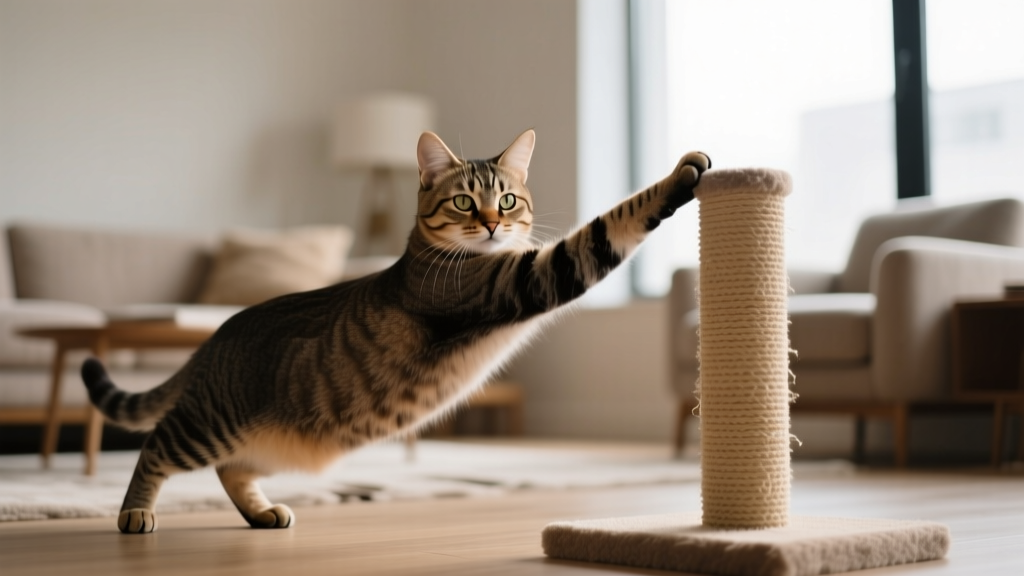
- Claw Maintenance: The most visible function. Cats shed the outer sheath of their claws every 2–4 weeks. Scratching stretches tendons, flexes muscles, and peels away dull layers—like hitting ‘refresh’ on their built-in tools. You’ll see this as rhythmic, vertical scratching on sturdy surfaces (door frames, posts), often after naps.
- Scent Marking: Cats have scent glands between their paw pads. Each scratch deposits pheromones—calming, territorial, and social signals. This is why cats scratch near entrances, windows, or where family members gather. It’s not ‘claiming ownership’ like a dog; it’s broadcasting, “This space feels safe to me.”
- Stress & Overstimulation Release: When overwhelmed—by loud noises, new pets, visitors, or even prolonged petting—cats use scratching as a physiological pressure valve. These scratches are often rapid, horizontal, low-to-the-ground, and may be accompanied by flattened ears or tail flicking. Think of it as feline deep breathing.
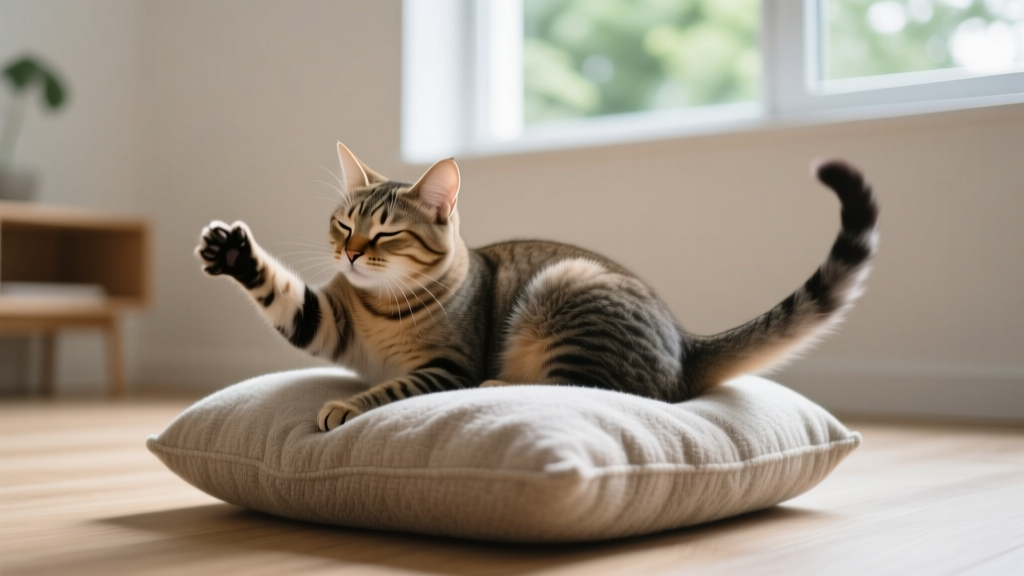
- Play & Motor Skill Practice: Kittens and young adults scratch during play sequences—pouncing, kicking, and ‘making biscuits’ against soft fabrics. This builds coordination, confidence, and hunting muscle memory. Adult cats retain this drive, especially if under-stimulated.
Decoding the ‘Where,’ ‘When,’ and ‘How’—A Real-World Behavior Map
Location, timing, and technique reveal more than any vet visit ever could. Below are three documented case studies from certified cat behaviorist Mikel Delgado’s clinical practice—each showing how subtle shifts in scratching patterns signaled urgent underlying needs:
“Luna, a 5-year-old indoor-only tabby, suddenly began scratching the bedroom door *only at 3:17 a.m.* for three weeks straight. Her owner assumed it was attention-seeking—until we installed a camera. Luna wasn’t meowing or pawing. She’d scratch silently, then sit and stare at the closed door. Turns out, her elderly human roommate had started sleeping in the guest room due to nighttime coughing. Luna was scratching at the barrier separating them—not out of frustration, but as a low-grade ‘Where are you?’ signal. We introduced a shared blanket swap (scent transfer) and a nightlight path to the guest room. Scratching stopped in 4 days.”
Here’s how to build your own behavior map:
- Vertical vs. Horizontal: Vertical scratching (upright posts, door jambs) strongly indicates claw maintenance or scent marking. Horizontal scratching (carpet corners, baseboards) is more commonly tied to stress release or play.
- Repetition & Intensity: Single, deliberate strokes = maintenance or marking. Rapid, repeated, full-body scrabbling = arousal or anxiety.
- Timing Clues: Scratching immediately after being petted? Likely overstimulation. Right before meals? May indicate anticipation or food-related stress (e.g., past resource competition). At dawn/dusk? Normal circadian rhythm—but also a sign your cat craves structured play during those high-energy windows.
Your Step-by-Step Intervention Plan (Backed by Veterinary Ethology)
Forget ‘stop scratching’—aim for ‘redirect, enrich, and validate.’ Based on guidelines from the American Association of Feline Practitioners (AAFP) and the International Society of Feline Medicine (ISFM), here’s a phased, evidence-based protocol:
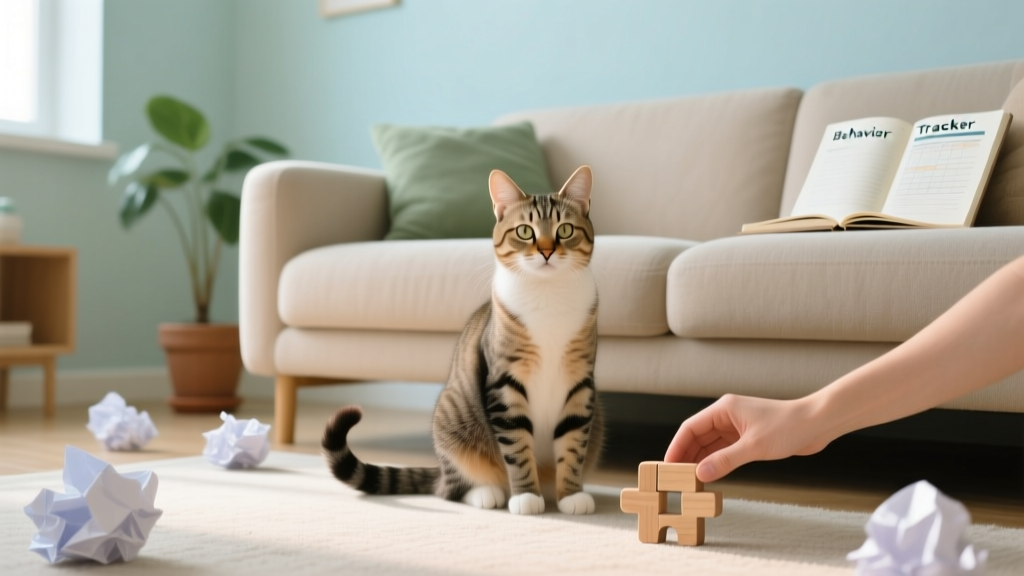
- Week 1: Audit & Accept — Log every scratch incident for 7 days: time, location, surface, posture, and what happened 5 minutes before/after. No judgment—just data. You’ll likely spot patterns invisible in real time.
- Week 2: Strategically Place Alternatives — Match substrate, angle, and location to your cat’s preference. Don’t assume cardboard = universal favorite. Try sisal rope (vertical), corrugated cardboard (horizontal), carpet remnants (low-pile), or wood (for natural texture lovers). Place alternatives *within 3 feet* of forbidden zones—cats rarely walk far to scratch.
- Week 3: Make ‘Good’ Irresistible & ‘Bad’ Unappealing — Use catnip spray, silver vine, or gentle praise *on the post* right after naps or meals. Simultaneously, cover off-limits spots with double-sided tape (Sticky Paws), aluminum foil, or citrus-scented cotton balls (safe, non-toxic deterrents). Never punish—this associates *you*, not the object, with fear.
- Week 4+: Reinforce & Rotate — Once consistent use begins, gradually move posts farther away (6 inches per week) toward desired locations. Rotate textures monthly to prevent boredom. Add interactive play sessions *before* peak scratching times (dawn/dusk) using wand toys that mimic prey movement—this satisfies the motor pattern without needing to scratch.
| Scratching Signal | Most Likely Meaning | Immediate Action | Long-Term Strategy |
|---|---|---|---|
| Rapid, horizontal scratching on rug near front door | Stress response to outdoor stimuli (birds, squirrels, passing dogs) | Block visual access temporarily with frosted film; offer a window perch with cover | Add daily ‘hunting’ play + puzzle feeders to redirect predatory energy |
| Slow, deliberate vertical scratching on bedroom doorframe | Scent marking + proximity seeking (bonding behavior) | Place a soft, cat-safe mat with your worn t-shirt beside the frame | Introduce scheduled ‘cuddle-and-scratch’ sessions using a sisal post near your bed |
| Scratching inside carrier or litter box | Pain or discomfort (arthritis, urinary tract issue, dental pain) | Schedule vet exam within 48 hours—do not delay | Switch to orthopedic bedding; consider litter box modifications (lower entry, larger size) |
| Scratching fabric after being petted >2 minutes | Overstimulation threshold reached (common in sensitive cats) | Stop petting *before* tail flicking begins; reward calm disengagement with treats | Teach ‘consent-based’ petting via clicker training; limit sessions to 90 seconds |
Frequently Asked Questions
Is declawing ever justified for scratching behavior?
No—declawing (onychectomy) is a medically unnecessary, painful, and ethically condemned procedure. It involves amputating the last bone of each toe—not just removing nails. The AAFP, ISFM, and AVMA all oppose it except in rare, life-threatening medical cases (e.g., severe, untreatable infection). Declawed cats show higher rates of chronic pain, lameness, litter box avoidance, and biting. Behavior consultants report 92% of scratching issues resolve with environmental modification alone—no surgery required.
My cat only scratches when I’m on video calls—why?
This is almost always attention-related *and* stress-related. Your focused attention on the screen (not them), combined with unfamiliar voices and sounds, creates mild social tension. Scratching nearby is their way of inserting themselves into your ‘social group’ visually and olfactorily. Try giving them a dedicated ‘call-time’ toy (e.g., a treat-dispensing ball) placed next to your laptop *before* the call starts—and reward quiet presence with gentle chin scritches mid-call.
Will nail caps (Soft Paws) stop scratching damage?
Nail caps reduce surface damage but *do not address the behavior*. Cats still scratch—just without tearing. Caps must be reapplied every 4–6 weeks and require proper fitting to avoid discomfort or ingestion risk. They’re best used *temporarily* (e.g., during furniture reupholstering) alongside behavior work—not as a long-term solution. As veterinary behaviorist Dr. Tony Buffington states: “Caps mask the symptom. Enrichment fixes the cause.”
Do certain breeds scratch more—or less?
Breed doesn’t determine scratching frequency—but genetics influence temperament traits that *indirectly* affect it. For example, highly active breeds like Bengals or Abyssinians may scratch more frequently due to elevated energy and play drive, while laid-back Ragdolls may appear to scratch less (though they still need it). More impactful than breed: individual early experiences (kittenhood socialization), indoor-only status, and environmental complexity. A single cat in a sparse apartment will scratch more than a confident cat in a multi-level, enriched home—even if they’re the same breed.
Can scratching behavior indicate depression or anxiety?
Yes—but not in isolation. Increased or altered scratching *combined* with other signs (excessive grooming, hiding, appetite changes, vocalizing at night, or litter box avoidance) warrants a vet visit to rule out medical causes first. True feline anxiety often manifests as *repetitive, ritualized* scratching—same spot, same number of strokes, same time daily—especially in newly adopted or recently relocated cats. Environmental enrichment and predictable routines help significantly, but severe cases benefit from veterinary behavior consultation and, rarely, FDA-approved anti-anxiety medication.
Common Myths About Cat Scratching
- Myth #1: “Scratching is a sign of disobedience or spite.” — Cats lack the cognitive capacity for spite—their brains aren’t wired for revenge or moral judgment. What looks like defiance is either unmet need (boredom, stress, pain) or miscommunication. Punishment damages your relationship and increases fear-based scratching elsewhere.
- Myth #2: “If I ignore scratching, they’ll stop.” — Ignoring doesn’t extinguish biologically driven behavior. Without appropriate outlets, cats often escalate (scratching louder, more destructively, or in hidden areas) or develop secondary issues like overgrooming or aggression. Proactive redirection is essential.
Related Topics (Internal Link Suggestions)
- Cat Stress Signals — suggested anchor text: "subtle signs your cat is stressed"
- Best Scratching Posts for Indoor Cats — suggested anchor text: "top-rated scratching posts that actually work"
- How to Introduce a New Cat Without Scratching Conflicts — suggested anchor text: "stress-free multi-cat household guide"
- Feline Enrichment Ideas — suggested anchor text: "37+ low-cost cat enrichment activities"
- When to See a Vet for Scratching Changes — suggested anchor text: "red flag scratching behaviors that need medical attention"
Final Thought: Scratch Like You Mean It—Then Redirect With Respect
What cats behavior means for scratching isn’t a problem to fix—it’s an invitation to deepen understanding. Every scratch is data: a clue about safety, comfort, physical need, or emotional state. By responding with curiosity instead of correction, you transform friction into connection. Start today—not with a spray bottle, but with a notebook and a single sisal post placed thoughtfully near your favorite chair. Observe. Adjust. Celebrate small wins. And remember: the goal isn’t a scratch-free home. It’s a home where your cat feels so secure, stimulated, and understood that they choose their post—not your couch—every single time. Ready to build your custom scratching plan? Download our free 7-Day Scratch Decoder Worksheet (includes printable log sheets, texture preference quiz, and vet-approved product checklist) to begin tomorrow.