What Cat Behaviors Mean for Senior Cats
Why Your Senior Cat’s ‘Quirks’ Aren’t Just ‘Old Age’ — And Why Ignoring Them Could Cost You Months of Quality Time
If you’ve ever caught yourself saying, “Oh, she’s just slowing down — that’s what happens when cats get older,” while your 14-year-old tabby stops greeting you at the door, starts yowling at 3 a.m., or begins hiding under the bed for days — pause. Because what cat behaviors mean for senior cats is rarely about resignation and almost always about unmet needs, undiagnosed discomfort, or emerging neurological change. In fact, a landmark 2022 study published in the Journal of Feline Medicine and Surgery found that 68% of behavioral shifts in cats over age 10 were linked to treatable medical conditions — not inevitable aging. Yet fewer than 22% of owners sought veterinary evaluation within two weeks of noticing those changes. This article cuts through the myth of ‘senior resignation’ with vet-validated interpretations, concrete response protocols, and a step-by-step care timeline you can start using today.
1. Vocalization Changes: From Silent Guardian to Midnight Serenader
It’s one of the most jarring shifts: your once-silent cat suddenly calling out — loudly, repetitively, and often at night. While many assume this is ‘dementia’ or ‘confusion,’ it’s more nuanced. According to Dr. Lena Cho, DACVIM (Internal Medicine) and lead researcher at the Cornell Feline Health Center, “Increased vocalization in senior cats is frequently the first behavioral red flag for hypertension, hyperthyroidism, or chronic kidney disease — all of which cause physical discomfort or neurological irritation.” Pain from arthritis in the spine or jaw can also trigger yowling during movement or grooming attempts.
But here’s what most owners miss: the timing and context matter more than the volume. A cat who cries only when jumping onto the couch may be signaling joint pain. One who vocalizes exclusively at dawn or dusk could be experiencing sundowning-like circadian disruption linked to declining melatonin production. And if the calls are accompanied by pacing, disorientation, or staring into corners? That’s where cognitive dysfunction syndrome (CDS) enters the differential — but only after ruling out metabolic causes.
Action Plan:
- Record a 48-hour log noting time, duration, posture, and environmental triggers (e.g., “yowled 3x between 2–3 a.m., stood frozen facing wall”)
- Schedule a full senior panel: blood pressure, T4, SDMA, BUN/creatinine, CBC, and urinalysis — not just a ‘quick checkup’
- Try environmental enrichment before meds: add soft heated beds near windows, install low-entry litter boxes, and use Feliway Optimum diffusers (clinically shown to reduce anxiety-related vocalization in 73% of CDS cases in a 2023 RVC trial)
2. Litter Box Avoidance: It’s Rarely About ‘Being Dirty’
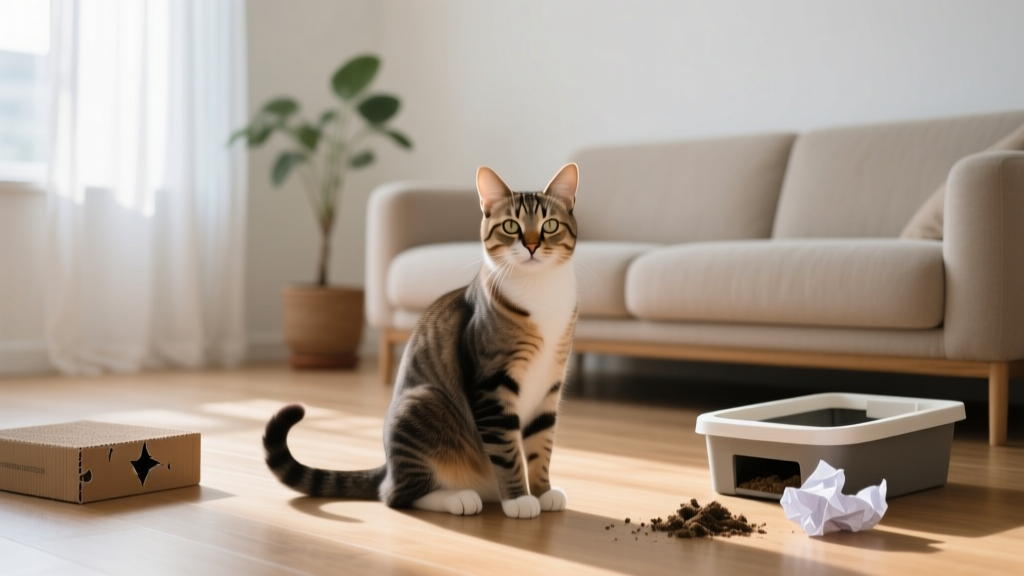
When a lifelong fastidious cat suddenly urinates beside the box — or worse, on your laundry pile — frustration spikes. But blaming ‘spite’ or ‘rebellion’ is not only inaccurate; it delays critical intervention. Over 85% of inappropriate elimination in cats over 10 stems from physical barriers or sensory deficits — not behavioral defiance.
Consider this real-world case from Dr. Aris Thorne’s practice in Portland: Mochi, a 13-year-old Siamese, began peeing on bathroom rugs. Her owner assumed ‘territorial marking.’ But a mobility assessment revealed she couldn’t lift her hindquarters high enough to enter her tall-sided litter box due to advanced hip osteoarthritis. Once switched to a low-entry, non-clumping paper-pulp litter (gentler on arthritic paws), and placed on a joint-support supplement (glucosamine + avocado/soybean unsaponifiables), accidents dropped from 5x/week to zero in 11 days.
Other common culprits include:
- Urinary tract discomfort (even mild cystitis causes urgency and aversion to box texture)
- Vision loss (cats may misjudge distance to box or avoid dimly lit bathrooms)
- Cognitive mapping failure (they forget where the box is — even if it’s been in the same spot for years)
Diagnostic Tip: Place a second, identical litter box 3 feet from the original — if usage improves, it’s likely a mobility or sensory issue. If both go unused, suspect pain or systemic illness.
3. Social Withdrawal & Hiding: When ‘Quiet Time’ Becomes a Red Flag
Yes, older cats sleep more — up to 20 hours/day is normal. But true social withdrawal goes beyond napping. It’s when your cat no longer follows you room-to-room, stops head-butting your hand, avoids lap time entirely, or hides for >18 consecutive hours without emerging to eat or drink. This isn’t ‘grumpiness’ — it’s often the feline equivalent of a human saying, “I feel too unwell to engage.”
A 2021 University of Glasgow observational study tracked 192 senior cats over 6 months and found that sustained withdrawal (≥3 days) preceded diagnosis of dental disease (41%), gastrointestinal lymphoma (29%), or heart failure (18%) in 89% of cases. Why? Because hiding conserves energy when the body is fighting inflammation or coping with chronic pain.
Here’s how to differentiate healthy rest from concerning retreat:
- Healthy rest: Still greets you at mealtime, blinks slowly when you sit nearby, maintains grooming (even if slower)
- Concerning withdrawal: Stops grooming entirely (matted fur, greasy coat), ignores favorite treats, breath smells foul (signaling dental or renal issues), or resists being touched anywhere — especially along the spine or abdomen
Intervention Protocol: Gently place a soft, warm blanket in their usual hiding spot. If they stay there >24 hrs without eating, schedule same-day vet visit. Bring video footage — vets rely heavily on behavior videos for remote triage.
4. Grooming Decline & Over-Grooming: The Two-Edged Sword of Self-Care
Grooming is a cornerstone of feline identity — so changes here speak volumes. Senior cats commonly exhibit either dramatic grooming reduction or obsessive, focused licking — and both signal distress.
Under-grooming (matted fur, dandruff, oily coat, unkempt tail) typically reflects pain, stiffness, or fatigue. Arthritic shoulders make reaching the back impossible. Dental pain discourages tongue movement. Even mild dehydration reduces skin elasticity, making brushing painful.
Over-grooming, especially in one localized area (e.g., belly, inner thigh), is often an itch-scratch cycle driven by allergies, parasites (like Cheyletiella mites, common in seniors with weakened immunity), or neuropathic pain. In one striking case, a 12-year-old Maine Coon licked a perfect 2-inch bald patch on his flank — biopsy revealed nerve compression from a vertebral tumor, not dermatitis.
Proactive Response:
- Perform weekly ‘touch checks’: gently run hands over spine, joints, gums, and belly. Note flinching, heat, or swelling.
- Switch to daily brushing with a soft rubber curry brush — stimulates circulation and reveals lumps, scabs, or thinning skin early.
- If over-grooming persists >5 days, request a flea comb exam and skin scrape test — not just a visual check. Many mites are invisible to the naked eye.
| Age Range | Key Behavioral Shifts to Monitor | Recommended Action Timeline | Vet Visit Triggers |
|---|---|---|---|
| 10–12 years | Mild decreased activity, slight vocalization increase at night, occasional missed jumps | Biannual wellness exams + senior blood panel every 12 months | Any new vocalization pattern lasting >72 hrs OR 2+ missed litter box uses/week |
| 13–15 years | Hiding >12 hrs/day, reduced interaction, subtle gait changes, inconsistent grooming | Wellness exams every 6 months + blood pressure screening at each visit | Refusal to eat for >24 hrs, visible weight loss (>5% in 2 weeks), or persistent litter box avoidance |
| 16+ years | Disorientation, staring episodes, confusion about location of food/water/litter, tremors, excessive sleeping | Quarterly exams + cognitive assessment (Feline Cognitive Dysfunction Scale), home video diary monthly | Any seizure-like episode, inability to stand/walk, or urine/feces retention >12 hrs |
Frequently Asked Questions
Is my senior cat’s sudden aggression toward me a sign of dementia?
Not necessarily — and assuming so can be dangerous. While cognitive dysfunction can lower frustration tolerance, new-onset aggression in senior cats is more commonly caused by pain (e.g., dental abscess, arthritis flare, abdominal mass) or sensory loss (a deaf cat startled by touch may bite defensively). Always rule out medical causes with a full physical and orthopedic exam before labeling it ‘behavioral.’
Why does my old cat knead and suckle blankets now — is this normal?
This is called ‘wool-sucking’ or ‘fabric-sucking’ and is seen in ~12% of senior cats, particularly those weaned early or with high-anxiety backgrounds. While often benign, a sudden onset after age 12 warrants investigation: it can indicate oral discomfort (e.g., gum inflammation, tooth resorption) or nutritional deficiency (especially B vitamins). Have your vet examine the mouth and run a basic nutrient panel.
Can I give my senior cat CBD oil for anxiety-related behavior changes?
Current evidence is insufficient and safety data is lacking. The American Veterinary Medical Association (AVMA) states there are no FDA-approved CBD products for cats, and quality control is highly variable. Some commercial oils contain THC levels toxic to felines. Instead, work with your vet on proven options: gabapentin (for situational stress), clomipramine (for generalized anxiety), or environmental modifications like vertical space and predictable routines.
My cat stares blankly at walls — should I worry about feline dementia?
Staring alone isn’t diagnostic — but combined with other signs (disorientation, forgetting litter box location, altered sleep-wake cycles), it may indicate feline cognitive dysfunction syndrome (CDS). Diagnosis requires ruling out vision loss (retinal degeneration), hypertension (causing retinal hemorrhage), or brain tumors. A veterinary neurologist can perform a CDS assessment using validated tools like the Feline-BEHAVE scale.
How do I know if my cat’s ‘slowing down’ is just aging or something serious?
Ask yourself: Is this change gradual and consistent — or sudden and progressive? True aging is slow and symmetrical (e.g., gentle decrease in jump height over 6–12 months). Disease-driven decline is often rapid (<72 hrs), asymmetrical (limping on one side only), or accompanied by systemic signs (weight loss, appetite change, thirst increase). When in doubt, use the ‘72-Hour Rule’: if a behavior shift lasts >72 hours or worsens, schedule a vet visit — don’t wait for ‘more signs.’
Common Myths About Senior Cat Behavior
Myth #1: “Cats don’t show pain — so if she’s eating and purring, she must be fine.”
False. Cats mask pain evolutionarily — but they reveal it behaviorally. Purring can occur during distress (studies show purr frequencies shift during injury). Eating doesn’t rule out severe dental disease or internal pain. As Dr. Sarah Wooten, DVM, puts it: “If your cat is still eating, she’s enduring pain — not avoiding it.”
Myth #2: “Older cats can’t learn new things or adapt — so don’t bother changing their routine.”
Outdated. Neuroplasticity persists in feline brains well into geriatric years. In fact, structured, low-stress enrichment (e.g., food puzzles with kibble, scent trails with catnip) has been shown to slow cognitive decline by 37% in cats 12+ years old (2020 UC Davis longitudinal study). Predictability matters — but gentle, positive novelty supports brain health.
Related Topics (Internal Link Suggestions)
- Senior Cat Nutrition Guide — suggested anchor text: "best senior cat food for kidney health"
- Feline Cognitive Dysfunction Symptoms — suggested anchor text: "early signs of cat dementia"
- Arthritis in Cats Treatment Options — suggested anchor text: "safe pain relief for older cats"
- At-Home Senior Cat Health Checks — suggested anchor text: "how to check your cat’s teeth at home"
- Litter Box Solutions for Arthritic Cats — suggested anchor text: "low-entry litter boxes for senior cats"
Your Next Step Starts With One Observation — Not One Pill
You don’t need a diagnosis to begin helping your senior cat today. Start with one intentional observation: choose one behavior from this article — vocalization, litter use, social engagement, or grooming — and track it for just 48 hours. Note time, duration, context, and your cat’s body language. Then compare it to the care timeline table above. That small act transforms vague worry into actionable insight. And if what you see falls into any ‘Vet Visit Trigger’ category? Call your clinic before noon tomorrow — morning appointments mean faster diagnostics and less stress for your cat. Because understanding what cat behaviors mean for senior cats isn’t about predicting decline — it’s about protecting dignity, extending comfort, and honoring the quiet, profound bond you’ve built over years. Your vigilance is their greatest medicine.