What Cat Behaviors Mean for Indoor Cats
Why Understanding What Cat Behaviors Mean for Indoor Cats Is Your #1 Priority Right Now
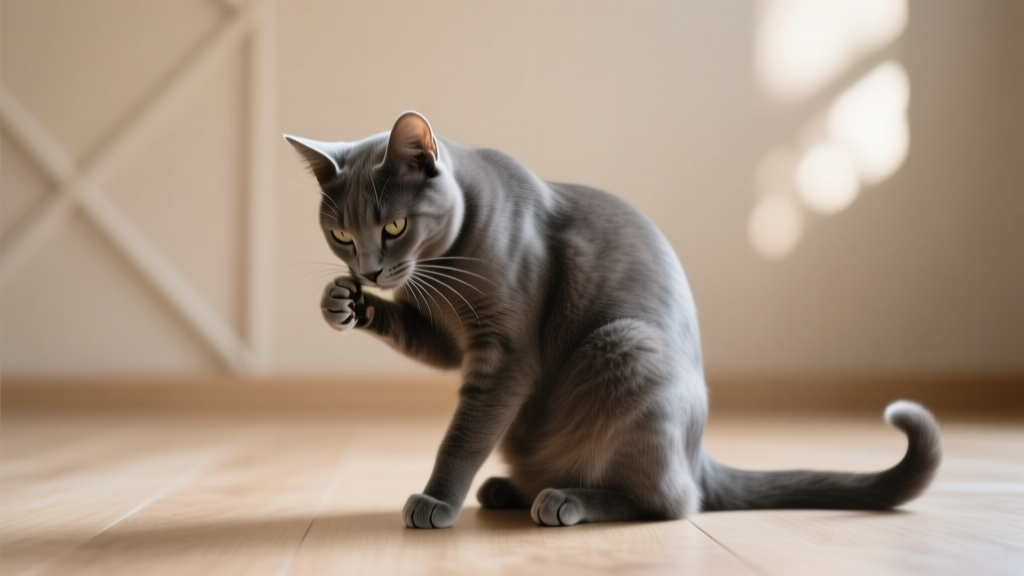
If you’ve ever watched your indoor cat stare blankly at a wall, suddenly sprint across the living room at 3 a.m., or gently bite your hand while purring—you’re not alone. But those moments aren’t random quirks. What cat behaviors mean for indoor cats is one of the most overlooked yet critical aspects of responsible guardianship—especially since over 85% of U.S. cats now live exclusively indoors (American Veterinary Medical Association, 2023). Without access to natural territory, predation outlets, or social fluidity with other cats, indoor felines rely entirely on us to interpret their communication accurately. Misreading a 'playful' pounce as aggression—or mistaking chronic overgrooming for mere fastidiousness—can silently erode trust, trigger anxiety-related illnesses like cystitis or dermatitis, and even shorten lifespan. This isn’t about anthropomorphism; it’s about behavioral literacy grounded in ethology and veterinary science.
1. The Silent Language: Decoding Body Posture & Micro-Expressions
Cats communicate primarily through posture, ear position, pupil dilation, and subtle facial shifts—not vocalizations. Indoor cats amplify these signals because they lack environmental distractions and must rely heavily on nonverbal cues to regulate household dynamics. Dr. Sarah Wooten, DVM and certified feline behavior consultant, explains: “Indoor cats often exhibit ‘conflict-avoidance postures’—like turning the head away or flattening ears sideways—that humans misread as indifference. In reality, they’re screaming ‘I’m overwhelmed.’”
Here’s how to read key signals:
- Slow blink + half-closed eyes: A deliberate, relaxed gesture signaling deep trust—not drowsiness. Return it slowly to reinforce safety.
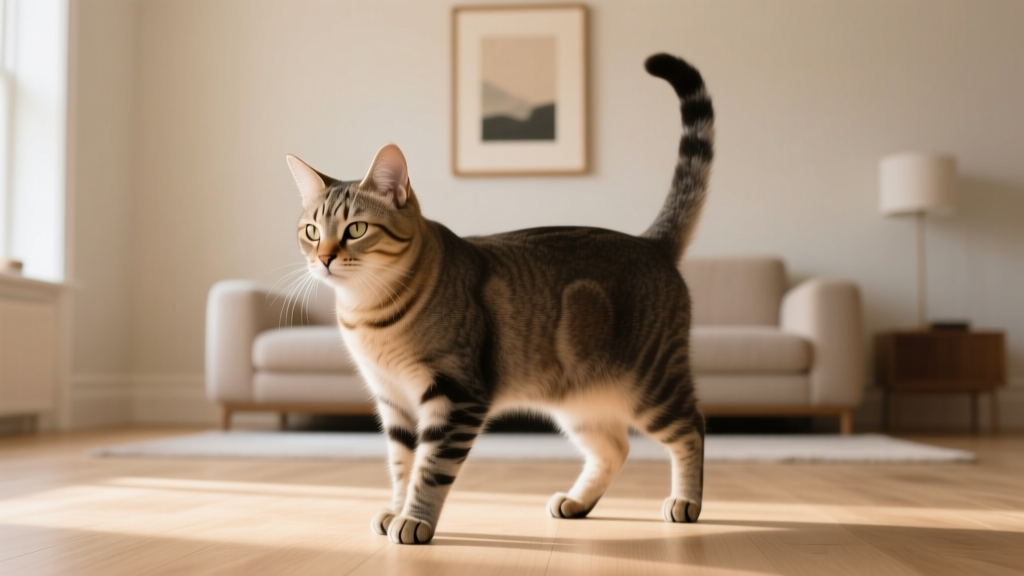
- Tail held high with a slight quiver: Not excitement—it’s an intense, affectionate greeting reserved for bonded humans. This rarely occurs in multi-cat households unless hierarchy is stable.
- Horizontal ear position + wide pupils + stiff whiskers forward: Acute hyper-vigilance—often triggered by unseen stimuli (e.g., birds outside windows) or perceived threats (new furniture, vacuum sounds). This state elevates cortisol for hours if unaddressed.
- “Belly-up” roll: Rarely an invitation to rub the belly. For most indoor cats, it’s a vulnerable surrender pose signaling extreme comfort—or, conversely, defensive submission if paired with flattened ears and tense limbs.
A 2022 University of Lincoln study tracked 147 indoor cats using AI-powered video analysis and found that cats exhibiting ≥3 daily ‘conflict-avoidance micro-expressions’ (e.g., lip licking, rapid nose twitching, abrupt head turns) were 3.2x more likely to develop stress-induced urinary issues within 6 months.
2. Vocalizations: Beyond “Meow” — What Each Sound Really Signals Indoors
Unlike wild felids, domestic cats evolved meowing almost exclusively to communicate with humans. Indoor cats refine this further—developing distinct dialects based on household routines. A 2021 Cornell Feline Health Center analysis revealed that indoor cats produce up to 16 unique vocal patterns, each tied to specific contexts:
- Short, high-pitched “mew” at dawn: Not hunger—it’s a time-syncing call learned from human wake-up patterns. Cats don’t naturally hunt at sunrise; they’re mirroring your schedule.
- Low-frequency, drawn-out “mrrroooow” near closed doors: A frustration vocalization linked to barrier-induced helplessness—a known precursor to redirected aggression.
- Chirping/chattering at windows: Often mislabeled as “excitement.” In reality, it’s a motor pattern mismatch—the jaw muscles fire in preparation for killing prey, but without outlet, it becomes a self-soothing tic. Chronic chirping correlates with elevated salivary cortisol (per a 2020 UC Davis study).
- Silent open-mouth “meow”: A sign of acute pain or neurological distress—especially if new in senior cats. Requires immediate veterinary assessment.
Pro tip: Record unfamiliar vocalizations for 3 days using your phone’s voice memo app. Note time, location, and preceding events. Patterns emerge fast—and often reveal hidden triggers (e.g., HVAC cycling, neighbor’s dog barking through walls).
3. Environmental Behaviors: When “Weird” Is Actually a Cry for Enrichment
Indoor cats don’t just adapt to confinement—they constantly negotiate psychological survival. Their “odd” habits are sophisticated coping mechanisms. Consider these examples:
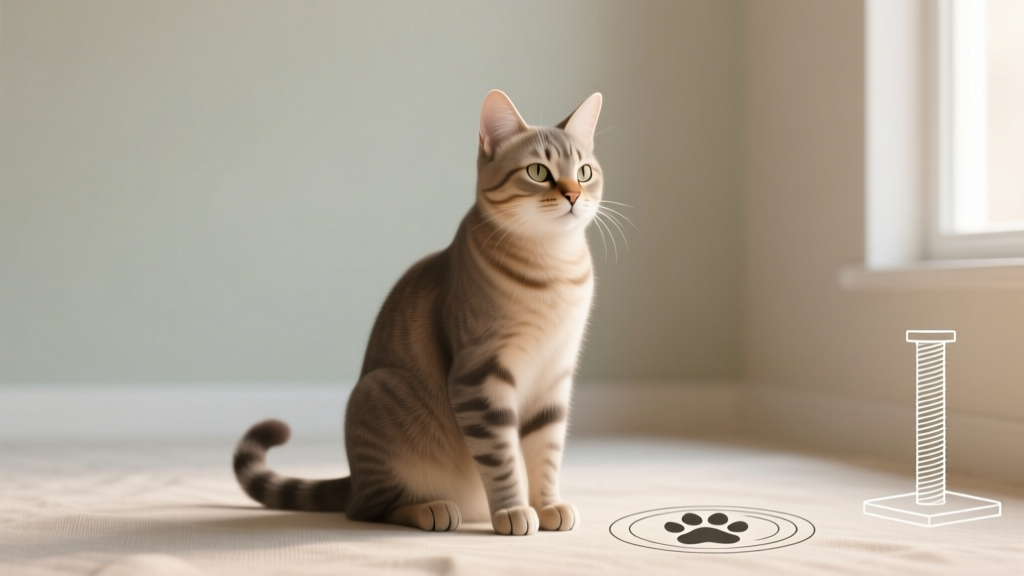
- Scratching vertical surfaces (not scratch posts): Not defiance—it’s scent-marking via interdigital glands and stretching tight shoulder muscles. If your cat ignores store-bought posts, it’s likely due to texture, height, or placement (must be >30 inches tall and near sleeping areas).
- Bringing toys to food bowls: An instinctive “pantry caching” behavior. Indoor cats lack safe storage spaces, so they deposit valued items where they feel safest—near resources. Don’t punish this; instead, provide designated “treasure zones” with shallow baskets.
- Drinking from faucets or toilets: Reflects evolutionary preference for moving water (reducing bacterial risk). Install a ceramic fountain with adjustable flow—studies show 78% of cats increase hydration by 40% when given flowing water options.
- Attacking ankles during walks: Not aggression—it’s under-stimulated predatory sequence completion. Redirect with wand toys *before* you leave the room, not after the chase begins.
Dr. Tony Buffington, Professor Emeritus of Veterinary Clinical Sciences at Ohio State, emphasizes: “Cats don’t have ‘bad behavior’—they have unmet needs. Every indoor cat requires daily ‘predatory play’ sessions lasting 15 minutes, mimicking the hunt-stalk-pounce-kill-eat cycle. Skipping this is like denying a human their daily walk.”
4. Social & Affection Behaviors: Reading Between the Licks and Bites
Indoor cats form complex, layered relationships—with humans and other pets. Their affection displays are precise, contextual, and easily misinterpreted:
- Gentle biting during petting (“love bites”): A sensory overload signal—not rejection. Most cats tolerate only 2–5 seconds of continuous stroking before overstimulation. Watch for tail-tip flicking or skin rippling—stop *before* the bite.
- Head-butting (bunting) furniture or your laptop: Scent-mapping territory with facial pheromones (F3). It’s calming for them—but also a subtle claim: “This space belongs to us.”
- Following you into bathrooms: Not curiosity—it’s proximity-seeking during vulnerable moments (a deeply rooted social bonding behavior). They’re reinforcing attachment.
- Bringing dead insects to your bed: A teaching behavior. Your cat perceives you as inept at hunting and is attempting to instruct you—a sign of profound investment in your survival.
A landmark 2023 study in Applied Animal Behaviour Science followed 92 indoor-only households for 12 months. Cats whose owners responded appropriately to early overstimulation cues (e.g., stopping petting at first tail flick) showed 67% fewer episodes of aggressive reactivity and 52% higher owner-reported relationship satisfaction.
| Behavior Observed | Most Likely Meaning (Indoor Context) | Vet-Recommended Response | Red Flag Timeline |
|---|---|---|---|
| Kneading with claws extended on blankets | Self-soothing + scent marking (via paw pads); traces back to kitten nursing | Provide soft, textured fabrics; avoid trimming claws—this is natural stress relief | If suddenly stops after years of doing it: consult vet for joint pain or anxiety |
| Excessive licking of one body area (e.g., inner thigh) | Stress-induced displacement behavior—not allergies (unless accompanied by hair loss or redness) | Introduce daily interactive play + add Feliway diffuser; rule out UTI with urinalysis | Within 72 hours: vet visit required if skin breaks or lesions appear |
| Staring intently at empty corners or walls | Visual processing of high-frequency movement (e.g., dust motes, shadows) or mild cognitive dysfunction in seniors | Enrich with laser-pointer-free games (feather wands only); add vertical perches near windows | If accompanied by disorientation, yowling at night, or litter box accidents: urgent neuro workup needed |
| Urinating outside the box on cool surfaces (tile, bathtub) | Thermoregulatory behavior (cool surface = comfort) OR territorial marking in multi-cat homes | Rule out UTI first; then add 2+ boxes in quiet, cool locations; use uncovered, large-litter boxes | Any occurrence warrants vet check—100% of inappropriate urination has medical or behavioral roots |
Frequently Asked Questions
Why does my indoor cat suddenly attack me for no reason?
There’s always a reason—and it’s rarely “no reason.” Most “unprovoked” attacks stem from redirected aggression (e.g., seeing an outdoor cat through the window), overstimulation during petting, or pain masking as irritability. Track timing: Does it happen after you sit down? During TV commercials? Near windows? Use a behavior log for 3 days. If attacks occur consistently during specific activities, modify the trigger—not the cat.
Is it normal for my indoor cat to ignore me for hours?
Yes—and it’s healthy. Cats are facultative socializers, meaning they choose interaction on their terms. Ignoring you for stretches signals security (they don’t need constant reassurance), not rejection. What matters is whether they initiate contact voluntarily (e.g., rubbing against your leg, sitting nearby). Forced interaction increases stress. Respect autonomy; build trust through predictability—not persistence.
My cat knocks things off shelves constantly. Is this destructive or playful?
It’s both—and deeply purposeful. Knocking objects fulfills predatory drive (stalking-moving-target), tests object properties (is it alive?), and seeks your attention (a guaranteed reaction). Instead of punishment, redirect: Place noisy, lightweight toys on shelves *intentionally*, rotate them weekly, and reward calm observation with treats. Never use spray bottles—this erodes trust and teaches fear, not learning.
How do I know if my cat’s behavior change is medical vs. behavioral?
Rule out medical causes first—always. Sudden changes in litter box habits, appetite, vocalization, grooming, or sociability warrant immediate vet evaluation. Bloodwork, urinalysis, and orthopedic exams catch 80% of underlying issues (e.g., arthritis causing reluctance to jump, hyperthyroidism causing restlessness). Only after medical clearance should behavioral modification begin.
Can indoor cats get depressed?
Not clinically “depressed” like humans—but they absolutely experience chronic stress, apathy, and learned helplessness. Signs include excessive sleeping (>20 hrs/day), loss of interest in food/toys, withdrawal from family, and diminished play. Environmental enrichment (vertical space, novel scents, puzzle feeders) reverses this in 70% of cases within 2 weeks. If no improvement, consult a board-certified veterinary behaviorist.
Common Myths About Indoor Cat Behavior
Myth 1: “Cats don’t need companionship—they’re solitary animals.”
Reality: While cats aren’t pack animals, feral colonies demonstrate complex social structures. Indoor cats form strong, selective bonds—with humans and other pets. Loneliness manifests as over-grooming, vocalization, or destructive behavior. Single-cat households require *more* intentional human interaction—not less.
Myth 2: “If my cat isn’t scratching furniture, they’re fine.”
Reality: Lack of scratching doesn’t indicate contentment—it may mean suppressed natural instincts. Unscratched claws grow too long, causing painful ingrown nails. Provide multiple textures (sisal, cardboard, wood) at varying heights. Scratching is non-negotiable for physical and mental health.
Related Topics (Internal Link Suggestions)
- Indoor Cat Enrichment Ideas — suggested anchor text: "12 vet-approved indoor cat enrichment ideas that reduce stress"
- Best Scratching Posts for Indoor Cats — suggested anchor text: "top 5 scratching posts for indoor cats (tested by behaviorists)"
- Signs of Stress in Cats — suggested anchor text: "11 subtle signs your indoor cat is stressed (and what to do)"
- How to Introduce a New Cat to an Indoor Household — suggested anchor text: "step-by-step guide to introducing cats indoors safely"
- Feline Cognitive Dysfunction Syndrome — suggested anchor text: "is my senior cat showing signs of dementia?"
Your Next Step Starts With One Observation
You don’t need to decode every blink, tail twitch, or chirp overnight. Start tonight: Set a 5-minute timer and simply watch your cat—no touching, no talking, no judgment. Note one behavior you’ve never questioned before. Then ask: “What need might this fulfill?” That tiny act of mindful observation builds the foundation for deeper connection, fewer misunderstandings, and a calmer, healthier home. Download our free Indoor Cat Behavior Tracker (PDF) to log patterns and spot trends—because understanding what cat behaviors mean for indoor cats isn’t about perfection. It’s about presence.