What Cat Behaviors Guide
Why Decoding Your Cat’s Language Isn’t Optional—It’s Lifesaving
If you’ve ever wondered, what cat behaviors guide should I trust when my cat hides after visitors arrive, kneads my lap while purring, or suddenly starts spraying near the window—it’s not just curiosity. It’s the foundation of your cat’s emotional safety, physical health, and your shared bond. Misinterpreting even one subtle cue—like mistaking slow blinking for disinterest instead of deep trust—can lead to missed stress signals, delayed medical intervention, or unintentional reinforcement of anxiety. In fact, a 2023 Cornell Feline Health Center study found that 68% of cats surrendered to shelters exhibited early behavioral signs of distress that owners misread as 'just being aloof' or 'acting out.' This guide isn’t about memorizing textbook definitions. It’s your field manual for reading your cat like a fluent speaker—not a translator relying on guesswork.
Decoding the Body: Posture, Eyes, Tail, and Ears—What Each Tells You
Your cat communicates more through micro-movements than meows. A single tail flick can mean irritation; a gently swaying tip? Contentment. But context is everything—and many owners miss the nuance because they’re looking at isolated parts instead of the full-body sentence.
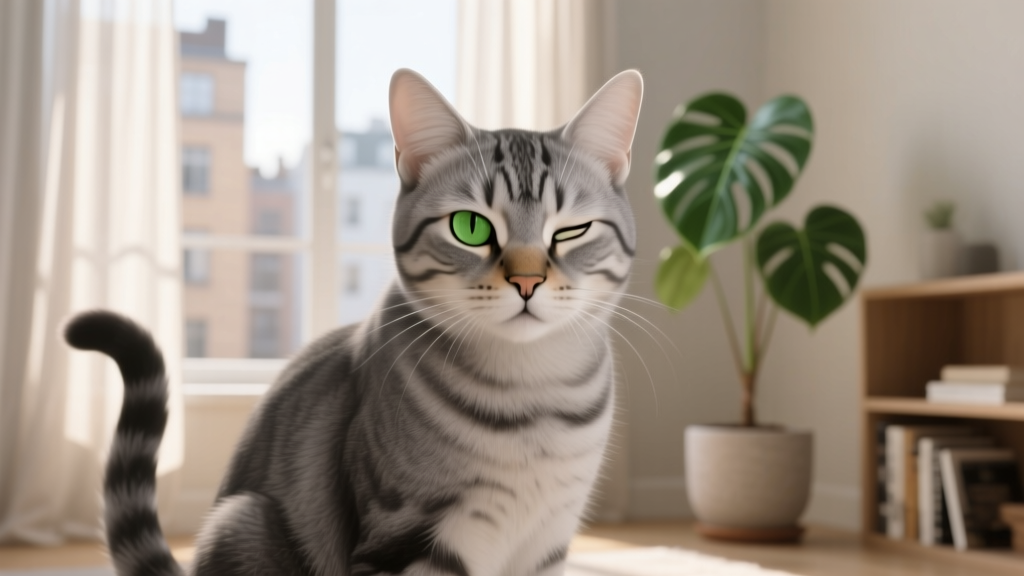
Take ear position: Forward ears signal alert curiosity—but if paired with dilated pupils and flattened shoulders, it’s likely low-level fear. Conversely, ears slightly back *with* half-closed eyes and relaxed whiskers? That’s the ‘bliss blink’—a sign of profound comfort. Dr. Sarah Wooten, DVM and certified feline behavior consultant, emphasizes: 'Cats rarely communicate with one signal alone. Always assess posture, facial expression, tail carriage, and environment together—like reading punctuation in a sentence.'
Here’s how to interpret combinations in real time:
- Slow blink + head butt + relaxed tail curl: Deep bonding behavior—your cat is marking you with scent glands while signaling non-threat. Return the slow blink to reinforce trust.
- Pinned ears + puffed tail + sideways stance: Defensive escalation. Do NOT approach. Give space, remove triggers (e.g., another pet, loud noise), and observe for retreat or freezing—early signs of shutdown.
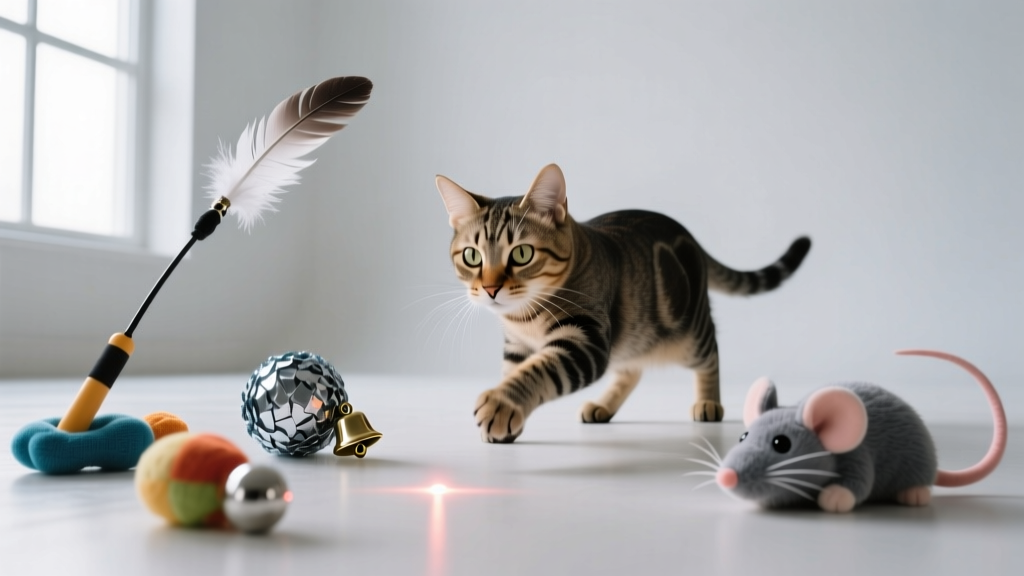
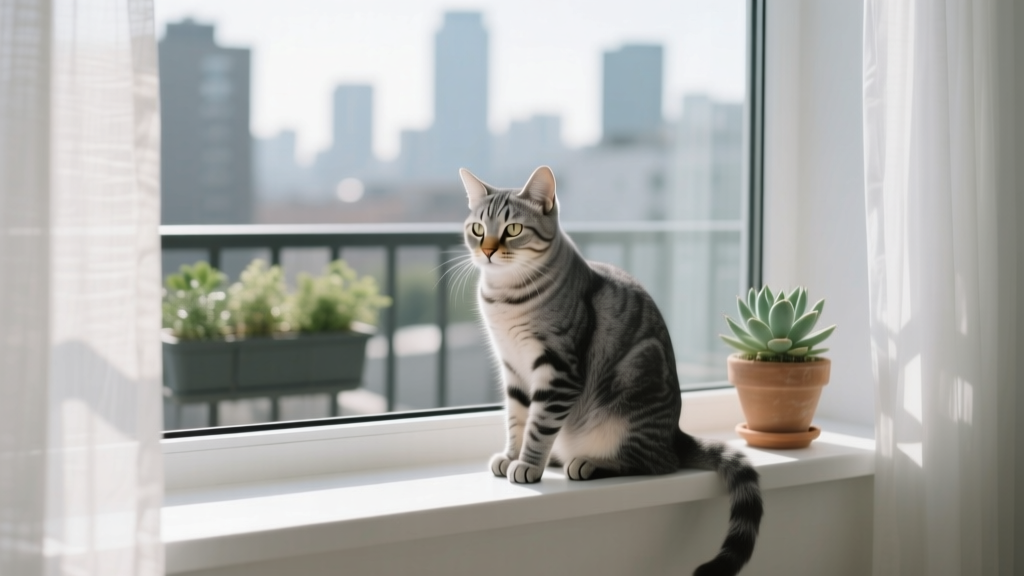
- Low crouch + wide eyes + rapid tail thump: Hunting focus or frustrated anticipation (e.g., watching birds through glass). Redirect with interactive play *before* frustration peaks into redirected aggression.
A common mistake? Assuming flattened ears always mean aggression. In kittens, ears flattening during play is normal—but in adult cats with history of trauma, it may indicate hypervigilance. Keep a private behavior journal for 5–7 days: note time, location, trigger, full body posture, and your response. Patterns emerge fast—and often reveal environmental stressors you hadn’t considered (e.g., HVAC vents blowing directly on resting spots).
Vocalizations Beyond the Meow: What Each Sound Really Means (And When It’s a Red Flag)
Cats evolved to be quiet hunters—so vocalization is largely learned behavior directed *at humans*. That means every chirp, trill, yowl, or growl is intentional communication. Yet most owners default to ‘happy’ or ‘angry’ labels, missing critical layers.
Consider this: A high-pitched, short ‘mew’ at breakfast time is a request. But the same sound—drawn-out, lower in pitch, repeated 4+ times—is often a sign of pain or cognitive decline in senior cats. A 2022 study published in Frontiers in Veterinary Science analyzed over 2,300 vocal samples from 127 cats and found that frequency modulation (how pitch rises/falls) and syllable duration were stronger predictors of distress than volume alone.
Here’s your practical vocal decoder:
- Trill or chirrup: Friendly greeting or invitation (often used by moms guiding kittens—so your cat may be ‘guiding’ you to food or a door).
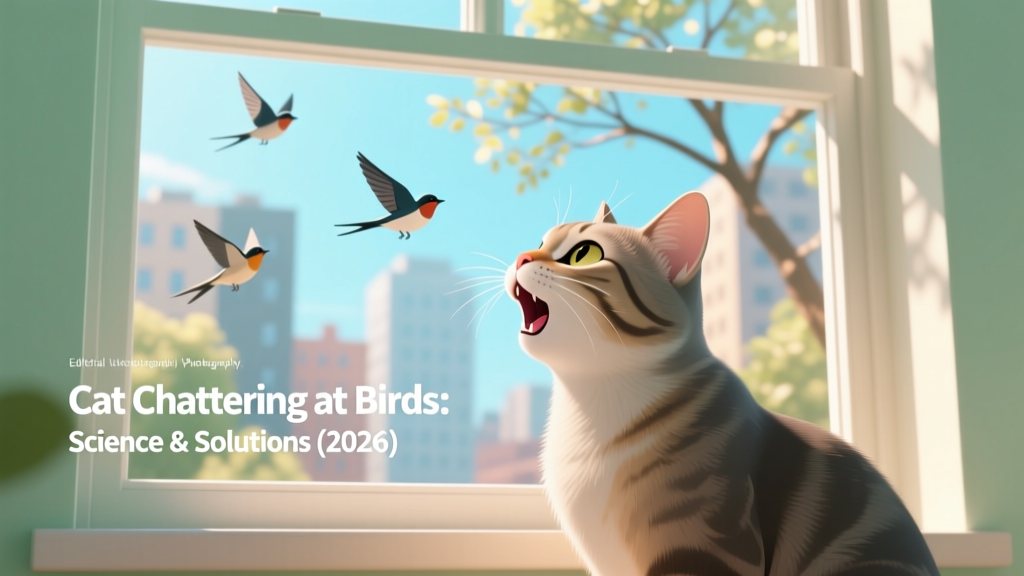
- Chatter (rapid teeth-clicking): Frustration mixed with predatory arousal—common at windows. Not anxiety, but unfulfilled instinct. Provide puzzle feeders or laser + treat combos to satisfy the chase-reward loop.
- Yowl (long, mournful, repetitive): Urgent signal. Could indicate pain (dental, arthritis), hyperthyroidism, or feline cognitive dysfunction (especially in cats >12 years). Record audio and share with your vet—even if no other symptoms appear.
- Hissing/growling: Clear boundary marker. Never punish. Instead, identify the trigger (e.g., forced handling, unfamiliar person) and use counter-conditioning: pair presence of trigger with high-value treats *at a distance where cat remains calm*.
Case study: Luna, a 9-year-old Siamese, began yowling nightly. Owner assumed attention-seeking—until video revealed her pacing and staring at the wall. Bloodwork uncovered early kidney disease. Her yowls weren’t demands—they were discomfort signals masked as ‘vocal personality.’
Routine & Environment Cues: When Litter Box Habits, Sleep, and Grooming Tell the Real Story
Behavioral shifts in daily routines are often the first—and most reliable—indicators of physical or psychological change. Unlike dogs, cats mask illness masterfully. So when your cat stops using the litter box *consistently*, sleeps 3+ hours more per day, or grooms obsessively (or stops grooming entirely), it’s rarely ‘just a phase.’
Let’s break down three high-signal routines:
- Litter box changes: Urinating outside the box is the #1 reason cats are relinquished. But it’s rarely ‘spite.’ According to the American Association of Feline Practitioners (AAFP), 80% of cases stem from medical issues (UTIs, arthritis making box entry painful) or environmental stressors (box location near washer/dryer, covered box trapping odors, insufficient boxes for multi-cat homes).
- Sleep pattern disruption: Adult cats sleep 12–16 hours/day—but quality matters. Restless sleeping, frequent waking, or hiding during usual active hours may signal pain, anxiety, or hyperthyroidism. Note: Senior cats naturally nap more, but sudden increase (>2 hours/day) warrants vet check.
- Grooming shifts: Over-grooming (bald patches, skin lesions) often indicates anxiety or allergies. Under-grooming (matted fur, greasy coat, odor) suggests pain (arthritis limiting reach), nausea, or depression. A 2021 UC Davis study linked chronic under-grooming in older cats to undiagnosed dental disease in 73% of cases.
Action step: Audit your home like a feline ergonomist. Is the litter box on a cold tile floor? Does your cat need to jump 18 inches to enter it? Is there a noisy appliance nearby? Small adjustments—adding a ramp, switching to unscented clumping litter, placing boxes on each floor—resolve 60% of routine-based issues without medication.
When ‘Normal’ Behavior Turns Problematic—And How to Respond Ethically
Some behaviors labeled ‘bad’—scratching, biting during petting, nighttime zoomies—are biologically essential. The issue isn’t the behavior itself, but mismatched expectations or unmet needs. Punishment (spraying water, yelling) damages trust and increases fear-based aggression.
Instead, use the ABC model (Antecedent-Behavior-Consequence) to ethically intervene:
- Antecedent: What happened right before? (e.g., guest enters → cat hides then hisses)
- Behavior: What did the cat do? (hiding, then hissing)
- Consequence: What followed? (guest leaves → cat associates guests = safety)
This reveals whether your response reinforces or worsens the behavior. In the guest example, if the guest leaves *because* the cat hissed, the cat learns hissing = effective boundary tool. Better consequence: Guest ignores cat, owner offers treats *from a distance*, gradually decreasing proximity over days.
For scratching: Provide vertical and horizontal surfaces (sisal rope, cardboard, wood) near sleeping areas and furniture. Apply double-sided tape or citrus spray *only* on off-limits zones—never as punishment. Reward use of appropriate posts with play, not just treats.
For petting-induced aggression: Learn your cat’s ‘tail twitch threshold’—the moment their tail tip begins rapid flicking. Stop *before* that point. Use hands-free toys (wand teasers) for longer interaction. Most cats tolerate only 3–5 seconds of sustained petting before overstimulation.
| Behavior Observed | Most Likely Meaning | Immediate Action | When to Contact Vet |
|---|---|---|---|
| Excessive licking of one area (e.g., belly) | Anxiety, allergy, or pain (e.g., abdominal discomfort) | Check for fleas, skin redness, or swelling. Remove potential irritants (new detergent, plants). Offer calming pheromone diffuser. | If bald patch >1 inch wide, raw skin, or persists >3 days despite environmental fixes |
| Staring at walls/empty corners + vocalizing | Feline cognitive dysfunction (FCD), hypertension, or seizure activity | Record video. Monitor appetite, litter box use, and night-time restlessness. Ensure easy access to food/water/litter. | Within 48 hours—especially if accompanied by disorientation, bumping into objects, or house-soiling |
| Sudden avoidance of favorite perch or window seat | Pain (arthritis, injury), vision/hearing loss, or perceived threat (e.g., outdoor cat visible outside) | Check perch stability, add ramps or steps. Observe for limping or reluctance to jump. Block window view temporarily. | If avoidance lasts >2 days or cat shows stiffness, yelping, or reduced mobility |
| Bringing dead prey to your bed or shoes | Instinctual ‘gifting’—sign of deep trust and inclusion in family unit | Thank gently (no scolding), then dispose calmly. Provide daily interactive play to satisfy hunting drive. | Never urgent—unless paired with lethargy, weight loss, or refusal to eat |
Frequently Asked Questions
Why does my cat stare at me silently—and is it threatening?
No—silent staring is rarely aggression. Cats conserve energy and avoid direct eye contact with threats (that’s why prolonged stares *between cats* are confrontational). When your cat holds your gaze without blinking, it’s often curiosity or gentle attention. If they soften their eyes and slowly blink afterward? That’s a deliberate ‘I love you’ signal. Try returning the slow blink—you’ll often see them mirror it.
My cat kneads and sucks on my blanket—does this mean they’re stressed or immature?
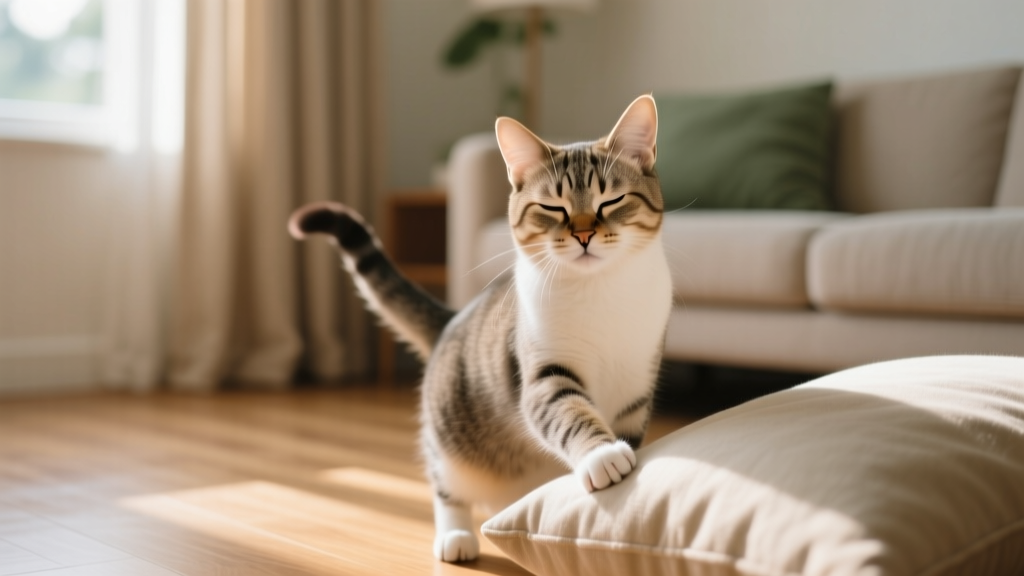
Kneading (‘making biscuits’) is a neonatal behavior tied to nursing and comfort. Sucking on fabric—especially soft, warm materials—often indicates security-seeking, not immaturity. Many cats who experienced early weaning or orphanhood retain this. As long as it’s not causing harm (e.g., ingesting fabric) or replacing meals, it’s a healthy self-soothing habit. If new in adulthood, consider recent stressors (move, new pet, schedule change).
Is it true that cats don’t feel love—or that they’re ‘just using us’?
No—this is a persistent myth rooted in outdated views of feline independence. Neuroimaging studies (2020, University of Tokyo) show cats experience oxytocin release during positive interactions with trusted humans—similar to dogs and infants. Their love is quieter, more selective, and expressed through vulnerability (sleeping exposed, bringing gifts, slow blinks), not exuberant greetings. They don’t ‘use’ us—they form complex, reciprocal social bonds.
How do I know if my cat’s ‘play aggression’ is normal—or a sign of deeper issues?
Play aggression (pouncing, biting, chasing) is normal in kittens and young adults—but should diminish by age 3–4 with consistent boundaries. Red flags: targeting ankles/face (not toys), escalating intensity, no ‘play bow’ or tail twitch before attack, or occurring only with specific people. Redirect consistently with wand toys *before* hands become targets. If biting breaks skin regularly or occurs without provocation, consult a veterinary behaviorist—underlying anxiety or incomplete socialization may need support.
Can I train my cat to stop certain behaviors—or are they ‘untrainable’?
Cats are highly trainable—using positive reinforcement (treats, praise, play)—but motivation differs from dogs. They won’t obey commands for approval alone; they need personal incentive. Success examples: Using clicker training to teach ‘touch,’ ‘come,’ or ‘enter carrier.’ Stopping counter-surfing by rewarding staying on a designated mat. Key: Identify your cat’s primary reinforcer (tuna, catnip, feather wand), keep sessions under 3 minutes, and never force compliance.
Common Myths About Cat Behavior—Debunked
Myth #1: “Cats are solitary animals who don’t need companionship.”
While cats are more independent than dogs, feral colonies and domestic multi-cat households prove they form complex social structures. Loneliness manifests as over-grooming, vocalization, or destructive behavior—especially in kittens and seniors. Single cats benefit immensely from environmental enrichment (windowsills, puzzle feeders, scheduled play) and human interaction.
Myth #2: “If my cat is eating and using the litter box, they must be fine.”
False. Cats hide illness until it’s advanced. A cat with early kidney disease, dental pain, or anxiety may maintain baseline routines while suffering significantly. Behavioral shifts—even subtle ones like avoiding stairs or sleeping in new locations—are often earlier indicators than appetite or litter box changes.
Related Topics (Internal Link Suggestions)
- Feline Body Language Cheat Sheet — suggested anchor text: "cat body language chart"
- How to Introduce a New Cat Without Stress — suggested anchor text: "introducing cats slowly"
- Best Calming Products for Anxious Cats — suggested anchor text: "natural cat anxiety relief"
- When to See a Veterinary Behaviorist — suggested anchor text: "cat behavior specialist near me"
- Understanding Cat Purring: Healing, Stress, or Something Else? — suggested anchor text: "why do cats purr"
Your Next Step: Build Your Personalized Behavior Log
You now hold a science-backed, compassionate framework for understanding what your cat is truly saying—not just what you hope they mean. But knowledge becomes power only when applied. Your immediate next step? Grab a notebook or open a Notes app and start a 7-Day Behavior Log. Each day, record: time, observed behavior, full context (who was present? sounds? smells?), your cat’s body language, and your response. Don’t judge—just observe. After one week, review patterns. Chances are, you’ll spot at least one recurring trigger or unmet need you can address this weekend. And if uncertainty lingers? Bookmark this page, share your log with your veterinarian at your next visit—or better yet, ask for a referral to a board-certified veterinary behaviorist (DACVB). Because every blink, tail flick, and chirp is an invitation—to listen deeper, respond wiser, and love more accurately.