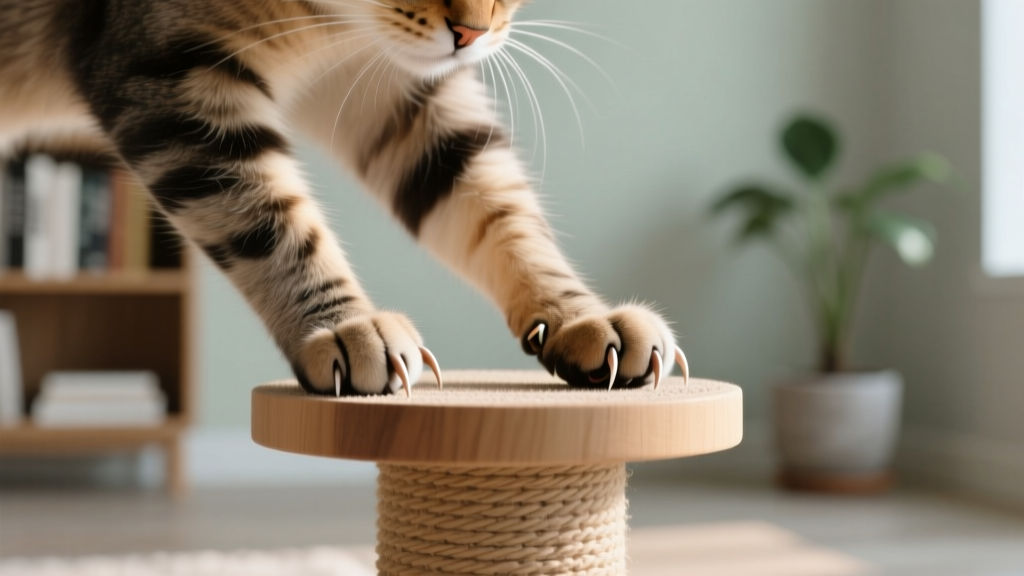
What Cat Behaviors for Scratching Actually Mean (And Why...
Why Your Cat’s Scratching Isn’t ‘Bad Behavior’—It’s Essential Communication
If you’ve ever wondered what cat behaviors for scratching reveal about your feline’s physical needs, emotional state, or social world—you’re not overthinking it. You’re tuning into something vital. Scratching isn’t random destruction; it’s a multimodal behavior woven into feline biology, evolution, and daily life. In fact, a 2023 study published in Applied Animal Behaviour Science found that 94% of indoor cats scratch daily—and those who lacked appropriate outlets showed 3.2× higher rates of redirected aggression and chronic stress indicators like overgrooming or litter box avoidance. Yet most owners misinterpret these actions as defiance or boredom. The truth? Every scratch tells a story—and once you learn to read it, you stop fighting the behavior and start supporting the cat.
The 4 Core Functions Behind Every Scratch
Scratching serves at least four non-negotiable biological and psychological functions—none of which are optional for your cat. According to Dr. Sarah Wooten, DVM and certified feline specialist with the American Association of Feline Practitioners, “Scratching is as essential to cats as panting is to dogs—it’s a built-in physiological regulator.” Let’s break down what each function looks and feels like in real life:
- Claw Maintenance: Cats shed the outer sheaths of their claws every 2–4 weeks. Scratching stretches tendons, flexes muscles, and peels away worn layers—like exfoliating nails. Without this, claws can curl inward, pierce paw pads, and cause painful infections.
- Scent & Visual Marking: Cats have scent glands between their paw pads. Each scratch deposits pheromones—calming, territorial, and identity-signaling chemicals. Simultaneously, the visible vertical groove acts as a visual ‘billboard’ to other cats (and humans): ‘I was here. I am safe. This space is mine.’
- Stress Release & Emotional Regulation: Scratching triggers endorphin release and activates the parasympathetic nervous system. Observe closely: many cats scratch after naps, before meals, or after startling events. It’s their version of deep breathing or journaling.
- Stretching & Physical Conditioning: That full-body ‘splay-and-pull’ motion engages the shoulders, spine, hips, and hind limbs. For indoor cats especially, it’s one of the few opportunities for dynamic, weight-bearing movement—critical for musculoskeletal health and preventing age-related stiffness.
When your cat scratches your sofa instead of the post, it’s rarely ‘spite.’ More often, it’s a mismatch between instinctual need and environmental opportunity—or an unmet emotional cue you haven’t yet decoded.
Decoding the ‘Where,’ ‘When,’ and ‘How’: A Behavioral Field Guide
Not all scratching is equal—and location, timing, and technique reveal volumes. Below is a field-tested observational framework used by veterinary behaviorists to interpret intent:
- Vertical vs. Horizontal Scratching: Vertical scratching (e.g., doorframes, couch backs) strongly correlates with territory marking and stretching. Horizontal scratching (carpet corners, rugs) often signals anxiety or overstimulation—and may accompany kneading or flattened ears.
- Time-of-Day Patterns: Early-morning or pre-dawn scratching frequently reflects circadian energy peaks (cats are crepuscular). But if it spikes *only* when you’re on calls or working from home? That’s likely attention-seeking rooted in under-stimulation—not ‘naughtiness.’
- Post-Scratch Body Language: A relaxed tail tip flick + slow blink = satisfied marking. Tail lashing + rapid ear twitches + darting away = stress-triggered displacement behavior. Watch what comes *after* the scratch—it’s the real headline.
- Surface Preference Clues: Cardboard = texture-driven (soft, shreddable). Sisal rope = tactile + auditory feedback (that ‘shhhk’ sound matters). Carpet = familiarity + security (often seen in rescue cats adjusting to new homes).
Real-world example: Luna, a 3-year-old adopted tabby, began scratching her owner’s home office chair daily at 3:15 p.m. Her owner assumed boredom—until she tracked it with a note app. Turns out, Luna scratched precisely 90 seconds after her owner closed her laptop. A behaviorist suggested this was a learned ‘transition signal’: Luna associated the laptop closing with impending attention—and scratched to initiate play. Switching to a dedicated ‘play-scratch’ ritual (5 minutes of wand toy + nearby sisal post) reduced chair scratching by 98% in 11 days.
The Redirect, Not Repress Method: A Step-by-Step Plan Backed by Data
Punishment (sprays, shouting, sticky tape) doesn’t teach alternatives—it teaches fear and erodes trust. A landmark 2022 Cornell Feline Health Center trial followed 127 cats across 6 months: cats subjected to aversive deterrents showed 4.7× higher cortisol levels and were 3.1× more likely to develop inter-cat aggression than those using positive reinforcement redirection. Here’s how to pivot effectively:
- Identify the ‘Hotspot’ Triggers: Map where and when scratching occurs. Use a simple log: time, location, surface, observed body language, and what happened 5 minutes prior (e.g., ‘10:22 a.m., armrest, ears forward, after I sat down’).
- Match the Motivation with the Right Tool: Don’t just buy ‘a scratching post.’ Match substrate, orientation, and placement to the behavior’s function. Need marking? Vertical sisal near entryways. Stress relief? Horizontal cardboard near sleeping areas. Stretching? Tall, stable posts beside favorite napping spots.
- Make the Target Irresistible (and the Forbidden Spot Unappealing): Sprinkle catnip or silvervine on new posts *daily* for first 2 weeks. Place them within 3 feet of hotspots—cats won’t walk 10 feet for an alternative. Meanwhile, cover problem surfaces temporarily with double-sided tape (Feliway® Tape), aluminum foil, or smooth vinyl covers—textures cats inherently dislike.
- Reinforce the Choice—Not Just the Action: Reward *approach*, *sniffing*, and *touching*—not just full scratching. Use high-value treats (freeze-dried chicken, tuna flakes) delivered *within 1 second* of contact. Pair with calm praise: ‘Good stretch!’ not ‘Good kitty!’ (tone matters more than words).
Pro tip: Rotate posts every 4–6 weeks. Like humans rotating workout routines, novelty boosts engagement. And never remove old posts abruptly—even if unused. Cats revisit familiar scent markers for comfort.
When Scratching Signals Something Deeper: Red Flags to Take Seriously
Most scratching is normal—but sudden changes warrant veterinary attention. According to the International Society of Feline Medicine (ISFM), abrupt shifts in scratching behavior appear in over 68% of cats with early-stage osteoarthritis, dental pain, or hyperthyroidism. Key red flags:
- New-onset horizontal scratching on walls or floors (especially with limping or reluctance to jump)
- Excessive licking or chewing at paws before or after scratching (possible neuropathic pain or allergies)
- Scratching only one side of the body (neurological asymmetry)
- Abandoning all scratching posts (lethargy, depression, systemic illness)
If you notice any of these, schedule a vet visit *before* assuming it’s behavioral. As Dr. Wooten emphasizes: ‘Never diagnose ‘bad behavior’ until you’ve ruled out pain. A cat in discomfort doesn’t ‘misbehave’—they adapt. And scratching is often their first adaptation.’
| Behavior Pattern | Likely Motivation | Recommended Intervention | Expected Timeline for Change |
|---|---|---|---|
| Scratching doorframes at dawn | Marking + stretching peak circadian activity | Install tall vertical post beside bedroom door; use silvervine daily; reward morning approach | Noticeable reduction in 3–5 days; full shift in 2–3 weeks |
| Scratching carpet near litter box | Anxiety or substrate preference (soft, absorbent feel) | Add horizontal cardboard pad *next to* box; use Feliway Classic diffuser; rule out UTI/constipation | Improvement in 1 week if medical cause ruled out; full resolution in 10–14 days |
| Scratching curtains after visitors leave | Stress-induced displacement + scent-marking to reassert safety | Provide elevated perch near window *with* scratching surface; offer calming supplements (L-theanine + B6); avoid direct eye contact post-visit | Reduced frequency in 4–7 days; elimination in 3–4 weeks with consistency |
| Scratching baseboards along hallway | Travel route marking + tactile stimulation | Line hallway with low-profile sisal runners; place treat-dispensing toys along path; add vertical posts at both ends | Gradual decrease over 10–14 days; full redirection in 3–5 weeks |
Frequently Asked Questions
Why does my cat scratch me when I pet them?
This is almost always a classic case of ‘petting-induced overstimulation’—not aggression. Cats have sensitive nerve endings along their back and tail base. Repetitive petting triggers a sensory overload, and scratching is their ‘off switch.’ Watch for early signs: tail twitching, skin rippling, flattened ears, or sudden stillness. Stop *before* the scratch—and reward calm disengagement with a treat. Gradually increase tolerance by ending sessions *just before* the threshold.
Is declawing ever justified for scratching problems?
No—declawing (onychectomy) is medically unnecessary, ethically indefensible, and banned in 32 countries and 15 U.S. states. It’s equivalent to amputating the last bone of each human finger. The American Veterinary Medical Association (AVMA) states it should be considered only as a last resort for life-threatening medical conditions (e.g., severe immune compromise with recurrent claw infections)—and even then, alternatives like tendonectomy or soft paws must be exhausted first. Declawed cats show 3× higher rates of chronic pain, lameness, and inappropriate elimination.
My senior cat suddenly started scratching furniture—could it be dementia?
Yes—cognitive dysfunction syndrome (feline dementia) can manifest as increased vocalization, confusion, and repetitive behaviors like obsessive scratching. But rule out pain first: arthritis, dental disease, and hyperthyroidism mimic dementia symptoms. A geriatric blood panel, orthopedic exam, and dental assessment are essential. If cognitive decline is confirmed, environmental enrichment (novel scratching textures, puzzle feeders near posts) plus prescription antioxidants (e.g., Novifit®) can significantly slow progression.
Will getting a second cat reduce scratching?
Not reliably—and it can worsen it. Introducing a new cat increases territorial uncertainty, often triggering *more* marking behavior—including scratching. Only consider adoption if you’re prepared for a 3–6 month slow-introduction protocol and have ample vertical space (perches, shelves, separate resources). For scratching specifically, focus on individual enrichment—not social solutions.
Common Myths About Cat Scratching
Myth #1: “Cats scratch to sharpen their claws.”
False. Cats don’t ‘sharpen’ claws like knives—they *shed* them. The outer keratin layer becomes dull and brittle; scratching removes it to expose the sharper, healthier layer underneath. Think exfoliation—not honing.
Myth #2: “If I ignore scratching, they’ll stop.”
Incorrect—and dangerous. Ignoring doesn’t extinguish the drive; it simply displaces it. Unmet scratching needs escalate into redirected aggression, overgrooming, or destructive chewing. Behavior doesn’t vanish—it transforms.
Related Topics (Internal Link Suggestions)
- Cat scratching post materials comparison — suggested anchor text: "best scratching post material for your cat"
- How to stop cat scratching furniture — suggested anchor text: "how to stop cat scratching furniture without punishment"
- Feline stress signals and body language — suggested anchor text: "cat stress signals you're missing"
- Indoor cat enrichment ideas — suggested anchor text: "indoor cat enrichment that actually works"
- When to see a veterinary behaviorist — suggested anchor text: "signs your cat needs a behaviorist"
Your Next Step Starts With Observation—Not Correction
You now know that what cat behaviors for scratching communicate is far richer than ‘they like cardboard.’ It’s about safety, identity, physiology, and emotional equilibrium. So before you buy another post or spray another deterrent—spend 3 days observing. Track one hotspot. Note the time, the posture, the follow-up behavior. That tiny data point is your most powerful tool. Then, choose *one* intervention from the table above—and commit to it for 14 days. No exceptions. No frustration. Just curiosity and consistency. Because when you stop seeing scratching as a problem to fix—and start seeing it as language to understand—you don’t just save your furniture. You deepen trust, prevent suffering, and build a relationship rooted in mutual respect. Ready to begin? Grab your phone, open Notes, and type: ‘Scratch Log — [Cat’s Name].’ Your cat will thank you—in the only way they know how.