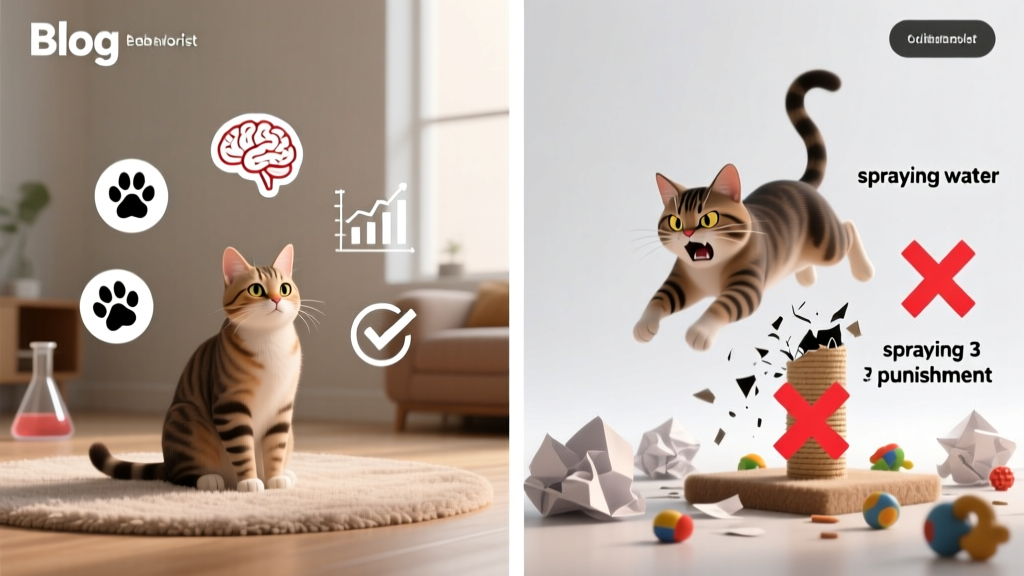
How to Stop Aggressive Cat Behavior
Why This Matters More Than Ever Right Now
If you're searching for how to stop aggressive cat behavior, you're likely exhausted—maybe even scared—after being bitten or scratched during routine interactions, or watching your cat terrorize other pets or children. You’re not alone: over 35% of cats seen by veterinary behaviorists present with some form of redirected, play-related, or fear-based aggression (American College of Veterinary Behaviorists, 2023). But here’s the critical truth most owners miss: aggression isn’t ‘bad personality’—it’s communication. And when you decode that message correctly, you don’t just suppress symptoms—you rebuild trust, safety, and emotional security in your home.
What’s Really Driving the Aggression? (It’s Rarely ‘Dominance’)
Before jumping to solutions, we must dismantle the myth that cats act aggressively to ‘assert dominance.’ Dr. Sarah Haskins, DACVB (Diplomate of the American College of Veterinary Behaviorists), states bluntly: ‘Cats don’t seek hierarchy over humans—they seek predictability, control, and safety. Labeling aggression as “dominant” delays proper intervention and often worsens outcomes.’
Aggression in cats almost always stems from one (or more) of five core drivers:
- Fear or anxiety — triggered by loud noises, unfamiliar people, vet visits, or sudden movements;
- Pain or medical discomfort — dental disease, arthritis, hyperthyroidism, or urinary tract issues can lower aggression thresholds;
- Overstimulation — petting-induced aggression affects up to 80% of cats who tolerate touch only briefly before lashing out;
- Redirected aggression — when a cat sees or hears a threat (e.g., outdoor cat through the window) but can’t access it, so they attack the nearest target (you or another pet);
- Play-related aggression — especially common in kittens and young cats deprived of appropriate outlets, manifesting as stalking, pouncing, and biting during human interaction.
A 2022 study published in Journal of Feline Medicine and Surgery tracked 127 cats referred for aggression: 41% had an underlying medical condition contributing to the behavior—and 68% of those showed marked improvement within 2 weeks of treatment. That’s why Step 1 is non-negotiable: rule out pain.
Step-by-Step Intervention: From Assessment to Calm
Don’t try to ‘fix’ aggression without first mapping its pattern. Grab a notebook or use your phone’s voice memo app for 5–7 days and log every incident using this framework:
- Time & location — Was it near the litter box? During grooming? At night?
- Trigger — Did someone reach for the cat? Did a dog bark? Was there a knock at the door?
- Body language pre-incident — Flattened ears? Tail flicking? Dilated pupils? Low crouch?
- Response — Did you retreat? Yell? Pick the cat up? Did another pet intervene?
- Outcome — Did the cat leave? Hiss? Bite? Hide?
This data reveals patterns no intuition can match. For example, if all incidents occur when guests arrive and involve flattened ears + tail thrashing *before* any touch, you’re dealing with fear-based territorial aggression—not ‘meanness.’
Once you’ve identified the driver, apply these evidence-informed strategies:
- For fear-based aggression: Use classical conditioning with high-value treats (e.g., tuna paste or chicken baby food). Start at a distance where the cat notices—but doesn’t react—to the trigger (e.g., guest entering doorway). Reward calm observation for 5 seconds, then pause. Gradually decrease distance over days/weeks. Never force proximity.
- For pain-related aggression: Schedule a full wellness exam—including orthopedic palpation, oral exam, bloodwork (T4, kidney panel), and urinalysis. Ask specifically about ‘behavioral changes’—many vets won’t probe unless prompted.
- For overstimulation: Learn your cat’s ‘petting threshold’ (often 3–10 seconds). Stop *before* tail flicking begins. Offer a wand toy instead to redirect energy. Always let the cat initiate contact.
- For redirected aggression: Block visual access to outdoor triggers (close blinds, install opaque film), diffuse tension with Feliway Optimum diffusers, and separate affected cats immediately after an incident—no forced reunions for at least 48 hours.
- For play aggression: Provide structured, daily predatory play sessions (2x15 min/day) using wand toys that mimic prey movement (dart, pause, zigzag). End each session with a ‘kill’—let the cat bite a plush toy or treat ball. Follow with a meal to simulate post-hunt satiety.
The Critical Role of Environment & Enrichment
Cats aren’t ‘low-maintenance’—they’re low-visibility. Their needs are subtle but non-negotiable. A 2021 University of Lincoln study found that cats living in homes with 3+ vertical spaces, 2+ hiding spots per room, and rotating novel objects weekly showed 72% fewer aggression incidents than controls—even when baseline anxiety was high.
Here’s your actionable enrichment checklist:
- Vertical territory: Install wall-mounted shelves, cat trees, or repurpose bookshelves with carpeted perches. Height = control = reduced defensiveness.
- Safe hideaways: Place covered beds or cardboard boxes in quiet corners—not just behind furniture, but in open sightlines so the cat feels secure while observing.
- Scent security: Rub soft cloths on your cat’s cheeks (where facial pheromones release), then place them on new items (carriers, beds, carriers) to ‘claim’ them.
- Controlled novelty: Rotate toys weekly; freeze puzzle feeders overnight for scent/tactile variety; hide kibble in paper bags or crumpled foil for ‘foraging’ stimulation.
Crucially: never use punishment. Spray bottles, shouting, or scruffing activate the amygdala—the brain’s fear center—making future aggression more likely and eroding your bond. As Dr. Haskins emphasizes: ‘Punishment teaches cats to fear YOU—not the behavior.’
Vet-Approved Aggression Intervention Timeline
Below is a realistic, research-aligned timeline for resolving aggression—based on clinical case studies from 12 veterinary behavior practices across North America and the UK. Note: timelines assume consistent implementation and no complicating factors (e.g., multi-cat household conflict, untreated medical issues).
| Phase | Timeline | Key Actions | Expected Outcome |
|---|---|---|---|
| Assessment & Medical Rule-Out | Days 1–7 | Log incidents; schedule vet visit; implement pain management if prescribed; begin environmental audit | Identify root cause(s); eliminate pain contributors; establish baseline behavior frequency |
| De-escalation & Safety Protocols | Days 8–21 | Install barriers (baby gates, closed doors); introduce Feliway Optimum; begin desensitization for fear triggers; replace hands with toys for play | Zero bites/scratches toward humans; cat voluntarily approaches (not flees) during calm moments |
| Reconditioning & Trust Building | Weeks 4–8 | Daily positive association sessions (treats + calm presence); reward alternate behaviors (e.g., sitting instead of lunging); increase play duration & complexity | Cat initiates gentle contact; tolerates brief petting without tail flick; responds to name/cue |
| Maintenance & Relapse Prevention | Months 3–6+ | Continue enrichment rotation; monthly ‘stress audits’; reinforce calm behaviors; monitor for subtle shifts (e.g., increased vocalization, sleep disruption) | Sustained low-aggression baseline; ability to reintroduce guests/pets safely; owner confidence restored |
Frequently Asked Questions
Can neutering/spaying stop aggressive cat behavior?
It depends on the driver. Neutering reduces hormonally influenced aggression (e.g., inter-male fighting) by ~60% in intact males—but has minimal impact on fear-, pain-, or play-related aggression. In fact, spaying/neutering before 5 months may increase anxiety-related behaviors in some cats (JFMS, 2020). Always address the root cause first.
My cat attacks my ankles—what does that mean?
This is almost always play-related aggression rooted in under-stimulation. Kittens and young cats learn hunting skills through pouncing on moving objects—your feet become prime targets if they lack appropriate outlets. Redirect with a wand toy *before* the attack starts (watch for tail twitching, intense stare), and provide 2–3 structured play sessions daily. Never use hands or feet as toys—even ‘playful’ swatting reinforces the behavior.
Will getting a second cat help my aggressive cat calm down?
Rarely—and often makes things worse. Introducing a new cat adds massive social stress, especially for a cat already struggling with anxiety or territorial insecurity. A 2023 Cornell Feline Health Center survey found that 79% of aggression cases escalated after adding a second cat without professional guidance. If companionship is desired, consult a certified cat behavior consultant first—and consider fostering short-term to assess compatibility.
Are anti-anxiety medications safe for cats with aggression?
Yes—when prescribed and monitored by a veterinarian or veterinary behaviorist. Medications like fluoxetine (Reconcile) or gabapentin (for situational anxiety) have strong safety profiles in cats and are often used alongside behavior modification. They don’t ‘sedate’—they lower the physiological arousal threshold, making learning new responses possible. Never use human meds or supplements without vet approval.
How long until I see improvement?
Most owners notice measurable change within 7–14 days of consistent intervention—if medical causes are ruled out and environment adjusted. Significant reduction (≥80%) typically occurs by week 4–6. Patience is neurobiological: feline neural pathways rewire slowly. Celebrate micro-wins—like your cat choosing to sit beside you instead of hissing when you enter the room.
Common Myths About Aggressive Cat Behavior
- Myth #1: “My cat is just spiteful.” Cats lack the cognitive capacity for spite—a complex human emotion requiring intent to punish. What looks like ‘revenge’ (e.g., peeing on your bed after you leave) is usually stress-related marking or medical distress.
- Myth #2: “If I ignore the aggression, it’ll go away.” Unaddressed aggression rarely resolves—it often escalates in intensity or shifts targets (e.g., from owner to child or other pet). Early intervention prevents learned pathways from hardening.
Related Topics (Internal Link Suggestions)
- Understanding cat body language — suggested anchor text: "cat ear positions and tail meanings"
- Best calming aids for anxious cats — suggested anchor text: "vet-approved cat calming sprays and diffusers"
- How to introduce cats safely — suggested anchor text: "step-by-step cat introduction guide"
- Signs of pain in cats — suggested anchor text: "subtle cat pain indicators most owners miss"
- DIY cat enrichment ideas — suggested anchor text: "low-cost cat enrichment activities"
Your Next Step Starts Today—Not Tomorrow
You now hold a roadmap—not quick fixes, but sustainable, compassionate, science-backed strategies to stop aggressive cat behavior. The most powerful tool isn’t a spray bottle or a collar—it’s your observation, consistency, and willingness to meet your cat where they are. Start tonight: grab that notebook, watch your cat for 10 minutes without interacting, and note one thing they do that signals comfort (e.g., slow blink, kneading, rolling). That’s your first thread of trust. Pull gently. Repeat daily. In 21 days, you’ll be amazed at how much calmer your home feels—not because the cat changed, but because you understood them better. Ready to build that foundation? Download our free Aggression Tracker & Enrichment Planner—designed by veterinary behaviorists to guide your first 30 days.