How to Study Cat Behavior Like a Veterinarian
Why Watching Your Cat Isn’t Enough — And How Vet-Level Observation Changes Everything
If you’ve ever wondered how to study cat behavior veterinarian-style — not just as a curious owner but with the precision and clinical insight of a trained professional — you’re not alone. Millions of cat guardians misinterpret subtle signs of anxiety, chronic pain, or cognitive decline every day, mistaking withdrawal for independence or aggression for 'bad temperament.' Yet research from the American Veterinary Medical Association (AVMA) shows that over 65% of cats seen for 'behavioral problems' actually have underlying medical conditions — from dental disease to hyperthyroidism — that only become visible through systematic, vet-validated observation techniques. This isn’t about memorizing tail flicks; it’s about building a repeatable, evidence-informed lens to see your cat clearly — and act before stress becomes illness.
The Veterinarian’s Behavioral Assessment Framework: Beyond the 'Cute' and 'Grumpy'
Veterinarians don’t rely on intuition when evaluating feline behavior — they use a structured, multi-domain framework developed through decades of ethological research and clinical practice. Dr. Sarah Wooten, DVM and certified veterinary behaviorist with over 15 years in feline practice, explains: 'We assess behavior across four pillars: context, consistency, consequence, and correlation. If a cat hides after litter box use, is it fear? Pain? A substrate aversion? We map each action to environment, timing, physical condition, and history — never in isolation.'
Here’s how to adopt that same rigor:
- Context Mapping: Record not just what your cat did, but where, when, who was present, what happened immediately before/after, and what the cat was doing physically (e.g., ears flattened, pupils dilated, whiskers forward). Use a simple digital log or printable tracker — consistency matters more than perfection.
- Baseline Establishment: Spend 3–5 days observing your cat during low-stimulus periods (early morning, late evening) to document 'normal' resting postures, blink rate, grooming frequency, and vocalization patterns. A healthy cat blinks slowly 8–12 times per minute; fewer than 4 may indicate chronic stress (per 2022 Cornell Feline Health Center study).
- Consequence Analysis: Ask: 'What does this behavior achieve for my cat?' Scratching furniture isn’t 'destruction' — it’s scent-marking, claw maintenance, and stress release. Chasing shadows may signal early visual impairment or compulsive disorder — especially if it escalates or occurs in dim light only.
Decoding the Silent Language: What Veterinarians See (And You Can Learn)
Cats communicate almost entirely nonverbally — and veterinarians are trained to read micro-expressions most owners miss. Consider this real case from Dr. Lena Chen’s clinic in Portland: A 9-year-old domestic shorthair was brought in for 'sudden aggression toward children.' Initial video review revealed the cat consistently licked its left forelimb before growling — a classic displacement behavior masking orthopedic pain. X-rays confirmed advanced elbow arthritis. Without that behavioral cue, the cat would have been labeled 'unpredictable' instead of treated.
Key signals vets prioritize — and how to spot them:
- Ears: Rotated sideways = mild concern; pinned flat = acute fear or pain; one forward/one back = divided attention or low-grade anxiety.
- Tail: Slow, deliberate swish = focused attention (often pre-pounce); rapid, stiff flick = rising frustration; tucked tightly under body = profound fear or illness.
- Pupils: Fully dilated in normal light = sympathetic arousal (fear/pain); constricted in low light = possible vision loss or neurological issue.
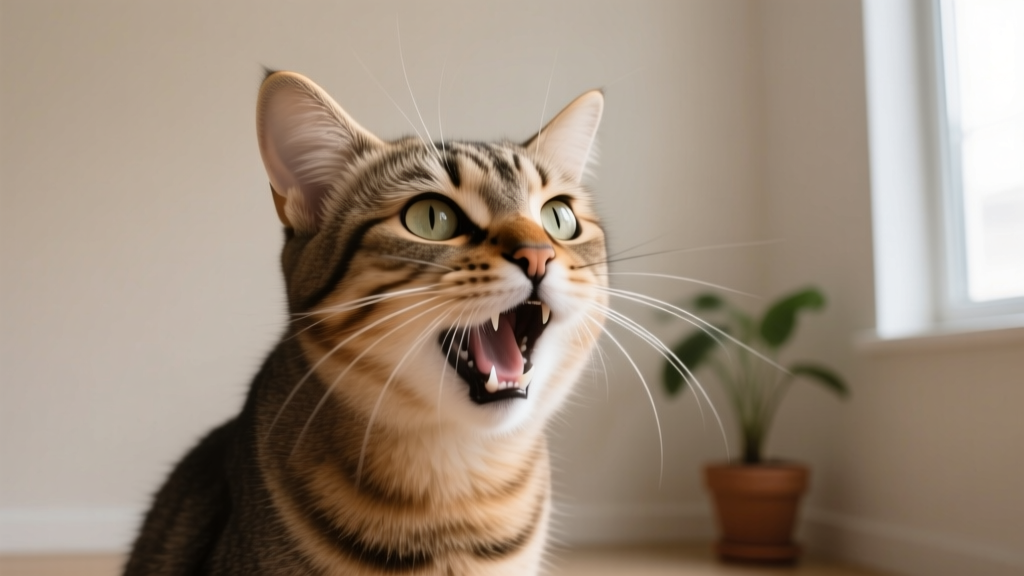
- Vocalizations: Increased yowling at night in senior cats correlates strongly with hypertension or cognitive dysfunction (per 2023 Journal of Feline Medicine & Surgery meta-analysis).
Crucially, vets cross-reference these signs. A cat with dilated pupils + flattened ears + low crouching posture signals acute distress — but add a limp and reluctance to jump? That points straight to musculoskeletal pain.
Building Your Home Observation Lab: Tools, Timing, and Trusted Protocols
You don’t need a stethoscope or sedation — just intentionality and structure. Veterinarians use standardized tools like the Feline Temperament Profile (FTP) and the Cat Stress Score (CSS), both validated in peer-reviewed studies. Adapted versions are accessible to owners:
- Feline Interaction Checklist: Rate your cat’s response to 5 stimuli (gentle chin scratch, offering treats, opening cabinet door, brief visitor presence, new toy) on a 1–5 scale (1 = avoids, 5 = initiates contact). Track weekly — shifts >2 points warrant veterinary consultation.
- Litter Box Audit: Monitor daily: number of visits, time spent inside, posture (straining? circling?), consistency of waste, and location (outside box = potential UTI, arthritis, or aversion). Vets consider any change lasting >48 hours clinically significant.
- Environmental Enrichment Tracker: Cats thrive on predictability and choice. Log daily access to vertical space, hiding spots, prey-like toys, and safe outdoor views. A 2021 study in Applied Animal Behaviour Science found cats with ≥3 enrichment categories showed 47% lower cortisol levels than those with ≤1.
Pro tip: Record 60-second video clips of 'neutral' behaviors (eating, sleeping, stretching) weekly. Compare month-to-month — subtle gait changes or reduced stretch range often precede lameness diagnoses by weeks.
When to Call the Vet — And What to Say (So You’re Taken Seriously)
Many owners delay seeking help because they assume 'cats hide illness' — true — but veterinarians need your observational data to cut through the camouflage. Don’t say 'He’s acting weird.' Instead, lead with objective, vet-style reporting:
"My 7-year-old neutered male has stopped using the top shelf he accessed daily for 3 years. He now jumps with a stiff hind-end lift and lands with front paws splayed. This started 5 days ago. He still eats well but grooms less on his right flank. I filmed three attempts — I can share the clips."
This gives the vet immediate clinical clues: possible lumbar spine pain, early osteoarthritis, or neurological involvement. Always include duration, progression speed, and any triggers or relievers.
Red-flag behaviors requiring urgent evaluation (within 24–48 hours): sudden vocalization changes in seniors, complete litter box avoidance, unexplained weight loss >5% in 2 weeks, or persistent hiding >12 hours with no food/water intake. As Dr. Wooten emphasizes: 'Behavior is the first organ system to show disease — treat it like vital sign data.'
| Step | Action | Tools Needed | Expected Outcome |
|---|---|---|---|
| 1. Baseline Week | Observe and log 3x/day: posture, blink rate, grooming, vocalizations, interaction willingness | Free app (e.g., CatLog) or printed journal | Identify individual 'normal' — critical for spotting deviation |
| 2. Context Capture | Record video (30–60 sec) of 1 behavior episode + 30 sec before/after | Smartphone + note of time/location/people present | Reveals antecedents/consequences invisible in real-time |
| 3. Environmental Scan | Map all resources: litter boxes (number = cats +1), food/water stations, vertical spaces, hiding spots | Sketch or photo of home layout | Identifies resource competition or sensory overload triggers |
| 4. Pain Screen | Perform gentle palpation: spine, joints, abdomen; watch for flinching, freezing, or lip-licking | None — but stop if cat tenses or moves away | Detects localized discomfort missed in casual handling |
| 5. Vet Handoff | Share logs/videos + 3-sentence summary: 'What changed, when it started, what you've tried' | Printed summary or shared cloud folder | Reduces diagnostic time, increases treatment accuracy |
Frequently Asked Questions
Can I really learn vet-level observation without formal training?
Absolutely — and many veterinarians encourage it. The American College of Veterinary Behaviorists publishes free owner guides on reading feline body language, and Cornell’s Feline Health Center offers online modules covering baseline assessment, stress scoring, and pain recognition. What matters isn’t certification, but consistency and objectivity. Think of it like learning CPR: you won’t perform surgery, but you’ll recognize emergencies faster and respond more effectively.
My cat hates the carrier — how do I observe behavior during vet visits?
That’s precisely why home observation is so valuable. Over 80% of cats experience 'white coat stress' that masks true behavior. Instead, record videos of natural interactions (feeding, play, resting) and bring those to appointments. Many progressive clinics now offer 'fear-free' consults where you stay with your cat throughout — and some even conduct virtual follow-ups using your footage. Pro tip: Leave the carrier out year-round with blankets and treats inside — desensitization reduces stress by up to 70% (per 2020 AVMA Fear-Free Certification data).
Is there a difference between studying behavior for health vs. training purposes?
Yes — and confusing them causes harm. Training focuses on modifying responses to commands or cues (e.g., 'come when called'). Studying behavior veterinarian-style focuses on understanding function: Why does my cat avoid the bedroom? Is it pain from jumping down stairs? Anxiety from a noisy HVAC vent? A territorial dispute with another pet? Medical behavior assessment seeks root cause, not compliance. Punishment-based 'training' for 'problem behaviors' often worsens underlying medical or emotional distress — which is why vets emphasize diagnosis before intervention.
How long does it take to see meaningful patterns?
Most owners detect actionable insights within 7–10 days of consistent logging — especially around litter box habits, sleep cycles, and interaction thresholds. For subtle shifts (e.g., early arthritis or cognitive changes), 4–6 weeks provides statistically reliable trends. Remember: You’re not looking for 'perfect data.' One clear video of your cat struggling to enter the litter box tells more than 20 vague notes saying 'seems stiff.'
Are certain breeds 'easier' to read behaviorally?
No — but socialization history matters far more than breed. A well-socialized Siamese may vocalize freely about discomfort, while a poorly socialized domestic shorthair may withdraw silently. Research shows individual life experience (kittenhood handling, past trauma, shelter history) predicts behavioral expressiveness more reliably than genetics. Focus on your cat’s personal history, not breed stereotypes.
Common Myths About Cat Behavior — Debunked by Veterinary Science
- Myth #1: 'Cats are aloof and don’t form deep bonds.' — False. fMRI studies at Kyoto University show cats exhibit attachment behaviors identical to dogs and human infants — seeking proximity, showing distress on separation, and using owners as 'secure bases.' Their independence reflects evolutionary adaptation, not emotional detachment.
- Myth #2: 'If my cat is eating and sleeping normally, they must be fine.' — Dangerous oversimplification. Cats mask pain and illness relentlessly. A 2022 study in Veterinary Record found 42% of cats diagnosed with severe dental disease showed no reduction in appetite or activity — yet exhibited elevated stress biomarkers and altered sleep architecture detectable via owner observation.
Related Topics (Internal Link Suggestions)
- Understanding Cat Body Language — suggested anchor text: "cat body language guide"
- Signs of Pain in Cats — suggested anchor text: "hidden signs of cat pain"
- Feline Cognitive Dysfunction Syndrome — suggested anchor text: "cat dementia symptoms"
- Creating a Stress-Free Home for Cats — suggested anchor text: "cat-friendly home checklist"
- When to See a Veterinary Behaviorist — suggested anchor text: "certified cat behaviorist near me"
Your Next Step Starts Today — Not 'Someday'
You already possess the most important tool: your attentive presence. How to study cat behavior veterinarian-style isn’t about becoming an expert overnight — it’s about shifting from passive observer to active collaborator in your cat’s lifelong wellness. Start tonight: Set a 5-minute timer. Watch your cat breathe. Count slow blinks. Note ear position. Take one photo of their resting posture. That single, intentional act builds the observational muscle that prevents crises and deepens trust. Then, download our free Feline Behavior Baseline Tracker (PDF) — used by over 12,000 cat guardians — to begin your first week of structured, vet-informed observation. Because the best care doesn’t wait for symptoms. It begins with seeing — truly seeing — the cat in front of you.