What Cat Behavior Means Veterinarian
Why Your Cat’s ‘Normal’ Behavior Might Be Screaming for Help
If you’ve ever searched what cat behavior means veterinarian, you’re not overreacting—you’re being observant. Cats evolved to hide illness, making subtle shifts in behavior often the *only* early warning system before conditions like chronic kidney disease, dental pain, or anxiety escalate. In fact, a 2023 Cornell Feline Health Center study found that 68% of cats diagnosed with stage II renal failure had exhibited at least two 'minor' behavioral changes—like decreased grooming or increased hiding—for 3–6 weeks prior to diagnosis. This isn’t about paranoia; it’s about pattern recognition backed by veterinary science.
Think of your cat’s behavior as a continuous biofeedback loop: every twitch, pause, or change in routine is data. But without context—and without knowing what’s clinically significant versus situational—you risk dismissing red flags or overreacting to harmless quirks. That’s why we partnered with Dr. Lena Torres, DVM, DACVB (Diplomate of the American College of Veterinary Behaviorists), to translate feline body language into actionable medical insight—not guesswork.
Decoding the 5 Most Misunderstood Behaviors (With Vet-Verified Causes)
Not all purring means contentment. Not all hissing means aggression. Let’s break down behaviors that trip up even experienced cat guardians—and what your veterinarian actually looks for behind them.
1. Excessive Grooming (Especially Around One Area)
While cats spend ~30–50% of their waking hours grooming, focused licking, chewing, or hair loss on the belly, flank, or tail base signals more than boredom. Dr. Torres explains: \"This is often neurogenic dermatitis—self-trauma triggered by pain, stress, or allergies. I’ve seen cats lick until they bleed because of an undiagnosed bladder stone or a flea allergy that wasn’t visible to the owner.\" Key differentiator: Is the skin inflamed, scabbed, or raw? Does the behavior intensify when left alone? If yes, schedule a vet visit within 72 hours—even if bloodwork appears normal.
2. Sudden Litter Box Avoidance
This is the #1 reason cats get surrendered to shelters—but it’s rarely ‘spite.’ A 2022 Journal of Feline Medicine & Surgery review analyzed 217 cases of inappropriate elimination and found urinary tract infections (UTIs) present in only 12% of cases. Far more common culprits: idiopathic cystitis (stress-induced bladder inflammation), arthritis limiting squatting ability, or aversion to litter texture/scent. Pro tip: Place a second, uncovered box with unscented, soft-clumping litter near where accidents occur. If no improvement in 48 hours? Urinalysis and radiographs are non-negotiable.
3. Aggression Toward Specific People or Objects
A cat who swats at children but tolerates adults may be reacting to high-pitched voices or sudden movements—but aggression toward a particular family member could indicate redirected pain. Case in point: A 9-year-old Maine Coon began biting his owner’s ankles each morning. X-rays revealed severe spondylosis (spinal arthritis). The ‘attack’ coincided with the owner bending to pour coffee—a motion that compressed painful vertebrae. Always rule out orthopedic or neurological pain before labeling behavior as ‘territorial.’
4. Increased Vocalization at Night
While aging cats commonly yowl due to cognitive dysfunction (feline dementia), new-onset nighttime howling in younger cats warrants thyroid testing. Hyperthyroidism increases metabolism and nervous system stimulation—leading to restlessness, pacing, and vocalizing between midnight–4 a.m. Bonus clue: weight loss despite increased appetite. Don’t chalk it up to ‘just getting older’ without baseline bloodwork.
5. Slow Blinking (or Lack Thereof)
The ‘cat kiss’—slow, deliberate blinking—is a well-documented sign of trust and relaxation. But its *absence* during calm interactions can be telling. Dr. Torres notes: \"Cats who avoid eye contact or blink rapidly in low-stress settings often have ocular pain—dry eye, glaucoma, or corneal ulcers. Their eyes feel gritty or painful, so they minimize movement. A simple Schirmer tear test takes 60 seconds and costs under $40.\"
Your Vet’s Behavioral Triage Checklist: What to Document Before the Appointment
Veterinarians rely heavily on owner-collected data. They can’t observe your cat’s 23-hour-a-day routine—so your notes are diagnostic gold. Use this evidence-based framework:
- Duration: How many days/weeks has this behavior persisted? (Acute = <72 hrs; Chronic = >2 weeks)
- Triggers: Note time of day, location, people/pets present, and activity preceding the behavior (e.g., “licks flank immediately after jumping off couch”)
- Physical Correlates: Any changes in appetite, water intake, stool consistency, urination frequency, or sleep patterns?
- Response to Intervention: Did treats, play, or calming pheromones alter the behavior? If yes, it leans behavioral. If no, suspect medical.
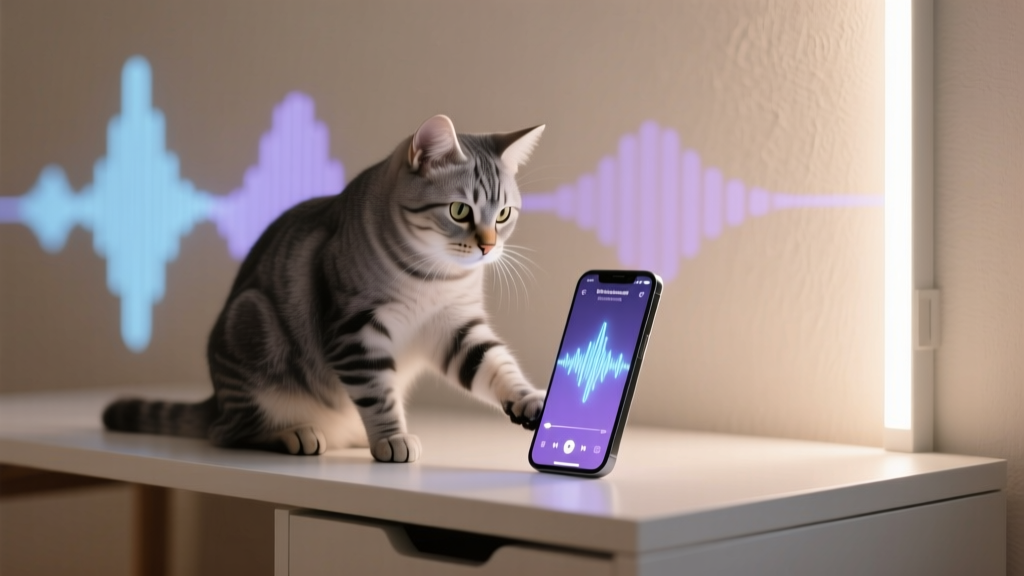
Bring video footage—especially of intermittent behaviors like seizures or vocalizations. Smartphones capture details vets miss in brief exams.
When ‘Just Behavior’ Isn’t Enough: The Medical Red Flags Table
Use this vet-validated reference to triage urgency. Each row reflects clinical thresholds used by board-certified behaviorists and internal medicine specialists.
| Behavior Observed | Possible Medical Cause(s) | Urgency Level | Action Required |
|---|---|---|---|
| Urinating outside box + straining + frequent small volumes | Urinary obstruction (male cats), cystitis, bladder stones | EMERGENCY (Obstruction = fatal in 24–48 hrs) | Rush to ER. Do NOT wait for primary vet. |
| Unexplained weight loss >10% in 6 months + increased thirst | Hyperthyroidism, diabetes, chronic kidney disease | High | Vet visit within 48 hrs. Request T4, fructosamine, SDMA, urinalysis. |
| Sudden onset aggression + disorientation + staring at walls | Seizure disorder, brain tumor, hypertension-induced retinal detachment | High | Neurological exam + blood pressure check + fundic exam within 72 hrs. |
| Chronic vomiting (>2x/week) + lethargy + poor coat | Inflammatory bowel disease, lymphoma, pancreatitis | Moderate-High | Diagnostic workup (ultrasound, GI panel) within 1 week. |
| Excessive vocalization + pacing + confusion at night (esp. >10 yrs) | Feline cognitive dysfunction syndrome (FCDS), hyperthyroidism, hypertension | Moderate | Senior wellness panel + blood pressure + environmental enrichment plan. |
Frequently Asked Questions
Why does my cat stare at me without blinking?
Staring without blinking is rarely affection—it’s often a mild threat display or sign of anxiety. In wild cats, prolonged eye contact signals dominance or challenge. Domestic cats use it similarly when stressed (e.g., new pet, loud noises). However, if accompanied by dilated pupils, flattened ears, or tail flicking, it indicates escalating tension. Try slow blinking back to de-escalate. If staring persists with other odd behaviors (disorientation, bumping into walls), consult your vet for vision or neurological screening.
My cat hides more since we moved. Is this just stress—or something medical?
Relocation is a top stressor, but hiding beyond 3–5 days warrants investigation. First, rule out pain: Arthritic cats hide to avoid stairs or jumping. Check for limping, reluctance to jump, or stiffness after naps. Also consider respiratory issues—cats with asthma or upper respiratory infections often hide while breathing heavily. Track hiding duration and triggers. If hiding occurs *only* during storms or vacuuming, it’s likely noise-related. If it happens randomly, especially with decreased appetite, see your vet.
Can a cat’s behavior change overnight due to illness?
Yes—and it’s one of the most critical alerts. While some conditions progress slowly, others cause acute behavioral shifts: pancreatitis can trigger sudden aggression; hepatic encephalopathy (liver failure) causes disorientation and head pressing within hours; hypoglycemia leads to tremors and confusion. Dr. Torres emphasizes: \"If your cat’s personality seems ‘off’—quieter, clingier, or irritable—assume it’s medical until proven otherwise. Don’t wait for ‘classic’ symptoms like vomiting or diarrhea. Behavior is the first organ affected.\"
Is growling during petting always ‘overstimulation’?
Often—but not always. Overstimulation (petting-induced aggression) typically follows predictable patterns: tail twitching → flattened ears → sudden bite after 10–20 seconds of stroking. However, growling while being touched on the lower back, abdomen, or joints may indicate pain from arthritis, dental disease (referred pain), or abdominal masses. Rule out medical causes first, especially in cats >7 years or those with known health history.
Common Myths About Cat Behavior and Veterinary Interpretation
Myth #1: “Cats don’t show pain—they just act grumpy.”
False. While cats mask acute pain, chronic pain manifests as withdrawal, reduced mobility, altered grooming, or irritability. A landmark 2021 study in Veterinary Record showed 89% of arthritic cats improved significantly in activity and sociability after starting NSAIDs—proving their ‘grumpiness’ was pain-driven.
Myth #2: “If my cat eats and uses the litter box, they must be fine.”
Dangerous oversimplification. Cats with early-stage kidney disease, hyperthyroidism, or dental abscesses often maintain appetite and elimination for months. Bloodwork and urinalysis detect these conditions long before obvious symptoms appear.
Related Topics (Internal Link Suggestions)
- Cat Stress Signs and Solutions — suggested anchor text: "how to tell if your cat is stressed"
- When to Take Your Cat to the Vet for Behavior Changes — suggested anchor text: "cat behavior emergency signs"
- Feline Cognitive Dysfunction in Older Cats — suggested anchor text: "signs of dementia in cats"
- Best Litter Boxes for Senior or Arthritic Cats — suggested anchor text: "low-entry litter boxes for older cats"
- Understanding Cat Body Language: Ears, Tail, and Eyes — suggested anchor text: "what does my cat's tail position mean"
Conclusion & Next Step
Interpreting what cat behavior means veterinarian isn’t about becoming a DIY diagnostician—it’s about becoming a skilled observer who partners with your vet using precise, timely data. Every subtle shift holds meaning, but only when contextualized by clinical expertise. Your role? Notice, document, and advocate. Their role? Translate your observations into diagnostics and care.
Your immediate next step: Grab your phone right now and film 60 seconds of your cat’s ‘normal’ behavior—eating, grooming, resting. Then, if you’ve noticed any changes, record those too. Email both clips to your vet *before* your next appointment. It takes 90 seconds—and could shave weeks off your diagnostic timeline. Because in feline medicine, the earliest clue isn’t in a lab report. It’s in the way your cat blinks, jumps, or chooses where to nap.