What Cat Behavior Means Versus What It Looks Like
Why Your Cat Isn’t ‘Just Being Moody’ — And Why Misreading Their Behavior Is Riskier Than You Think
If you’ve ever wondered what cat behavior means versus what it seems to show — like why your cat rubs against your leg but then swats when you pet them, or why they purr while trembling during a vet visit — you’re not overthinking. You’re confronting one of the most misunderstood communication systems in the animal kingdom. Cats evolved as solitary hunters with subtle, context-dependent signals — not dramatic displays like dogs. When we misinterpret those signals, we don’t just miss cues; we erode trust, escalate stress-related illnesses (like idiopathic cystitis), and unintentionally reinforce fear or aggression. In fact, a 2023 Cornell Feline Health Center study found that 68% of cats surrendered to shelters exhibited behaviors owners labeled ‘aggressive’ or ‘unfriendly’ — but were later diagnosed as chronic stress responses to misread social cues. This isn’t about ‘training’ your cat. It’s about fluency — learning their grammar of glances, postures, and pauses.
The Truth Behind the ‘Friendly’ Head-Butt (It’s Not Always Affection)
That soft head-bump against your shin? Most owners call it ‘love’. But ethologists classify it as allorubbing — scent-marking behavior used to establish shared territory and group identity. When your cat head-butts you, they’re not saying ‘I adore you’ — they’re saying ‘You’re part of my safe coalition.’ That distinction matters. If your cat only does this with you but avoids other family members, it doesn’t mean they dislike them — it may signal insecurity around those individuals or unresolved tension in the household hierarchy.
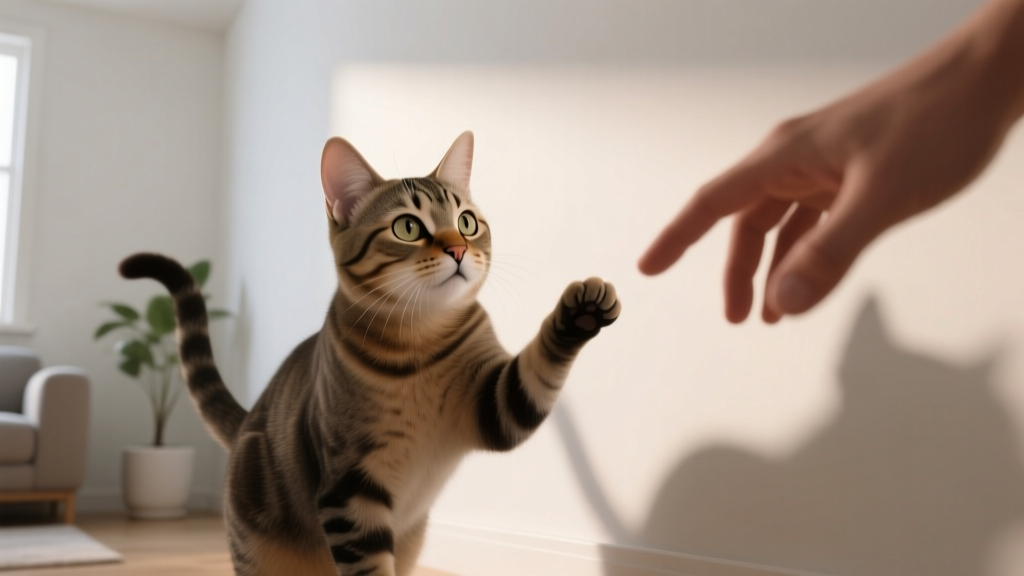
Here’s how to test it: Gently extend your hand palm-down (not finger-first) and let them approach. If they rub *and* hold eye contact with slow blinks afterward, that’s affection-plus-trust. If they rub once and immediately turn away or flatten ears when touched, it’s likely territorial marking — not an invitation for prolonged interaction.
Dr. Sarah Wooten, DVM and certified feline behavior consultant, explains: ‘Cats don’t have a “love circuit” activated by physical touch alone. Their bonding is built through mutual resource control — sharing space, food, and resting spots — not just proximity. A head-butt without reciprocal engagement tells you they’re claiming you, not connecting with you.’
When Purring Isn’t Peace — Decoding the Stress-Purr Paradox
Purring is the ultimate behavioral Trojan horse. While often associated with contentment, research published in Frontiers in Veterinary Science (2022) confirmed that cats purr at identical frequencies (25–150 Hz) during labor, injury recovery, and veterinary exams — all high-stress states. This frequency range stimulates bone density repair and reduces pain perception. So what cat behavior means versus what it sounds like hinges entirely on context: posture, respiration rate, pupil dilation, and environmental triggers.
Use the 3-Point Purr Audit before assuming comfort:
- Eyes: Are pupils dilated (stress) or relaxed/normal (calm)? Note: Low light distorts this — check in consistent lighting.
- Tail: Is it wrapped tightly around body or legs (self-soothing) or held high and still (confidence)? A low, twitching tail tip amid purring suggests agitation.
- Respiration: Count breaths per minute. Resting cats breathe 20–30 times/min. Over 40? Purring is likely self-medication.
Case in point: Luna, a 4-year-old rescue, purred constantly during her first month home — until her owner filmed her sleeping. Review revealed rapid breathing and tucked hind legs. A vet visit uncovered undiagnosed dental pain. Once treated, her purring became intermittent and occurred only during lap-sitting with slow blinks. Context transformed everything.
‘Playful’ Swatting vs. Fear-Based Lashing — Why ‘Kittenish’ Isn’t Always Cute
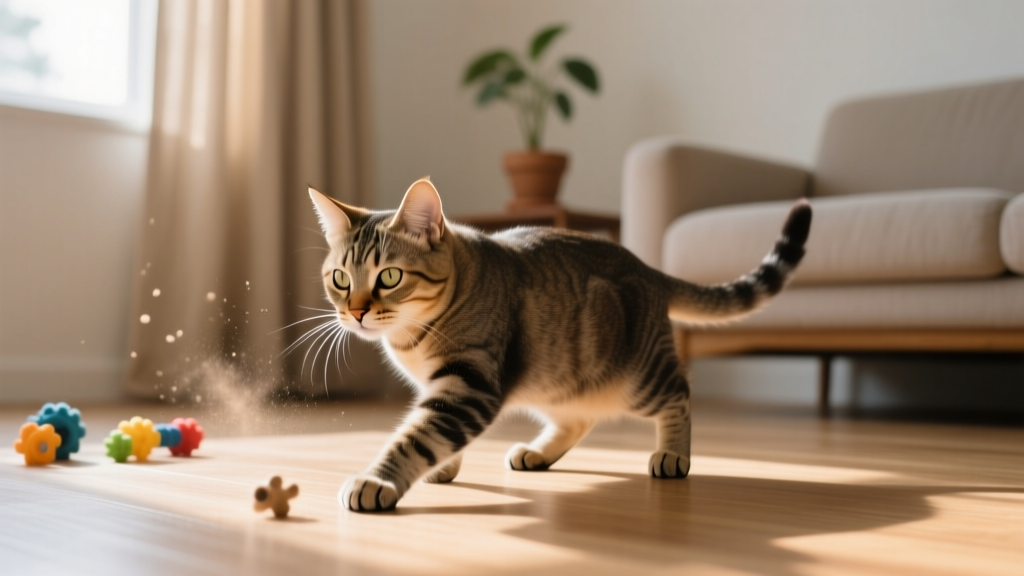
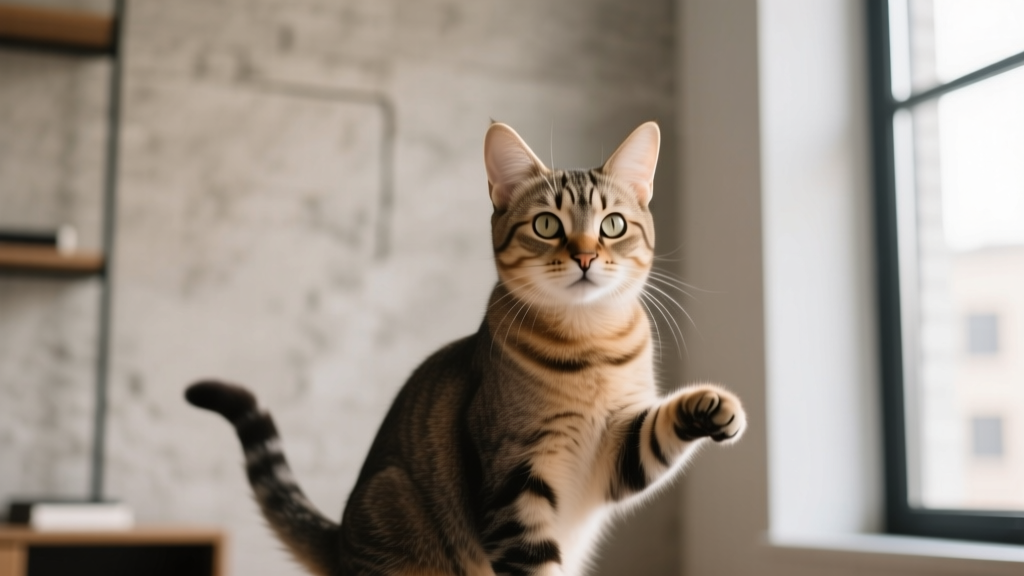
That ‘playful’ bat at your ankle? It might be predatory rehearsal — or a last-ditch warning. The difference lies in body language sequencing, not speed or force. Playful swatting follows a predictable pattern: crouched stance → intense stare → rear-end wiggle → quick, open-pawed tap with retracted claws. Fear-based lashing is chaotic: flattened ears *before* movement, sideways posture, hissing mid-strike, and immediate retreat or freeze.
A critical red flag: If your cat swats *after* being petted beyond their tolerance threshold (often at the base of the tail), it’s rarely ‘play’. It’s a clear ‘stop’ signal — and punishing or ignoring it teaches them that humans don’t respect boundaries, escalating to biting or avoidance.
Behaviorist Dr. Mikel Delgado, PhD (UC Davis), emphasizes: ‘Cats don’t “get over” boundary violations. They recalibrate their risk assessment. Each ignored “stop signal” lowers their threshold for future defensive behavior — sometimes permanently.’
To rebuild safety, use the 5-Second Rule: Pet for max 5 seconds, pause, watch for invitation (head-press, forward ear tilt). If none, stop. Repeat only if they initiate contact again. This trains mutual consent — not obedience.
The Slow Blink Lie — Why ‘Cat Kisses’ Aren’t Always Invitations
Slow blinking is widely touted as a ‘cat kiss’ — a sign of love. While true in some contexts, it’s equally common as a de-escalation tactic used when a cat feels trapped or observed too intently. In multi-cat homes, slow blinks often occur *between* cats during tense standoffs — not as affection, but as a ‘I’m not threatening you’ gesture.
So what cat behavior means versus what it looks like here depends on directionality and reciprocity. A slow blink *you initiate* and they return? High-confidence bonding. A slow blink *they do while staring at you from across the room, then immediately look away*? Likely stress displacement — especially if paired with tail-tip flicks or whisker flattening.
Try this experiment: Sit quietly 6 feet away. Soften your gaze (don’t stare). Blink slowly 3 times. Pause 5 seconds. If they blink back *within 10 seconds*, it’s engagement. If they yawn, stretch, or leave — they’re politely declining interaction. Respect it. That’s where real trust begins.
| Behavior | What It Appears To Mean | What It Actually Means (Context-Dependent) | Key Diagnostic Clues | Action Step |
|---|---|---|---|---|
| Tail held high & quivering | “Excited happiness” | Intense marking behavior (urine spraying prep) OR extreme arousal (can precede aggression) | Is cat near door/window? Any urine odor? Is tail base stiff or fluid? | Block visual access to triggers; offer vertical space + pheromone diffuser (Feliway Optimum) |
| Rolling onto back | “I trust you — pet my belly!” | Mostly a vulnerable posture for thermoregulation or stretching; belly exposure = defense-ready position | Are legs relaxed or tense? Are claws sheathed? Is gaze direct or averted? | Only pet if they initiate contact *with paws up*. Otherwise, scratch chin/cheeks instead. |
| Chattering at windows | “Frustrated hunting instinct” | Neurological response to prey sight — jaw muscles activate to grip, but frustration elevates cortisol | Does chattering happen *only* at birds/squirrels? Is cat panting or drooling? | Redirect with wand toy *before* chattering starts; avoid punishment — it increases anxiety. |
| Bringing dead prey home | “Gift-giving / pride” | Instinctual teaching behavior (if kittens present) OR attempt to move ‘unsafe’ item from territory | Is cat mothering? Does she drop prey then ignore it? Does she guard it? | Thank gently, remove calmly. Provide daily interactive play to satisfy hunt-catch-kill sequence. |
| Excessive licking/grooming | “Meticulous self-care” | Often displacement behavior for anxiety OR early sign of dermatological issue (allergies, pain) | Is fur thinning? Is licking focused on one spot? Does it happen during quiet hours? | Record timing/duration. Vet consult if >20 mins/day or skin lesions appear. |
Frequently Asked Questions
Why does my cat stare at me silently — is it judging me?
Not judging — assessing. Silent staring is a low-level threat display *unless* paired with slow blinks. If your cat holds eye contact without blinking for >3 seconds, they’re monitoring your intentions. To diffuse: softly blink, look away, then offer a treat. This signals non-threat without demanding interaction.
My cat kneads blankets but not me — does that mean they don’t love me?
No — kneading is a neonatal behavior linked to nursing comfort, not selective affection. Many cats knead objects because blankets mimic the texture and warmth of a mother’s belly. If they knead *you*, it’s a bonus. If not, they may associate your lap with unpredictability (phone use, sudden movements) or prefer firmer surfaces. Try placing a soft blanket on your lap first.
When my cat hides after guests leave, is it trauma or just shyness?
It’s likely acute stress response — not trauma. Cats process social events physiologically: elevated cortisol peaks 2–4 hours post-stimulus. Hiding for <24 hours is normal recovery. If hiding lasts >48 hours, involves refusal to eat/drink, or includes vocalizing, consult a vet to rule out pain or illness. Pro tip: Offer a covered carrier with treats *before* guests arrive — it becomes a safe zone, not a panic shelter.
Do cats understand their names — or just the tone I use?
Yes — they recognize their names as distinct auditory stimuli. A landmark 2019 study in Scientific Reports confirmed cats distinguish their name from similar-sounding words, even when spoken by strangers. But they choose whether to respond based on motivation — not comprehension. Pair name + positive outcomes (treats, play) consistently to strengthen association.
Why does my cat bite me gently during petting — is it affection or aggression?
It’s almost always a ‘petting-induced aggression’ signal — not affection. Gentle bites are a precise, calibrated ‘off switch’ indicating overstimulation, often at the tail base or flank. It’s their version of saying ‘I’ve reached capacity.’ Stop *immediately* when you feel the first nip. Never punish — instead, end sessions *before* the bite occurs, using treats to create positive associations with ending.
Common Myths About Cat Behavior
Myth #1: “Cats are aloof because they’re independent.”
Reality: Cats are facultatively social — they form deep, selective bonds but prioritize safety over constant interaction. Their ‘aloofness’ is often misread vigilance. In secure environments, bonded cats seek proximity, follow owners room-to-room, and greet with chirps — behaviors suppressed in unpredictable settings.
Myth #2: “If a cat sleeps on you, they trust you completely.”
Reality: While sleeping on you *can* indicate trust, it’s more commonly thermoregulation (human bodies are ~2°F warmer than room temp) or scent absorption (your smell masks theirs, reducing perceived vulnerability). True trust is shown through relaxed wakefulness near you — not just unconscious proximity.
Related Topics (Internal Link Suggestions)
- Cat Body Language Dictionary — suggested anchor text: "complete cat body language guide"
- How to Tell If Your Cat Is Stressed — suggested anchor text: "signs of cat anxiety you're missing"
- Why Cats Bite During Petting — suggested anchor text: "petting-induced aggression explained"
- Slow Blink Training for Cats — suggested anchor text: "how to build trust with slow blinks"
- Cat Communication With Humans — suggested anchor text: "how cats talk to people"
Conclusion & Your Next Step
Understanding what cat behavior means versus what it superficially resembles isn’t about memorizing a dictionary — it’s about cultivating observational patience and contextual curiosity. Every flick of a tail, every shift in ear angle, every pause before a pounce carries layered meaning shaped by genetics, history, and immediate environment. The goal isn’t perfection; it’s reduction of guesswork. Start today with one behavior: pick *one* signal your cat uses frequently (e.g., tail position when greeting you), observe it for 3 days with notes on time, location, and your own actions — then compare patterns. You’ll spot nuances no article can teach you. Ready to go deeper? Download our free Behavior Decoder Journal — a printable tracker with expert prompts and vet-reviewed interpretation keys. Because when you speak their language, the bond transforms from coexistence to conversation.