What Is Typical Cat Behavior for Kittens? 7 Surprising Signs Your Kitten Is Perfectly Normal (And 3 That Mean It’s Time to Call the Vet)
Why Understanding What Is Typical Cat Behavior for Kittens Changes Everything
If you’ve just brought home a fluffy, wide-eyed ball of energy — or are considering adopting one — you’ve likely found yourself Googling what is typical cat behavior for kittens at 2 a.m. after being pounced on for the seventh time that night. You’re not overreacting. You’re observing. And that curiosity is the first, most vital step toward raising a confident, well-adjusted adult cat. Kittens aren’t miniature adults — they’re neurologically wired explorers, social learners, and sensory sponges undergoing rapid brain development between weeks 2 and 16. Misreading their signals can lead to unintentional punishment of natural instincts, stunted socialization, or even lifelong anxiety. But when you know what’s biologically and developmentally normal — and what’s a red flag — you shift from reactive panic to proactive, empathetic caregiving.
Stage-by-Stage: The 4 Critical Developmental Windows (and What ‘Typical’ Looks Like in Each)
Kittens don’t mature linearly — they progress in overlapping, biologically timed windows. According to Dr. Mikel Delgado, certified cat behavior consultant and researcher at UC Davis, “Kittens have sensitive periods where their brains are primed to learn specific things — like how to trust humans, interpret body language, or regulate play intensity. Missing those windows doesn’t mean failure — but it makes remediation far harder.” Here’s what’s typical, broken down by age:
Weeks 2–4: The Sensory Awakening Phase
At birth, kittens are blind, deaf, and immobile — reliant entirely on scent and touch. By week 2, eyes open (often unevenly); by week 3, ears unfold and begin rotating. Typical behavior includes rooting for milk, kneading with paws, gentle suckling, and clinging to mom or littermates. They’ll vocalize softly — mews and chirps — mostly to signal distress or hunger. This is when they begin developing motor control: wobbling attempts at standing, tail flicks, and head-lifting during nursing. Red flag: No eye opening by day 14, no response to sound by day 21, or persistent lethargy despite feeding.
Weeks 4–7: The Socialization Sprint
This is the golden window — widely cited in the American Veterinary Society of Animal Behavior (AVSAB) guidelines — when kittens form lasting impressions of people, other animals, sounds, and environments. Typical behavior includes playful pouncing on tails, paws, and moving objects; approaching new people with curiosity (not fear); tolerating gentle handling of paws, ears, and mouth; and learning bite inhibition through littermate play. They’ll begin using a litter box consistently by week 5–6 if introduced gently. Key insight: A kitten who hisses or freezes *every time* a hand approaches at 5 weeks hasn’t had enough positive human interaction — not because they’re ‘mean,’ but because their socialization window is narrowing fast.
Weeks 8–12: The Confidence Catalyst
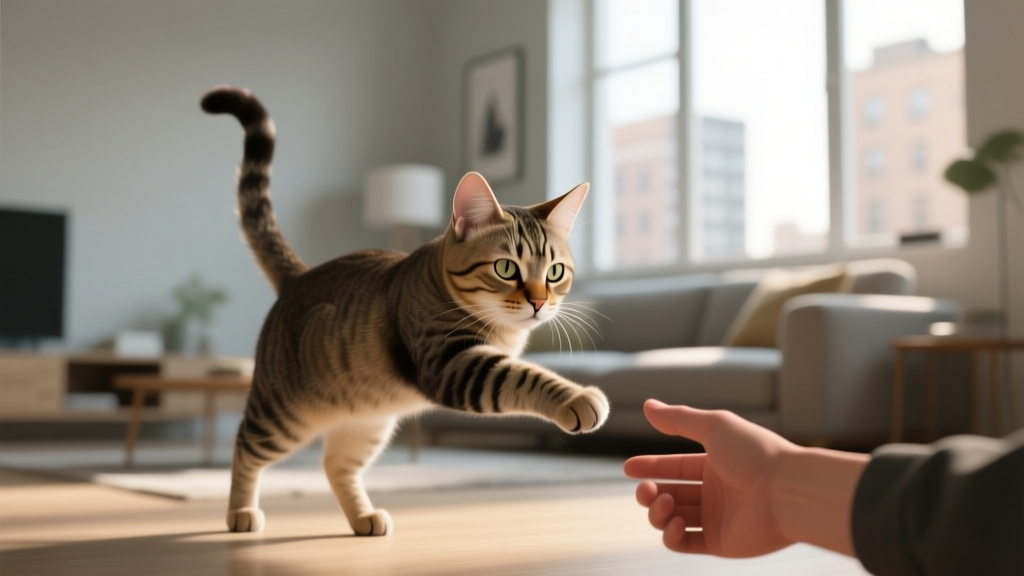
By 8 weeks, kittens are fully weaned, socially independent from mom (though still learning from her), and capable of complex play sequences. Typical behavior includes object play (batting toys under furniture, stalking crinkle balls), climbing vertical surfaces, exploring novel textures (carpet vs. tile vs. cardboard), and initiating interactive play with humans — often with ‘play bows’ (front legs stretched forward, rear end up). They’ll also begin establishing sleep-wake rhythms aligned more closely with yours — though expect bursts of nocturnal activity. Pro tip: If your kitten avoids all floor-level play by 10 weeks, prefers hiding over investigating, or never initiates contact, consult a feline behaviorist — this may indicate incomplete socialization or early stress imprinting.
Weeks 12–16: The Identity Formation Period
Now your kitten is refining personality traits: boldness vs. caution, sociability vs. independence, playfulness vs. observation. Typical behavior includes testing boundaries (e.g., jumping onto counters *after* being told ‘no’), increased vocal variety (chirps, trills, meows tailored to different needs), and selective affection — cuddling deeply with one person but remaining reserved with others. They’ll also begin marking territory with cheek-rubbing (not spraying) and may show mild possessiveness over favorite toys or sleeping spots. Note: This is when spay/neuter typically occurs — and while it doesn’t alter core personality, it *does* reduce hormonally driven behaviors like roaming or yowling by ~90% (per Cornell Feline Health Center).
The 5 Most Misunderstood ‘Weird’ Behaviors — And Why They’re Actually Brilliant Evolutionary Adaptations
What looks like chaos is often finely tuned survival programming. Let’s demystify five behaviors that trigger frantic Google searches — and why each is not only typical, but essential:
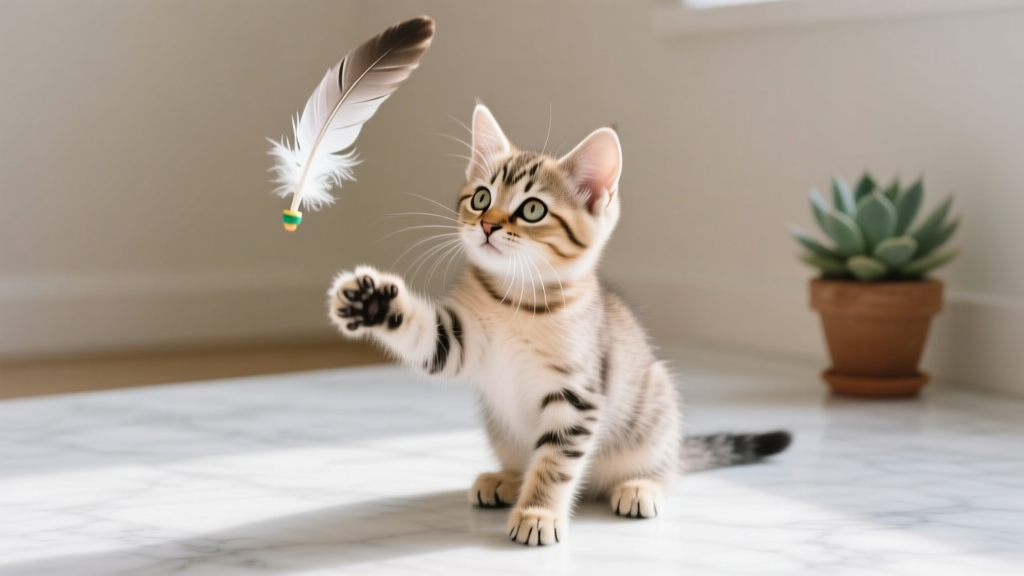
- The Midnight Zoomies: Those 3 a.m. dashes around the hallway aren’t ‘crazy’ — they’re rehearsing hunting sequences. In the wild, kittens practice short-burst chases to build neuromuscular coordination. Indoor kittens burn off pent-up energy when their circadian rhythm peaks — usually at dawn/dusk. Solution: Schedule two 15-minute interactive play sessions daily — one right before bedtime — using wand toys that mimic prey movement.
- Biting During Petting: This isn’t aggression — it’s overstimulation. Kittens (and adult cats) have a low threshold for tactile input on sensitive areas like the base of the tail or belly. Their ‘petting tolerance’ is measured in seconds, not minutes. A twitching tail, flattened ears, or sudden stillness precedes the bite — it’s a polite ‘I’m done’ signal you’ve missed. Solution: Watch for micro-expressions, limit petting to head/cheeks, and end sessions *before* they do.
- Bringing You ‘Gifts’ (Toys, Socks, Even Bugs): This is maternal instinct in action — even unspayed females bring ‘prey’ to their human ‘kittens.’ It’s a sign of deep bonding and trust. Dismissing or punishing it breaks that trust. Solution: Thank them warmly, then quietly swap the ‘gift’ for an appropriate toy — reinforcing the behavior *and* redirecting.
- Chewing on Cords or Plants: Teething peaks at 3–6 months, and oral exploration is how kittens gather environmental data. Biting satisfies gum discomfort *and* provides sensory feedback. Solution: Offer chilled chew toys (freeze damp washcloths), apply bitter apple spray to cords, and provide cat-safe greens (catnip, oat grass) for nibbling.
- Sucking on Blankets or Ears: Called ‘wool-sucking,’ this is a comforting displacement behavior — especially common in early-weaned or orphaned kittens. It’s linked to dopamine release, similar to thumb-sucking in toddlers. Unless it causes injury or obsession, it’s harmless. Solution: Provide soft, textured bedding and increase interactive play to reduce stress-based repetition.
When ‘Typical’ Crosses Into ‘Concerning’: A Veterinarian-Approved Red Flag Checklist
Not all deviations are emergencies — but some warrant prompt professional input. Below is a clinically validated decision framework used by shelter behavior teams and private feline practitioners. Use it alongside your observations — and always err on the side of consultation when in doubt.
| Behavior Observed | Age Threshold | Duration & Context | Action Recommended |
|---|---|---|---|
| No interest in play or exploration (lethargy) | Any age > 3 weeks | Persistent for >24 hours, not explained by recent vaccination or travel | Immediate vet visit — rule out infection, parasites, or congenital issues |
| Excessive vocalization (constant yowling/crying) | 8+ weeks | Occurs daily for >3 days, unrelated to feeding or attention-seeking | Full wellness exam + thyroid panel (hyperthyroidism can present young in rare cases) |
| Aggression toward hands/feet during play (no inhibition) | 12+ weeks | Escalating intensity, no redirection success after 2 weeks of consistent training | Consult certified feline behaviorist — may indicate fear-based or redirected aggression |
| Inappropriate elimination (outside litter box) | 10+ weeks | After consistent use for ≥2 weeks; no medical cause found | Environmental assessment + urine culture — stress cystitis is common in young cats |
| Obsessive grooming leading to bald patches or skin damage | 12+ weeks | Localized to one area, worsening over 5+ days | Vet dermatology consult — rule out allergies, parasites, or neurological triggers |
Frequently Asked Questions
Do kittens ‘outgrow’ biting and scratching during play?
Yes — but only with consistent, species-appropriate guidance. Kittens learn bite inhibition primarily through play with littermates: when they bite too hard, the sibling yelps and stops playing. Without that feedback, they rely on *you* to teach boundaries. Never use your hands as toys. Instead, redirect bites to appropriate chew toys, pause play immediately upon biting, and resume only when calm. Most kittens significantly reduce uninhibited play biting by 5–6 months — but reinforcement must start by week 8.
Is it normal for my kitten to hide for days after coming home?
It’s very common — especially in kittens under 12 weeks who’ve experienced separation from mom/littermates. Hiding is a self-protective strategy, not rejection. According to ASPCA shelter behavior protocols, kittens need a quiet, confined ‘safe room’ (with food, water, litter, and hiding spots) for 3–7 days before gradual exposure. Never force interaction. Sit quietly nearby reading, offer treats at a distance, and let them approach on their terms. Most emerge confidently within 48–72 hours — but some take up to 10 days. Patience is neurological nourishment.
Why does my kitten stare at walls or ‘chatter’ at windows?
This is predatory motor pattern activation — completely typical. Chattering (rapid jaw vibration) occurs when kittens see birds or squirrels they can’t reach. It’s thought to be a ‘rehearsal’ for the killing bite. Staring at blank walls or corners may reflect heightened auditory sensitivity (hearing high-frequency rodent squeaks or plumbing noises) or visual tracking of dust motes in sunbeams. As long as it’s brief and interspersed with normal activity, it’s benign. If staring lasts >5 minutes or is accompanied by disorientation, consult your vet.
Should I punish my kitten for scratching furniture?
No — punishment damages trust and rarely stops the behavior. Scratching is non-negotiable for claw maintenance, stretching muscles, and scent-marking. Instead, provide appealing alternatives: tall, stable scratching posts covered in sisal or cardboard, placed near sleeping areas and furniture they target. Entice with catnip or silvervine. Trim nails every 10–14 days. Use double-sided tape or citrus spray on off-limit surfaces. Positive reinforcement works — reward *using* the post with treats or play.
How much sleep is normal for a kitten?
Kittens sleep 18–22 hours per day — but in ultrashort cycles (15–30 minutes), punctuated by intense bursts of activity. This conserves energy for neural development and growth. Don’t mistake deep sleep for illness — check for steady breathing, warm ears, and responsive blinking. If your kitten sleeps >22 hours *and* shows no interest in food, play, or interaction when awake, seek veterinary evaluation.
Common Myths About What Is Typical Cat Behavior for Kittens
Myths persist because they sound plausible — but they risk causing real harm to kitten development and human-cat relationships.
- Myth #1: “Kittens will naturally ‘learn manners’ without guidance.” Truth: Without structured socialization and clear boundaries by 12 weeks, kittens often develop chronic anxiety, inappropriate play, or resource guarding. Their brains are literally pruning neural pathways — unused ones vanish. Unpracticed skills (like gentle handling) fade.
- Myth #2: “If a kitten is friendly, it’s fully socialized.” Truth: Friendliness toward *one person* doesn’t equal broad social competence. A kitten who adores you but hides from guests, men, or children hasn’t generalized trust — and may become fearful or defensive in new contexts later.
Related Topics (Internal Link Suggestions)
- Kitten socialization checklist — suggested anchor text: "free printable kitten socialization checklist"
- Best toys for kitten development — suggested anchor text: "toys that build kitten confidence and coordination"
- When to spay or neuter a kitten — suggested anchor text: "optimal spay/neuter timing for kittens"
- Signs of kitten stress and anxiety — suggested anchor text: "subtle signs your kitten feels unsafe"
- How to introduce a kitten to other pets — suggested anchor text: "safe, step-by-step kitten introduction guide"
Your Next Step: Observe, Document, and Celebrate the Tiny Milestones
Understanding what is typical cat behavior for kittens isn’t about creating a perfect pet — it’s about honoring their biology, respecting their pace, and meeting them where they are. Keep a simple journal: note when they first climb stairs, initiate play with you, use the litter box independently, or nap curled against your leg. These aren’t trivial moments — they’re evidence of secure attachment and healthy development. If something feels ‘off’ — trust your gut, then consult your veterinarian *or* a certified feline behaviorist (find one via the International Association of Animal Behavior Consultants). And remember: every kitten is an individual. Some will nap through thunderstorms; others will dive under the bed. Both are perfectly typical — as long as they’re eating, playing, growing, and connecting with you. Now go refill that water bowl, toss a feather wand, and watch — really watch — the extraordinary intelligence unfolding in those tiny paws.