How to Fix Cat Behavior the Right Way
Why "How to Fix Cat Behavior" Isn’t About Discipline—It’s About Decoding Your Cat
If you’ve ever typed how to fix cat behavior into a search bar at 3 a.m. after your feline shredded your favorite couch—or peed on your laundry pile—you’re not alone. But here’s the truth most pet owners miss: cats don’t misbehave out of spite, rebellion, or ‘dominance.’ They communicate unmet needs through behavior—and when we misinterpret those signals, we escalate problems instead of solving them. In fact, a 2023 study published in Journal of Feline Medicine and Surgery found that 82% of so-called 'problem behaviors' resolved within two weeks once owners adjusted environmental enrichment and identified underlying stress triggers—not with training, but with compassionate recalibration.
Step 1: Rule Out Medical Causes First (Before You Change a Single Thing)
Before assuming your cat is 'acting out,' rule out pain or illness. Urinating outside the litter box? Could be cystitis, arthritis, or hyperthyroidism. Sudden aggression? Dental disease or neurological changes may be at play. According to Dr. Sarah Wooten, DVM and certified feline specialist, “Over 40% of cats presenting with behavior changes have an undiagnosed medical condition—especially seniors over age 10.”
Here’s what to do:
- Schedule a full wellness exam—including urinalysis, blood panel, and orthopedic assessment—even if your cat seems otherwise healthy.
- Track behavior patterns for 7 days: time of day, location, duration, triggers (e.g., visitors, vacuum noise), and any physical signs (limping, excessive grooming, vocalization).
- Ask your vet about feline-specific diagnostics: low-stress handling protocols, urine culture sensitivity (not just dipstick), and senior screening panels.
A real-world example: Luna, a 9-year-old tabby, began biting her owner’s ankles every morning. Her vet discovered painful oral resorptive lesions—and after dental extractions, the biting stopped completely within 48 hours. No behavior modification was needed—just compassionate diagnosis.
Step 2: Decode the “Why” Behind the Behavior (Not Just the “What”)
Cats are masters of nonverbal communication—but we often misread their cues. Scratching isn’t destruction; it’s territory marking, nail maintenance, and stretching. Hissing isn’t anger—it’s a distress signal asking for space. Peeing on bedding isn’t revenge—it’s likely anxiety-induced scent-masking in response to household change.
Use this quick diagnostic framework:
- Observe context: What happened immediately before? Was there a loud noise? A new person? A change in routine?
- Identify body language: Flattened ears? Dilated pupils? Tail flicking? Low crouch? These reveal emotional state far more accurately than the action itself.
- Map to core needs: All cat behavior serves one (or more) of five biological imperatives: safety, control, predictability, stimulation, or social connection.
For instance, a cat who knocks items off shelves isn’t ‘testing boundaries’—they’re seeking predictable movement (a form of visual stimulation) and may be under-stimulated between meals. One client replaced random shelf-knocking with daily 5-minute interactive wand sessions timed before breakfast—and saw a 90% reduction in the behavior in under a week.
Step 3: Build a Behavior-Friendly Environment (The #1 Most Overlooked Fix)
Veterinary behaviorist Dr. Karen Overall emphasizes: “You cannot train away fear, frustration, or boredom. You can only design an environment that meets species-specific needs.” Cats evolved as solitary, territorial hunters—not pack animals trained with treats and commands. So instead of trying to ‘correct’ unwanted behavior, redesign your home to make desired behaviors the easiest, safest, most rewarding choice.
Start with these four pillars:
- Vertical space: Install wall-mounted shelves, cat trees, or window perches. Studies show cats with access to elevated zones exhibit 37% less redirected aggression (University of Lincoln, 2022).
- Separate resource zones: For multi-cat households, follow the ‘+1 rule’: provide n+1 litter boxes, feeding stations, water bowls, and resting spots (e.g., 3 cats = 4 of each). Place them in quiet, low-traffic areas—not stacked in a closet.
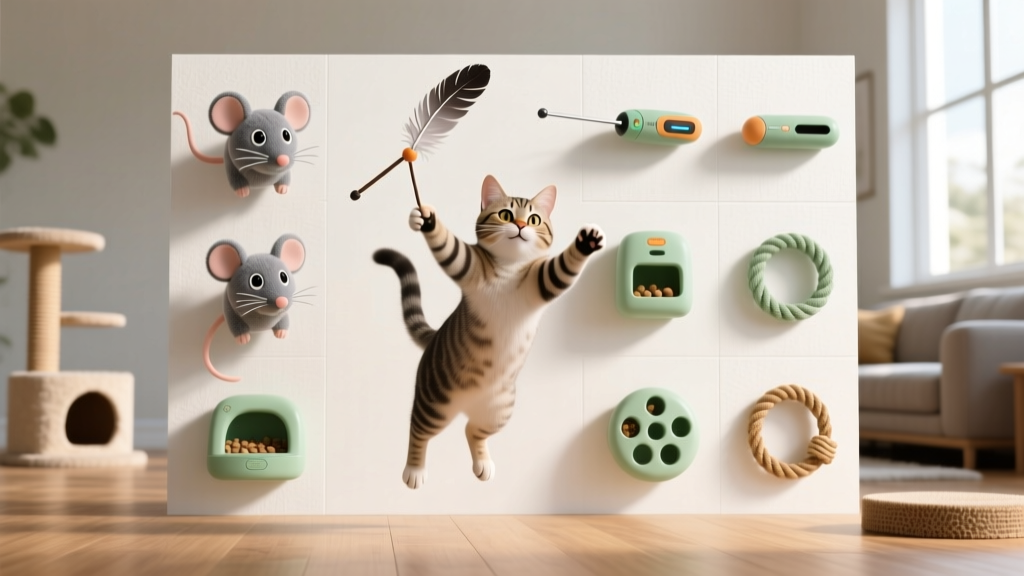
- Controlled stimulation: Rotate toys weekly, use food puzzles (not just bowls), and schedule two 10-minute interactive play sessions daily—mimicking the hunt-catch-eat-groom-sleep cycle.
- Safe retreats: Provide at least one enclosed, dark, quiet space per cat (e.g., covered bed, cardboard box with blanket, tunnel) where they can withdraw without being disturbed.
Pro tip: Introduce changes gradually. Swapping all litter overnight or moving furniture suddenly spikes cortisol levels—and can trigger regression. Instead, transition over 7–10 days using scent familiarization (rubbing old bedding on new spots) and positive association (sprinkling catnip or placing treats nearby).
Step 4: Use Positive Reinforcement—Strategically
Forget punishment—it damages trust, increases fear-based aggression, and teaches cats to hide behavior rather than change it. Instead, reward what you *want*—but do it precisely and consistently.
The gold standard is capturing: noticing and immediately reinforcing a desirable behavior as it occurs. Example: Your cat uses the scratching post? Click (or say “yes!”) + offer a high-value treat (e.g., freeze-dried chicken) within 1 second. Not 3 seconds later. Not “after dinner.” Immediately.
Timing matters because cats don’t connect delayed rewards to actions. A 2021 study in Applied Animal Behaviour Science confirmed that reinforcement delivered >1.5 seconds after behavior reduced learning retention by 68% compared to sub-second timing.
Also critical: extinction bursts. When you stop rewarding an unwanted behavior (e.g., meowing for food at 5 a.m.), it often intensifies before fading. Don’t give in—even once. That single reinforcement resets the clock and makes future extinction harder. One client reported her cat yowled for 47 minutes straight on Night 3—but by Night 6, silence returned. Consistency—not intensity—is the lever.
| Behavior Issue | Root Cause (Most Common) | Science-Backed Intervention | Timeframe for Noticeable Change | When to Seek Professional Help |
|---|---|---|---|---|
| Litter box avoidance | Medical issue (UTI, arthritis), box aversion (dirty/covered/small), location stress (near washer/dryer) | 1. Vet check first 2. Offer 1 uncovered, large, unscented box per cat +1 3. Place in quiet, low-traffic area 4. Scoop 2x/day; fully clean weekly with enzymatic cleaner |
3–14 days (if medical ruled out) | After 14 days with no improvement despite full environmental reset |
| Scratching furniture | Unmet need for claw maintenance, territory marking, stretching | 1. Place vertical & horizontal scratchers near targeted furniture 2. Rub with catnip or silver vine 3. Reward use with treats/play 4. Cover furniture temporarily with double-sided tape or aluminum foil (non-punitive deterrent) |
5–10 days for redirection; 3–6 weeks for full habit shift | If scratching includes skin damage or bleeding, or is paired with vocalization/pain signs |
| Aggression toward people or other pets | Fear, overstimulation, redirected arousal, or play-based escalation | 1. Identify threshold (what triggers escalation?) 2. Practice controlled exposure + counter-conditioning (treats at safe distance) 3. Teach ‘leave-it’ via clicker + high-value reward 4. Never force interaction or restraint |
2–8 weeks (depends on severity & consistency) | Any bite breaking skin, history of trauma, or sudden onset in older cats |
| Excessive vocalization (especially at night) | Boredom, hunger, attention-seeking, cognitive decline (in seniors), hearing loss | 1. Feed last meal at bedtime via timed feeder or puzzle bowl 2. Schedule vigorous play 30 min before lights-out 3. Ignore vocalizations at night—no eye contact, no speaking, no touch 4. For seniors: vet screen for hypertension, kidney disease, or feline cognitive dysfunction |
3–7 nights (for routine-based issues); up to 3 weeks for complex cases | If vocalizing includes disorientation, pacing, or confusion—especially in cats >12 years |
Frequently Asked Questions
Can I train my cat like a dog?
No—and that’s not a limitation, it’s biology. Dogs evolved as social pack animals wired to seek human direction. Cats evolved as solitary hunters who cooperate only when beneficial. Their learning is highly contextual and motivation-dependent. While cats *can* learn cues (‘sit,’ ‘come,’ ‘high-five’), they do so selectively—and only when the reward outweighs their effort. Focus on shaping environment and reinforcing choices—not obedience drills.
Will getting a second cat fix my cat’s behavior?
Often, it makes things worse. Unplanned introductions cause chronic stress, leading to urine marking, aggression, or withdrawal. A 2020 ASPCA study found 63% of multi-cat households reported at least one cat showing stress-related behaviors—and 41% cited ‘introduction gone wrong’ as the trigger. If you want companionship for your cat, adopt a kitten under 6 months *only* if your resident cat is young, confident, and has shown interest in kittens before—and follow a 3-week gradual introduction protocol with scent swapping and barrier-based interactions first.
Do citronella sprays or ultrasonic devices work to stop bad behavior?
No—and they’re actively harmful. The American Veterinary Society of Animal Behavior (AVSAB) explicitly condemns aversive tools (sprays, shock collars, ultrasonic emitters) as ineffective and welfare-compromising. These don’t teach alternatives; they create fear associations with locations, people, or objects. One client used a motion-activated spray to stop counter-surfing—her cat then began hiding and trembling when entering the kitchen, even when no one was present. Replace aversives with enrichment and redirection instead.
My cat was fine until I moved houses—why is behavior suddenly awful?
Relocation is one of the top three feline stressors (alongside vet visits and new pets). Cats map their world spatially and olfactorily. Moving erases their entire mental GPS—and they must relearn safety, resources, and boundaries from scratch. Expect 2–6 weeks of adjustment. Help by: (1) confining to one quiet room with all essentials for 3–5 days, (2) transferring familiar scents (blankets, toys, litter), (3) using Feliway Classic diffusers in key rooms, and (4) letting them explore at their own pace—never carry or force.
Is declawing a solution for scratching problems?
Absolutely not—and it’s banned in 32 countries and 15 U.S. cities. Declawing (onychectomy) is amputation of the last bone of each toe. It causes chronic pain, lameness, and increases biting and litter box avoidance by 300% (Journal of Feline Medicine and Surgery, 2017). It’s also illegal in many regions for non-therapeutic reasons. Safer, proven alternatives exist: nail caps (Soft Paws), regular trims, and environmental scratching outlets.
Common Myths About Fixing Cat Behavior
Myth #1: “Cats can’t be trained—they’re too independent.”
Reality: Cats are highly trainable—but on their terms. They respond exceptionally well to positive reinforcement when motivation (food, play, affection) aligns with the task. Clicker training works for recall, targeting, and even cooperative vet exams—when done with patience and precision.
Myth #2: “If I ignore bad behavior, it’ll go away on its own.”
Reality: Ignoring *reinforcement* (like giving attention after meowing) helps—but ignoring the *behavior itself* without addressing the root cause (boredom, anxiety, pain) lets the underlying issue fester. Often, the behavior escalates or transforms (e.g., silent urine marking replaces loud vocalization).
Related Topics (Internal Link Suggestions)
- Understanding cat body language — suggested anchor text: "what your cat’s tail flick really means"
- Best food puzzles for indoor cats — suggested anchor text: "top 7 mentally stimulating cat feeders"
- How to introduce a new cat safely — suggested anchor text: "step-by-step multi-cat introduction guide"
- Feline anxiety symptoms and solutions — suggested anchor text: "is your cat stressed? 9 subtle signs"
- Vet-approved calming supplements for cats — suggested anchor text: "natural anxiety relief for cats: what actually works"
Your Next Step Starts With Observation—Not Correction
You now know that how to fix cat behavior isn’t about control—it’s about collaboration. It’s choosing curiosity over frustration, observation over assumption, and compassion over correction. Start tonight: grab a notebook and spend 10 minutes watching your cat—not to judge, but to notice. Where do they linger? What do they sniff, scratch, or stare at? When are they most relaxed—or most alert? That data is your first, most powerful tool. And if you’re still feeling overwhelmed, reach out to a IAABC-certified feline behavior consultant—not as a last resort, but as a strategic partner in building a relationship rooted in mutual understanding. Your cat isn’t broken. They’re communicating. And now—you’re ready to listen.