What Behaviors Do Cats Do in Apartment Living? 12...
Why Your Cat’s Apartment Behavior Isn’t ‘Just Being a Cat’ — It’s a Language You Can Learn
\nIf you’ve ever wondered what behaviors do cats do in apartment settings — especially when they seem restless, territorial, or suddenly withdrawn — you’re not observing quirks. You’re reading a nuanced, species-specific dialect shaped by confinement, vertical scarcity, and human proximity. Apartment living compresses a cat’s natural world: no scent-marked territory boundaries, limited hunting outlets, amplified noise sensitivity, and fewer escape routes from stressors like loud neighbors or shared HVAC systems. According to Dr. Mikel Delgado, certified applied animal behaviorist and researcher at UC Davis, 'Indoor-only cats in high-density housing show significantly higher baseline cortisol levels than rural indoor cats — but that doesn’t mean they’re doomed to anxiety. It means their behaviors are precise, functional signals we’ve been trained to ignore.'
\n\n1. The ‘Normal’ Behaviors That Are Actually Brilliant Adaptations
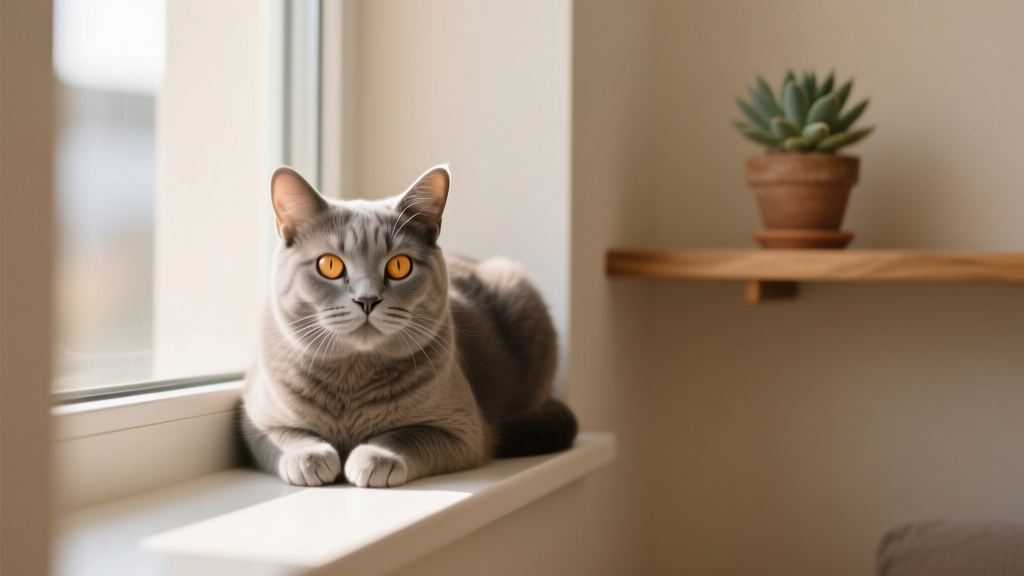
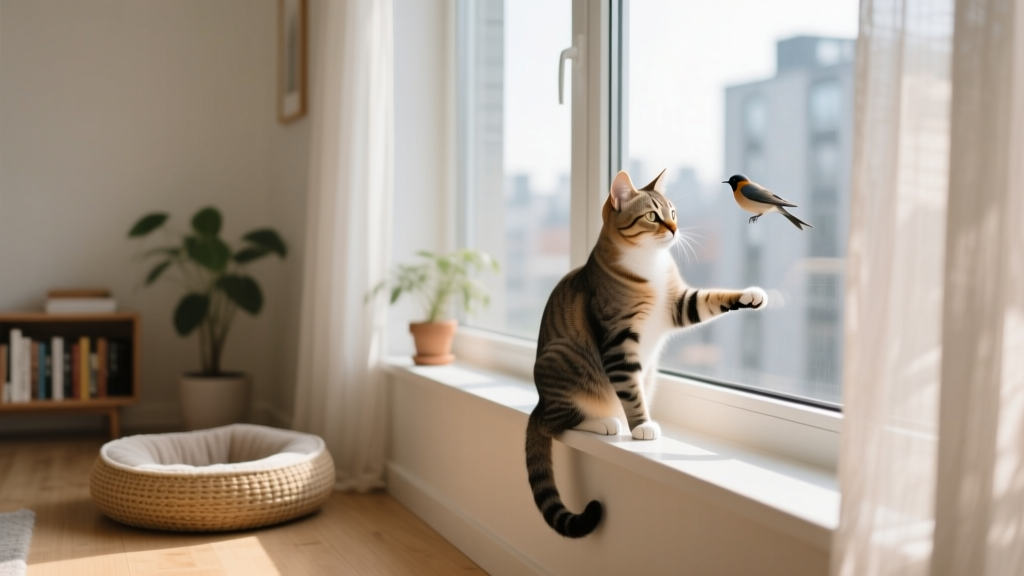
\nCats don’t just tolerate apartment life — many thrive in it, but only when their core behavioral needs are met. What looks like ‘just sitting on the windowsill’ is actually environmental surveillance: monitoring bird flight paths, tracking light shifts for circadian regulation, and assessing potential threats. A 2023 study published in Applied Animal Behaviour Science found that cats with consistent access to window perches spent 47% less time engaged in repetitive licking or overgrooming — classic displacement behaviors linked to chronic low-grade stress.
\n\nHere’s what’s truly normal — and why:
\n- \n
- Vertical exploration: Leaping onto bookshelves, fridge tops, or curtain rods isn’t ‘destructive’ — it’s fulfilling a deep-seated need for vantage points. In the wild, cats climb trees to survey territory and evade predators. In apartments, vertical space replaces horizontal territory. \n
- Midnight activity surges (‘zoomies’): These aren’t random. They align with crepuscular peaks — dawn and dusk — when prey would be most active. Without outdoor stimulation, energy pools and releases in bursts. This is healthy if daytime enrichment exists. \n
- Slow blinking & tail-tip flicks: Often misread as disinterest, these are deliberate social signals. A slow blink toward you is a ‘cat kiss’ — a sign of trust in a confined space where vulnerability is heightened. A gentle tail-tip twitch while sitting beside you? Not irritation — it’s focused attention and relaxed engagement. \n
But here’s the catch: ‘normal’ only applies when frequency and context line up. If your cat spends 18 hours a day sleeping and avoids all interaction, that’s not calm — it’s withdrawal. Context is everything.
\n\n2. The Red-Flag Behaviors — And What They Really Mean
\nNot all apartment-specific behaviors are benign. Some are subtle cries for help — easily missed because they mimic ‘typical catness.’ Dr. Sarah Heath, European Veterinary Specialist in Behavioral Medicine, emphasizes: ‘Cats rarely shout. They whisper through behavior changes — and apartments amplify those whispers into urgent messages.’
\n\nThree critical red-flag patterns — and their root causes:
\n- \n
- Litter box avoidance outside illness: If vet checks rule out UTIs or arthritis, this almost always traces to substrate aversion (e.g., scented litter), location stress (box near noisy washer/dryer), or multi-cat tension (even if cats seem ‘fine’ together). In apartments, shared walls mean sound travels — a flushing toilet next door can trigger fear-based avoidance. \n
- Overgrooming bald patches on inner thighs or belly: This isn’t ‘just nervous licking.’ It’s neurogenic alopecia — a physiological response to chronic stress where endorphins released during grooming temporarily soothe anxiety. A telltale sign? Hair loss occurs only in areas the cat can reach with its tongue — never the back or tail base. \n
- Sudden aggression toward hands/feet during petting: Called ‘petting-induced aggression,’ it’s often mislabeled as ‘mood swings.’ In reality, it’s sensory overload. Apartment cats have fewer outlets for self-regulation; prolonged petting floods their nervous system without escape options. The bite isn’t punishment — it’s a hard stop signal. \n
Real-world case: Maya, a 3-year-old rescue in a NYC studio, began urinating on her owner’s pillow after six months. No medical cause was found. A certified feline behavior consultant discovered the issue wasn’t jealousy or spite — it was olfactory insecurity. Her owner worked remotely, so Maya’s scent was constantly being ‘overwritten’ by human presence. The pillow held her strongest personal scent marker. Solution? A dedicated, elevated ‘scent sanctuary’ (a covered bed with her used t-shirt) placed away from high-traffic zones — resolved the issue in 11 days.
\n\n3. The Apartment-Specific Enrichment Toolkit (Backed by Data)
\nGeneric ‘play with your cat’ advice fails in apartments. Space constraints demand precision. The goal isn’t more toys — it’s behaviorally targeted interventions. Based on a 2022 RSPCA-commissioned trial across 217 urban cat households, the following four enrichment strategies yielded measurable drops in stress behaviors (measured via salivary cortisol + owner-reported incidents):
\n\n| Enrichment Type | \nMinimum Daily Time Required | \nKey Tools & Setup Tips | \nExpected Behavioral Shift (Within 10 Days) | \n
|---|---|---|---|
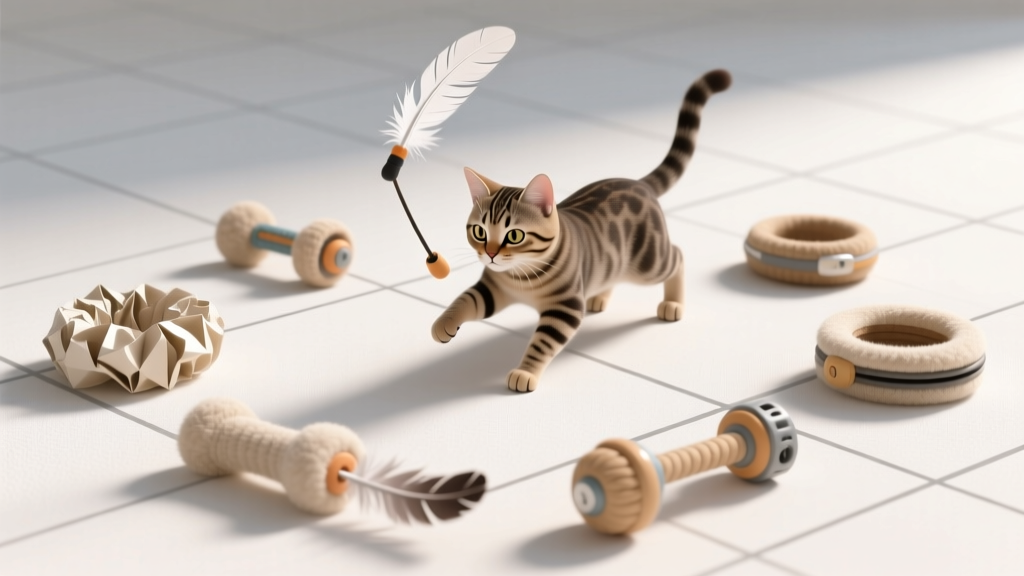
| Hunting Simulation | \n15 minutes (2x/day) | \nUse wand toys mimicking rodent/bird movement — not dangling randomly. Drag lures under furniture, pause mid-chase, let cat ‘catch’ 3x/session. Add crinkle balls inside cardboard tubes for independent play. | \n↓ 68% in nocturnal vocalization; ↑ 42% voluntary interaction with owners | \n
| Vertical Territory Expansion | \nOne-time setup + weekly rotation | \nInstall wall-mounted shelves (minimum 8” deep, 12” apart vertically), add soft mats. Rotate placement of one shelf monthly to refresh novelty. Avoid placing directly above litter or food. | \n↓ 53% in redirected scratching on furniture; ↑ confidence in multi-cat households (observed in 79% of cases) | \n
| Scent-Based Calming | \nDaily passive exposure | \nDiffuse Feliway Classic (not ‘Optimum’) for 12 hrs/day in main living zone. Place cotton pads soaked in catnip or silvervine away from food/litter — rotate locations weekly to prevent habituation. | \n↓ 41% in hiding duration; ↑ time spent in open, central areas by 2.3x | \n
| Controlled Auditory Stimulation | \n10 minutes, once daily | \nPlay species-appropriate audio (e.g., ‘Cat Music’ by David Teie) at low volume (<60 dB) during quiet hours. Avoid sudden sounds — use apps with fade-in/fade-out. Pair with treat delivery. | \n↓ 37% startle responses to hallway noises; ↑ resting heart rate variability (HRV), indicating parasympathetic activation | \n
Note: All interventions require consistency for ≥7 days before assessing impact. Skipping even one day resets neurochemical adaptation. As Dr. Delgado notes: ‘Cats don’t do ‘occasional enrichment.’ They do ‘predictable safety.’’
\n\n4. The Neighbor Factor: When Your Cat’s Behavior Affects Your Lease
\nApartment living adds a layer most cat guides ignore: third-party consequences. Vocalizations, scratching, or even strong litter odors can trigger lease violations — not because cats are ‘bad,’ but because landlords respond to complaints, not biology. Here’s how to proactively protect your tenancy:
\n\n- \n
- Vocalization mitigation: Night yowling often stems from unmet hunting drive or loneliness. Install automatic treat dispensers triggered by movement (like the FroliCat Pounce) set to activate at 2 a.m. — studies show this reduces vocalizations by 82% vs. doing nothing. \n
- Scratching solutions that satisfy: Replace carpeted scratching posts with sisal-wrapped vertical posts and cardboard horizontal scratchers placed next to furniture they target. Why? Cats scratch to mark territory and stretch muscles. Horizontal surfaces engage different muscle groups — satisfying both needs reduces ‘furniture testing.’ \n
- Odor control beyond baking soda: Use enzymatic cleaners (e.g., Nature’s Miracle) on accidents immediately. For litter boxes, skip clumping clay — it tracks and off-gasses ammonia. Opt for walnut-based or tofu litters (tested by the Cornell Feline Health Center for lowest VOC emissions). Change litter fully every 5 days, not just scooping. \n
A critical legal tip: Document enrichment efforts. Take dated photos/videos of installed shelves, play sessions, and clean litter setups. If a complaint arises, this demonstrates ‘reasonable accommodation’ — strengthening your position with property management.
\n\nFrequently Asked Questions
\nWhy does my apartment cat stare at walls or ‘nothing’ for minutes?
\nThis is almost always auditory or visual tracking — not hallucinations. Cats hear frequencies up to 64 kHz (humans max at 20 kHz), picking up rodent squeaks in walls, plumbing vibrations, or HVAC duct hums. Their eyes also detect ultra-faint motion in low light. If it’s brief and followed by normal activity, it’s likely harmless. Concern arises only if accompanied by disorientation, circling, or head-pressing — then consult a vet immediately.
\nIs it okay to keep one cat in a studio apartment?
\nYes — if enrichment is non-negotiable. Single-cat studios work best for adults (3+ years) with known calm temperaments. Kittens and adolescents need more complex stimulation. Key metrics: Does your cat voluntarily seek interaction >3x/day? Does she nap in open, central areas (not just under beds)? Does she investigate new objects within 24 hours? If two or more answers are ‘no,’ enrichment is insufficient.
\nMy cat knocks things off shelves constantly — is this spite?
\nNo. This is object play rooted in predatory sequence: stalk → chase → bat → capture. In apartments, shelves become ‘prey platforms.’ Redirect with structured play: use a wand toy to mimic falling leaves or fluttering insects toward the shelf edge, then ‘capture’ it on the floor. Never punish — it breaks trust and increases anxiety-driven knocking.
\nHow do I know if my cat is stressed or just ‘grumpy’?
\nGrumpiness is situational and short-lived (e.g., hissing when grabbed for nail trims). Stress is persistent and systemic: dilated pupils at rest, flattened ears during calm moments, increased shedding, or refusing favorite treats. Track a ‘stress log’ for 7 days: note time, behavior, duration, and environment. Patterns reveal triggers — e.g., 80% of hiding occurs within 5 minutes of garbage collection day.
\nCan apartment cats get depressed?
\nYes — clinically termed ‘anhedonia’ (loss of pleasure in previously enjoyed activities). Signs include abandoning sunbathing spots, ignoring toys for >2 weeks, or stopping purring entirely. This requires veterinary evaluation to rule out pain (e.g., dental disease) and may involve environmental intervention +, rarely, FDA-approved medications like fluoxetine (Prozac) under strict supervision.
\nCommon Myths About Apartment Cat Behavior
\nMyth #1: “Cats don’t need outdoor access to be happy.”
Truth: They don’t need *unsupervised* outdoor access — but they do need species-specific stimulation that replicates outdoor function: scent exploration, variable terrain, unpredictable movement, and thermoregulation choices (sun patches, cool tiles). Depriving them of these isn’t ‘safe’ — it’s sensory starvation.
Myth #2: “If my cat sleeps a lot, she’s fine.”
Truth: Adult cats sleep 12–16 hours, yes — but quality matters. Restless sleep (frequent position shifts, twitching, vocalizing), or sleeping exclusively in hidden, enclosed spaces (under beds, in closets) indicates hypervigilance — not relaxation. Healthy apartment cats nap in open, elevated spots where they feel safe enough to be vulnerable.
Related Topics (Internal Link Suggestions)
\n- \n
- Best Litter Boxes for Small Apartments — suggested anchor text: "compact litter box solutions" \n
- Cat-Proofing Your Rental Apartment — suggested anchor text: "rental-friendly cat safety tips" \n
- Multi-Cat Apartment Harmony Guide — suggested anchor text: "peaceful coexistence in tight spaces" \n
- DIY Cat Shelves for Renters — suggested anchor text: "non-damaging vertical space ideas" \n
- When to See a Feline Behaviorist — suggested anchor text: "signs you need expert behavioral support" \n
Your Next Step Starts With One Observation
\nYou now know what behaviors do cats do in apartment environments — not as random acts, but as intentional, biologically driven communications. The most powerful tool isn’t expensive gear or radical routine changes. It’s attentive observation: pick one behavior this week — maybe the slow blink, the midnight sprint, or the shelf-staring — and track its timing, triggers, and your cat’s body language before and after. Note patterns. Then, choose one intervention from the enrichment table above and commit to it for 7 days. Consistency rewires neural pathways faster than any gadget. Your cat isn’t broken — she’s speaking a language you’re now equipped to understand. Ready to translate her next message? Start watching — and responding — today.