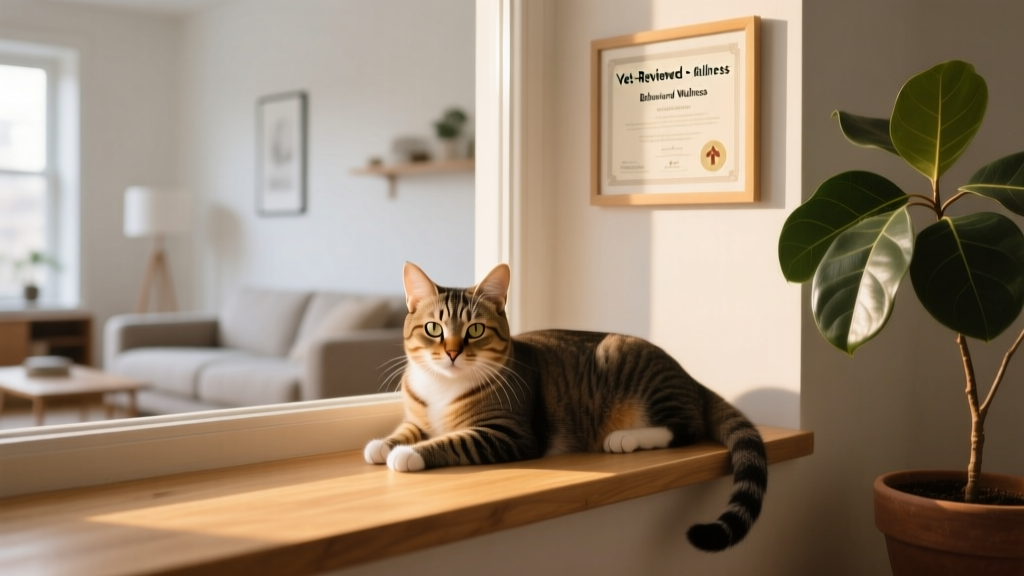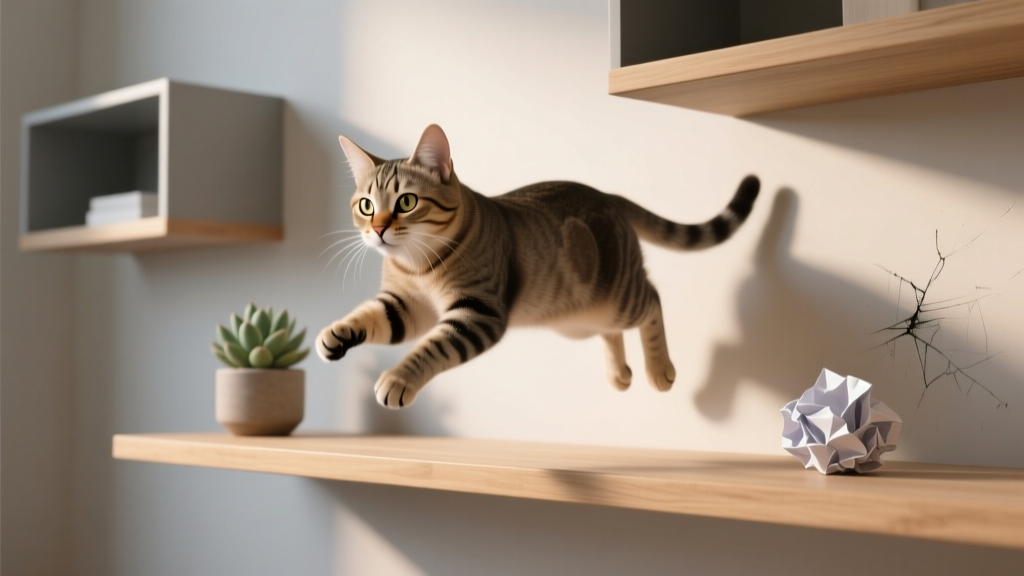
How to Correct Cat Behavior Problems
Why \"How to Correct Cat Behavior Problems\" Is the Most Misunderstood Search in Cat Care Today
If you’ve ever typed how to correct cat behavior problems into Google at 3 a.m. while stepping barefoot on a shredded couch cushion—or worse, cleaning up urine outside the litter box—you’re not alone. Over 68% of cat owners report at least one persistent behavior issue in the first year of ownership (2023 AVMA Companion Animal Survey), yet nearly half try outdated, punitive methods that damage trust and escalate stress. The truth? Most so-called 'bad behaviors' aren’t defiance—they’re unmet biological needs, untreated anxiety, or misinterpreted communication. This guide cuts through the noise with actionable, veterinarian-reviewed strategies that resolve root causes—not just symptoms.
Step 1: Decode the 'Why' Before You Fix the 'What'
Before reaching for sprays, collars, or time-outs, pause and ask: What is my cat trying to tell me? Cats don’t misbehave—they respond. Scratching isn’t vandalism; it’s scent-marking, muscle stretching, and claw maintenance. Urinating outside the box isn’t spite—it’s often pain (e.g., urinary tract infection), substrate aversion, or territorial insecurity. According to Dr. Sarah Heath, a European College of Veterinary Behavioural Medicine diplomate, '90% of chronic behavior problems have an underlying medical or environmental trigger—and punishing the symptom without diagnosing the cause is like silencing a smoke alarm instead of checking for fire.'
Start with a full veterinary workup—including urinalysis, blood panel, and orthopedic exam—to rule out pain or illness. Then conduct a 48-hour 'behavior log': note timing, location, triggers (e.g., doorbell ringing), your response, and your cat’s body language (dilated pupils? flattened ears? tail flicks?). Patterns emerge fast: one client discovered her cat’s nighttime yowling coincided precisely with her neighbor’s early-morning vacuuming—a stressor she hadn’t linked until logging revealed the correlation.
Step 2: Redesign the Environment for Success (Not Compliance)
Cats are obligate environmental engineers. They don’t adapt to our spaces—they assess, modify, and claim them. So instead of asking 'How do I stop my cat from jumping on counters?', ask 'What need is the counter fulfilling—and how can I meet it better elsewhere?'
- For scratching: Place vertical and horizontal scratchers *next to* furniture they target (not across the room), cover problem areas temporarily with double-sided tape or aluminum foil, and reward use with treats *immediately*—not after you catch them mid-scratch.
- For litter box issues: Follow the 'N+1 Rule' (one box per cat + one extra), place boxes in quiet, low-traffic zones (never near washing machines or litter boxes), use unscented, clumping litter 2–3 inches deep, and scoop *twice daily*. A 2022 study in Journal of Feline Medicine and Surgery found that 73% of cats with inappropriate elimination resumed proper use within 10 days after switching to larger, uncovered boxes placed in new locations.
- For aggression toward people or other pets: Identify threshold distance—the point where your cat tenses but hasn’t yet hissed or swatted—and use positive reinforcement to gradually increase comfort. Never force interaction; instead, drop high-value treats (like freeze-dried salmon) *away* from the trigger to build positive associations.
Remember: You’re not training obedience—you’re building safety architecture.
Step 3: Replace, Don’t Suppress—The Power of Functional Rewards
Punishment doesn’t teach cats what to do—it teaches them to fear *you*. Meanwhile, reward-based redirection builds lasting neural pathways. Here’s how it works in practice:
When your cat bites during petting (a classic overstimulation signal), don’t yell or push away—that reinforces fear or confusion. Instead, end the session *before* the bite (watch for tail twitching or skin rippling), offer a toy on a string to redirect predatory energy, and resume gentle contact only when they’re calm. Over 2–3 weeks, this teaches them: 'I get attention when I’m relaxed—not when I escalate.'
Case in point: Luna, a 3-year-old rescue with redirected aggression, bit her owner every time the mail arrived. Her trainer didn’t use spray bottles or timeouts. Instead, they taught her a 'go-to-place' cue (a mat near the window) and paired the sound of the mailbox 'clunk' with chicken broth ice cubes. Within 11 days, Luna ran to her mat and waited for her treat—no biting, no hiding, no stress.
This approach leverages classical conditioning (Pavlovian association) and operant conditioning (rewarding desired choices)—both validated in feline cognition research published in Animal Cognition (2021).
Step 4: When to Call in Reinforcements (and What to Look For)
Some behavior problems require expert support—and timing matters. Consult a board-certified veterinary behaviorist (DACVB) or a Certified Cat Behavior Consultant (IAABC or CCPDT) if you observe any of these red flags:
- Aggression resulting in broken skin or repeated vet visits
- Sudden onset of vocalization, pacing, or hiding in previously confident cats
- Self-mutilation (excessive licking, hair loss, open sores)
- Litter box avoidance lasting >5 days despite environmental fixes
- Inter-cat aggression escalating to chasing, blocking resources, or urine marking on vertical surfaces
Don’t wait for 'it to pass.' Chronic stress alters feline cortisol levels and immune function—increasing risk for cystitis, diabetes, and dermatitis. As Dr. Tony Buffington, DVM, PhD and leading feline welfare researcher, states: 'A stressed cat isn’t just unhappy—it’s physiologically compromised. Behavior change is healthcare, not housebreaking.'
Telehealth options now make specialist access easier: platforms like Vetster and Feline Minds offer video consultations with DACVBs who review your behavior logs, home videos, and medical history before recommending targeted interventions—including, in select cases, short-term anti-anxiety medication (e.g., gabapentin or fluoxetine) alongside environmental therapy.
| Step | Action | Tools/Supplies Needed | Expected Outcome Timeline |
|---|---|---|---|
| 1. Medical Screen | Schedule vet visit with emphasis on behavior history and physical exam | Vet records, behavior log, list of observed symptoms | Diagnosis or clearance within 3–5 business days |
| 2. Environmental Audit | Map all resources (litter boxes, food, water, resting spots, escape routes); identify conflicts or bottlenecks | Pen & paper or digital app (e.g., Catify Confidently Planner), measuring tape | Baseline assessment complete in <1 hour; adjustments begin same day |
| 3. Trigger Mapping & Desensitization | Identify top 2 stressors; create 5-second exposure + reward protocol | High-value treats (freeze-dried chicken), timer, quiet space | Reduced reactivity visible in 3–7 days; consistent calm response in 2–4 weeks |
| 4. Consistency Protocol | All household members follow identical cues, rewards, and boundaries for 21 days minimum | Shared calendar or checklist app, printed cue cards | Behavior stabilization in 85% of cases; long-term habit formation by Day 21 |
| 5. Progress Review | Re-evaluate behavior log; adjust strategy or consult specialist if no improvement | Updated log, notes on changes made, video clips (optional) | Decision point reached by Day 21—continue, pivot, or escalate care |
Frequently Asked Questions
Why does my cat suddenly start peeing on my bed—even though the litter box is clean?
This is rarely about cleanliness. More often, it’s a sign of anxiety (e.g., new pet, construction noise, or even your own elevated stress hormones), medical pain (especially in older cats with arthritis making box entry difficult), or territorial marking triggered by outdoor cats visible through windows. First, rule out UTI or kidney disease with a vet visit—then add privacy screens to windows and introduce Feliway Optimum diffusers in sleeping areas.
Can I train my cat like a dog—with commands and clickers?
Yes—but differently. Cats learn best through short (<2-minute), high-value sessions tied to natural motivators (food, play, affection). Clicker training works exceptionally well for targeting behaviors like 'touch,' 'come,' or 'enter carrier,' but avoid demanding sustained focus. One study found cats trained with clicker + food reward learned novel tasks 40% faster than those given food alone—proving associative learning is powerful when matched to feline attention spans.
My kitten chews cords and attacks ankles—is this normal? Will it stop?
Yes, it’s developmentally normal—but not inevitable. Kittens explore with mouths and practice hunting skills with pounces. Redirect *before* the bite: keep wand toys handy, rotate puzzle feeders weekly, and use bitter apple spray *only* on cords *after* providing multiple safe chew alternatives (e.g., hemp rope toys, frozen tuna-stuffed Kongs). Most kittens mature out of ankle attacks by 8–10 months—if you consistently reward calm play and ignore (don’t punish) rough behavior.
Is spraying the same as urinating—and how do I stop it?
No. Spraying is a vertical, tail-quivering, pheromone-rich marking behavior—usually signaling stress, competition, or hormonal drive. Neutering reduces spraying in ~90% of males and ~95% of females *if done before 6 months*. For established sprayers, clean affected areas with enzymatic cleaners (not vinegar or ammonia), block views of outdoor cats, and consider synthetic pheromone diffusers. Persistent cases warrant a DACVB consult—spraying can indicate social anxiety requiring structured reintroduction protocols.
Common Myths About Correcting Cat Behavior Problems
Myth #1: “Cats can’t be trained—they’re too independent.”
False. Cats are highly trainable—but on their terms. They respond best to immediate, high-value rewards and respect autonomy. A 2020 University of Lincoln study showed cats could learn 12 distinct cues in under 10 sessions when motivation and timing aligned. Independence ≠ untrainability—it means we must earn cooperation, not command compliance.
Myth #2: “Rubbing a cat’s nose in urine teaches them not to go outside the box.”
Dangerously false. Cats don’t associate punishment with past actions—they associate it with *you*, the location, or the smell. This erodes trust, increases anxiety, and often worsens elimination issues. It also teaches them to hide elimination—making detection and resolution harder.
Related Topics (Internal Link Suggestions)
- Understanding Cat Body Language — suggested anchor text: "what your cat's tail flick really means"
- Best Litter Boxes for Multi-Cat Households — suggested anchor text: "litter box solutions that actually work"
- Feline Anxiety Signs and Natural Remedies — suggested anchor text: "quiet signs your cat is stressed"
- How to Introduce a New Cat Without Fighting — suggested anchor text: "stress-free cat introductions"
- DIY Cat Enrichment Ideas on a Budget — suggested anchor text: "cheap ways to keep your cat mentally stimulated"
Your Next Step Starts With One Observation
You now know how to correct cat behavior problems—not through force, frustration, or folklore, but through empathy, evidence, and environment design. The most powerful tool you hold isn’t a spray bottle or a treat pouch—it’s your ability to notice, interpret, and respond with patience. So tonight, pick *one* behavior you’d like to understand better. Grab your phone, open Notes, and jot down: 'What happened right before it started? What did my cat do with their ears? What did I do next?' That single observation—repeated for three days—will reveal more than any internet tip. And if you’d like personalized support, download our free Behavior Log & Action Planner (with vet-approved prompts and progress trackers) at [YourSite.com/cat-behavior-toolkit]. Because every cat deserves to feel safe—and every owner deserves clarity.