How to Control Cats Behavior Veterinarian-Approved
Why 'How to Control Cats Behavior Veterinarian' Is the Most Misunderstood Search You’ll Make This Year
\nIf you’ve ever typed how to control cats behavior veterinarian into Google after your cat shredded the couch at 3 a.m., growled at guests, or started urinating outside the litter box—congratulations: you’re not alone, and more importantly, you’re asking the right question at the right time. But here’s what most pet owners don’t realize: ‘control’ isn’t about dominance, discipline, or quick fixes—it’s about understanding your cat’s neurobiology, environmental triggers, and unmet needs through a veterinary lens. Board-certified veterinary behaviorists (Dip ACVB) emphasize that over 80% of so-called ‘bad behavior’ stems from undiagnosed medical conditions, chronic stress, or misaligned enrichment—not willfulness.
\n\nStep 1: Rule Out Medical Causes—Before You Try Any Behavioral Intervention
\nThis is non-negotiable—and it’s where most well-intentioned owners derail. According to Dr. Marci Koski, a certified feline behavior consultant and former veterinary technician, “A cat peeing on your bed isn’t ‘getting back at you.’ It could be interstitial cystitis, hyperthyroidism, dental pain, or early-stage kidney disease—all of which cause irritability, restlessness, and aversion to the litter box.” A 2022 study published in Journal of Feline Medicine and Surgery found that 63% of cats referred for aggression or house-soiling had at least one underlying medical condition confirmed via full diagnostic workup.
\nWhat your vet should assess:
\n- \n
- Comprehensive physical exam (including orthopedic evaluation—arthritis causes irritability in 90% of cats over age 12) \n
- Urinalysis + urine culture (to detect silent UTIs or crystals) \n
- Blood panel (T4, BUN, creatinine, glucose, SDMA for early kidney disease) \n
- Dental radiographs (resorptive lesions cause severe, unobserved pain) \n
- Thyroid palpation + T4 test (hyperthyroidism mimics anxiety and hyperactivity) \n
Never skip this step—even if your cat seems ‘perfectly healthy.’ As Dr. Katherine Houpt, Cornell University’s emeritus professor of animal behavior, states: “You cannot treat behavior without ruling out pain. Full stop.”
\n\nStep 2: Decode the Function of the Behavior (Not Just the Symptom)
\nVeterinary behaviorists use ABC analysis—Antecedent, Behavior, Consequence—to map patterns objectively. Let’s say your cat bites when you pet her for more than 5 seconds:
\n- \n
- A (Antecedent): You stroke her lower back while she’s lying on her side \n
- B (Behavior): She turns, hisses, then bites your hand \n
- C (Consequence): You withdraw—and she regains control of her space \n
This isn’t ‘spite.’ It’s a classic overstimulation response rooted in feline sensory thresholds. Research from the University of Lincoln shows cats process tactile input at up to 3x the neural intensity of dogs—and many lack the neurological ‘off-ramp’ to self-regulate once arousal peaks.
\nCommon functions & veterinary-recommended responses:
\n- \n
- Resource guarding (food, litter box, sleeping spot) → Add duplicates + spatial separation \n
- Fear-based aggression (hissing at vacuum, hiding from visitors) → Desensitization + counterconditioning with high-value treats (e.g., freeze-dried chicken), never forced exposure \n
- Redirected aggression (attacking owner after seeing outdoor cat) → Break visual access *before* escalation; use motion-activated deterrents on windows \n
- Attention-seeking (meowing incessantly at night) → Reinforce quiet behavior *only* during calm periods—not during vocalization \n
Step 3: Build a Feline-Optimized Environment (The #1 Vet-Recommended Tool)
\nDr. Tony Buffington, DVM, PhD and lead researcher of the landmark ‘Indoor Cat Project’ at Ohio State, proved that 72% of behavior issues resolve—or significantly improve—with environmental enrichment alone. His team identified five core pillars every indoor cat needs daily:
\n- \n
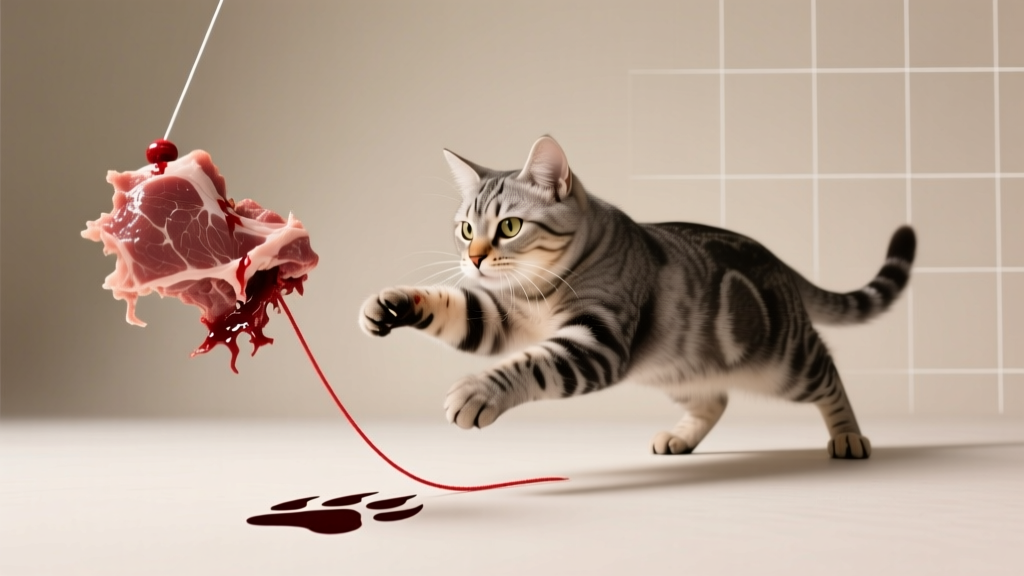
- Hunting (interactive play sessions mimicking prey sequence: stalk → chase → pounce → kill → eat) \n
- Eating (puzzle feeders used for 90% of meals—not just kibble bowls) \n
- Scratching (vertical + horizontal surfaces in high-traffic areas, covered in sisal or cardboard) \n
- Climbing (cat trees, wall shelves, window perches—minimum 3 vertical levels) \n
- Safe resting spots (covered beds, elevated hideaways, consistent low-stress zones) \n
A real-world case: Luna, a 4-year-old Siamese mix, was diagnosed with idiopathic cystitis and chronic urine marking. Her veterinarian prescribed amitriptyline *and* a home environment audit. Within 10 days of adding two tall cat trees near windows, switching to a puzzle feeder, and installing a Feliway Optimum diffuser, her marking decreased by 95%. No medication adjustments were needed.
\n\nStep 4: When & How to Use Veterinary Behavior Medications—Safely and Strategically
\nMedication isn’t a ‘last resort’—it’s often the most compassionate first-line tool for cats in chronic distress. Unlike dogs, cats metabolize drugs differently, and only certain SSRIs/SNRIs are FDA-approved or clinically validated for feline use.
\nHere’s what vets actually prescribe—and why timing matters:
\n| Medication | \nPrimary Use Case | \nOnset of Effect | \nKey Safety Notes | \n
|---|---|---|---|
| Clomipramine (Anafranil®) | \nObsessive grooming, tail-chasing, separation anxiety | \n3–4 weeks | \nMonitor liver enzymes; avoid in cats with cardiac arrhythmias | \n
| Fluoxetine (Reconcile®) | \nUrine marking, generalized anxiety, inter-cat aggression | \n4–6 weeks | \nStart low (0.5 mg/kg); may cause transient lethargy | \n
| Gabapentin | \nAcute situational stress (vet visits, travel, storms) | \n1–2 hours | \nSafe short-term; sedation common but reversible | \n
| Alprazolam (Xanax®) | \nRarely used; only for extreme, life-threatening panic | \n30–60 min | \nHigh risk of paradoxical agitation; never long-term | \n
Crucially: Medication works *only* when paired with behavior modification. As Dr. Meghan Herron, DACVB, explains: “Drugs lower the emotional thermostat—they don’t teach new skills. Without environmental support and training, relapse is nearly guaranteed.”
\n\nFrequently Asked Questions
\nCan I train my cat like a dog—to obey commands and stop unwanted behaviors?
\nNo—and that’s the good news. Cats aren’t disobedient; they’re exquisitely selective. Training works best when framed as cooperative games using positive reinforcement (clicker + treat). For example: teaching ‘touch’ with a target stick builds trust, then generalizes to ‘come,’ ‘enter carrier,’ or ‘step onto scale.’ Force-based methods increase fear and erode the human-animal bond—vets strongly advise against them.
\nMy vet said my cat’s behavior is ‘just personality’—should I get a second opinion?
\nYes—if the behavior is sudden, worsening, or causing household disruption (e.g., aggression, house-soiling, self-injury). ‘Personality’ is rarely the full story. Ask specifically: ‘Have we ruled out pain, metabolic disease, or neurologic changes?’ If your vet hasn’t performed diagnostics beyond a cursory exam, consult a veterinarian board-certified in behavior (find one at dacvb.org) or a Fear Free–certified practice.
\nAre collars with bells or citronella sprays effective for stopping scratching or jumping?
\nNo—and they’re actively harmful. Bells impair hunting instinct and cause chronic low-grade stress (studies show elevated cortisol in bell-wearing cats). Citronella sprays trigger fear conditioning and can generalize to people or objects nearby. Vets universally recommend enriching alternatives: sturdy scratching posts placed *next to* furniture, double-sided tape on surfaces, and scheduled interactive play instead.
\nHow long does it take to see improvement after implementing vet-recommended behavior strategies?
\nIt depends on the root cause. Medical resolution (e.g., treating UTI) often yields improvement in 3–7 days. Environmental changes show measurable shifts in 2–3 weeks. Medication-supported behavior modification typically requires 6–12 weeks for durable change. Patience isn’t passive—it’s strategic observation. Keep a simple log: date, behavior, antecedent, intervention, outcome. You’ll spot patterns faster than any app.
\nCommon Myths About Controlling Cat Behavior
\n- \n
- Myth #1: “Cats can’t be trained—they’re too independent.” Reality: Cats learn continuously via operant conditioning—but they choose *what’s worth their energy*. High-value rewards (tuna paste > dry kibble), short sessions (3–5 mins), and consistency yield reliable results. Clicker-trained cats routinely participate in blood draws, weight checks, and even dental exams. \n
- Myth #2: “Spraying is a dominance issue—you need to assert authority.” Reality: Urine marking is almost always a stress signal—not territorial posturing. Punishment increases cortisol and worsens marking. Vets recommend identifying stressors (new pets, construction, schedule changes), using pheromone diffusers (Feliway Optimum), and providing safe vertical territory. \n
Related Topics (Internal Link Suggestions)
\n- \n
- Why is my cat suddenly aggressive? — suggested anchor text: "sudden cat aggression causes" \n
- Best puzzle feeders for cats — suggested anchor text: "top-rated slow feeders for indoor cats" \n
- Feline urinary tract health guide — suggested anchor text: "cat UTI symptoms and prevention" \n
- How to introduce a new cat safely — suggested anchor text: "stress-free multi-cat household setup" \n
- Signs of cat anxiety you’re missing — suggested anchor text: "subtle feline stress signals" \n
Your Next Step Starts With One Action—Today
\nYou now know that how to control cats behavior veterinarian isn’t about control at all—it’s about compassion, clarity, and collaboration with your cat’s biology. The single highest-impact action you can take today? Schedule a full veterinary behavior consultation—or at minimum, request a senior wellness panel (including SDMA and blood pressure) if your cat is over age 7. Print this page, bring it to your appointment, and ask: ‘What medical conditions could explain this behavior—and what environmental tweaks would you prioritize first?’ Because the most powerful tool in behavior change isn’t a spray bottle or a timeout—it’s accurate information, delivered with empathy, and acted upon with patience. Your cat isn’t broken. They’re communicating. And now—you’re finally fluent.