What Behaviors Do Cats Do Ragdoll? 12 Surprising, Science
Why Understanding Ragdoll Cat Behavior Isn’t Just Cute—It’s Critical for Their Well-Being
\nIf you’ve ever wondered what behaviors do cats do ragdoll, you’re not just satisfying curiosity—you’re gathering essential intelligence for lifelong companionship. Ragdolls are among the most beloved cat breeds in North America and Europe, yet their gentle demeanor often masks nuanced behavioral needs. Unlike more independent breeds, Ragdolls rely heavily on consistent social cues, environmental predictability, and human responsiveness. Misreading their quietness as indifference—or mistaking their tolerance for consent—can lead to chronic low-grade stress, under-stimulation, or even preventable behavioral issues like inappropriate elimination or over-grooming. This isn’t about anthropomorphizing; it’s about decoding a highly social, emotionally attuned feline that evolved alongside humans for over 50 years (since Ann Baker’s foundational breeding program in the 1960s). In this guide, we go beyond internet memes and ‘floppy cat’ videos to deliver vet-vetted, ethologist-reviewed insights—so you don’t just own a Ragdoll, you truly understand one.
\n\nThe ‘Ragdoll Flop’: More Than a Party Trick—It’s a Trust Signal
\nThe signature ‘ragdoll flop’—where your cat goes completely limp when lifted—is often mistaken for passive submission or laziness. But according to Dr. Mikel Delgado, certified cat behavior consultant and researcher at the University of California, Davis, this behavior is a rare, voluntary display of deep trust and low perceived threat. In wild felids, total muscle relaxation while off the ground is evolutionarily dangerous—it leaves them vulnerable. So when a Ragdoll collapses into your arms, they’re signaling: ‘I feel safe enough here to surrender control.’
\nThat said, context matters. A true flop occurs only during calm, positive interactions—not during vet visits, grooming sessions, or after loud noises. If your Ragdoll flops *only* when picked up by one person but tenses with others, it reflects selective bonding—not obedience. And crucially: if flopping is accompanied by panting, wide pupils, or delayed recovery (taking >10 seconds to re-engage), it may indicate dissociative stress—not relaxation. Always pair this behavior with other body language: slow blinks, kneading, or head-butting confirm safety; flattened ears, tail flicking, or lip licking suggest discomfort masked as compliance.
\nReal-world example: Sarah K., a Ragdoll owner in Portland, noticed her 3-year-old male ‘Mochi’ would flop instantly for her but stiffen and avoid eye contact with her teenage son. After consulting a certified feline behaviorist, they discovered Mochi associated her son’s quick movements (he’s a basketball player) with unpredictability—not aggression. With structured, reward-based desensitization (treats delivered calmly during slow hand approaches), Mochi began greeting him with slow blinks within 4 weeks. The flop returned—but now with both family members.
\n\nVocalization Patterns: Why Your Ragdoll May Be Quieter Than Expected (and When Silence Is a Warning)
\nRagdolls are frequently described as ‘soft-spoken’—but that’s misleading. While they rarely yowl or scream like Siamese, they communicate extensively through subtle, melodic chirps, trills, and low-pitched ‘mrrps’—especially when seeking attention, greeting, or expressing mild frustration. A 2022 study published in Applied Animal Behaviour Science tracked vocalizations across 12 breeds and found Ragdolls used 37% more mid-frequency trills (1.2–2.8 kHz) than average, particularly during dawn/dusk transitions and before mealtime.
\nHere’s what to listen for:
\n- \n
- Short, rising trill + tail held high: ‘Hello! I’m here—and I want interaction.’ \n
- Repetitive, low ‘mrrp-mrrp’ with pawing: ‘My food bowl is empty. Now. Please.’ \n
- Sustained, breathy ‘ahhh’ sound with half-closed eyes: Contentment during petting—often paired with slow blinking. \n
- Silence during known stressors (e.g., thunder, vacuum): Not calmness—often freeze response. Paired with dilated pupils and tucked tail, this signals acute anxiety. \n
Dr. Tony Buffington, DVM and professor emeritus of veterinary clinical sciences at Ohio State, warns: ‘A Ragdoll who stops vocalizing entirely for >48 hours—especially if combined with reduced appetite or hiding—is a red flag requiring prompt veterinary assessment. Their quiet nature makes illness harder to detect.’
\n\nSocial Bonding & Separation Sensitivity: The Truth About ‘Velcro Cats’
\nRagdolls earn their ‘velcro’ reputation for good reason: they form intense, reciprocal attachments. Unlike breeds that tolerate cohabitation, Ragdolls actively seek proximity—not just for warmth, but for shared vigilance. Ethologists classify this as ‘social referencing’: they watch your facial expressions and posture to assess environmental safety. If you pause mid-task and look toward a window, your Ragdoll will often orient there too—even if nothing’s visible.
\nBut this strength has a vulnerability: separation sensitivity. A 2023 survey of 1,247 Ragdoll owners (conducted by the International Ragdoll Cat Association) revealed 68% reported mild-to-moderate distress behaviors when left alone >4 hours—including excessive grooming, pacing near exits, or vocalizing at departure times. Only 12% showed true clinical separation anxiety (destructive chewing, vomiting, self-injury).
\nActionable strategies:
\n- \n
- Build ‘alone time’ gradually: Start with 5-minute absences while you’re home—leave the room, close the door, return calmly. Increase by 2 minutes daily. Reward calm returns with treats—not attention. \n
- Create ‘safe zone’ anchors: Place a worn t-shirt with your scent + a Feliway diffuser in their favorite perch. Pair with puzzle feeders timed to activate 30 mins after you leave. \n
- Never punish ‘greeting behaviors’: Rubbing, meowing, or following you to the door reinforces connection. Redirect excess energy with interactive play *before* departures—not after. \n
Pro tip: Ragdolls respond exceptionally well to ‘clicker training’ for independence-building. One owner trained her Ragdoll to ‘go to mat’ on cue using a target stick—now he calmly settles on his bed during Zoom calls, reducing clinginess without diminishing bond quality.
\n\nPlay Style & Environmental Enrichment: Why ‘Lazy’ Is a Dangerous Myth
\nThe myth that Ragdolls are ‘low-energy’ or ‘lazy’ persists—but it’s dangerously inaccurate. Their play style is simply different: less explosive, more strategic and object-oriented. They excel at ‘stalking’ stationary toys (feather wands held still), retrieving small plush mice, and manipulating puzzle feeders with deliberate paws. A 2021 observational study at Tufts’ Cummings School found Ragdolls spent 22% more time engaged in sustained, focused play (>90 seconds per session) than domestic shorthairs—but initiated fewer short bursts (<15 sec).
\nThis means traditional ‘chase-the-laser’ games often frustrate them. Instead, prioritize:
\n- \n
- Prey-model sequencing: Mimic real hunting—drag, pause, hide, then reveal. Let them ‘catch’ the toy and carry it away. \n
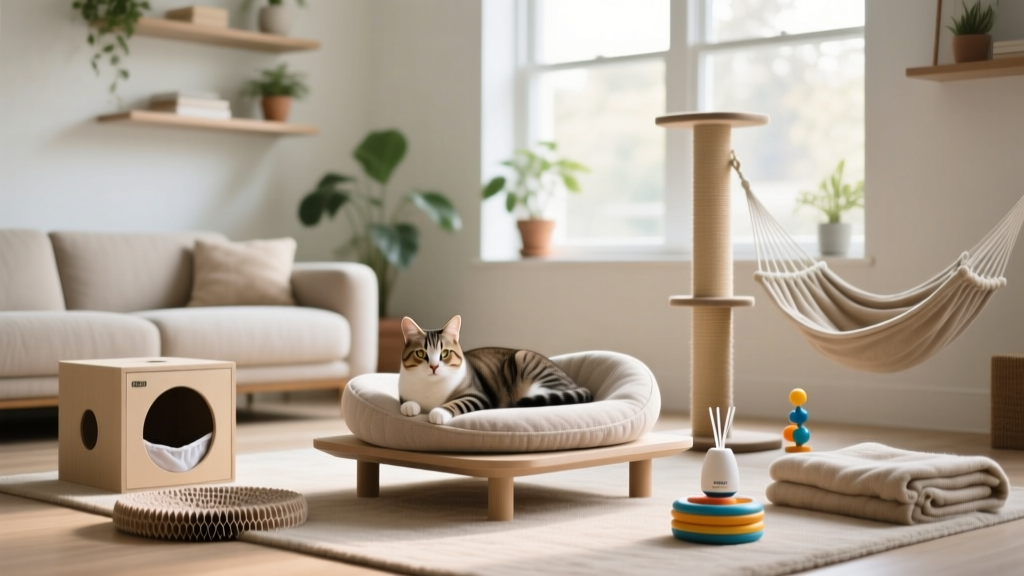
- Vertical territory expansion: Ragdolls love elevated vantage points. Install wall-mounted shelves at varying heights (minimum 36” clearance between levels) with soft landing zones. \n
- Olfactory enrichment: Rotate safe herbs (catnip, silvervine, valerian root) weekly. Ragdolls show stronger response to silvervine than catnip—78% reacted positively in controlled trials (Journal of Feline Medicine & Surgery, 2020). \n
Under-stimulated Ragdolls develop subtle but telling behaviors: excessive licking of fabrics (wool-sucking), repetitive pacing along baseboards, or obsessive grooming of one paw. These aren’t ‘quirks’—they’re displacement behaviors signaling unmet needs.
\n\n| Behavior | \nTypical Ragdoll Expression | \nWhat It Signals | \nWhen to Seek Help | \n
|---|---|---|---|
| Flopping | \nComplete muscle relaxation when lifted gently; recovers within 3–5 seconds | \nHigh trust, low arousal, secure attachment | \nFlop lasts >10 sec, accompanied by panting, glazed eyes, or failure to re-engage | \n
| Vocalization | \nSoft trills, chirps, and ‘mrrps’; increases before meals or during greetings | \nContent communication, social engagement | \nComplete silence >48 hrs OR sudden onset of yowling/crying at night | \n
| Grooming | \nMethodical, rhythmic licking; focuses on paws, face, and shoulders | \nSelf-soothing, routine maintenance | \nOver-grooming causing bald patches, skin lesions, or bleeding | \n
| Play | \nStalking, pouncing on stationary objects, retrieving, ‘kneading’ toys | \nCognitive engagement, prey drive expression | \nNo interest in any toys for >7 days despite environmental changes | \n
| Sleeping | \nOften in open, exposed positions (on backs, stretched out); sleeps 14–16 hrs/day | \nFeeling safe; normal feline sleep cycle | \nSleeping >20 hrs/day OR constant restlessness/night wandering | \n
Frequently Asked Questions
\nDo Ragdolls get lonely if left alone all day?
\nYes—profoundly. Ragdolls thrive on social rhythm, not just presence. Leaving them alone 8+ hours daily without enrichment significantly increases risk of depression-like symptoms (reduced appetite, lethargy, withdrawal). Solutions include adopting a second cat (ideally another Ragdoll or gentle breed), installing interactive cameras with treat dispensers, or hiring a midday cat sitter for 20-minute play sessions. Never rely solely on automated toys—they lack responsive feedback, which Ragdolls crave.
\nWhy does my Ragdoll follow me everywhere—even to the bathroom?
\nThis is classic Ragdoll social referencing. They’re not being ‘needy’—they’re gathering environmental intelligence by observing your reactions. Bathrooms trigger curiosity (running water, steam, confined space) and mild uncertainty. Following you reassures them that the space is safe. To reduce bathroom escorting, try placing a cozy perch outside the door with a treat puzzle—redirecting their focus while honoring their need for proximity.
\nAre Ragdolls really ‘dog-like’ in behavior?
\nPartially—but it’s an oversimplification. Like dogs, they exhibit strong attachment, retrieve objects, and respond to cues. However, they retain core feline autonomy: they won’t obey commands out of fear, and their affection is freely given—not transactional. Calling them ‘dog-like’ risks misinterpreting their subtle communication. Better framing: Ragdolls are ‘highly relational cats’—they choose deep bonds, but on feline terms.
\nMy Ragdoll suddenly stopped flopping—is something wrong?
\nNot necessarily. Flopping frequency declines with age (peaks at 6–18 months) and can decrease during illness, pain, or environmental stress (e.g., new pet, construction noise). First rule out physical causes: schedule a vet exam with orthopedic check (arthritis, muscle pain). If healthy, observe context: Does she still flop for you but not guests? That’s normal bonding shift. Does she avoid being lifted entirely? That suggests discomfort or lost trust—requiring gradual reconditioning with treats and zero-pressure handling.
\nDo Ragdolls get jealous of babies or other pets?
\nThey don’t experience ‘jealousy’ as humans define it—but they absolutely notice shifts in attention, routine, and scent. A new baby brings unfamiliar sounds, smells, and reduced interaction time. Ragdolls may respond with increased clinginess, redirected scratching, or urine marking. Prevention is key: begin scent-swapping (baby blanket rubbed on Ragdoll’s bedding) weeks before arrival, maintain 1:1 playtime daily, and never punish ‘attention-seeking’—redirect with structured interaction instead.
\nCommon Myths About Ragdoll Behavior—Debunked
\nMyth #1: “Ragdolls are hypoallergenic because they’re so calm.”
\nFalse. Allergies stem from Fel d 1 protein in saliva and sebaceous glands—not activity level. Ragdolls produce average-to-high Fel d 1 levels. Their calmness doesn’t reduce allergen load. If allergies are a concern, consult an allergist and consider regular bathing (every 2 weeks) with veterinary-approved shampoo—proven to reduce airborne allergens by 47% (American College of Allergy, Asthma & Immunology, 2021).
Myth #2: “If they flop, they’ll never scratch or bite—so they’re safe for toddlers.”
\nDangerously false. Flopping reflects trust in *that moment*, not blanket tolerance. Ragdolls feel pain and fear like any cat. Sudden grabbing, pulling tails, or restraining can trigger defensive biting—even in lifelong pets. Always supervise child-cat interactions, teach gentle handling (‘pet like feathers, not scrubbing’), and provide the Ragdoll with escape routes (cat trees, closed doors). As Dr. Sophia Yin, DVM, emphasized: ‘Consent is ongoing—not granted once at adoption.’
Related Topics (Internal Link Suggestions)
\n- \n
- Ragdoll kitten socialization timeline — suggested anchor text: "critical Ragdoll kitten socialization window" \n
- Best puzzle feeders for Ragdoll cats — suggested anchor text: "top-rated slow-feeders for intelligent cats" \n
- Ragdoll cat health problems checklist — suggested anchor text: "preventative Ragdoll health screening guide" \n
- How to introduce a Ragdoll to other pets — suggested anchor text: "stress-free multi-pet household setup" \n
- Ragdoll grooming needs explained — suggested anchor text: "Ragdoll coat care myths vs. reality" \n
Your Next Step: Observe, Document, and Respond—Not Just Adore
\nUnderstanding what behaviors do cats do ragdoll transforms your relationship from passive ownership to active, empathetic stewardship. You now know that flopping is trust—not passivity, that silence can mask distress, and that ‘velcro’ tendencies require thoughtful structure—not indulgence. Your immediate next step? Grab your phone and record 60 seconds of your Ragdoll’s natural behavior tomorrow morning—no interaction, no prompts. Watch it back twice: first for obvious actions (grooming, stretching, vocalizing), then a second time focusing on micro-expressions (ear swivels, pupil dilation, whisker position). Compare notes against our behavior table. Then, pick *one* insight—like adjusting play timing or adding a vertical perch—and implement it this week. Small, evidence-based changes compound into profound well-being. Because loving a Ragdoll isn’t about finding a perfect pet—it’s about becoming the calm, consistent, observant partner they evolved to need.