Cat Sideways Hop Before Pounce: Play or Hunt?
You’re walking through the living room with a basket of laundry when—bam—your cat appears from behind the couch. They do that hilarious sideways hop (sometimes with a little back arch), freeze for half a second like a tiny statue, and then pounce at… your sock. Or your ankle. Or the unsuspecting feather toy you didn’t even know was on the floor.
If you’ve ever laughed and wondered, “Is my cat being silly, or are they practicing to take down a wildebeest?” you’re not alone. That sideways hop before a pounce is one of the most recognizable “cat moves” out there. It’s also one of the most misunderstood—because it can mean play, hunting practice, excitement, or even “I’m not sure about this situation, but I’m going to investigate with my whole body.”
Why Cats Do the Sideways Hop: The Evolutionary Backstory
Cats are ambush predators. Even the fluffiest indoor cat has a brain and body built for stealth, timing, and explosive bursts of movement. In the wild, small felines survive by conserving energy, then striking at just the right moment. The sideways hop is part of that athletic toolkit.
From an evolutionary standpoint, this behavior is tied to:
- Predatory rehearsal: Kittens practice stalking, timing, and pouncing long before they’re skilled hunters. Adult cats keep those motor patterns “fresh” through play.
- Startle-and-control strategy: Sudden lateral movement can confuse prey. If you’ve ever watched a cat “crab walk” sideways toward a toy, you’ve seen a dramatic version of the same idea: unpredictability.
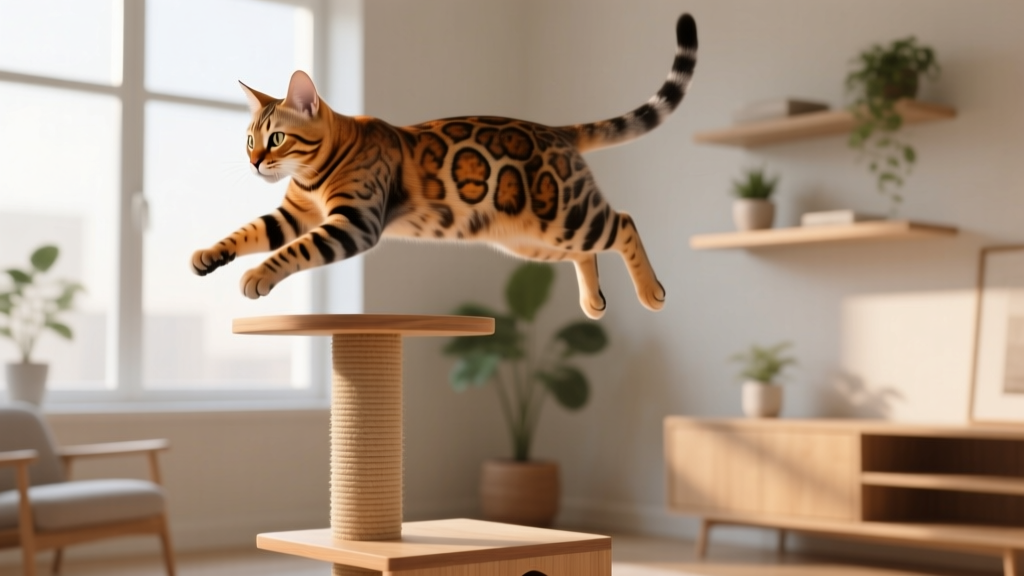
- Body priming: That hop often comes with a weight shift to the hind legs. Cats store power in their back end like a coiled spring, then release it into a pounce.
- Emotional arousal: Excitement (whether playful or predatory) changes how cats move. The sideways hop is frequently a visible “overflow” of energy and anticipation.
In other words: your cat isn’t being random. They’re being a cat—running ancient software on a modern, cushioned carpet.
What the Sideways Hop Looks Like (and Why It’s So Effective)
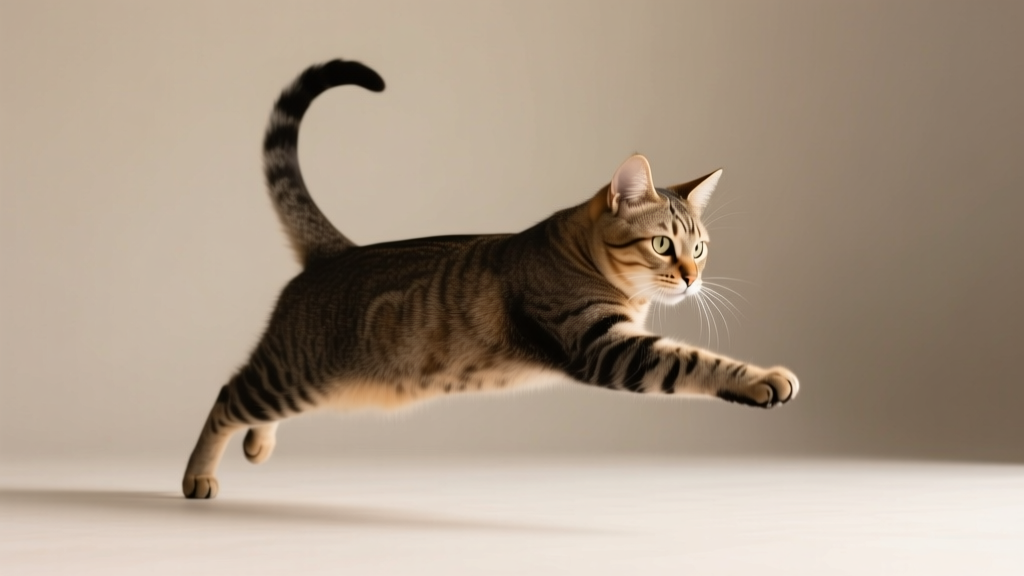
Most owners describe it as a “crab hop” or “sideways bounce.” Typical ingredients include:
- A quick sideways spring, often with the body slightly turned
- Hindquarters loaded (the “wiggle butt” may show up right after)
- A brief freeze, as if the cat is re-calculating distance
- A pounce, swat, or chase
That freeze is especially important. Cats are calculating machines: distance, angle, traction, target movement, and their own confidence all show up in that split-second pause.
Different Contexts: Play Hop vs. Hunt Hop vs. “What Was That?” Hop
The sideways hop shows up in several situations. The meaning changes based on what happens before and after, and what the rest of the body is saying.
1) The Classic Play Hop (Toy Time)
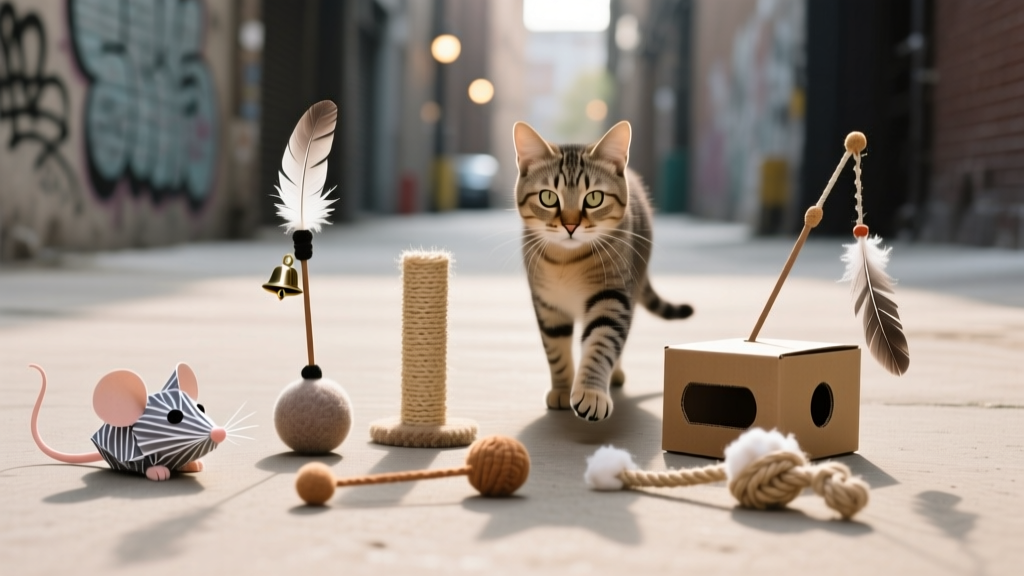
Your cat spots a feather wand, a shoelace, or a crinkly ball. They hop sideways like a fuzzy boxer, then pounce. You’ll often see:
- Loose, bouncy movements
- Ears mostly forward (or swiveling toward the toy)
- Claws mostly sheathed during swats
- Short bursts with breaks to reset
This is joyful practice hunting. Your cat is meeting a deep instinctive need in a safe way.
2) The “I’m Hunting That” Hop (Real Target)
This is the hop aimed at something your cat considers legitimate prey: a bug, a sunbeam-moving dust mote (yes, really), a lizard in the window, or a suspicious rustle under the rug. You may notice:
- More stillness before the hop
- Low, controlled posture
- Intense stare with minimal blinking
- A quieter body overall—less “bouncy,” more “laser-focused”
In this mode, your cat is not joking. They’re doing the same sequence their ancestors used to secure dinner.
3) The “Spicy Uncertainty” Hop (Startled or Testing Boundaries)
Sometimes the sideways hop appears when your cat is unsure: a new object on the floor, a crinkly bag that moved on its own, a visiting pet behind a door. Here the hop can be part bravado, part caution.
Clues include:
- Ears partially back or sideways (“airplane ears”)
- Piloerection (fur puffed, tail bottle-brushed)
- Stiff legs and a more exaggerated sideways posture
- Hissing or growling in more intense moments
This version can look like play at first glance, but it’s more about creating distance, testing safety, and looking bigger—while still staying ready to bolt.
4) The “Attack the Ankles” Hop (Over-Arousal or Under-Enrichment)
If your cat hops sideways and then pounces on you—especially feet moving past them—this is often misdirected predatory play. It’s common in young cats, high-energy cats, and cats who don’t get enough structured play.
It’s not “being mean” in the human sense. It’s your cat’s hunting brain grabbing the nearest moving target. Unfortunately, that target is frequently your toes.
What the Behavior Says About Your Cat’s Mood
The sideways hop is best read as “high arousal plus action readiness.” To figure out whether that arousal is playful, predatory, or anxious, look at the full picture:
- Playful/excited: relaxed face, soft body, tail up or gently swishing, takes breaks, returns for more.
- Predatory/focused: stillness, low posture, minimal vocalizing, intense tracking of a target, decisive pounce.
- Uncertain/defensive: puffed fur, arched back, sideways stance held longer, ears back, possible hissing, retreating between hops.
- Overstimulated: rapid tail lashing, dilated pupils, biting harder than usual during play, difficulty “turning off.”
One of my favorite ways to think about it: your cat’s sideways hop is like them saying, “I’m charged up—what happens next depends on whether I feel safe and satisfied.”
Related Behaviors You Might Notice
If your cat does the sideways hop, you may also see:
- The butt wiggle: hindquarters shimmy just before a pounce—fine-tuning aim and muscle activation.
- The freeze-and-stare: that intense pause to calculate timing and distance.
- Crab walking: exaggerated sideways movement, often with an arched back—common in kittens and during “spooky play.”
- Chattering at birds: a separate prey response, often paired with frustration when prey is inaccessible.
- Zoomies after hunting play: energy release, especially if play ends too abruptly.
When It’s Normal (Most of the Time) vs. When to Be Concerned
Normal: The sideways hop is typically a sign of healthy play, curiosity, and predatory practice—especially if your cat is eating, sleeping, and using the litter box normally.
Worth a closer look if you notice:
- Sudden change in movement (your cat starts hopping but seems stiff, painful, or uncoordinated)
- Limping after pouncing, reluctance to jump, or avoiding stairs
- New aggression toward people or pets that escalates quickly
- Compulsive, repetitive pouncing on nothing, paired with stress signs (over-grooming, hiding, appetite changes)
- Seizure-like episodes (loss of awareness, uncontrolled movements—rare, but important to rule out medically)
If the hop looks more like discomfort than exuberance, a vet check is the right move. Pain can make cats “weird,” and they’re masters at hiding it until they can’t.
How to Respond (and How to Encourage the Healthy Version)
The best response depends on what your cat is hopping at and why.
If it’s playful: lean into it
- Use interactive toys (wand toys, flirt poles) to give your cat a “real” target instead of hands and feet.
- Mimic prey movement: let the toy hide behind furniture, pause, then dart. The hop often appears when the “prey” acts believable.
- End with a win: let your cat catch the toy occasionally. Constant failure can create frustration.
- Add a routine: 5–10 minutes, once or twice a day, can dramatically reduce ankle ambushes.
If it’s aimed at your ankles: redirect, don’t punish
- Freeze your feet (movement makes you “prey”).
- Redirect to a toy tossed away from your body.
- Reward calm with attention or treats when your cat chooses a toy or sits instead of pouncing.
- Increase enrichment: puzzle feeders, bird videos in moderation, window perches, and scheduled play help.
If it’s nervous/uncertain: give space and confidence
- Don’t force interaction with the “scary” object or visitor.
- Create escape routes (cat trees, shelves, open doorways).
- Pair new things with good stuff (treats, play at a distance) to build positive associations.
Healthy sideways hops are a sign your cat feels safe enough to express energy. Your job is to channel that energy toward appropriate targets.
Fun Facts and Research-Flavored Bits
- Play is serious practice. Animal behavior research consistently supports the idea that play helps young animals develop hunting and social skills. For cats, pouncing games aren’t “extra”—they’re instinctual training sessions.
- Sideways movement is tactical. Lateral hops can help a cat reposition quickly while keeping eyes on the target, improving strike angle and traction.
- Kittens are hop champions. Younger cats show the most dramatic sideways hops and crab walks because they’re building coordination and confidence.
- Indoor cats need “fake hunts.” Without opportunities to stalk and pounce, many cats invent their own—sometimes involving your legs at 2 a.m.
FAQ: Cat Sideways Hop Before Pounce
Is the sideways hop always play?
No. It’s often playful, but it can also be hunting practice or a response to uncertainty. Check the rest of your cat’s body language—loose and bouncy suggests play; stiff and puffed suggests fear or defensiveness.
Why does my cat hop sideways and then run away?
That’s common in “spooky play” or uncertainty. Your cat may be excited but not fully confident, so they hop in, test the situation, then retreat to reassess. Kittens do this constantly.
My cat does the sideways hop right before biting me. What should I do?
Treat it as misdirected predatory play. Stop using hands as toys, freeze movement, and redirect to an interactive toy. Add daily play sessions so your cat has an appropriate outlet.
Do adult cats do this too, or is it a kitten thing?
Adults absolutely do it—especially high-energy cats or cats who are feeling particularly playful. Kittens tend to be more dramatic because they’re still refining coordination.
Could the sideways hop mean my cat is stressed?
It can, if it’s paired with puffed fur, ears pinned back, hissing, hiding, or a sudden change in behavior. If your cat looks tense rather than playful, consider what in the environment might be worrying them.
Should I encourage it?
Yes—if it’s happening during appropriate play. Encouraging natural hunting play with toys is one of the best ways to support your cat’s mental health and reduce unwanted ambush behavior.
The sideways hop before a pounce is one of those behaviors that makes cats endlessly entertaining—and endlessly fascinating. It’s a window into the predator within, the kitten within, and sometimes the tiny drama queen within.
Does your cat do a sideways hop before attacking a feather toy, a dust bunny, or your unsuspecting slippers? Share your funniest (or most puzzling) sideways-hop stories with the Cat Lovers Base community at catloversbase.com.