What Behaviors Do Cats Do for Anxiety? 12 Subtle but...
Why Your Cat’s 'Normal' Behavior Might Be Screaming for Help
If you’ve ever wondered what behaviors do cats do for anxiety, you’re not alone — and you’re already paying attention to something vital. Unlike dogs, cats rarely vocalize distress with whining or pacing; instead, they internalize, suppress, or express anxiety through subtle, easily misread behaviors: overgrooming until bald patches appear, sudden litter box avoidance, unexplained aggression toward familiar people, or hiding for days after a minor household change. These aren’t ‘just quirks’ — they’re physiological stress responses linked to elevated cortisol, suppressed immunity, and even urinary tract disease. In fact, a 2023 study in the Journal of Feline Medicine and Surgery found that 68% of cats diagnosed with idiopathic cystitis (a painful bladder condition) had concurrent, undiagnosed anxiety triggers — proving that behavioral signs are often the first and most accurate diagnostic window into feline emotional health.
1. The Silent Language: Decoding Anxiety-Driven Behaviors (Beyond Hiding)
Hiding is the classic red flag — but it’s also the least informative. Real insight lies in what your cat does *before*, *during*, and *after* retreat. Veterinary behaviorist Dr. Melissa Bain (UC Davis School of Veterinary Medicine) emphasizes that anxiety in cats manifests as a spectrum of displacement behaviors — actions that serve no obvious function but help manage internal tension. These include:
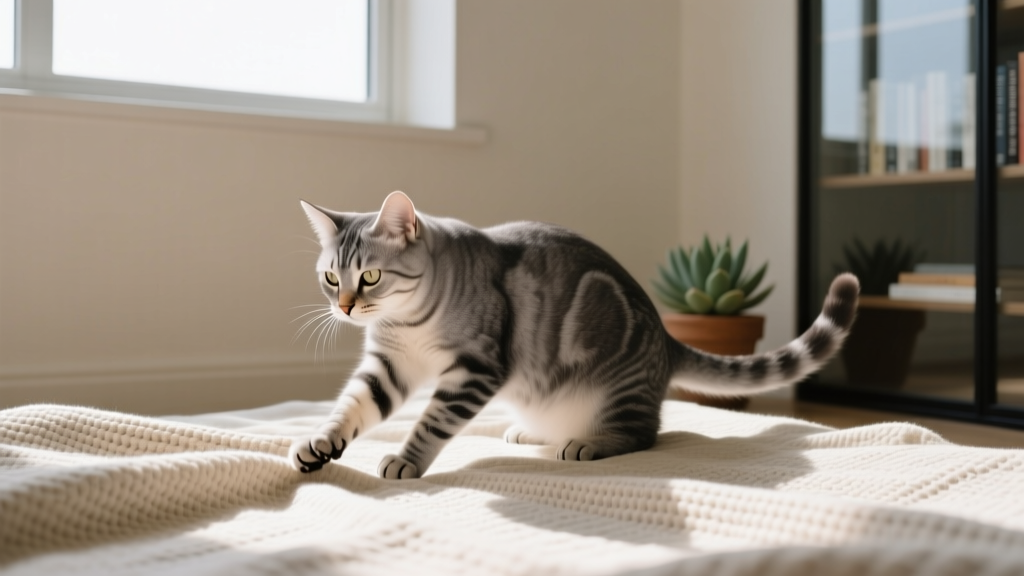
- Overgrooming (psychogenic alopecia): Licking or chewing fur obsessively — especially on inner thighs, belly, or forelegs — until skin is raw or hairless. This isn’t just ‘boredom’; it releases endorphins that temporarily soothe nervous system hyperarousal.
- Excessive kneading or suckling: While comforting in kittens, persistent nursing on blankets, clothing, or even your arm past 6 months signals insecurity and attempts at self-soothing.
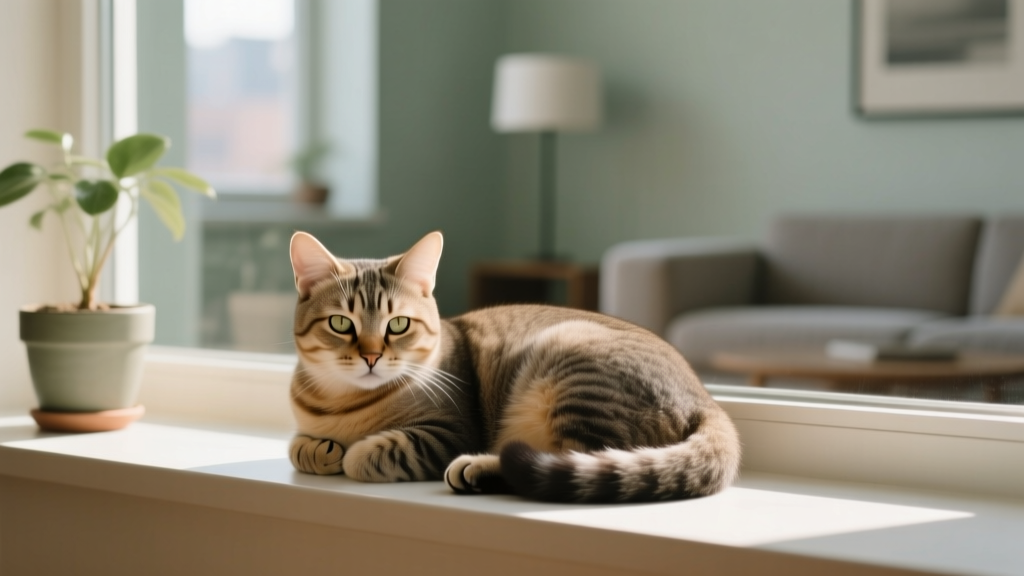
- Freezing + dilated pupils: Not fear-based ‘fight-or-flight’, but a high-alert ‘freeze-and-monitor’ state. Pupils remain wide even in normal light, ears swivel independently, whiskers pull back tightly — a sign the amygdala is stuck in threat-assessment mode.
- Redirected aggression: Sudden, intense hissing, swatting, or biting *after* seeing another cat outside, hearing loud noises, or sensing tension between humans — the target isn’t the source, but whoever’s nearest.
A real-world example: Luna, a 4-year-old domestic shorthair, began urinating on her owner’s laundry pile after a new baby arrived. Her vet ruled out UTI, but a certified feline behavior consultant observed Luna pacing near windows at dawn, tail twitching rapidly, then retreating to a closet — classic anticipatory anxiety. Within 10 days of installing motion-activated window blinds and introducing a consistent ‘safe zone’ routine, the marking stopped.
2. When ‘Bad Behavior’ Is Actually a Cry for Calm
Many owners label anxiety-driven actions as ‘disobedience’ or ‘spite’. That misunderstanding delays intervention — and worsens outcomes. Consider these common misattributions:
- Litter box avoidance: Often blamed on cleanliness, but research shows >75% of cases involve substrate aversion (e.g., pain from arthritis making digging uncomfortable) or location anxiety (box placed near noisy appliances or high-traffic areas).
- Scratching furniture: Not defiance — it’s scent-marking (via facial glands) and tactile stress-release. A stressed cat may scratch 3–5x more frequently and focus on vertical surfaces near doorways or windows where threats are perceived.
- Vocalization at night: Yowling or meowing persistently between 2–4 a.m. isn’t ‘attention-seeking’ — it’s circadian disruption linked to separation anxiety or cognitive decline in older cats. Dr. Sarah Heath, a European Specialist in Veterinary Behavioral Medicine, notes this pattern correlates strongly with elevated nighttime cortisol levels in feline saliva tests.
Actionable step: Track a 72-hour behavior log. Note time, duration, trigger (if visible), environment (light/noise/other pets), and your cat’s posture. Patterns emerge fast — e.g., scratching spikes every Tuesday at 5 p.m. (coinciding with garbage truck arrival) or vocalizing only when left alone for >2 hours. This data is gold for your vet or behaviorist.
3. From Observation to Intervention: Science-Backed Strategies That Work
Once you recognize the behaviors, the next question is: what actually helps? Not all popular advice is evidence-based. Here’s what peer-reviewed studies and board-certified behaviorists confirm works — and why:
- Environmental enrichment isn’t optional — it’s neurological medicine. A landmark 2022 University of Lincoln study showed cats with access to vertical spaces (cat trees ≥5 ft tall), multiple feeding stations (not just one bowl), and daily 10-minute interactive play sessions had 42% lower salivary cortisol than control groups. Key: rotate toys weekly and use food puzzles — mental engagement lowers sympathetic nervous system activation.
- Pharmacological support is sometimes essential — and nothing to fear. As Dr. Ilona Rodan, co-author of Understanding Behavior in Cats, states: “Just like humans with clinical anxiety, some cats need SSRIs (e.g., fluoxetine) or benzodiazepines (e.g., alprazolam) short-term to break the cycle of chronic stress. It’s not sedation — it’s enabling the brain to relearn safety.” Always paired with behavior modification, never used alone.
- Consistency beats intensity. One 15-minute predictable routine (e.g., same-time play → treat → quiet petting) reduces uncertainty — the #1 driver of feline anxiety. Avoid ‘surprise’ affection; let your cat initiate contact. Reward calm proximity with gentle chin scritches, not full-body petting (which many cats tolerate but don’t enjoy).
Pro tip: Introduce change gradually. Moving? Set up the new carrier in the living room 2 weeks early with treats inside. New pet? Use scent-swapping (rubbing a cloth on each animal, then placing it in their safe space) for 5 days before visual introductions.
4. The Anxiety Behavior Tracker: What to Watch, When to Worry, and What It Likely Means
| Behavior | Typical Duration/Pattern | Most Likely Anxiety Trigger | Urgency Level (1–5) | First Action Step |
|---|---|---|---|---|
| Overgrooming leading to bald patches or sores | Multiple times daily, lasting >5 mins/session, worsening over days | Chronic stress (e.g., multi-cat household tension, owner work schedule changes) | 4 | Schedule vet visit to rule out dermatitis/pain; add Feliway Optimum diffuser in affected area |
| Urinating outside the litter box on soft surfaces (beds, rugs) | New onset, no prior history, urine tests negative | Location anxiety or substrate aversion (e.g., covered box, scented litter) | 3 | Place 2–3 uncovered boxes with unscented clumping litter in quiet, low-traffic rooms; remove covers permanently |
| Aggression toward specific person or pet after a trigger event | Immediate onset post-event (e.g., thunderstorm, visitor), resolves in 1–2 hrs | Redirected or fear-based aggression | 2 | Separate safely; avoid punishment; reintroduce via parallel activities (e.g., both eat treats in same room, 6 ft apart) |
| Excessive vocalization at night (>3 episodes/night, lasting >10 mins) | Persistent for >2 weeks, no medical cause found | Separation anxiety or age-related cognitive dysfunction | 4 | Install nightlight + leave radio on low; consult vet for senior bloodwork & possible melatonin trial |
| Refusing food for >24 hours with lethargy | Acute onset, no vomiting/diarrhea | Severe situational anxiety (e.g., boarding, vet visit, home renovation) | 5 | Seek emergency vet care — anorexia >48 hrs risks hepatic lipidosis, a life-threatening liver condition |
Frequently Asked Questions
Why does my cat suddenly start hiding after living with me for years?
Sudden hiding in a previously confident cat is rarely ‘just aging’. It’s almost always a response to a change in sensory input (e.g., new flooring that echoes, a neighbor’s dog barking constantly, or even your own increased stress hormones — cats detect human cortisol in sweat). Rule out pain first (dental issues, arthritis), then audit environmental shifts. Even switching laundry detergent can alter scent cues cats rely on for security.
Can anxiety cause physical illness in cats?
Yes — profoundly. Chronic anxiety suppresses immune function, increases inflammation, and elevates risk for feline interstitial cystitis (FIC), inflammatory bowel disease (IBD), and asthma. A 2021 Cornell Feline Health Center review found anxious cats were 3.2x more likely to develop recurrent urinary blockages. Stress literally reshapes physiology — which is why treating anxiety isn’t ‘just behavioral’; it’s preventative healthcare.
Will getting a second cat reduce my anxious cat’s stress?
Not reliably — and often makes it worse. Cats are facultatively social, not pack animals. Introducing a new cat without meticulous, 4–6 week scent/visual/safe-distance protocols increases territorial anxiety in 70% of resident cats (per International Society of Feline Medicine guidelines). If companionship is the goal, consider adopting a bonded pair who already know each other — never force a solo cat into cohabitation.
How long does it take to see improvement after starting anxiety interventions?
With environmental adjustments alone: 2–4 weeks for mild cases. With combined behavior modification + medication: noticeable reduction in severe behaviors (like aggression or inappropriate elimination) within 10–14 days, though full stabilization takes 8–12 weeks. Patience is critical — neural pathways rewire slowly. Track progress with video snippets weekly; you’ll spot subtle wins (e.g., longer eye-blink sequences, relaxed ear position) before major behavior shifts.
Are CBD or herbal remedies safe and effective for anxious cats?
Evidence is extremely limited. No CBD product is FDA-approved for cats, and dosing is unstandardized. A 2023 University of Tennessee study found inconsistent cannabinoid concentrations in 89% of commercial pet CBD oils, with 22% containing detectable THC — toxic to cats. Safer, proven alternatives include prescription anti-anxiety meds, Feliway diffusers (clinically validated to reduce stress markers), and targeted play therapy. Always consult your vet before trying supplements.
Common Myths About Cat Anxiety
Myth #1: “Cats don’t get anxiety — they’re just independent.”
False. Independence is a survival trait, not emotional indifference. Neuroimaging studies confirm cats experience limbic system activation identical to humans during threat exposure. Their ‘independence’ is often learned coping — avoiding vulnerability because expressing fear historically meant predation.
Myth #2: “If my cat eats and uses the litter box, they can’t be anxious.”
Deeply misleading. Many anxious cats maintain baseline functions while exhibiting high-level distress elsewhere (e.g., grooming compulsions, hypervigilance, micro-aggressions). A cat can have perfect litter habits yet suffer debilitating anxiety — just like a human with high-functioning anxiety who excels at work while battling panic attacks privately.
Related Topics
- Cat stress symptoms checklist — suggested anchor text: "comprehensive cat stress symptoms checklist"
- Best calming aids for cats with anxiety — suggested anchor text: "vet-recommended calming aids for cats"
- How to introduce a new pet to an anxious cat — suggested anchor text: "step-by-step guide to introducing pets safely"
- Feline hyperesthesia syndrome vs anxiety — suggested anchor text: "feline hyperesthesia vs anxiety symptoms"
- Cat anxiety medications: what vets prescribe — suggested anchor text: "safe anxiety medications for cats"
Your Next Step Starts Today — And It’s Simpler Than You Think
Recognizing what behaviors do cats do for anxiety is the crucial first act of advocacy — but knowledge becomes power only when applied. Don’t wait for ‘big’ signs like aggression or refusal to eat. Start tonight: observe your cat for 10 minutes without interaction. Note ear position, blink rate, tail movement, and whether they choose elevated perches or floor-level hideouts. Then, pick *one* evidence-backed action from this article — whether it’s adding a second litter box, playing with a wand toy for 5 minutes before bed, or simply sitting quietly 3 feet away while offering treats. Consistency compounds. Small, compassionate interventions rewire safety pathways in your cat’s brain — one calm moment at a time. Ready to go deeper? Download our free Feline Anxiety Behavior Tracker (PDF) — includes printable logs, vet conversation scripts, and a 7-day environmental reset plan.