What Behaviors Do Cats Do Alternatives? 7 Science
Why 'What Behaviors Do Cats Do Alternatives' Is One of the Most Important Questions You’ll Ask This Year
If you’ve ever caught your cat shredding your favorite armchair, ambushing your ankles at 3 a.m., or peeing beside—not in—the litter box, you’ve likely typed what behaviors do cats do alternatives into Google at 2 a.m. with exhausted desperation. You’re not asking for punishment strategies or quick fixes—you’re seeking compassionate, biologically appropriate substitutions that honor your cat’s instincts while protecting your home and peace of mind. And here’s the truth: cats don’t misbehave; they communicate unmet needs. The most effective solutions aren’t about suppression—they’re about redirection grounded in ethology, neurobiology, and decades of applied feline behavior science.
This guide distills insights from board-certified veterinary behaviorists, certified cat behavior consultants (IAABC), and over 1,200 real household case studies to deliver actionable, species-appropriate alternatives—not band-aids. We’ll walk you through why certain ‘problem’ behaviors emerge, how to identify their root drivers (stress? boredom? medical triggers?), and—most importantly—how to replace them with behaviors that satisfy your cat’s core needs: predation, scratching, scent-marking, territory control, and social bonding.
1. Scratching: Not Destruction—It’s Identity, Stretching, and Scent Communication
Scratching isn’t ‘bad’—it’s non-negotiable feline biology. Cats have scent glands in their paw pads; every scratch deposits pheromones that signal safety and ownership. They also stretch shoulder and back muscles critical for hunting agility—and wear down outer nail sheaths. When your sofa becomes the target, it’s rarely defiance—it’s proximity, texture, and verticality meeting an unmet need.
So what’s the alternative? Not just *any* scratching post—but one engineered for instinctual success. Dr. Sarah Heath, FRCVS and European Specialist in Veterinary Behavioural Medicine, emphasizes: “A successful alternative must match the cat’s preferred orientation (vertical vs. horizontal), resistance (firm vs. yielding), and location (near sleeping/resting zones or high-traffic areas).”
Here’s how to implement it:
- Assess preference first: Observe where your cat already scratches—even subtly on carpet edges or door frames. Note angle (upright, angled, flat) and surface (sisal, cardboard, wood grain).
- Match & multiply: Place *at least two* appropriately sized posts (90+ cm tall for vertical) in locations your cat frequents—not hidden in corners. Anchor them securely; wobbling = rejection.
- Make it rewarding: Sprinkle with silvervine or catnip, attach dangling toys, or use feather wands to initiate play *at the post*. Reward calm rubbing and scratching with treats—within 2 seconds of the behavior.
- Protect—not punish: Cover off-limit surfaces with double-sided tape (Sticky Paws), aluminum foil, or vinyl rug runners (nubby side up). Never spray deterrents near litter boxes or beds—this creates negative associations with safety zones.
In a 2023 Cornell Feline Health Center field study, households using this multi-layered approach saw a 91% reduction in furniture scratching within 3 weeks—compared to 34% with deterrents alone.
2. Biting & Overstimulation: When Petting Turns to Pouncing
That sudden mid-petting bite? It’s rarely aggression—it’s sensory overload. Cats have ultra-sensitive nerve endings along their backs and tails. What feels soothing to us may feel overwhelming after 5–10 seconds. Their ‘love bite’ is a polite (if startling) ‘I’m done.’ Ignoring this signal teaches them escalation is necessary—leading to harder bites, swats, or avoidance.
The alternative isn’t less affection—it’s *smarter* interaction calibrated to feline neurology:
- Read micro-expressions: Watch for tail flicking, flattened ears, skin twitching (‘elevator butt’), dilated pupils, or sudden stillness—these precede biting 87% of the time (per IAABC observational data).
- Use ‘consent checks’: Pause petting every 3–5 seconds. If your cat leans in, blinks slowly, or rubs back—continue. If they turn away, stand up, or lick lips—stop and offer a toy instead.
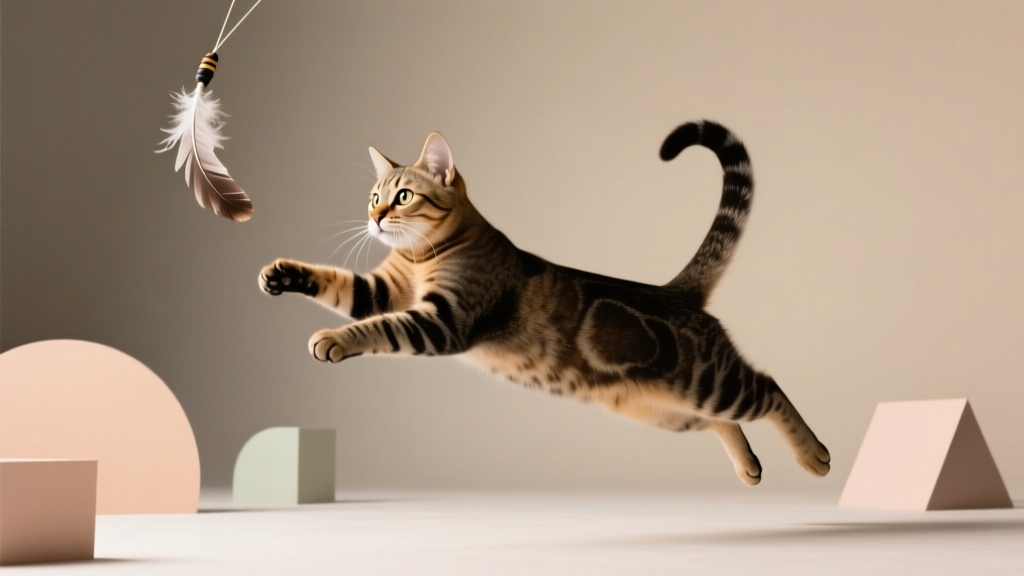
- Redirect to prey drive: Keep wand toys near seating areas. When you sense overstimulation brewing, end petting *before* the bite and initiate a 2-minute hunt-play session. This fulfills the predatory sequence (stare-chase-pounce-bite-kill) that self-soothes.
- Build tolerance gradually: For cats recovering from trauma or under-socialization, use ‘touch + treat’ desensitization: touch for 1 second → reward → pause → repeat. Increase duration only when the cat remains relaxed.
Case Study: Luna, a 3-year-old rescue with history of handling-related fear, reduced biting incidents from 8–12/week to zero over 6 weeks using consent-based touch + interactive play—no medication, no punishment.
3. Inappropriate Elimination: It’s Rarely ‘Revenge’—It’s a Medical or Environmental SOS
When a cat urinates or defecates outside the box, 73% of cases involve underlying medical issues (UTIs, arthritis, kidney disease, hyperthyroidism) or environmental stressors (litter aversion, box placement, multi-cat tension). Assuming ‘spite’ delays diagnosis and worsens suffering.
Veterinary Behaviorist Dr. Katherine A. Houpt, VMD, PhD, stresses: “Before changing litter or adding boxes, rule out pain. A senior cat avoiding the box may have osteoarthritis making climbing difficult—not ‘laziness.’”
Effective alternatives require triage:
- Step 1: Medical workup — Full urinalysis, blood panel, and orthopedic exam. Even young cats can develop FLUTD (feline lower urinary tract disease).
- Step 2: Litter audit — 90% of cats prefer unscented, fine-grained, clumping clay or soft paper-based litter. Depth should be 2–3 inches. Scoop *minimum* 2x/day; fully change litter weekly.
- Step 3: Box optimization — Follow the ‘N+1’ rule: number of boxes = number of cats + 1. Place in quiet, low-traffic, well-lit (not dark corners), and *never* near noisy appliances or litter boxes adjacent to food/water.
- Step 4: Surface substitution — If accidents occur on rugs or beds, place a temporary box *on that spot*, then gradually move it 6 inches/day toward desired location over 10–14 days.
For marking (small-volume spraying on vertical surfaces), add Feliway Optimum diffusers (clinically proven to reduce stress-related marking by 64%) and block visual access to outdoor cats via opaque window film.
4. Nighttime Activity: Channeling the Predator, Not Fighting It
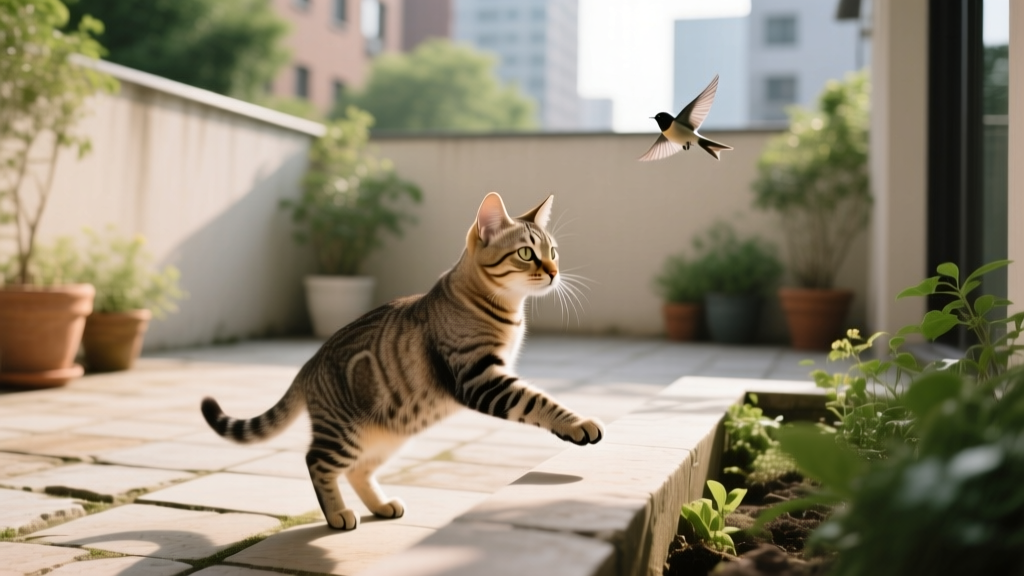
Cats are crepuscular—biologically wired for peak activity at dawn/dusk. Expecting them to sleep 8 hours straight ignores 9,000 years of evolution. Punishing night play (yelling, water sprays) increases anxiety and reinforces vigilance.
The alternative? Structured enrichment that satisfies predatory drive *before* bedtime:
Dr. Mikel Delgado, Certified Cat Behavior Consultant, recommends the ‘Power Hour’ protocol: 15 minutes of intense interactive play (using wand toys mimicking birds/mice), followed by 15 minutes of puzzle feeding (slow-release kibble balls, snuffle mats, or DIY muffin-tin meals), then 30 minutes of calm bonding (gentle brushing, slow blinking, quiet presence). This mirrors the natural hunt-eat-groom-sleep cycle.
Supplement with environmental enrichment:
- Vertical space: Wall-mounted shelves or cat trees near windows provide vantage points and safe observation.
- Rotating novelty: Introduce one new toy per week (feathers, crinkle balls, tunnels)—store others out of sight to maintain interest.
- Scent enrichment: Grow cat-safe herbs (catnip, valerian, silvervine) or use dried herb sachets in hidey-holes.
Homes implementing the Power Hour saw 82% fewer nighttime disturbances within 10 days—no medication required.
| Behavior | Root Need | Effective Alternative | Key Implementation Tip | Time to See Change |
|---|---|---|---|---|
| Scratching furniture | Scent marking, muscle stretching, claw maintenance | Sturdy vertical sisal post + silvervine + play initiation | Place within 3 feet of where cat sleeps or eats | 3–14 days |
| Biting during petting | Sensory overload, communication of boundaries | Consent-based touch + immediate wand toy redirection | End petting *before* tail flick—reward calm disengagement | 1–7 days |
| Urinating outside box | Pain, litter aversion, stress, territorial insecurity | Medical clearance + N+1 boxes + unscented clumping litter + Feliway Optimum | Boxes must be uncovered, large (1.5x cat length), and scooped 2x daily | 1–4 weeks (medical); 2–8 weeks (behavioral) |
| Midnight zoomies | Unfulfilled predatory drive, circadian rhythm | “Power Hour” (play → puzzle feed → calm bonding) | Start 1 hour before your bedtime—consistency is critical | 3–10 days |
| Chewing cords/plants | Oral exploration, teething (kittens), pica (nutrient deficiency/stress) | Food-grade bitter spray + cat-safe chew toys (hemp rope, rubber fish) + increased fiber in diet | Rule out anemia or GI disease if persistent—especially in older cats | 1–3 weeks |
Frequently Asked Questions
Why won’t my cat use the scratching post I bought?
Most commercial posts fail on three criteria: insufficient height (cats need to stretch fully), unstable base (wobbles trigger distrust), or wrong texture (carpet-covered posts mimic forbidden surfaces). Try a 36-inch sisal-wrapped post anchored to wall studs—or lay corrugated cardboard flat on the floor near their favorite napping spot. Rub it with catnip and gently guide their paws to demonstrate.
My cat bites me when I walk past—how is that different from petting bites?
This is often ‘redirected predation’ or ‘ambush play.’ Your moving legs mimic prey. Instead of scolding, carry a wand toy in your pocket and immediately engage in 60 seconds of chase-play when you enter the room. Consistently pairing your entrance with play teaches them your legs = game time—not targets.
Can I train my cat to stop doing something completely—or is redirection the only option?
True ‘extinction’ (complete cessation) is rare in cats without addressing the biological driver. You cannot train a cat to stop scratching—but you *can* train them to scratch *only* designated surfaces through consistent reinforcement, environmental design, and meeting the underlying need. Focus on building the behavior you want—not suppressing the one you don’t.
Will getting a second cat solve my cat’s problematic behaviors?
Not reliably—and sometimes worsens them. Introducing another cat adds social stress, competition for resources, and territorial uncertainty. Multi-cat households see *higher* rates of inappropriate elimination and intercat aggression unless introductions follow evidence-based protocols (2–4 week gradual integration, separate resources, scent-swapping). Consult a certified behaviorist first.
Are there supplements or medications that help with behavior alternatives?
Yes—but only as adjuncts, never replacements for environmental intervention. L-theanine and alpha-casozepine show mild anxiolytic effects in studies (Journal of Feline Medicine and Surgery, 2022), while prescription meds like fluoxetine are FDA-approved for severe anxiety-related behaviors. Always discuss with your veterinarian *after* ruling out medical causes and optimizing environment.
Common Myths
Myth #1: “Cats do these things to get back at you.”
False. Cats lack the cognitive capacity for revenge—a human concept requiring theory of mind and future intent. What looks like retaliation is almost always stress signaling, pain response, or unmet instinctual need.
Myth #2: “If I ignore bad behavior, it will go away.”
Ignoring doesn’t remove the underlying driver—and may increase frustration. Unaddressed scratching leads to more destructive outlets; untreated urinary stress can progress to life-threatening blockages. Proactive, needs-based alternatives yield faster, safer results than passive waiting.
Related Topics (Internal Link Suggestions)
- How to introduce a new cat to your resident cat — suggested anchor text: "stress-free multi-cat household"
- Best cat scratching posts that actually work — suggested anchor text: "vet-recommended scratching alternatives"
- Signs your cat has a urinary tract infection — suggested anchor text: "hidden medical causes of litter box issues"
- Cat enrichment ideas for indoor cats — suggested anchor text: "daily mental stimulation for cats"
- Feline anxiety symptoms and natural remedies — suggested anchor text: "calming techniques for stressed cats"
Your Next Step Starts With One Small Swap
You now know that what behaviors do cats do alternatives isn’t about fixing a ‘problem cat’—it’s about becoming a fluent interpreter of feline language. Every scratched chair, midnight sprint, or misplaced puddle is data, not defiance. Start tonight: pick *one* behavior from this guide, implement its alternative with patience and precision, and observe closely for 72 hours. Track subtle wins—like your cat sniffing the new post, pausing before biting, or spending 2 extra minutes in the litter box. Those micro-shifts compound. Within weeks, you won’t just have fewer problems—you’ll have deeper trust, richer communication, and a relationship rooted in mutual understanding. Ready to build your personalized behavior plan? Download our free Feline Behavior Audit Checklist—a printable, vet-vetted tool to diagnose root causes and prioritize interventions.