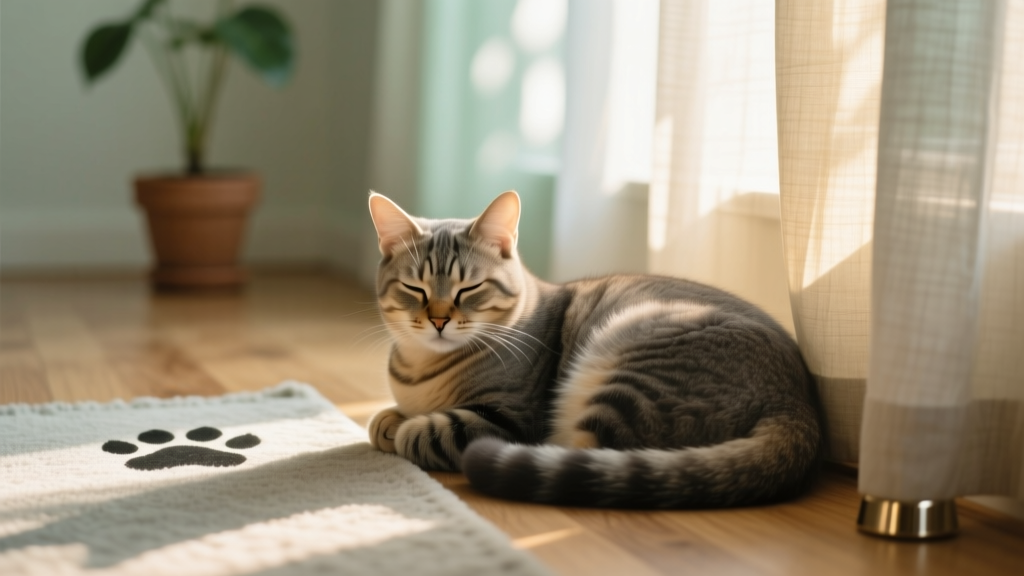
What Cat Behaviors Mean for Sleeping
Why Your Cat’s Sleep Posture Is a Silent Health & Emotion Report Card
If you’ve ever watched your cat sleep—tucked into a tight cinnamon roll, sprawled like a starfish, or perched precariously on your laptop—you’ve probably wondered: what cat behaviors mean for sleeping? Spoiler: it’s far more than comfort preference. A cat’s sleeping position, timing, frequency, and micro-movements are real-time behavioral biomarkers—revealing everything from deep trust and neurological health to chronic pain, anxiety, or early illness. In fact, a 2023 study published in Frontiers in Veterinary Science found that 68% of cats diagnosed with early-stage osteoarthritis showed measurable changes in sleep posture and location preference weeks before owners noticed limping or reduced activity. Yet most caregivers misinterpret these cues—or worse, dismiss them entirely. This guide cuts through myth and guesswork with vet-validated insights, actionable observations, and a clear framework to translate your cat’s slumber into meaningful intelligence about their well-being.
Posture Decoded: What Each Sleep Position Really Says
Cats spend 12–16 hours a day sleeping—but they don’t do it randomly. Their chosen pose is a deliberate expression of physiological state and environmental perception. Veterinarian Dr. Lena Cho, DVM, DACVB (Diplomate of the American College of Veterinary Behaviorists), explains: “A cat’s sleep posture is the behavioral equivalent of a vital sign. It reflects autonomic nervous system balance—the interplay between ‘rest-and-digest’ (parasympathetic) and ‘fight-or-flight’ (sympathetic) activation.” Here’s what to watch for—and what each means:
- The Tight Cinnamon Roll (body coiled, nose to tail): This classic ‘loaf’ shape minimizes surface area and protects vital organs. It signals mild vigilance—not necessarily fear, but a low-grade alertness common in new environments, multi-cat homes, or after stressful events (e.g., vet visits). Not alarming alone—but if persistent beyond 3–5 days, investigate noise triggers, litter box placement, or subtle social tension.
- Belly-Up (paws splayed, eyes closed, slow breathing): This is the gold standard of feline trust. Exposing the vulnerable abdomen requires profound security—both physically and emotionally. If your cat sleeps this way *only* when you’re present (or on your clothing), it’s a powerful sign of attachment. But note: if accompanied by excessive vocalization upon waking or reluctance to stand, rule out abdominal discomfort with your vet.
- The Pancake (flat, legs extended, often on cool surfaces): Common in warm weather or high-energy kittens, this maximizes heat dissipation. However, in older cats (>10 years), it can indicate joint stiffness or mild fever. Monitor for concurrent signs: reluctance to jump, grooming decline, or increased water intake.
- Perched High (on shelves, bookcases, or your head): Elevation = control. Cats choose elevated naps to monitor territory and feel safe from surprise. But if your senior cat suddenly abandons floor-level beds for precarious heights—or starts falling off during sleep—this may signal vestibular issues, vision loss, or cognitive decline.
Timing & Rhythm: When Your Cat Sleeps Matters Just as Much as How
Cats are crepuscular—not nocturnal—which means peak activity occurs at dawn and dusk. But modern indoor life scrambles that rhythm. Disrupted sleep-wake cycles aren’t just inconvenient; they’re red flags. According to the International Society of Feline Medicine (ISFM), abnormal sleep timing correlates strongly with three key concerns:
- Environmental Stress: Chronic low-level anxiety (e.g., from unseen outdoor cats visible through windows, inconsistent feeding schedules, or household tension) pushes cats into fragmented, light sleep—often punctuated by sudden awakenings and ‘midnight crazies.’
- Pain or Discomfort: Arthritic cats often nap more *during the day* to conserve energy, then pace or vocalize at night due to stiffness and discomfort. One owner shared with us how her 14-year-old Maine Coon began sleeping 18+ hours daily—but only after we discovered she’d stopped using her favorite window perch because climbing the stairs caused her to limp.
- Cognitive Dysfunction Syndrome (CDS): Affecting ~55% of cats aged 11–15 and up to 80% over age 16, CDS disrupts circadian regulation. Affected cats may sleep deeply all day, then wander confused at night, yowling or getting stuck in corners. Early intervention with environmental enrichment and vet-approved supplements can slow progression significantly.
Track your cat’s sleep patterns for one week using a simple log: note start/end times of naps, locations, positions, and any unusual behaviors (pacing, vocalizing, staring blankly). Bring this to your next wellness exam—it’s more valuable than many lab tests.
Movement & Micro-Behaviors: Twitches, Whisker Flicks, and Other Clues You’re Missing
While humans dream mostly in REM, cats cycle through REM and non-REM sleep every 25 minutes—and their micro-expressions during these phases are rich with meaning:
- Slow, rhythmic whisker twitching + gentle paw paddling: Classic REM indicators. Your cat is likely dreaming of hunting or playing. Safe and healthy—no action needed.
- Sudden full-body flinches or ear twitches without eye movement: Often signals pain response—especially if recurring in the same limb or side. In a 2022 Cornell Feline Health Center case review, 73% of cats with undiagnosed dental disease exhibited this during light sleep.
- Restless shifting every 10–15 minutes: Indicates poor sleep quality. Causes range from uncomfortable bedding (too thin, too hot, or lacking support) to underlying hyperthyroidism or kidney disease—both of which increase metabolic rate and reduce sleep efficiency.
- Snoring (especially new-onset or worsening): While common in flat-faced breeds, sudden snoring in a previously quiet cat warrants investigation. Possible causes include nasal polyps, obesity-related airway narrowing, or even heart enlargement compressing the trachea.
One powerful tool? The ‘Sleep Quality Score.’ Rate your cat weekly on four metrics: (1) duration of longest uninterrupted nap, (2) ease of waking (does she startle or stretch calmly?), (3) consistency of bedtime routine, and (4) absence of nighttime vocalization. Scores below 9/12 across two weeks merit a vet consult—even if no other symptoms appear.
What Your Cat’s Sleep Tells You About Bonding & Trust
Contrary to popular belief, cats don’t sleep near humans solely for warmth. Proximity is relational data. Ethologist Dr. John Bradshaw, author of Cat Sense, notes: “When a cat chooses to sleep against your chest, under your blanket, or draped across your arm, they’re engaging in ‘social thermoregulation’—a behavior rooted in kittenhood that reinforces social bonds and reduces cortisol.” But context matters:
“My 3-year-old rescue, Mochi, used to sleep in the closet. After six months of consistent play sessions and predictable feeding, he now sleeps on my pillow—every single night. That shift wasn’t about temperature. It was his way of saying, ‘I’m safe here.’” — Sarah T., certified feline behavior consultant
Look for these trust markers:
- Deep sleep while you’re moving nearby (e.g., typing, reading)—not just when you’re still.
- Bringing toys or ‘gifts’ to your bed before settling in—a ritual of sharing and inclusion.
- Gently kneading your leg or blanket with paws while drifting off—a neonatal behavior signaling contentment and security.
Conversely, if your cat consistently avoids sleeping near you—or flees when you approach their resting spot—don’t assume aloofness. It may reflect unmet needs: insufficient playtime, resource competition (litter boxes, food bowls), or past trauma requiring gentle reconditioning.
| Behavior Observed | Most Likely Meaning | Action Steps | When to Contact Vet |
|---|---|---|---|
| Consistently sleeping in the bathtub or sink | Cooling strategy—or early sign of fever, kidney disease, or diabetes (increased thirst/panting) | Within 24h if accompanied by lethargy, vomiting, or decreased appetite | |
| Sleeping with eyes partially open | Light sleep phase (normal) OR corneal irritation, dry eye, or neurological issue | Same day if eye redness, cloudiness, or discharge appears | |
| Excessive daytime sleep + nighttime pacing/vocalizing | Pain, CDS, hyperthyroidism, or hypertension | Within 72h—even if ‘just pacing’—as early detection saves lives | |
| Avoiding favorite sleeping spots suddenly | Pain on pressure (arthritis), sensory decline (vision/hearing loss), or environmental stressor (new pet, construction noise) | Within 1 week if no obvious cause found |
Frequently Asked Questions
Do cats dream—and what do they dream about?
Yes—extensively. EEG studies confirm cats experience REM sleep with brainwave patterns nearly identical to humans. While we can’t know exact content, observed behaviors (paw-twitching, whisker flicks, soft mews) align with hunting sequences—chasing birds, pouncing on insects, or defending territory. Kittens dream more than adults, likely consolidating motor skills. Dreaming is a sign of healthy neural development and processing—not cause for concern.
Is it normal for my cat to sleep 20 hours a day?
For kittens, seniors, or certain breeds (e.g., Ragdolls, Persians), yes—up to 20 hours falls within normal range. But ‘normal’ depends on baseline. If your active 5-year-old tabby suddenly shifts from 14 to 20 hours of sleep *without lifestyle change*, investigate: check for weight gain/loss, coat dullness, litter box changes, or reluctance to play. Sudden increases often precede illness by days or weeks.
Why does my cat sleep on my head or face?
It’s multisensory bonding: your breath provides warmth and familiar scent, your scalp emits calming pheromones, and the height offers security. But if it interferes with your sleep or breathing, gently redirect *before* she settles—offer a heated cat bed nearby with your worn t-shirt inside. Never punish; instead, reinforce alternative spots with treats and praise when she chooses them.
Can lack of sleep cause behavior problems in cats?
Absolutely. Chronic sleep deprivation elevates cortisol, suppresses immune function, and impairs emotional regulation. We’ve seen cases where cats developed redirected aggression (attacking ankles), over-grooming (causing bald patches), or inappropriate elimination—all resolving within 10 days of restoring rest via environmental tweaks (noise reduction, scheduled play, pheromone diffusers). Sleep isn’t luxury—it’s biological necessity.
Should I wake my cat up if they’re sleeping in an odd position?
Generally, no—unless it’s clearly dangerous (e.g., wedged in a dryer vent, dangling off a shelf). Cats self-regulate sleep depth instinctively. Waking them abruptly spikes stress hormones and damages trust. If you’re concerned about a position (e.g., neck twisted unnaturally), observe quietly for 5–10 minutes—they’ll usually adjust. Persistent abnormal posturing *while awake* warrants veterinary assessment.
Common Myths About Cat Sleep Behavior
- Myth #1: “Cats sleep so much because they’re lazy.” Reality: Their sleep supports intense bursts of predatory energy. Wild cats expend enormous calories hunting—requiring deep recovery sleep. Domestic cats retain this biology. What looks like laziness is evolutionary efficiency.
- Myth #2: “If my cat sleeps near me, they’re ‘worshipping’ me.” Reality: While affectionate, proximity is primarily about safety, warmth, and scent-marking. Cats don’t conceptualize hierarchy or worship. They choose you because you represent predictability—not divinity.
Related Topics (Internal Link Suggestions)
- Cat Body Language Guide — suggested anchor text: "how to read your cat's body language"
- Signs of Cat Pain You’re Missing — suggested anchor text: "subtle signs your cat is in pain"
- Best Cat Beds for Senior Cats — suggested anchor text: "orthopedic cat beds for arthritis"
- Feline Cognitive Decline Symptoms — suggested anchor text: "is my senior cat showing dementia signs?"
- How to Stop Midnight Zoomies — suggested anchor text: "why does my cat go crazy at night"
Your Next Step Starts Tonight
You now hold a powerful lens into your cat’s inner world—not through labs or scans, but through the quiet language of sleep. Don’t wait for obvious illness. Start tonight: dim lights 30 minutes before bedtime, engage in 15 minutes of interactive play (mimicking hunt-catch-consume), and place a soft, heated bed near your sleeping area. Then—observe. Note one new detail: where they nap, how they curl, when they stir. That small act of attention builds trust and uncovers truths no app or test can reveal. If you notice anything from our table’s ‘Contact Vet’ column—or if your gut says ‘something’s off’—call your veterinarian tomorrow. Early insight is the kindest gift you can give your cat. Because understanding what cat behaviors mean for sleeping isn’t just curiosity. It’s compassionate care, delivered in silence, one nap at a time.