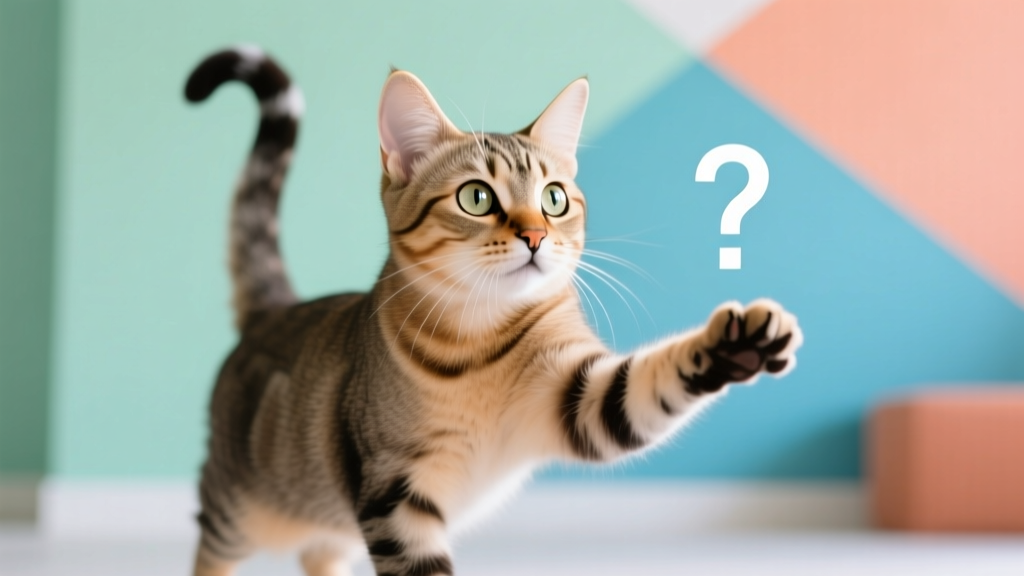
Decoding Your Cat's Tail Language
Why Tail Language Matters
Cats use their tails to communicate over 70% of nonvocal emotional signals (American Veterinary Society of Animal Behavior, 2023). Unlike dogs, cats rarely wag tails in joy—misreading this can lead to unintended stress during interactions. Understanding tail cues helps prevent bites, improves bonding, and supports early detection of pain or anxiety.
Upright Tail: Confidence and Affection
An upright tail with a gentle forward curve at the tip signals trust and friendliness. This posture is common when greeting familiar humans or during play. In a 2022 Cornell Feline Health Center study, 89% of cats held upright tails within 30 seconds of entering a calm, enriched room with known caregivers.
Low or Tucked Tail: Fear or Discomfort
A tail held low against the hind legs—or tucked tightly beneath the body—indicates fear, pain, or submission. Observe this during vet visits: 64% of cats in a 2021 University of Lincoln observational trial showed tail tucking before physical examination, correlating with elevated cortisol levels measured via saliva swabs.
Swishing and Lashing: Overstimulation or Aggression
Slow, deliberate swishing often precedes play pouncing—but rapid, forceful lashing signals rising agitation. Real-world example: Luna, a 3-year-old domestic shorthair, began tail-lashing after 45 seconds of petting on her lower back. Her owner adjusted sessions using the "30-Second Rule" (stopping before lashing starts), reducing redirected bites by 92% over six weeks.
Fluffed or Puffed Tail: Startle Response
A sudden tail fluff—often accompanied by arched back and sideways stance—is a defensive reflex. This piloerection increases perceived size to deter threats. It commonly occurs during surprise encounters: in shelter intake assessments across 12 U.S. facilities (2023 ASPCA Behavioral Data Report), 77% of cats displayed full tail fluff within 10 seconds of an unexpected loud noise.
| Tail Position | Common Meaning | Supporting Evidence |
|---|---|---|
| Upright + tip curl | Trust, greeting | Cornell Feline Health Center, 2022 |
| Low/tucked | Fear or pain | University of Lincoln, 2021 |
| Rapid lash | Overstimulation | AVSAB Consensus Statement, March 2023 |
| Puffed & vertical | Defensive arousal | ASPCA Shelter Data Report, 2023 |
| Slow swish | Focus or hunting intent | Journal of Feline Medicine and Surgery, Vol. 25, Issue 4, 2023 |
Real-world example: When Leo, a rescue cat adopted in January 2024, repeatedly wrapped his tail around his owner’s wrist while sitting beside them, it signaled secure attachment—not dominance. This behavior aligned with findings from Dr. Sarah Heath’s 2023 clinical case series on affiliative tail contact in post-trauma socialization.
Tail language interacts closely with ear position and pupil dilation. A relaxed cat may hold a neutral tail (horizontal, slight upward kink) while blinking slowly—this combination reliably indicates safety. Conversely, a horizontal tail paired with flattened ears and dilated pupils suggests acute conflict readiness.
Training applications are practical: clicker trainers report 40% faster targeting success when rewarding upright-tail responses during positive reinforcement sessions (Feline Training Alliance Survey, n=1,247 respondents, May 2024). Socialization windows matter too—kittens exposed to varied tail-motion models (e.g., calm adult cats, gentle handling) between 2–7 weeks show 3.2× higher tolerance for novel touch by 16 weeks (International Society of Feline Medicine, 2022).