Why Cats Sit Facing the Door at Restaurants
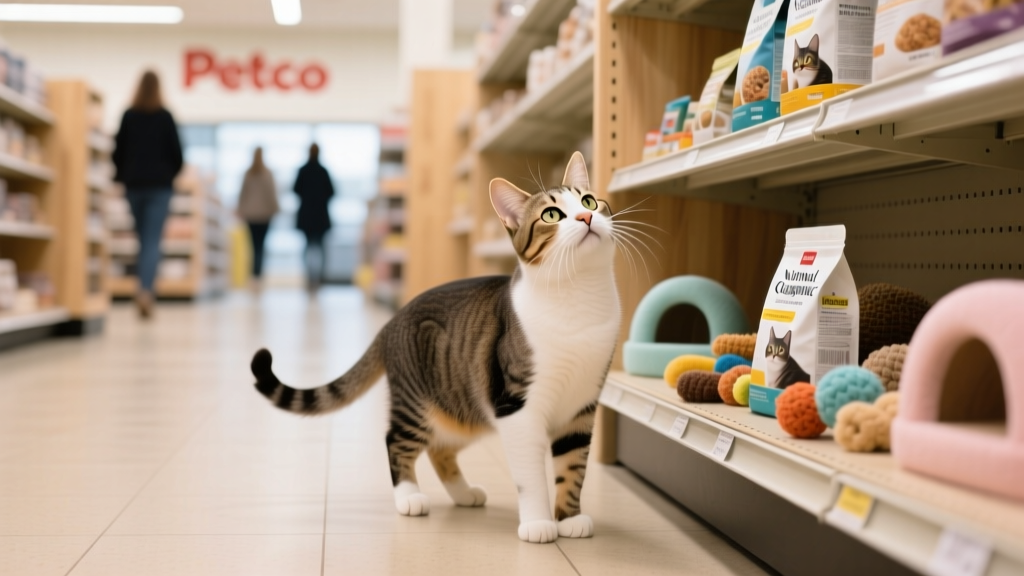
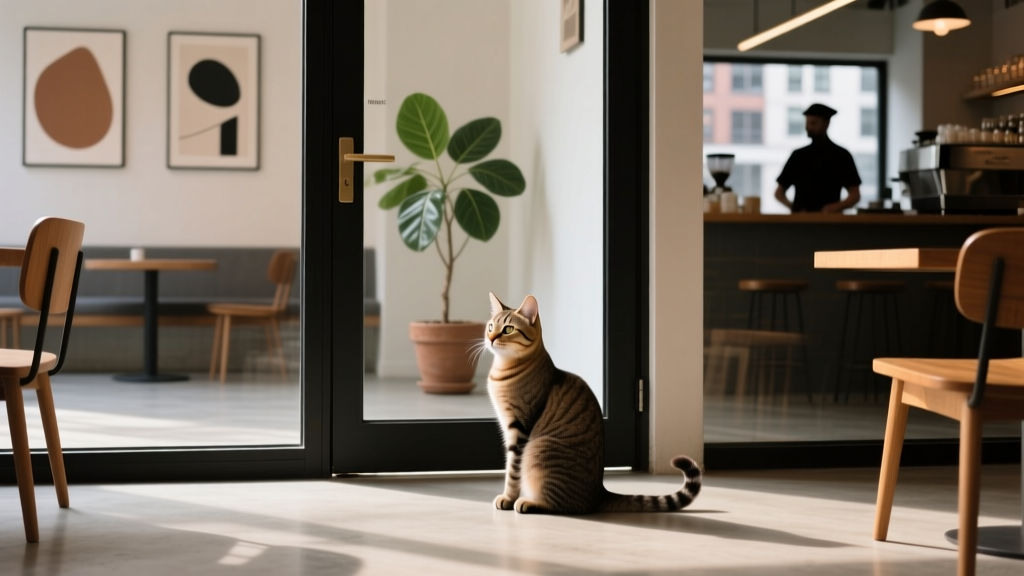
You’re at a restaurant with a patio—maybe it’s one of those places where “dog-friendly” quietly turns into “animal-friendly” because the staff is kind and the neighborhood cats are bold. A cat strolls in like it owns the reservation list, hops onto a spare chair, and then… sits. Not facing you. Not facing the kitchen. Facing the door.
Or maybe it’s your own cat at home: every time you eat at the dining table, they park themselves in the doorway like a tiny, furry bouncer. You call their name. They flick an ear, but their eyes stay locked on the entrance. It looks oddly intentional—like they’re waiting for someone, guarding the space, or doing security detail for the dinner rush.
This is one of those classic cat behaviors that feels mysterious until you view it through a feline lens. Once you do, it becomes equal parts logical, adorable, and very on-brand for cats.
The Scientific (and Evolutionary) Reason Cats Monitor Doors
Even the friendliest house cat is built from wildcat parts. Domestic cats descended from solitary hunters that survived by controlling their surroundings: spotting threats early, protecting resources, and always having an exit plan.
A doorway is a high-value “information portal.” It’s where new scents roll in, where footsteps approach, where unfamiliar animals appear, where opportunities (food, attention, warmth) might arrive—and where trouble could enter, too.
From a behavior standpoint, sitting facing the door is a form of environmental monitoring. Cats love to collect data. A door offers constant updates:
- Visual information: movement, shadows, silhouettes, and approaching humans.
- Sound information: footsteps, voices, clinking dishes, traffic outside.
- Scent information: air currents bring in smells of other animals, food, and people.
There’s also a survival logic to it: in nature, many predators and rivals appear from transitional spaces—paths, burrows, openings. Cats are hardwired to keep transitional zones under surveillance.
At restaurants, doors swing open frequently. People enter, leave, carry bags, drop napkins, laugh loudly, and move unpredictably. To a cat, that’s a lot of potential change. Facing the door is the feline version of reading the room.
A Detailed Breakdown: Different Contexts, Same Door-Facing Habit
Not all door-facing is the same. The “why” changes depending on the setting and the cat’s personality.
1) The Restaurant Cat: “I’m Managing My Territory”
Some cats are regulars. They’ve learned that restaurant entrances are prime spots for:
- Food opportunities: someone drops a fry, a customer offers a bite, or a staff member slips them a treat.
- People watching: cats are observational geniuses; they enjoy predictable patterns (and restaurants have plenty).
- Social control: seeing who comes and goes helps them decide where to sit, who is safe, and when to move.
Facing the door also prevents surprises. If another cat wanders in, the resident cat gets a head start deciding: “Do I stay? Do I stare? Do I leave with dignity?”
2) Your Cat at Home: “I’m On Alert Because Something Might Happen”
At home, door-facing often happens near:
- The front door: delivery people, visitors, and hallway sounds.
- The kitchen entrance: where meals appear—an extremely important event in cat culture.
- A bedroom doorway at night: many cats position themselves where they can monitor both you and the rest of the house.
If your cat sits facing a doorway while you eat dinner, it might be a combination of “I’m supervising” and “I’m waiting for the possibility of food.” Cats are excellent at associating certain human routines with rewards.
3) The Nervous Cat: “I Need a Clear Escape Route”
Some cats face doors because they feel safer with a direct line to an exit. Think of it as choosing the seat in a café that faces the entrance—only your cat is doing it instinctively.
You might notice this more in:
- Shy cats in busy environments
- Newly adopted cats learning the home layout
- Cats during renovations or after a move
If the door is the “escape hatch,” facing it lowers stress because they can react quickly.
4) The Confident Cat: “I’m the Gatekeeper”
Other cats face the door because they feel in charge. These are the cats who sit tall, chest forward, tail wrapped neatly, looking like they’re about to ask for your credentials.
In multi-cat households, a cat may also “own” a doorway as a strategic checkpoint to monitor other cats’ movements. This isn’t always aggressive—sometimes it’s just social organization, feline-style.
What Door-Facing Says About Your Cat’s Mood
The posture and micro-signals tell you whether this behavior is calm, curious, or anxious.
- Relaxed sentinel: ears forward or gently swiveling, slow blinks, loose body, tail resting. Mood: curious, content, mildly watchful.
- Alert observer: body slightly leaned forward, eyes wide, ears sharply tracking sounds, whiskers forward. Mood: interested, stimulated.
- Stressed guard: crouched low, tense shoulders, tail tucked or flicking fast, ears angled sideways (“airplane ears”), dilated pupils. Mood: uneasy, defensive, overwhelmed.
One helpful question: is your cat choosing the spot because it’s comfortable and strategic, or because they look like they can’t fully relax anywhere else?
Related Behaviors You Might Notice
Cats rarely do just one “security” behavior. If your cat is a door-watcher, you may also see:
- Following you to the bathroom: partly bonding, partly monitoring a closed-door situation (and yes, sometimes they just like the routine).
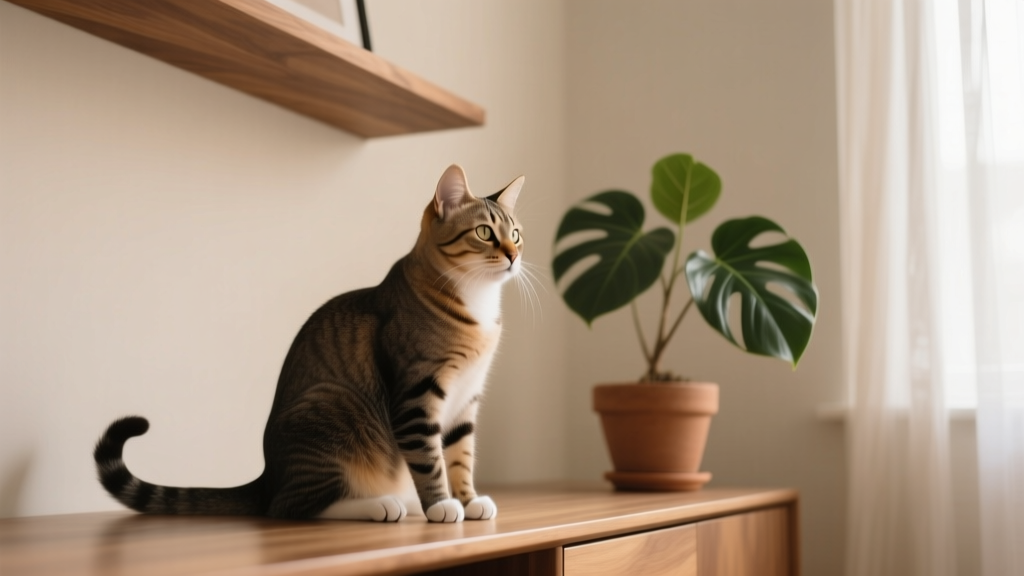
- Sitting on high perches facing entrances: a bookshelf lookout is basically a feline watchtower.
- “Checking” rooms after a noise: quick patrol, sniff, return.
- Blocking hallways or stairs: strategic chokepoints to track movement.
- Startling at the doorbell but then approaching the door: fear + curiosity is a very cat combination.
When It’s Normal (Most of the Time) vs. When to Be Concerned
Usually normal: Door-facing is often a healthy sign your cat feels engaged with their environment. Many cats enjoy observation the way humans enjoy scrolling social media—constant updates, low effort, satisfying.
Potential concern signs:
- Hypervigilance: your cat seems unable to settle, startles easily, and spends long periods tense and scanning.
- Increased hiding or avoidance: they monitor the door but retreat from normal household activity.
- Aggression around doorways: swatting ankles, growling when someone passes, blocking access consistently.
- Sudden behavior change: a previously relaxed cat becomes intensely door-focused, especially if paired with appetite changes, vocalizing, or litter box issues.
If you’re seeing a big shift, consider recent stressors: new pet, new roommate, neighborhood cats outside, construction noise, or schedule changes. If the door-focused behavior is paired with other signs of anxiety or physical discomfort, it’s worth checking in with your veterinarian and/or a qualified cat behavior professional.
How to Respond (and When to Encourage It)
Door-facing itself isn’t something you need to “fix.” Your goal is to support your cat’s sense of safety and give that watchful brain healthy outlets.
1) Offer a Better Observation Spot
If your cat likes facing the door while you’re at a table (restaurant patio or home dining area), try providing an alternative that’s still strategic:
- a chair with a soft towel or mat
- a nearby cat tree or perch
- a window seat with a view of the entrance area
This can reduce underfoot weaving and help your cat settle more comfortably.
2) Pair Door Activity With Positive Associations
If your cat is nervous about the door (doorbell, guests, deliveries), you can help by pairing door-related noises with rewards:
- treats after the doorbell
- a favorite toy when someone enters
- calm praise if they choose to sit at a distance and observe
You’re teaching: “Door stuff happens, and good things follow.”
3) Reduce Surprise and Increase Predictability
Cats relax when they can predict outcomes. If visitors are frequent, give your cat a routine:
- before guests arrive: set up a quiet room with litter, water, and a cozy hide
- during arrivals: ask guests to ignore the cat initially (no reaching, no intense eye contact)
- after things settle: let the cat approach on their own terms
4) For Multi-Cat Homes: Prevent Doorway “Traffic Jams”
If a cat guards a doorway and another cat avoids it, add resources in multiple locations (litter boxes, water, beds), and create alternative paths with furniture placement. Doorway tension is often a space-management problem, not a “bad cat” problem.
Fun Facts and Research-Flavored Nuggets
- Cats are crepuscular: they’re naturally most active around dawn and dusk—times when doors open (commutes, deliveries, dinner outings) and when outdoor animals move around. Door monitoring can spike during these hours.
- They track airflow and scent: a frequently opening door changes air currents, bringing in fresh smells. For a cat, that’s like a live news feed.
- They prefer control of approach: many cats feel more comfortable when they can see something approaching rather than having it appear behind them. Facing the door is a simple way to avoid being surprised.
- “Sentinel behavior” shows up in social groups: while cats are often solitary hunters, free-roaming cats can form loose colonies where individuals may take turns being watchful near resources. Door-facing can echo that resource-guarding/monitoring role—especially where food is involved (hello, restaurants).
FAQ: Common Questions About Cats Facing the Door
1) Does my cat face the door because they’re protecting me?
Sometimes it can look like protection, and cats do form strong attachments. More often, it’s self-protection and information gathering: your cat feels safer when they can monitor what enters. The sweet bonus is that their chosen spot may also place them near you.
2) Why does my cat do this more when we’re eating?
Mealtime is a high-interest event. Cats learn patterns fast: people at a table can mean food smells, dropped crumbs, or a chance to beg. Facing the door during meals can also be about monitoring movement—servers, family members, or anyone who might bring something tasty.
3) Is it anxiety if my cat always watches the door?
Not automatically. Look at the body language. A relaxed cat who occasionally watches the door is normal. A tense, easily startled cat who can’t settle, hides more, or shows aggression around entrances may be experiencing stress.
4) My cat sits facing the door but keeps looking back at me. What does that mean?
That’s a classic “split attention” cat move: monitoring the environment while checking in with you. It can signal bonding (“I’m keeping tabs on you”) or anticipation (“Are we doing something? Is food happening?”).
5) Why do restaurant cats pick the doorway instead of a quiet corner?
The doorway is where the action is: food scents, new people, dropped snacks, and social opportunities. Confident cats often choose high-traffic spots because they’ve learned it pays off—and because they’re comfortable managing the chaos.
6) Should I move my cat if they’re blocking a doorway?
If it’s not causing stress, you can gently redirect rather than scold. Use a treat trail or a toy to guide them to a nearby perch. If they’re guarding the doorway from other pets, address it as a household traffic issue: add alternate routes and spread resources out.
Cats facing the door at restaurants (and at home) aren’t being weird just for fun—though they do make it look stylish. They’re doing what cats do best: gathering intel, controlling their space, and keeping options open. When you read the posture and context, you can tell whether your cat is calm-curious, strategically hopeful for snacks, or feeling a bit on edge—and respond in a way that builds trust.
Have you seen a “door sentinel” cat in the wild, or does your own cat take their post like a tiny security guard? Share your story (and any hilarious restaurant-cat encounters) with the Cat Lovers Base community at catloversbase.com.