How to Understand Cat Behavior Guide
Why Decoding Your Cat’s Behavior Isn’t Optional—It’s Essential for Their Well-Being
If you’ve ever wondered, 'What is my cat trying to tell me?'—you’re not alone. In fact, the search for a reliable how to understand cat behavior guide reflects a growing awareness among cat owners: misreading feline signals isn’t just frustrating—it can silently erode trust, trigger stress-related illnesses like cystitis or overgrooming, and even lead to rehoming. Unlike dogs, cats evolved as solitary hunters who communicate subtly—through micro-expressions, scent, posture, and timing—not volume or obedience. That means your cat isn’t ‘aloof’ or ‘manipulative’; they’re speaking a dialect we weren’t born fluent in. This guide bridges that gap—not with guesswork, but with observation frameworks validated by veterinary behaviorists, shelter enrichment specialists, and decades of ethological research.
Your Cat’s Body Language Is a Full-Sentence Language (Not Just Tail Wags)
Cats don’t use isolated signals—they layer them. A flicking tail *alone* might mean mild irritation, but paired with flattened ears, dilated pupils, and a low crouch? That’s a pre-escalation warning. Dr. Sarah Hopper, DACVB (Diplomate of the American College of Veterinary Behaviorists), emphasizes: “Cats rarely give one cue. They broadcast intention through clusters—posture, facial tension, ear position, whisker angle, and even blink speed. Reading just one piece is like hearing half a sentence.”
Start with the three most revealing zones:
- Eyes: Slow blinks = trust and calm; wide-open with fixed gaze = alertness or threat assessment; rapid blinking or squinting = discomfort or pain (especially if unilateral).
- Ears: Forward and relaxed = curiosity; swiveling independently = environmental scanning; flattened sideways or backward = fear, aggression, or pain (e.g., ear infection).
- Tail: Upright with quiver tip = affectionate greeting; low and tucked = anxiety or submission; puffed and vertical = defensive arousal; rapid side-to-side flick = intense frustration (not ‘playful’—this often precedes biting).
Real-world case: Luna, a 4-year-old rescue tabby, began urinating outside her litter box. Her owner assumed ‘spite.’ A behavior consult revealed Luna’s tail was consistently low and twitching while near the box—and her ears were slightly back. Video review showed she’d approach, freeze for 3 seconds, then retreat. The litter box sat next to a noisy washing machine. Once relocated to a quiet corner with a hood removed (reducing visual confinement), accidents stopped within 48 hours. Her ‘behavior’ wasn’t defiance—it was a clear, unheeded stress signal.
Vocalizations: What Your Cat *Really* Means When They Meow, Chirp, or Growl
Here’s a truth most owners miss: Adult cats rarely meow at other cats. They meow almost exclusively *at humans*—as a learned, cross-species communication tool. That means every meow is tailored to *you*. Tone, duration, pitch, and context reveal intent far more than frequency.
Dr. Tony Buffington, Professor Emeritus of Veterinary Clinical Sciences at Ohio State, notes: “Meowing is essentially ‘catlish’ translated into human-friendly syntax. A high-pitched, rising ‘mee-ow?’ when you enter the kitchen? That’s ‘Food now, please.’ A low, guttural, repeated ‘mrrrrow’ at dawn? That’s ‘I’m awake and you should be too—let’s negotiate.’”
Break down common sounds:
- Purring: Not always contentment. Cats purr during labor, injury, and terminal illness. It’s a self-soothing mechanism linked to frequencies (25–150 Hz) shown to promote bone density and tissue repair (study: Fauna Communications, 2021). Observe context: Is your cat purring while kneading on your lap? Likely comfort. Purring while hiding under the bed after a vet visit? Likely distress.
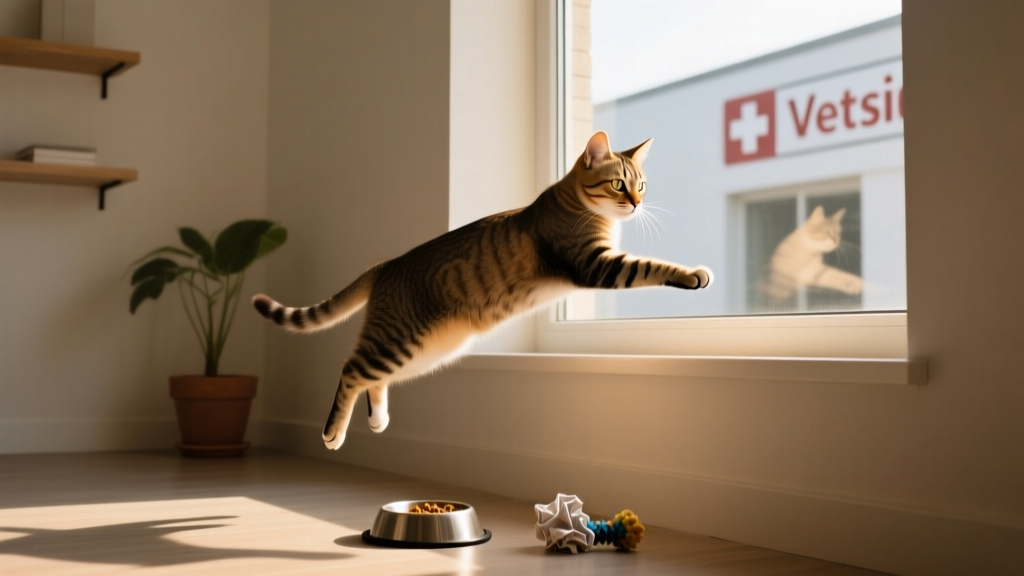
- Chirping/Chattering: Often seen at windows. This isn’t excitement—it’s a motor pattern interruption. In wild felids, this sound accompanies the ‘bite shake’ used to kill prey. Your cat is expressing frustrated predatory drive—not joy.
- Hissing/Growling: These are distance-increasing signals. Never punish them. They’re saying, ‘I feel unsafe—please back away.’ Forcing interaction escalates stress and can create lasting fear associations.
The Hidden World of Scent & Space: Why Your Cat ‘Marks’ Your Sofa (and How to Redirect It)
Cats navigate the world primarily through olfaction—up to 200 million scent receptors (vs. humans’ 5 million). Their behavior around scent is deeply tied to security, identity, and social structure. When your cat rubs their cheeks on your laptop, doorframes, or your leg, they’re depositing pheromones from glands located around their mouth, chin, and temples. This isn’t ‘claiming’ you—it’s *calming* you (and themselves) by labeling shared spaces as ‘safe.’
Contrast that with urine marking: a deliberate, vertical spray (often on cool, smooth surfaces like walls or cabinets) releasing pheromones mixed with volatile compounds signaling reproductive status or territorial stress. Key differentiator: Litter box accidents involve squatting and small puddles; marking involves backing up, tail upright, and rhythmic tail quivering.
Intervention isn’t about ‘stopping’ the behavior—it’s about addressing the root cause. A 2023 study in the Journal of Feline Medicine and Surgery found that 76% of marking cases resolved within 6 weeks when environmental stressors (e.g., new pets, construction noise, inconsistent routines) were mitigated *and* synthetic feline facial pheromone diffusers (Feliway Classic) were used concurrently. Always rule out medical causes first—UTIs, arthritis, or hyperthyroidism can mimic marking behavior.
Decoding Play, Aggression, and Overstimulation: When Petting Turns Into Biting
The infamous ‘petting aggression’ isn’t random. It’s a neurobiological threshold response. Cats have sensitive nerve endings along their spine and tail base. Repetitive petting—even gentle strokes—can quickly overload sensory input, triggering a fight-or-flight reflex. Signs appear *before* biting: skin rippling (‘twitchy back’), tail tip flicking, ears rotating backward, sudden stillness, or dilated pupils.
Instead of punishing, use proactive redirection:
- Read the ‘stop signal’ early: If tail tip flicks once, pause petting for 5 seconds. If it flicks twice, stop entirely.
- Switch to interactive play: Offer a wand toy for 3–5 minutes—this satisfies predatory drive without tactile overload.
- Respect autonomy: Let your cat initiate contact. Offer your hand palm-down, fingers curled (mimicking a non-threatening paw), and wait. If they head-butt or rub, proceed slowly. If they turn away or yawn (a stress signal), disengage.
Important: Never use hands as toys. This teaches cats that fingers = prey, leading to redirected aggression later. Keep play sessions short (2–3 minutes), frequent (2–3x daily), and end with a ‘kill’—letting them ‘catch’ the toy and hold it briefly.
| Behavior Signal | Most Likely Meaning | Action to Take | Red Flag If Paired With… |
|---|---|---|---|
| Slow blink + relaxed posture | Trust and safety | Mirror the blink gently; maintain calm presence | None—this is ideal baseline behavior |
| Low, slow tail sweep (not flick) | Focus or mild curiosity | Observe quietly; avoid sudden movement | Dilated pupils + flattened ears = potential escalation |
| Excessive licking/grooming (especially belly or legs) | Anxiety or physical discomfort | Check for fleas, skin lesions, or joint stiffness; consult vet if persistent | Thinning fur, bald patches, or skin redness = dermatological issue |
| Bringing ‘gifts’ (toys, dead insects) | Instinctive teaching behavior or offering resources | Thank calmly; redirect to appropriate toy play | Sudden onset in senior cats = possible cognitive decline |
| Scratching furniture vertically | Marking territory + stretching muscles | Provide tall, stable scratching posts near sleeping areas; reward use with treats | Scratching only one spot + vocalizing = possible pain or joint issue |
Frequently Asked Questions
Why does my cat stare at me without blinking?
Unbroken eye contact from a cat is often misinterpreted as ‘creepy’—but it’s actually a neutral or mildly attentive state. Unlike dogs, cats don’t use prolonged staring as a dominance signal. If your cat holds your gaze while relaxed (ears forward, tail still), they’re simply observing. However, if their body is tense or they hiss when you move, it’s vigilance—not aggression. Try slow blinking back: if they reciprocate, it’s a sign of trust.
My cat hides when guests arrive—is that normal?
Yes—especially for cats with limited early socialization (under 7 weeks). Hiding is a healthy stress-coping strategy, not ‘shyness.’ Forcing interaction increases cortisol levels and damages trust. Instead: provide elevated hideouts (cat trees, covered beds), use Feliway diffusers 48 hours before visits, and let guests ignore the cat entirely—offering treats only if the cat approaches voluntarily. Most cats acclimate within 2–3 consistent, low-pressure exposures.
Do cats recognize their names?
A 2019 study published in Scientific Reports confirmed that cats *do* recognize their own names—even when spoken by strangers—by turning their heads or ears toward the sound. But they choose whether to respond based on motivation (e.g., food, play) and relationship history. Don’t expect obedience; expect acknowledgment. Pair name use with positive outcomes (treats, play) to strengthen association.
Is it okay to punish my cat for scratching furniture?
No—punishment (spraying water, yelling, tapping) damages your bond and increases fear-based aggression. Scratching is biologically essential: it marks territory, sheds claw sheaths, and stretches shoulder muscles. Instead, make scratching posts more appealing (place near sleeping areas, use catnip, scratch on it yourself to demonstrate), and make furniture less attractive (double-sided tape, aluminum foil, or citrus-scented sprays—cats dislike both textures and smells).
My senior cat has started yowling at night—what’s wrong?
Nighttime vocalization in older cats warrants immediate veterinary evaluation. Common causes include hypertension (linked to kidney disease or hyperthyroidism), cognitive dysfunction syndrome (feline dementia), or painful osteoarthritis. Blood pressure checks, thyroid panels, and orthopedic exams are essential first steps—not behavioral training. Early intervention can dramatically improve quality of life.
Common Myths About Cat Behavior—Debunked
Myth #1: “Cats are independent and don’t need companionship.”
Reality: Cats form secure attachments to caregivers—demonstrated in ‘secure base tests’ where cats explore freely when their person is present but seek proximity when stressed. Social isolation correlates with higher rates of obesity, urinary issues, and depression-like symptoms in cats. Daily interactive play and gentle touch meet core social needs.
Myth #2: “If my cat sleeps on me, they love me more than others.”
Reality: While warmth and scent are factors, cats choose sleeping spots based on thermoregulation (your body heat), safety (elevated vantage point), and routine—not hierarchical ‘ranking.’ A cat may sleep on your partner’s lap daily but only on you during thunderstorms—that doesn’t indicate lesser affection, but context-specific trust.
Related Topics (Internal Link Suggestions)
- Understanding Cat Body Language Cues — suggested anchor text: "cat body language decoder"
- Why Does My Cat Bite When I Pet Them? — suggested anchor text: "petting-induced aggression in cats"
- Best Calming Products for Anxious Cats — suggested anchor text: "vet-recommended cat anxiety solutions"
- How to Introduce a New Cat Safely — suggested anchor text: "stress-free multi-cat household guide"
- Cat Enrichment Ideas for Indoor Cats — suggested anchor text: "indoor cat stimulation activities"
Conclusion & Your Next Step Toward True Understanding
A how to understand cat behavior guide isn’t about mastering a static list of ‘rules’—it’s about cultivating ongoing, empathetic observation. Your cat communicates constantly; the skill lies in slowing down enough to notice the nuance. Start today with one change: spend 5 minutes daily watching your cat *without interacting*. Note ear direction, tail motion, blink rate, and where they choose to rest. Journal one insight weekly. Within 21 days, you’ll spot patterns no app or chart can teach you—because you’ll be learning your cat’s unique dialect. Ready to go deeper? Download our free 7-Day Cat Communication Tracker (with video examples and vet-reviewed annotation prompts) at the link below—and transform confusion into connection, one slow blink at a time.