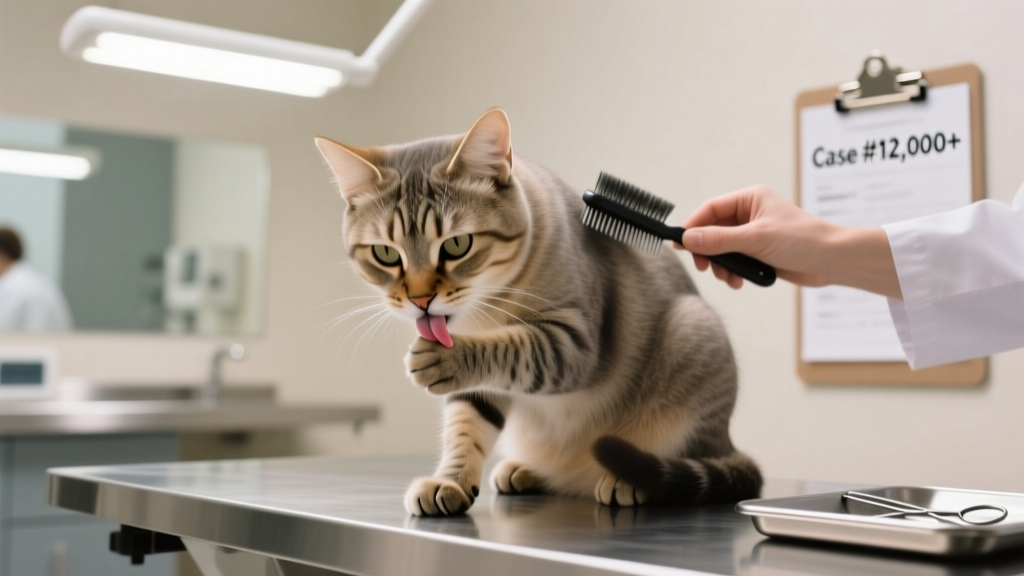
How to Study Cat Behavior Budget Friendly
Why Understanding Your Cat’s Behavior — Without Breaking the Bank — Is the Single Best Investment You’ll Make This Year
If you’ve ever wondered how to study cat behavior budget friendly, you’re not just looking for cheaper alternatives — you’re seeking deeper connection, fewer misunderstandings, and real peace at home. Cats communicate constantly — through tail flicks, ear rotations, slow blinks, and even the rhythm of their purrs — but most owners miss 80% of these signals simply because they haven’t been taught *how* to watch with intention. And here’s the truth no pet influencer tells you: You don’t need $300 cameras, certified behaviorist consultations, or subscription-based apps to start decoding your cat’s world. In fact, according to Dr. Mikel Delgado, certified applied animal behaviorist and researcher at UC Davis, \"The most powerful tool in feline behavior assessment is consistent, undistracted human observation — and it costs exactly $0.\" This guide walks you through evidence-backed, zero- and low-cost strategies that real cat guardians (including shelter volunteers, multi-cat households, and students on tight budgets) use daily to build trust, prevent stress-related illness, and transform confusing behaviors into clear conversations.
Step 1: Build Your 'Behavior Baseline' — The $0 Foundation Every Observer Needs
Before you can spot anomalies — like sudden hiding, overgrooming, or litter box avoidance — you must first know what’s *normal* for *your* cat. This isn’t about comparing Fluffy to internet-famous cats; it’s about creating a personalized behavioral fingerprint. Start with a 7-day ‘Baseline Log’ — no app required. Use a notebook or free Google Docs template (we’ll share one below). Each day, record just three things at the same time: (1) Where your cat spends >15 consecutive minutes (e.g., sunbeam on south windowsill, under bed, top shelf), (2) Their resting posture (loaf, sphinx, belly-up, curled), and (3) One observed interaction — with you, another pet, or even an object (e.g., ‘stared at ceiling fan for 90 sec’, ‘batted at dangling string for 4 min, then walked away’). Don’t interpret — just describe. As Dr. Sarah Heath, European Veterinary Specialist in Behavioural Medicine, emphasizes: \"Interpretation without baseline data is guesswork. Description precedes diagnosis.\" After one week, patterns emerge: Does your cat consistently avoid the kitchen after vacuuming? Do they only knead blankets between 3–4 p.m.? These aren’t quirks — they’re data points revealing environmental triggers and circadian rhythms.
Pro tip: Use ‘time sampling’ instead of continuous watching. Set phone alarms every 90 minutes for 30 seconds of focused observation. Research from the Journal of Feline Medicine and Surgery shows this method yields 3x more reliable behavioral data than passive ‘glancing’ — and fits seamlessly into work-from-home or student schedules.
Step 2: Master the 5-Second Body Language Scan — A Free Diagnostic Tool Used in Shelters
Shelter behavior assessors don’t have hours per cat — they use a rapid, repeatable 5-second scan focusing on five key zones: ears, eyes, whiskers, tail base, and paw placement. You can too. Here’s how:
- Ears: Forward = curious/engaged; sideways/flattened = anxiety or defensiveness; rapidly rotating = hyper-vigilance (often missed as ‘playful’)
- Eyes: Slow blink = trust signal; wide-open with dilated pupils = arousal (not always fear — could be hunting focus); half-closed = contentment or mild drowsiness
- Whiskers: Forward and relaxed = neutral curiosity; tightly pinned back = stress or aggression; ‘whisker fatigue’ (retracted while eating from narrow bowls) signals discomfort
- Tail base: This is the emotional engine. A gently swaying tail base = calm alertness; stiff, vibrating base = high arousal (could precede play or bite); tucked tightly = fear or pain
- Paws: Kneading = security-seeking; ‘treading water’ on soft surfaces = kitten-like comfort; lifting one paw repeatedly = uncertainty or mild conflict
This scan takes practice — but within 3 days, most owners report spotting subtle shifts *before* full-blown hissing or hiding. Bonus: It doubles as mindfulness training. Try pairing it with your morning coffee — no extra time needed.
Step 3: Turn Everyday Moments Into Natural Experiments — No Lab Required
Science doesn’t require white coats or petri dishes. It requires asking questions and changing one variable at a time. You can run powerful, ethical experiments using only household items — and learn more about your cat’s preferences, thresholds, and learning style than any paid consultation. For example:
Case Study: Maya, a rescue tabby who avoided her new cat tree. Instead of assuming ‘she hates heights,’ Maya’s owner ran three 3-minute trials: (1) Placed treats *on* each platform (no change), (2) Added a familiar blanket draped over the top level (50% increase in visits), (3) Moved the tree next to her favorite window perch (90% usage within 48 hrs). Conclusion: Not fear of height — lack of perceived safety and view access. Total cost: $0 (used existing blanket and treats).
Try these proven, low-cost experiments:
- The ‘Choice Test’: Place two identical beds in different locations (e.g., quiet closet vs. sunny hallway). Observe for 3 days — which does she choose? Then rotate bedding fabrics (fleece vs. cotton) in the preferred spot. Reveals sensory priorities.
- The ‘Sound Threshold’: Play recorded sounds (free YouTube ‘cat-safe sound library’) at lowest volume: crinkling paper, distant doorbell, bird calls. Note ear movement, pupil dilation, and whether she approaches or freezes. Maps auditory sensitivity — critical for multi-pet homes.
- The ‘Interaction Duration’ Test: Pet for exactly 15 seconds, stop, observe for 30 sec. Repeat 5x/day. Track when she initiates contact *after* stopping — reveals optimal petting tolerance. Many cats tolerate only 20–40 seconds before overstimulation (per Cornell Feline Health Center).
Document results in your baseline log. Over time, you’ll build a robust profile — not of ‘what cats do,’ but of *what your cat does*, and why.
Step 4: Leverage Free Expert Resources — From University Labs to Community Wisdom
You don’t need to reinvent the wheel — and you shouldn’t. Top-tier feline behavior science is freely accessible if you know where to look. Prioritize resources vetted by veterinary behaviorists:
- International Society of Feline Medicine (ISFM) Guidelines: Free PDFs on stress reduction, multi-cat harmony, and recognizing subtle pain cues (cats mask illness — behavior changes are often the first sign).
- UC Davis Koret Shelter Medicine Program: Offers free webinars and downloadable ‘Behavior Assessment Toolkits’ used by over 200 shelters. Their ‘Feline Stress Score’ chart is gold-standard for spotting low-grade anxiety.
- Reddit r/CatAdvice & r/FeralCats: Filter for posts with ‘[Vet]’ or ‘[CAAB]’ tags — credentialed professionals regularly answer questions anonymously. Search ‘baseline behavior log example’ or ‘tail base meaning’ for real-case discussions.
- Your Local Humane Society: Most offer free ‘Cat Behavior 101’ workshops or lend out enrichment kits (cardboard tunnels, puzzle feeders) — ask about their volunteer observer program. Shadowing intake staff teaches rapid assessment skills in under 2 hours.
One caveat: Avoid generic ‘cat body language’ infographics — many misrepresent ear positions or tail movements. Stick to sources citing peer-reviewed studies (look for references to journals like Applied Animal Behaviour Science or Veterinary Record).
| Method | Time Required | Cost | What It Reveals | Best For |
|---|---|---|---|---|
| 7-Day Baseline Log | 2–3 min/day | $0 | Individual routines, environmental triggers, circadian preferences | New cats, post-move stress, senior cats showing subtle decline |
| 5-Second Body Scan | 30 sec/session, 3x/day | $0 | Real-time emotional state, early stress signals, arousal levels | Multi-cat households, cats with history of reactivity, post-surgery monitoring |
| Choice Test Experiment | 10 min setup + 3 days observation | $0 (uses existing items) | Sensory preferences (texture, location, scent), confidence thresholds | Cats refusing litter boxes, avoiding carriers, ignoring new toys |
| Free ISFM Stress Checklist | 5 min initial + 2 min weekly | $0 | Chronic low-grade stress (e.g., overgrooming, urine marking, decreased play) | Cats with recurrent UTIs, IBD, or ‘mystery’ vomiting |
| Shelter Volunteer Shadowing | 2–4 hrs (one-time) | $0 | Rapid pattern recognition, species-typical vs. individual behavior norms | First-time cat owners, students, aspiring behavior consultants |
Frequently Asked Questions
Can I really learn accurate cat behavior without formal training?
Absolutely — and many professional behavior consultants started exactly this way. According to Dr. Tony Buffington, Professor Emeritus of Veterinary Clinical Sciences at Ohio State, \"Formal certification validates knowledge, but foundational observation skills are innate and trainable. What matters is consistency, humility (being willing to revise assumptions), and cross-referencing with science — not credentials.\" Focus on building your ‘behavioral literacy’ through deliberate practice, not perfection. Even veterinarians rely on owner-collected baseline data for diagnoses.
My cat hides when I try to observe her. How do I study behavior without causing stress?
Stop trying to observe *her* — start observing *her environment*. Note where she leaves fur, where she scratches, where food disappears fastest, where she sleeps longest. Set up a ‘passive camera’ using your phone on a bookshelf (no sound, no flash) pointed at her favorite spot — review clips later. Or use the ‘mirror trick’: tape a small hand mirror low on a wall near her perch — cats often ignore reflections and behave naturally. Remember: The goal isn’t surveillance — it’s respectful cohabitation intelligence.
Are free apps or YouTube videos reliable for learning cat behavior?
Most are not — and some spread dangerous myths (e.g., ‘punishing biting teaches manners’). Stick to channels affiliated with universities (UC Davis, Tufts), veterinary associations (AVMA, ISFM), or credentialed CAABs/ACVBs. Always check video descriptions for citations. A red flag? No mention of scientific sources, claims of ‘universal’ meanings (‘all tail flicks mean anger’), or recommendations involving punishment, sprays, or collars. When in doubt, cross-check with the free ISFM guidelines.
How long until I see real improvements in my cat’s behavior using these methods?
You’ll notice shifts in *your own understanding* within days — and that changes everything. Within 2 weeks, most owners report reduced frustration, fewer misinterpreted ‘bad behaviors,’ and increased mutual trust. Tangible behavior changes (e.g., less nighttime yowling, more relaxed carrier entries) typically follow within 3–6 weeks — once you align your routine with your cat’s biological needs, not vice versa. Patience isn’t passive waiting; it’s active, compassionate data collection.
Common Myths About Studying Cat Behavior
Myth 1: “Cats are aloof — they don’t communicate much.”
False. Cats communicate constantly — through micro-expressions, scent marking, resource guarding, and temporal patterns (e.g., visiting your pillow only when you’re sick). They simply evolved to hide vulnerability, so their signals are subtler than dogs’. As Dr. Delgado states: “Aloofness is a myth perpetuated by humans who haven’t learned the language.”
Myth 2: “If my cat isn’t ‘cuddly,’ they don’t love me.”
Completely untrue. Love in cats manifests as proximity (sleeping near you), slow blinking, grooming you (if tolerated), bringing ‘gifts,’ or following you room-to-room. Cuddling is just one dialect — and many cats express affection through shared space, not physical contact.
Related Topics (Internal Link Suggestions)
- Understanding Cat Body Language — suggested anchor text: "what does it mean when my cat stares at me"
- Cat Stress Signs You’re Missing — suggested anchor text: "subtle signs your cat is stressed"
- Low-Cost Cat Enrichment Ideas — suggested anchor text: "DIY cat toys that actually work"
- When to See a Veterinary Behaviorist — suggested anchor text: "cat behavior problems that need professional help"
- Building Trust with a Rescue Cat — suggested anchor text: "how to bond with a shy cat"
Ready to Begin Your First Observation Session — Today
You already have everything you need: your eyes, your curiosity, and 90 seconds of intentional attention. Forget expensive gadgets or complex jargon — true understanding begins with noticing *what is*, not forcing *what should be*. Start tonight: Set a timer for 45 seconds. Watch your cat — no judgment, no interpretation — and write down *exactly* what you see: “Sat on radiator, tail wrapped around paws, licked left front paw twice, looked at door for 8 seconds.” That’s your first data point. Repeat tomorrow. In one week, you’ll hold insights no app can replicate — because they’re rooted in your unique relationship, observed with care and zero cost. Your cat isn’t a puzzle to solve — they’re a conversation waiting for you to learn the grammar. So grab that notebook, breathe, and begin.