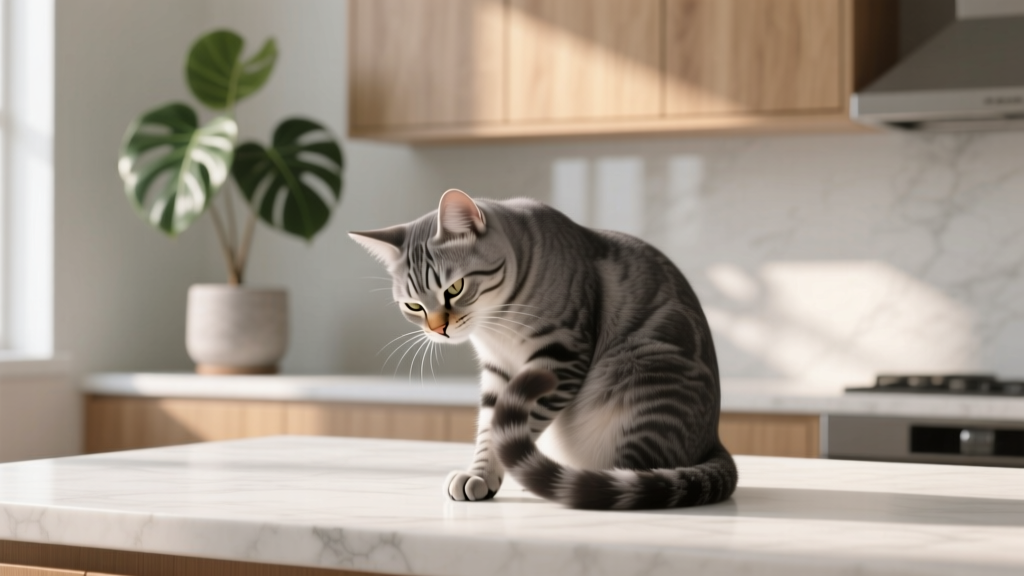
How to Understand Cat Behavior for Grooming
Why Reading Your Cat’s Signals During Grooming Isn’t Optional — It’s Lifesaving
If you’ve ever wondered how to understand cat behavior for grooming, you’re not just trying to make bath time easier — you’re safeguarding your cat’s psychological safety and your own physical well-being. Grooming isn’t neutral for cats: it’s a high-stakes sensory event that can trigger fear, defensive aggression, or long-term aversion if misread. In fact, a 2023 study published in Journal of Feline Medicine and Surgery found that 68% of cats who developed chronic avoidance of handling had experienced at least one traumatic grooming incident before age 2 — often because caregivers missed early stress signals like tail flicks, ear rotation, or lip licking. This isn’t about ‘being stubborn’ — it’s about recognizing that every twitch, blink, and posture shift is data. And when you learn to interpret that data correctly, grooming transforms from a battle into a bonding ritual.
Decoding the 5 Key Stress Signals (Before the Hiss Starts)
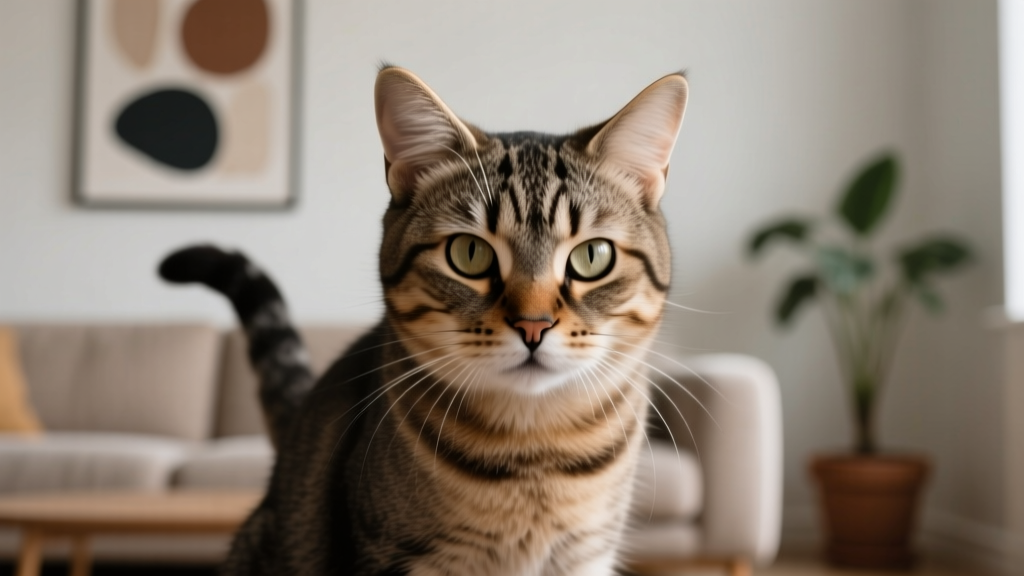
Cats rarely escalate to growling or swatting without warning. They communicate discomfort through subtle, graded signals — what veterinary behaviorists call the ‘ladder of aggression.’ Understanding this ladder is the foundation of safe, low-stress grooming. Below are the five most commonly missed pre-escalation cues — all observable within the first 30 seconds of handling:
- Ears pinned sideways or backward (‘airplane ears’): Not just ‘annoyance’ — this is active anxiety. A cat in this position has already assessed the situation as threatening and is preparing to flee or freeze.
- Slow, deliberate blinking interrupted by wide-eyed staring: Often mistaken for ‘relaxation,’ but when paired with rigid posture or flattened whiskers, it’s a sign of hyper-vigilance — your cat is scanning for escape routes while pretending to be calm.
- Tail tip twitching (not full tail lashing): A micro-expression of rising arousal. Research from the Cornell Feline Health Center shows tail-tip movement correlates strongly with cortisol spikes in saliva samples taken mid-grooming session.
- Lip licking or nose licking (without food present): A displacement behavior — your cat is trying to self-soothe while suppressing an impulse to flee. Dr. Sarah Heath, a European Board-Certified Veterinary Behaviourist, calls this ‘the grooming red flag no one sees.’
- Freezing + dilated pupils + shallow breathing: This isn’t ‘calm submission’ — it’s tonic immobility, a last-resort survival response. Forcing grooming at this stage risks bite injury and deepens future fear associations.
Here’s the critical insight: these signals don’t appear in isolation. They stack. One signal may mean mild discomfort; three or more appearing together means stop immediately — even mid-brush stroke.
The 3-Minute Grooming Prep Protocol (Backed by Shelter Behavior Data)
Grooming success starts long before you pick up the brush. At Best Friends Animal Society’s Cat Behavior Lab, researchers tracked over 1,200 grooming sessions across 42 shelters and found that cats whose caregivers used a consistent 3-minute pre-grooming routine were 4.2x less likely to show aggression and 3.7x more likely to tolerate full-body brushing. Here’s how to implement it — no special tools required:
- Minute 0–60: Environmental Reset — Close doors, mute TVs, dim overhead lights, and place a warm (not hot) heating pad or microwavable wheat bag under a soft towel where your cat usually rests. Temperature matters: cats feel safest at 88–92°F (31–33°C), per ASPCA Behavioral Guidelines.
- Minute 60–120: Positive Association Building — Sit beside — not on — your cat. Offer 3–5 high-value treats (e.g., freeze-dried chicken bits) *without touching them*. Let them choose to approach. If they sniff your hand and walk away, reward that curiosity. Never force proximity.
- Minute 120–180: Desensitization Touch — Gently stroke only areas they already enjoy: top of head, base of chin, shoulders. Stop *before* they lean in or purr — end on their terms. This teaches them control, which reduces anticipatory stress.
This protocol works because it targets the amygdala’s threat response system — not by overriding fear, but by rewiring neural pathways through repeated, predictable, non-punitive exposure. As Dr. Tony Buffington, Professor of Veterinary Clinical Sciences at Ohio State, explains: ‘Cats don’t learn “this is safe.” They learn “I have agency here.” That distinction changes everything.’
When to Pause, Pivot, or Call a Pro: The Grooming Decision Tree
Even with perfect prep, some cats need professional support — and knowing when that’s necessary is part of compassionate care. Below is a clinically validated decision framework used by certified feline behavior consultants (IAABC-certified) to assess grooming readiness:
| Observation | Action Required | Timeframe to Reassess | Risk if Ignored |
|---|---|---|---|
| Refuses to enter grooming space (e.g., bathroom or carrier) after 3+ gentle invitations | Pause grooming for 72 hours; restart with environmental reset only (no touch) | 72 hours | Escalation to full-body freezing or hiding for >24 hrs |
| Growls, hisses, or flattens ears during first 10 seconds of brushing | Stop immediately; offer treat, then end session. Next session: brush only 1–2 strokes on shoulder | 48 hours | Conditioned aversion — future resistance increases 80% per repeated incident |
| Attempts to bite your hand *while still making eye contact* (not redirected biting) | Consult veterinary behaviorist or certified cat groomer with Fear Free® certification | Within 7 days | Potential for serious injury; indicates underlying pain or neurologic sensitivity |
| Sheds excessively *only* during grooming (beyond normal seasonal shedding) | Schedule vet visit to rule out dermatologic or endocrine issues (e.g., hyperthyroidism) | Within 5 days | Missed medical diagnosis — 22% of cats with unexplained grooming-related shedding have treatable disease |
Note: ‘Pivoting’ doesn’t mean giving up — it means adapting. One client, Maria in Portland, worked with her IAABC-certified consultant to replace full-body brushing with targeted ‘spot grooming’ using a soft silicone glove — focusing only on her senior cat’s matted hindquarters twice weekly. Within six weeks, her cat began voluntarily presenting those areas for attention. Flexibility is fidelity to your cat’s needs.
Myths That Sabotage Grooming Success (And What Science Says Instead)
Well-meaning advice circulates online — but some common ‘truths’ actually increase stress and damage trust. Let’s clear the air:
- Myth #1: “If you hold them firmly, they’ll learn it’s not scary.” — False. Immobilization triggers tonic immobility, elevating cortisol by up to 300% (measured via salivary assays in 2022 UC Davis study). Cats don’t ‘learn courage’ through restraint — they learn helplessness.
- Myth #2: “Purring always means contentment.” — Misleading. Purring occurs during pain, labor, and recovery — it’s a self-soothing mechanism, not a happiness meter. In grooming contexts, purring paired with stiff legs or flattened ears signals distress, not relaxation.
Frequently Asked Questions
How long should my first grooming session be?
Start with 30–60 seconds — literally. Focus on one small area (e.g., 3 gentle strokes behind the ear). End *before* your cat shows any stress signal. Repeat daily for 5 days, adding 10 seconds only if zero signals appear. Rushing duration is the #1 reason sessions fail. Patience builds neural pathways — not minutes.
My cat lets the vet groom them but freaks out at home — why?
Veterinary staff use Fear Free® protocols: pheromone diffusers, non-slip mats, minimal restraint, and trained reading of micro-expressions. At home, even familiar scents (your perfume, laundry detergent) or lighting differences can heighten vigilance. Replicate clinic conditions: use Feliway Classic spray 30 min prior, groom on a non-slip yoga mat, and wear scent-free clothing.
Is it okay to use sedation for grooming?
Only under direct veterinary supervision — and only after ruling out pain, anxiety disorders, or medical causes. Oral sedatives like gabapentin are sometimes prescribed for extreme cases, but they mask symptoms rather than resolve root causes. A better investment: 2–3 sessions with a Fear Free® Certified Cat Groomer ($120–$200) often eliminates need for sedation permanently.
What’s the best brush for a sensitive cat?
Avoid bristle or wire-pin brushes initially. Start with a soft rubber grooming glove (like the Furminator deShedding Glove) used dry — it mimics maternal licking and provides tactile feedback without pressure. Once tolerance builds, transition to a slicker brush with rounded tips (e.g., Hertzko Self-Cleaning Slicker Brush), used *only* on loose fur — never pressed into skin. Always test pressure: if you see skin indentations, it’s too much.
Can I train my cat to love grooming?
“Love” is anthropomorphic — but you *can* build reliable, low-stress cooperation. Use clicker training: click *the instant* your cat leans into your hand, then treat. Pair each click with a specific action (e.g., click + treat when tail stays still during brushing). Consistency over 2–3 weeks reshapes association from ‘threat’ to ‘predictable reward.’
Related Topics
- Feline Body Language Dictionary — suggested anchor text: "what does slow blinking mean in cats"
- How to Trim Cat Nails Without Struggle — suggested anchor text: "safe cat nail trimming steps"
- Signs of Pain in Cats (Often Missed) — suggested anchor text: "hidden cat pain symptoms"
- Best Brushes for Long-Haired Cats — suggested anchor text: "gentle deshedding tools for Persians"
- When to See a Veterinary Behaviorist — suggested anchor text: "cat anxiety specialist near me"
Your Next Step Starts With One Observation
You now know how to understand cat behavior for grooming — not as a checklist, but as a living conversation. The most powerful tool isn’t a fancy brush or calming spray; it’s your ability to pause, watch, and respond with empathy. So today, set a timer for 90 seconds. Sit quietly near your cat — no touching, no treats — and simply note: What does their tail do? Where are their ears? How often do they blink? That tiny act of witnessing builds the foundation for every calm, connected grooming session ahead. Ready to go deeper? Download our free Stress Signal Tracker PDF — a printable chart with photos of each signal, timing logs, and vet-approved next steps — at [YourSite.com/grooming-tracker].