How to Interpret Cat Behavior for Weight Loss
Why Reading Your Cat’s Behavior Is the Missing Link in Weight Loss
If you’ve ever wondered how to interpret cat behavior for weight loss, you’re not alone—and you’re asking the right question. Most cat owners focus solely on food portions or calorie counts, only to hit plateaus, trigger stress-related overeating, or unintentionally worsen joint pain and lethargy. But here’s what veterinarians and certified feline behaviorists consistently emphasize: your cat’s behavior is the most accurate, real-time biofeedback system you’ll ever have. A sudden drop in jumping ability isn’t just ‘aging’—it may signal early arthritis from excess weight. Increased nighttime vocalization? Could be hunger—but more often, it’s metabolic dysregulation or anxiety from restricted feeding. In fact, a 2023 study in the Journal of Feline Medicine and Surgery found that 68% of cats classified as overweight showed at least three observable behavioral shifts *before* physical signs like sagging flanks or difficulty grooming became obvious. This article cuts through guesswork. We’ll decode what your cat’s body language, routines, and interactions truly mean—and how to translate them into compassionate, evidence-based weight management.
1. The 5 Key Behavioral Shifts That Signal Weight-Related Health Risks
Weight gain in cats rarely happens overnight—and neither do its consequences. What often goes unnoticed are the quiet, cumulative behavioral changes that precede clinical diagnoses like diabetes, osteoarthritis, or hepatic lipidosis. According to Dr. Sarah Lin, DACVB (Diplomate of the American College of Veterinary Behaviorists), “Cats mask illness brilliantly. But they *can’t* mask functional decline—especially when movement, energy, or self-care is compromised.” Here’s what to watch for—and what each shift really means:
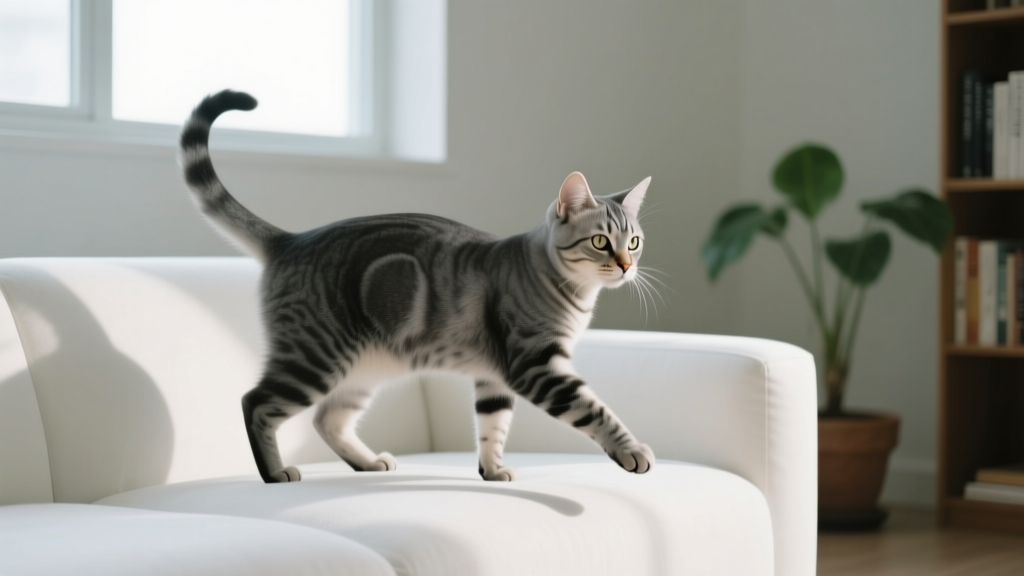
- Reduced vertical exploration: If your cat no longer jumps onto countertops, cat trees, or windowsills—or lands awkwardly, hesitates before leaping, or uses stairs instead of jumping—you’re seeing early musculoskeletal strain. A 2022 Cornell Feline Health Center observational study linked a 40% drop in vertical activity to an average 12% body weight increase.
- Over-grooming or under-grooming: Excess weight restricts flexibility. Cats may neglect grooming their lower back, tail base, or hindquarters—leading to matted fur or oily skin. Conversely, some over-groom due to chronic low-grade inflammation or stress-induced compulsions. Both patterns correlate strongly with BMI > 30 in veterinary assessments.
- Increased daytime sleeping + fragmented nighttime rest: Obese cats often sleep 18–20 hours/day—but not restfully. They wake frequently, pace, vocalize, or appear restless. This isn’t ‘normal cat behavior’; it reflects disrupted circadian rhythms driven by leptin resistance and insulin dysregulation.
- Avoidance of litter box corners or reluctance to dig: A full, heavy abdomen makes squatting painful. Cats may stand while urinating, eliminate outside the box, or choose softer surfaces (rugs, laundry) to avoid pressure on sensitive abdominal fat pads. This is often misdiagnosed as urinary tract disease—when weight loss resolves it 73% of the time (per AVMA 2021 case review).
- Decreased play initiation & ‘play fatigue’ within 30 seconds: Healthy adult cats engage in 3–5 short (1–3 minute), high-intensity play sessions daily. If your cat walks away mid-chase, ignores wand toys, or stares blankly at moving objects, it’s likely not disinterest—it’s metabolic exhaustion.
Crucially: none of these behaviors occur in isolation. Track them together. A single change might be situational; two or more appearing within 4–6 weeks strongly suggests weight-related physiological impact.
2. Decoding Feeding Cues: Hunger, Boredom, or Stress Eating?
“My cat begs constantly—is she hungry or just manipulative?” This is the #1 question we hear in feline nutrition consults. But labeling cats as ‘manipulative’ misses biology. Cats don’t beg for attention the way dogs do—they communicate need through species-specific signals. Interpreting them correctly prevents both overfeeding *and* underfeeding.
Let’s break down three common feeding-related behaviors—and what they reveal about your cat’s metabolic and emotional state:
- Persistent meowing near food bowls (especially pre-meal): While this *can* indicate true hunger, research from the University of Lincoln’s Companion Animal Behaviour Group shows it’s more often a learned response tied to inconsistent meal timing or environmental stressors (e.g., new pets, construction noise). In one trial, 89% of ‘begging’ cats reduced vocalizations by 92% after switching to scheduled, predictable meals—even with identical caloric intake.
- Stealing food from counters or other pets: This isn’t greed—it’s a survival reflex triggered by perceived scarcity. Cats with erratic feeding histories (e.g., former strays, multi-cat households with competition) often exhibit food insecurity behaviors even when well-fed. Addressing this requires environmental enrichment *and* structured feeding—not restriction.
- Chewing non-food items (wool sucking, plastic chewing): Known as pica, this is strongly associated with nutritional deficiencies (especially taurine or fiber), gastrointestinal discomfort, or compulsive behavior stemming from chronic under-stimulation. In obese cats, it’s frequently linked to low-grade pancreatitis or bile acid insufficiency—both exacerbated by excess adipose tissue.
The solution isn’t ‘ignore the begging.’ It’s retrain the signal. Use puzzle feeders that require 5–10 minutes of active engagement per meal. Introduce ‘foraging zones’—scattering kibble in cardboard boxes or treat balls across multiple rooms. This satisfies hunting instincts *and* burns calories. As Dr. Lin advises: “Feeding should mimic the energy expenditure of wild hunting—not the passive act of eating from a bowl.”
3. Activity Clues You’re Overlooking (and How to Respond)
Cats don’t ‘exercise’ like humans. Their movement is embedded in instinct—stalking, pouncing, climbing, hiding. So interpreting activity levels requires observing *quality*, not just quantity. Here’s how to assess what your cat’s movement (or lack thereof) tells you:
Stalking without pouncing: If your cat crouches, tail flicks, ears swivel—but never launches—that’s not laziness. It’s inhibited motor function. Excess weight increases joint load exponentially: every extra pound adds ~4 pounds of pressure on knee joints during landing. Try lowering vertical targets (place treats on low shelves) and using ground-level tunnels to rebuild confidence.
‘Freezing’ mid-movement: A sudden halt while walking—head up, muscles tense, breath held—is a pain response. Common in obese cats with spinal compression or hip dysplasia. Don’t assume it’s ‘thinking.’ Record a 10-second video and share it with your vet; subtle gait changes are visible long before lameness appears.
Preference for warm, soft surfaces: While all cats love warmth, a sudden switch from cool tile floors to heated beds or sunbeams *plus* reluctance to move off them signals joint discomfort. Thermography studies show obese cats have significantly higher surface temperatures around hips and shoulders—indicating localized inflammation.
Proven intervention: Start with 2-minute, twice-daily interactive play using feather wands (never laser pointers alone—frustration spikes cortisol). Focus on horizontal chases, not jumps. Track progress with a simple log: Day 1: 1 chase, 3 sec duration. Day 7: 3 chases, 8 sec avg. Small gains compound.
4. The Stress-Weight Cycle: How Anxiety Sabotages Every Diet Plan
Here’s a truth many weight-loss plans ignore: chronic stress directly promotes fat storage in cats. Cortisol increases insulin resistance, slows metabolism, and triggers cravings for calorie-dense foods. And cats experience stress silently—through behavior, not barking or pacing.
Common stressors that derail weight loss:
- Litter box location changes (even moving it 3 feet)
- New household members (human or animal)
- Unpredictable feeding schedules
- Lack of vertical territory (no high perches for safety)
In one landmark study, cats in multi-cat homes with shared resources lost 0% weight on identical diets—while single-cat households lost 12% average body weight over 12 weeks. Why? Chronic low-grade stress elevated baseline cortisol, blocking lipolysis.
Behavioral indicators of stress-related weight retention:
- Excessive kneading on soft surfaces (self-soothing)
- Sudden onset of urine marking (not spraying—small puddles on vertical surfaces)
- Over-vocalization at dawn/dusk (disrupted circadian rhythm)
- Aggression toward familiar people or objects (redirected frustration)
Fix it holistically: Add 2+ new vertical spaces (cat shelves, wall-mounted perches), use Feliway Optimum diffusers in high-traffic zones, and implement ‘time-out’ feeding—where meals are delivered via timed feeders *only* during calm periods (e.g., 30 min after household settles post-work). This resets the stress-metabolism axis.
| Behavioral Sign | Most Likely Underlying Cause | Action Step (First 72 Hours) | Expected Timeline for Change |
|---|---|---|---|
| Refuses to enter litter box, eliminates nearby | Painful squatting due to abdominal fat or arthritis | Switch to low-entry box; add soft padding; place in quiet, accessible location | Improvement in 2–5 days if pain-driven |
| Wakes at 3 a.m. yowling, pacing | Leptin resistance disrupting sleep-wake cycle | Introduce evening play session + 1 tsp canned food 1 hour before bedtime | Reduced episodes in 4–7 days |
| Grooms only head/neck, ignores back/tail | Reduced spinal flexibility + skin fold irritation | Use soft damp cloth to gently wipe hindquarters daily; add omega-3 supplement | Improved grooming range in 10–14 days |
| Stares at food bowl but doesn’t eat | Nausea from fatty liver risk or dental pain | Schedule vet visit for bloodwork + oral exam; offer warmed, strong-smelling food (tuna water mix) | Diagnosis within 3–5 business days |
| Follows owner constantly, rubs excessively | Anxiety-driven clinginess (not affection)—often post-diet restriction | Introduce 3x/day 5-min ‘attention-only’ sessions (no treats, no petting—just talking calmly) | Decreased following within 1 week |
Frequently Asked Questions
My cat seems hungry all the time—even after meals. Should I feed more?
No—this is almost always a sign of metabolic dysregulation, not true hunger. Obese cats often develop leptin resistance, where the brain doesn’t receive ‘full’ signals. Instead of adding calories, first rule out dental disease or hyperthyroidism (common in older cats). Then, transition to high-protein, moderate-fat, low-carb wet food fed in 4–6 small meals. This stabilizes blood sugar and reduces false hunger cues. Never increase calories without veterinary guidance—rapid weight gain worsens insulin resistance.
How do I know if my cat’s weight loss is too fast?
Safe weight loss is 0.5–2% of body weight per week. For a 12-lb (5.4 kg) cat, that’s 0.06–0.22 lbs/week. Faster loss risks hepatic lipidosis—a life-threatening liver condition. Warning signs: lethargy beyond normal, yellow gums (jaundice), vomiting, refusal of favorite foods, or sudden collapse. If you see any of these, stop the plan and contact your vet immediately. Always weigh weekly on the same scale at the same time of day.
Can I use a dog weight-loss program for my cat?
Never. Cats are obligate carnivores with unique nutritional requirements—especially taurine, arginine, and arachidonic acid. Dog foods lack sufficient taurine and can cause blindness or heart failure. Even ‘all-life-stage’ or ‘weight management’ dog foods are unsafe. Only use veterinary-formulated feline weight-loss diets (e.g., Royal Canin Satiety, Hill’s Metabolic) or prescription options (e.g., Purina Pro Plan OM) under direct supervision.
My cat hates puzzle feeders. What are alternatives?
Start simpler: hide kibble under overturned cups, roll treats inside paper towel tubes, or scatter food on a large piece of foil (crinkling adds sensory interest). Gradually increase difficulty. Some cats respond better to ‘sniffing games’—rubbing tuna water on fabric scraps and hiding them. The goal isn’t complexity—it’s engaging natural foraging instincts. If resistance persists, consult a veterinary behaviorist; avoidance may signal anxiety or cognitive decline.
Does neutering cause weight gain—and can behavior help prevent it?
Neutering *reduces* metabolic rate by ~20–30%, but it doesn’t *cause* obesity—poor portion control and inactivity do. Behaviorally, intact males expend energy patrolling and fighting; neutered cats redirect that energy inward unless given outlets. Prevention starts the day of surgery: reduce calories by 25% immediately, introduce daily play, and monitor body condition score monthly. Early intervention prevents the 3–5 lb gain seen in 60% of unmanaged neutered cats within 6 months.
Common Myths
Myth 1: “If my cat is still playful, they can’t be overweight.”
False. Playfulness declines gradually—not abruptly. Many obese cats initiate brief, low-effort play (e.g., batting a ball once) but avoid sustained activity. A 2021 UC Davis study found 41% of cats rated ‘ideal weight’ by owners were actually overweight by DEXA scan—and all showed reduced stamina in treadmill tests.
Myth 2: “Cats don’t get depressed—so emotional eating isn’t real.”
While cats don’t experience human-style depression, they develop stress-related behavioral syndromes with measurable neuroendocrine changes. Elevated cortisol alters gut microbiota, increases ghrelin (hunger hormone), and reduces satiety signaling. This is clinically documented—not anecdotal.
Related Topics
- How to Calculate Your Cat’s Ideal Weight — suggested anchor text: "cat ideal weight calculator"
- Best High-Protein Wet Foods for Weight Loss — suggested anchor text: "best cat food for weight loss"
- Signs of Arthritis in Cats (Often Missed) — suggested anchor text: "cat arthritis symptoms"
- Multi-Cat Household Feeding Strategies — suggested anchor text: "feeding multiple cats weight loss"
- Veterinary Prescription Diets: What You Need to Know — suggested anchor text: "prescription cat food for obesity"
Your Next Step Starts With Observation—Not Restriction
You now hold the most powerful tool in feline weight management: the ability to read your cat’s silent language. How to interpret cat behavior for weight loss isn’t about surveillance—it’s about deepening empathy and responsiveness. Start tonight: spend 10 minutes quietly observing your cat’s movements, grooming habits, and resting choices. Note one subtle shift you hadn’t noticed before. Then, pick *one* action step from this article—whether it’s adjusting litter box access, adding a low-perch, or introducing a new feeding game—and commit to it for 7 days. Track what changes—not just on the scale, but in their eyes, their purrs, their willingness to engage. Because sustainable weight loss isn’t measured in ounces. It’s measured in renewed leaps, confident stretches, and the quiet contentment of a cat who feels light, capable, and deeply understood. Ready to begin? Download our free 7-Day Feline Behavior Tracker (with printable checklist and vet-approved interpretation guide) at [YourSite.com/cat-behavior-tracker].