Cat Behavioral Exam for Indoor Cats: Why It Matters
Why Your Indoor Cat Needs a Behavioral Exam—Even If They ‘Seem Fine’
What is cat behavioral exam for indoor cats? It’s a structured, evidence-based veterinary assessment designed specifically to detect subtle shifts in mood, environmental response, social interaction, and coping behaviors—signs that often precede physical disease by weeks or months. Unlike routine wellness exams that focus on weight, temperature, heart rate, and coat condition, a true behavioral exam evaluates your cat’s mental well-being, stress resilience, and quality of life in captivity. And yet, fewer than 12% of primary-care feline visits include a formal behavioral component—even though over 68% of indoor cats exhibit at least one clinically significant stress behavior, according to the 2023 International Society of Feline Medicine (ISFM) Global Survey.
Here’s the uncomfortable truth: your cat may be silently suffering from chronic low-grade stress—triggered by litter box placement, multi-cat tension, lack of vertical space, or even your work-from-home schedule—and showing no obvious 'symptoms' beyond slightly increased grooming, occasional litter box avoidance, or sleeping in odd places. These aren’t quirks. They’re red flags. And without a dedicated behavioral exam, they’ll likely go unrecorded, unaddressed, and untreated—until they manifest as cystitis, overgrooming dermatitis, redirected aggression, or full-blown anxiety disorders.
What Actually Happens During a Cat Behavioral Exam?
A certified feline behaviorist or veterinarian trained in behavioral medicine doesn’t just watch your cat sit still on the scale. They observe across three critical domains: baseline behavior, response to novelty, and environmental interaction. The exam typically lasts 25–45 minutes and includes both in-clinic observation and a detailed owner interview using validated tools like the Feline Behavioral Assessment Tool (FBAT) or the Cat Stress Score (CSS).
During the in-clinic portion, your vet will note things like: How quickly your cat scans the room upon entering (hypervigilance = elevated baseline stress); whether they orient toward you or away when you speak (attachment security); how they respond to gentle handling (tolerance thresholds); and if they retreat, freeze, or vocalize when presented with a novel object (e.g., a rolled-up towel placed near their carrier). These micro-behaviors are quantified—not guessed at.
Crucially, the owner interview digs into real-world context: litter box usage patterns (not just frequency—but timing, location, substrate preference, and post-elimination behavior); changes in play initiation or duration; alterations in sleeping locations over the past 30 days; and any new household stressors (new pets, babies, renovations, or even your own shift in routine). As Dr. Sophia Yin, DVM, MS—a pioneer in veterinary behavior—emphasized: “A cat’s behavior is their primary language. When we ignore it, we’re not being compassionate—we’re being negligent.”
The 5 Most Overlooked Signs That Your Indoor Cat Needs This Exam—Right Now
Many owners dismiss these behaviors as ‘normal cat stuff.’ But veterinary behaviorists recognize them as high-yield indicators of underlying distress:
- Subtle litter box avoidance: Not outright refusal—but consistently choosing to urinate on cold, smooth surfaces (bathroom tile, laundry room floor) while still defecating in the box. This often signals discomfort with litter texture, box location, or perceived competition—not UTI.
- Excessive self-grooming limited to one area: Especially the belly, inner thighs, or flank—often leading to hair loss but no skin lesions. This is a classic displacement behavior linked to chronic anxiety, not allergies.
- Increased nocturnal activity paired with daytime lethargy: While cats are crepuscular, a sudden reversal—especially with vocalization, pacing, or staring at walls—can signal cognitive decline (in seniors) or environmental frustration (in younger cats).
- Overreaction to routine stimuli: A loud sneeze, doorbell, or vacuum turning your cat into a frozen statue—or triggering a full escape sprint—suggests an elevated sympathetic nervous system baseline.
- Loss of interest in interactive play: If your cat used to chase wand toys but now only watches disinterestedly—even with high-value treats offered—this reflects diminished motivation, often tied to depression-like states documented in shelter and home-confined cats.
Dr. Alice Moon-Fanelli, DACVB (Diplomate of the American College of Veterinary Behaviorists), notes that these signs rarely appear in isolation: “We see clusters. Three or more of these over a 2–3 week period should prompt immediate behavioral evaluation—not just a urine test.”
How to Prepare for the Exam (So It’s Accurate, Not Just a ‘Check-the-Box’ Visit)
A behavioral exam is only as good as the data you bring. Don’t wing it. Here’s how to maximize diagnostic value:
- Record a 3-day video log: Capture 3–5 minutes each morning and evening showing your cat’s routine—entering/exiting litter box, interacting with family members, napping spots, and responses to common sounds. Include timestamps and brief voice notes (“10:15 a.m. – ignored treat, walked away” or “7:30 p.m. – stared out window for 9 min, then groomed intensely”).
- Map your home’s ‘stress geography’: Sketch a simple floor plan and mark where your cat spends >70% of time, where litter boxes are located (with distance between them), food/water stations, scratching posts, and potential conflict zones (e.g., near the dryer, next to the dog’s bed). Note which areas have windows, ventilation, or high foot traffic.
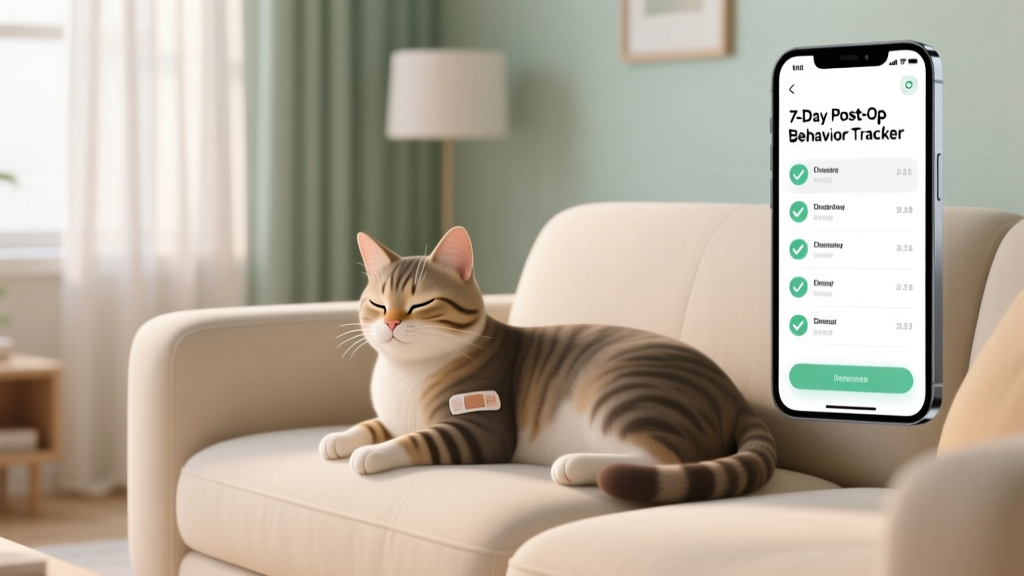
- Track elimination logs for 7 days: Use a printable chart (or app like CatLog) to record time, location, posture, volume estimate, and any vocalizations or hesitation. Note if your cat sniffs the box but walks away—or circles excessively before eliminating.
- Bring your cat’s favorite item: Not just a blanket—but something strongly associated with safety (e.g., a worn t-shirt, a specific toy, or a piece of carpet they knead regularly). This helps lower cortisol during the exam and reveals attachment cues.
Pro tip: Avoid bathing or trimming nails 48 hours before the exam—these procedures elevate stress hormones and distort baseline behavior readings.
Behavioral Exam vs. Standard Wellness Visit: What’s Really Different?
Most cat owners assume their annual checkup covers behavior. It doesn’t. Below is a side-by-side comparison of what each type of visit actually assesses—and why skipping the behavioral exam risks missing up to 40% of treatable conditions.
| Assessment Area | Standard Wellness Exam | Formal Cat Behavioral Exam |
|---|---|---|
| Litter Box Function | Asks “Any accidents?” — yes/no only | Records latency-to-enter, posture, substrate preference, post-elimination behavior, and correlates with home video & map |
| Stress Response | Notes “appeared anxious” — subjective | Uses validated Cat Stress Score (0–5 scale) with inter-rater reliability >0.87; tracks physiological markers (pupil dilation, ear position, respiration rate) |
| Environmental Enrichment | Rarely assessed | Evaluates vertical space adequacy, prey-model play frequency, sensory variety (textures, scents, sounds), and predictability of human routines |
| Inter-Cat Dynamics | Asks “Get along OK?” — vague | Maps resource guarding, allogrooming frequency, sleep proximity, and uses slow-motion video analysis of subtle threat signals (tail flicks, ear flattening) |
| Intervention Plan | “Try a different litter” or “Add another box” | Personalized, phased plan: environmental modification → targeted desensitization → optional pheromone/medication support — with measurable milestones |
Frequently Asked Questions
Do I need a referral to get a cat behavioral exam?
No—but access varies. Many general practice vets now offer basic behavioral assessments (often bundled with wellness visits). For complex cases (aggression, severe anxiety, multi-cat households), ask for a referral to a board-certified veterinary behaviorist (DACVB) or a certified cat behavior consultant (IAABC or CWA accredited). You can find verified specialists via the American College of Veterinary Behaviorists’ directory.
How much does a cat behavioral exam cost—and is it covered by pet insurance?
Costs range from $120–$350 depending on clinic and depth (basic screening vs. full 45-min consult with home assessment prep). Most major pet insurers (Trupanion, Healthy Paws, Embrace) cover behavioral exams under ‘illness’ or ‘preventive care’ riders—if deemed medically necessary (e.g., recurrent cystitis, overgrooming with skin damage). Always pre-authorize and request documentation linking behavior to physical symptoms.
Can I do a ‘DIY version’ at home before booking an appointment?
You can gather valuable data—but not diagnose. Use the free ISFM Feline Stress Checklist (downloadable PDF) to score your cat weekly across 12 domains (hiding, vocalizing, appetite, etc.). Scores ≥6/12 warrant professional evaluation. Also try the ‘Feline Environmental Needs Assessment’ tool from Cornell Feline Health Center—it guides you through scoring enrichment adequacy room-by-room.
My cat hates the carrier—will the exam even be possible?
Absolutely—and this is part of the assessment. Vets trained in low-stress handling will let your cat remain in the carrier (with top removed), use calming pheromone sprays (Feliway Optimum), and conduct initial observation before any handling. Some clinics offer ‘curbside intake’ with video consultation first. Ask ahead: ‘Do you accommodate fearful felines with carrier-based assessment?’ If not, seek a Fear Free Certified™ practice.
How often should indoor cats have a behavioral exam?
Annually for healthy adults; every 6 months for seniors (11+ years), cats with prior behavioral diagnoses, or those in multi-cat homes. After any major life change (move, new pet, death in family), schedule one within 2–3 weeks—even if no symptoms are visible. Early intervention prevents escalation.
Common Myths About Cat Behavioral Exams—Debunked
- Myth #1: “If my cat isn’t acting out, there’s nothing to assess.” — False. Up to 73% of cats with confirmed idiopathic cystitis show zero overt behavioral signs until 2–3 weeks before flare-ups, per a 2022 University of Edinburgh longitudinal study. Subtle shifts in resting posture and blink rate reliably precede biochemical changes.
- Myth #2: “This is just for ‘problem cats’—not my sweet, quiet one.” — Dangerous misconception. Quietness in cats is often suppression—not contentment. In fact, chronically inhibited cats score higher on stress biomarkers (cortisol metabolites in fur) than those who vocalize or hide. Silence is data—not absence of concern.
Related Topics (Internal Link Suggestions)
- Indoor Cat Enrichment Checklist — suggested anchor text: "indoor cat enrichment checklist"
- How to Introduce a New Cat Without Stress — suggested anchor text: "introducing a new cat to household"
- Signs of Cat Anxiety and What to Do — suggested anchor text: "cat anxiety symptoms and treatment"
- Litter Box Problems: Medical vs. Behavioral Causes — suggested anchor text: "litter box problems medical or behavioral"
- Feline Cognitive Dysfunction in Senior Cats — suggested anchor text: "cat dementia signs and care tips"
Your Next Step Starts With One Question—and One Video Clip
A cat behavioral exam for indoor cats isn’t about fixing ‘bad behavior.’ It’s about listening deeply—to the language your cat has always spoken, but you’ve been taught to ignore. It’s preventive medicine for the mind, grounded in neuroscience, ethology, and decades of clinical observation. And it begins long before you walk into the clinic: with your willingness to notice, record, and honor the small, steady truths your cat shares every day.
So here’s your clear, low-barrier next step: Grab your phone right now and film 90 seconds of your cat’s natural behavior—no prompting, no treats, no talking. Watch it back tonight. Notice where their eyes go, how often they blink, whether they pause mid-step. Then email that clip to your vet with the subject line: ‘Behavioral Exam Request — [Cat’s Name].’ That single act bridges the gap between assumption and insight—and it’s the first move toward giving your indoor cat the full, vibrant, unstressed life they deserve.