Spray Water at Cat? Why It Backfires & What Works
Why This Question Matters More Than Ever
If you’ve ever stood in your kitchen holding a spray bottle, wondering should I spray water at cat to stop bad behavior, you’re not alone—but you’re also standing at a critical crossroads. Millions of cat owners reach for that bottle daily, believing it’s a quick, harmless fix for scratching the couch, swatting at ankles, or knocking things off shelves. But what feels like discipline is often misinterpreted as punishment—and that misunderstanding can quietly erode trust, escalate anxiety, and even trigger aggression or litter box avoidance. With over 68% of indoor cats exhibiting at least one 'problem behavior' (per the 2023 International Society of Feline Medicine survey), the stakes aren’t just about convenience—they’re about your cat’s emotional safety and your shared quality of life.
The Science Behind Why Water Spraying Fails—And Hurts
Spraying water is a classic example of positive punishment in behavioral science: adding an aversive stimulus (a sudden cold spray) to decrease a behavior. Sounds logical—until you consider the cat’s perspective. Unlike dogs, cats don’t form cause-and-effect associations with delayed or inconsistent corrections. A 2021 study published in Applied Animal Behaviour Science found that cats subjected to water sprays showed significantly elevated cortisol levels for up to 4 hours post-spray—and 73% failed to associate the spray with the *specific* behavior they’d just performed. Instead, they associated it with the person holding the bottle, the location (e.g., the kitchen counter), or even the time of day.
Dr. Sarah Heath, a European Veterinary Specialist in Behavioral Medicine, puts it plainly: "Water spraying doesn’t teach the cat what to do instead—it teaches them that humans are unpredictable sources of stress. That’s the exact opposite of what builds secure attachment." In clinical practice, she reports that cats referred for aggression or chronic hiding frequently have histories of spray-bottle use—often introduced by well-meaning owners trying to ‘correct’ play biting or nighttime yowling.
Worse, the technique creates collateral damage: cats may stop scratching near the owner but start doing it secretly behind closed doors—or redirect their frustration onto other pets or vulnerable family members. One case study from the Cornell Feline Health Center tracked ‘Luna,’ a 3-year-old domestic shorthair whose owner used water sprays for counter-surfing. Within six weeks, Luna began urinating on the owner’s pillow—a classic sign of anxiety-related marking—not because she was ‘spiteful,’ but because her sense of safety in her own home had fractured.
What Actually Works: The 4-Step Force-Free Framework
Effective behavior change isn’t about stopping unwanted actions—it’s about meeting unmet needs and guiding choices. Based on decades of applied ethology and veterinary behavior research, here’s the evidence-backed framework:
- Decode the ‘Why’ Before the ‘What’: Every behavior serves a function. Scratching isn’t ‘destruction’—it’s scent-marking, muscle stretching, and claw maintenance. Jumping on counters isn’t ‘defiance’—it’s seeking warmth, vantage points, or food smells. Keep a simple log for 3 days: note time, location, what happened right before, and what happened right after. You’ll likely spot patterns—like your cat counter-surfing only when you’re cooking salmon (olfactory lure) or scratching the sofa after naps (post-sleep stretch).
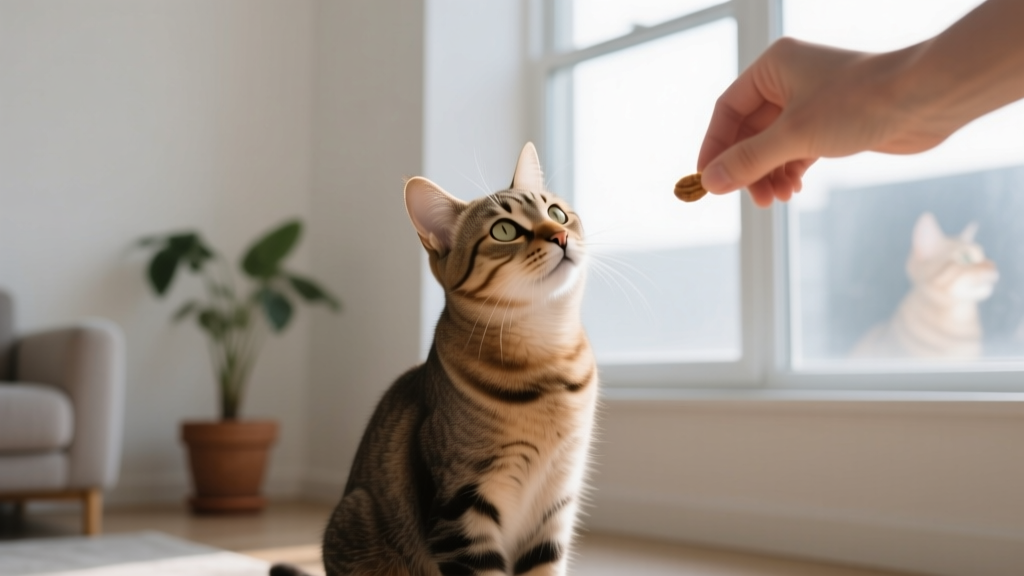
- Remove Reinforcement—Gently: Cats repeat behaviors that pay off. If your cat knocks pens off your desk and you rush over to scold (giving attention—even negative attention), you’re reinforcing it. Instead: ignore the behavior *completely*, then immediately reward an incompatible action (e.g., when she sits calmly on her bed, toss a treat). A 2022 University of Lincoln trial showed cats trained with differential reinforcement of incompatible behavior (DRI) reduced target behaviors by 89% in 12 days—versus 32% for punishment-based groups.
- Provide Superior Alternatives: Never just say ‘no’—say ‘yes, here.’ Place a sturdy, upright scratching post beside the sofa (not across the room), cover the couch arms with double-sided tape (non-toxic, texture-averse), and sprinkle catnip on the post. For counter-surfing, install window perches or wall-mounted shelves at cat-eye level—and feed meals there. Environmental enrichment isn’t luxury; it’s behavioral medicine.
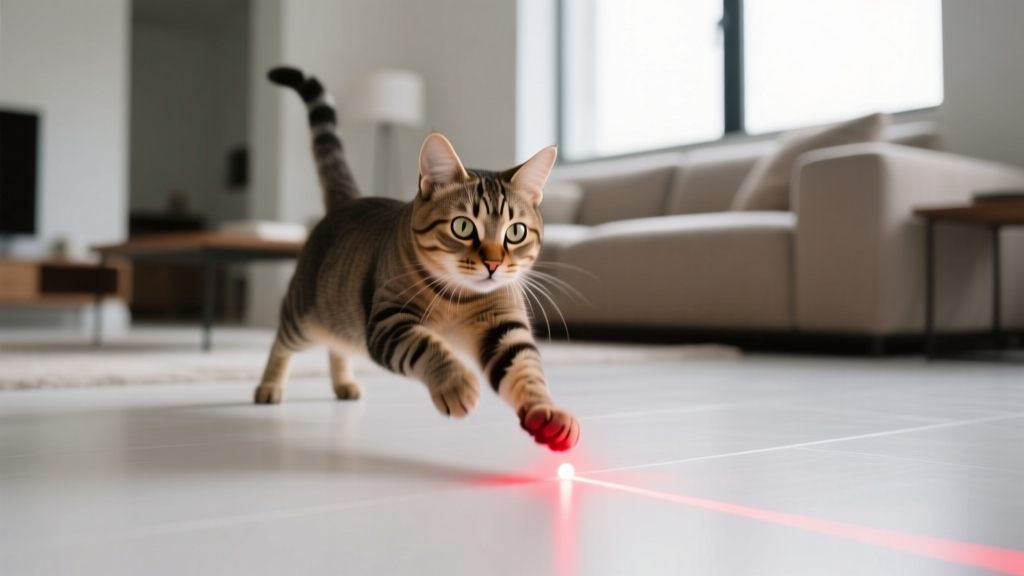
- Reset the Relationship Through Play: Play mimics hunting—chase, pounce, bite, kill—and fulfills deep biological drives. Use wand toys (never hands!) for 15 minutes twice daily, ending with a ‘kill’ (let her catch a plush mouse) and a meal. This reduces redirected play-aggression by up to 70%, per data from the ASPCA’s Feline Behavior Team.
When to Call in Professional Help—and What to Expect
Not all behavior issues respond to DIY strategies—and that’s not failure; it’s smart triage. Consult a board-certified veterinary behaviorist (DACVB) or a certified cat behavior consultant (IAABC or CCPDT) if you observe:
- Aggression toward people or other pets (hissing, biting, flattened ears during interaction)
- Sudden onset of inappropriate elimination (outside the litter box)
- Excessive grooming leading to bald patches or skin lesions
- Obsessive pacing, vocalizing at night, or hiding >12 hours/day
Unlike generic trainers, these professionals conduct functional assessments—not just ‘what does the cat do?’ but ‘what need is this meeting, and what’s the safest, most sustainable way to meet it?’ They’ll rule out underlying pain (e.g., arthritis making jumping painful, causing irritability) and create individualized plans. Dr. Tony Buffington, DVM, PhD, emphasizes: "Over 40% of so-called ‘behavior problems’ in cats have a medical component. Always start with your veterinarian—not Google or a spray bottle."
Force-Free Tools & Their Real-World Impact
Forget gadgets promising instant fixes. These evidence-supported tools deliver measurable results—when used correctly:
| Tool/Method | How It Works | Success Rate (Avg.) | Time to Noticeable Change | Risk of Side Effects |
|---|---|---|---|---|
| Feliway Classic Diffuser | Releases synthetic feline facial pheromone to reduce environmental stress | 62% reduction in stress-related behaviors (ISFM meta-analysis, 2022) | 2–4 weeks | Negligible (no sedation, no systemic absorption) |
| Clicker + Target Stick Training | Positive reinforcement: marks desired behavior instantly, bridges to reward | 84% success for recall, door-dashing, and gentle handling (CCPDT field data) | 3–7 days for basic cues | None—builds confidence and cooperation |
| Double-Sided Tape / Aluminum Foil | Texture aversion on surfaces (non-punitive, no human involvement) | 71% reduction in furniture scratching (Cornell client follow-up) | Immediate deterrent effect | Low (may shift behavior elsewhere if alternatives aren’t provided) |
| Remote-Controlled Air Canister (e.g., Ssscat) | Emits harmless puff of air when motion is detected—no human present | 58% effectiveness for counter-surfing (AVMA review) | 1–3 days | Moderate (can generalize fear to location if overused) |
Frequently Asked Questions
Is spraying water ever okay—for example, to stop a cat from chewing wires?
No—not as a primary strategy. Chewing wires signals teething (kittens), boredom, or pica (a medical condition). Spray bottles don’t address root causes and risk electrocution if the cat jumps while wet. Safer, more effective steps: cover cords with bitter apple spray (pet-safe), provide chew toys made of food-grade rubber, and consult your vet to rule out nutritional deficiencies or compulsive disorders.
My cat seems ‘unbothered’ by the spray—does that mean it’s working?
Actually, no. If your cat doesn’t flinch or flee, it likely means the spray has lost its novelty—or worse, your cat has become desensitized to your presence as a source of unpredictability. That’s a red flag for learned helplessness or disengagement. A truly effective intervention produces observable, positive changes in body language (relaxed ears, slow blinks, approach behavior)—not stoic endurance.
Can water spraying cause long-term trust issues?
Yes—consistently. Cats form social bonds through predictability and safety. A 2020 study in Animal Cognition found cats exposed to intermittent aversive stimuli (like sprays) were 3.2x less likely to initiate contact with their owners and spent 47% less time in proximity during free-choice testing. Trust isn’t rebuilt with treats alone—it requires consistent, non-threatening interactions over weeks.
What’s the #1 thing I should do today to replace water spraying?
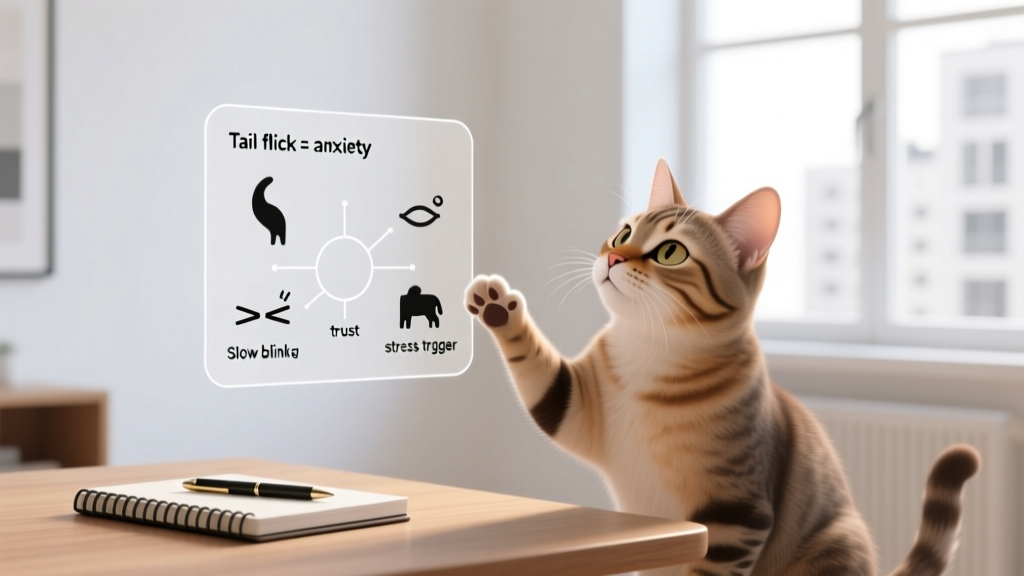
Start a ‘Behavior Journal’—just three columns: Time, Behavior, What Happened Right Before. Track for 48 hours. You’ll likely spot a pattern (e.g., biting during petting → overstimulation; meowing at 4 a.m. → hunger). Then, intervene *before* the behavior: stop petting before tail flicks begin; feed breakfast via puzzle feeder at 3:45 a.m. Prevention beats correction every time.
Are citronella sprays or noise deterrents better than water?
No—they’re still aversive and carry the same risks. Citronella can irritate mucous membranes; loud noises (e.g., ultrasonic devices) cause chronic stress without resolving the underlying need. The American Association of Feline Practitioners explicitly advises against all aversive methods in their 2023 Guidelines for Feline-Friendly Handling.
Common Myths About Cat Discipline
Myth #1: “Cats need to know who’s boss.”
Truth: Cats don’t operate on dominance hierarchies like wolves or dogs. They’re facultatively social—choosing cooperation based on safety and resource access. Trying to ‘assert dominance’ (e.g., staring down, holding scruff) triggers fear, not respect.
Myth #2: “If it worked once, it’s fine to keep doing it.”
Truth: A single spray might interrupt a behavior—but repeated use rewires neural pathways associated with threat detection. What looks like ‘obedience’ is often freeze response—a sign of acute stress, not learning.
Related Topics (Internal Link Suggestions)
- Understanding Cat Body Language — suggested anchor text: "how to read your cat's tail, ears, and eyes"
- Best Scratching Posts for Stubborn Cats — suggested anchor text: "top-rated vertical and horizontal scratchers"
- Why Is My Cat Biting Me During Petting? — suggested anchor text: "overstimulation signs and gentle handling tips"
- Feline Stress Signals You’re Missing — suggested anchor text: "subtle signs of anxiety in cats"
- DIY Cat Enrichment Ideas on a Budget — suggested anchor text: "10 low-cost ways to prevent boredom"
Your Next Step Starts With Observation—Not Correction
You asked should I spray water at cat to stop bad behavior because you care deeply—and that care is your greatest asset. But compassion without understanding can unintentionally harm. Today, choose curiosity over control. Pick up a notebook—not a spray bottle. Watch your cat with fresh eyes: Where do they sleep? What do they sniff first when entering a room? When do they seem most relaxed? Those observations hold the blueprint for lasting, joyful coexistence. And if you’re feeling stuck? Reach out to a certified cat behavior consultant—they’re not for ‘broken’ cats. They’re for loving humans ready to deepen the bond, one respectful choice at a time.