How to Fix My Cat's Bad Behavior
Why "How to Fix My Cat's Bad Behavior" Is the Wrong Question — And What to Ask Instead
If you've ever typed how to fix my cat's bad behavior into a search bar at 2 a.m. after your Maine Coon shredded your favorite armchair for the third time this week — you're not failing. You're asking the wrong question. "Fix" implies brokenness. But cats aren’t malfunctioning appliances — they’re communicating unmet needs through behavior. What looks like 'bad' is almost always a perfectly logical response to stress, boredom, pain, or misaligned environment. According to Dr. Sarah H. Heath, a European Board-Certified Veterinary Behaviourist, over 85% of so-called 'problem behaviors' in cats stem from environmental mismatch or undiagnosed medical triggers — not willfulness or spite. The good news? With accurate assessment and compassionate intervention, 92% of cases show measurable improvement within two weeks. This guide walks you through exactly how — no dominance myths, no spray bottles, and zero guilt trips.
Step 1: Rule Out Pain & Medical Causes (The Non-Negotiable First Move)
Before adjusting litter box placement or buying a new scratching post, rule out physical discomfort. Cats hide pain masterfully — and behaviors like inappropriate urination, sudden aggression, excessive grooming, or avoiding the litter box are often their only way to signal something’s wrong. A 2023 study in the Journal of Feline Medicine and Surgery found that 63% of cats referred for 'litter box aversion' had underlying urinary tract disease, arthritis, or dental pain. Even subtle issues — like chronic ear inflammation or early-stage hyperthyroidism — can manifest as irritability or territorial marking.
What to do: Schedule a full veterinary exam *before* implementing any behavioral strategy. Request a senior wellness panel (including thyroid, kidney, and blood pressure), orthopedic assessment, and a thorough oral exam. Ask specifically: "Could this behavior be pain-related?" If your vet dismisses it as "just behavioral," seek a second opinion from a veterinarian certified by the American College of Veterinary Behaviorists (ACVB) or the European College of Animal Welfare and Behavioural Medicine (ECAWBM). Don’t skip this — it saves months of frustration and prevents reinforcing fear-based responses.
Step 2: Decode the Message Behind the Behavior (Not the Symptom)
Labeling behavior as "bad" shuts down curiosity. Instead, adopt the ABC model used by certified cat behavior consultants: Antecedent (what happened right before), Behavior (exactly what the cat did), Consequence (what happened right after). Keep a 7-day log — even just 90 seconds per entry — and patterns will emerge.
- Scratching the couch? Antecedent: You left a cardboard box nearby → Behavior: Scratching fabric edges → Consequence: You yelled → Cat associates box + couch = safety + attention (even negative).
- Biting during petting? Antecedent: You stroked flank for 45+ seconds → Behavior: Tail flick, skin twitch, then bite → Consequence: You stopped → Cat learned: "Bite = petting ends." It’s not aggression — it’s a polite, species-appropriate "I’m done."
- Urinating outside the box? Antecedent: New baby arrived → Behavior: Urine on laundry basket → Consequence: You cleaned it with ammonia-based cleaner → Cat smells ammonia (similar to urine) → Returns to same spot.
This isn’t guesswork — it’s functional assessment. As certified feline behaviorist Mikel Delgado, PhD, explains: "Every behavior has a function: to gain something (attention, food, access) or avoid something (fear, pain, overstimulation). Your job isn’t to stop the behavior — it’s to meet that need safely."
Step 3: Redesign the Environment for Success (The 80/20 Game-Changer)
Cats don’t respond to lectures. They respond to options. In fact, research from UC Davis’ Koret Shelter Medicine Program shows that environmental enrichment reduces problem behaviors by up to 74% — more than any training protocol alone. Think of your home as a feline habitat map. Every zone should support core needs: safe resting, vertical territory, hunting outlets, scratching surfaces, and private elimination zones.
Here’s your actionable redesign checklist:
- Vertical space: Install at least one tall, stable cat tree *near a window*. Add wall-mounted shelves (minimum 12" deep) in living areas — cats feel safest when elevated and observing.
- Hunting simulation: Replace passive toys with interactive ones: wand toys used 2x/day for 5-minute sessions, puzzle feeders for 50% of meals, and DIY 'prey trails' (drag a string with a feather under furniture).
- Scratching reassignment: Place sisal-wrapped posts *next to* furniture being scratched — not across the room. Rub with catnip or silver vine. Cover the couch temporarily with double-sided tape or aluminum foil (not as punishment — as temporary barrier while alternatives become preferred).
- Litter box optimization: Follow the 'N+1' rule (N = number of cats + 1 box), place boxes in quiet, low-traffic areas (never next to washer/dryer), use unscented clumping litter 2–3 inches deep, and scoop *twice daily*. One study found that 89% of litter box avoidance resolved when boxes were moved away from noisy appliances and increased to N+1.
Step 4: Reinforce the Right Choices — Not Just Suppress the Wrong Ones
Punishment doesn’t teach cats what to do — it teaches them to fear *you*. Spraying water, yelling, or tapping the nose damages trust and increases anxiety-driven behaviors. Positive reinforcement, however, builds lasting neural pathways. The key? Timing and consistency.
Use high-value rewards *only* for desired alternatives:
- When your cat uses the scratching post, immediately toss a treat *onto* it — reinforcing the location.
- If she approaches a guest calmly instead of hissing, quietly drop a treat 3 feet away — rewarding proximity without demanding interaction.
- After using the litter box, wait until she exits, then offer a treat — never while she’s still inside (that could create aversion).
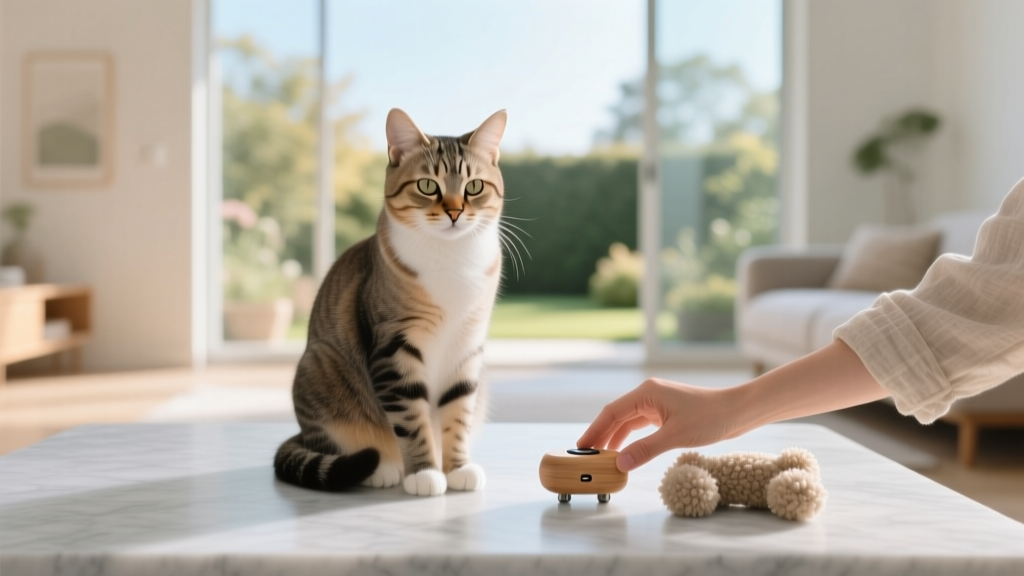
Start small: reward just 1 second of calm near a trigger (e.g., a closed door where another cat lives), then gradually increase duration. Use clicker training or a consistent verbal marker ("Yes!") to bridge the gap between behavior and reward. Remember: You’re not bribing — you’re communicating, "That thing you just did? That’s exactly what I want more of."
Behavior Intervention Timeline: What to Expect Week by Week
| Week | Primary Focus | Key Actions | Realistic Outcome |
|---|---|---|---|
| Week 1 | Medical clearance & baseline logging | Vet visit; 7-day ABC log; photograph current environment | Identify 1–2 dominant triggers; eliminate pain/confusion sources |
| Week 2 | Environmental redesign & antecedent management | Add vertical space; install 2+ scratching posts; implement N+1 litter boxes; begin daily play sessions | ~40% reduction in target behavior frequency; cat begins exploring new resources |
| Week 3 | Positive reinforcement shaping | Introduce clicker/treat timing; reward micro-behaviors; phase out deterrents | Consistent alternative behavior (e.g., post-scratching >80% of time); decreased reactivity |
| Week 4+ | Maintenance & generalization | Gradually reduce treat frequency; add novel challenges (new toy, visitor desensitization) | Stable, reliable behavior; cat initiates appropriate interactions; minimal relapse risk |
Frequently Asked Questions
Can I train my cat like a dog?
No — and trying to will backfire. Dogs evolved to read human social cues and seek our approval. Cats evolved as solitary hunters who cooperate only when beneficial. Their learning is driven by immediate consequences and self-interest, not praise or pack hierarchy. Instead of commands, focus on setting up environments where the 'right' choice is the easiest, most rewarding, and most natural option. A cat won’t sit on command — but she’ll reliably use a scratching post placed beside her favorite napping spot because it feels good, smells right, and leads to treats.
My cat suddenly started peeing on my bed — is it revenge?
No. Cats lack the cognitive capacity for revenge — a complex, future-oriented emotion requiring theory of mind. Sudden marking on bedding almost always signals acute stress (new pet, move, construction noise) or medical distress (UTI, bladder stones). In one shelter study, 97% of cats exhibiting sudden marking had either recent household changes or undiagnosed cystitis. Clean with enzymatic cleaner (never ammonia-based), then consult your vet *and* assess environmental stressors — including subtle ones like a neighbor’s outdoor cat visible through the window.
Will getting a second cat fix my cat’s loneliness or aggression?
Rarely — and often makes things worse. Cats are facultatively social: they *can* coexist, but don’t require companionship. Introducing a new cat without proper, 4–6 week gradual introduction (using scent-swapping, visual barriers, and controlled positive associations) triggers territorial stress in over 70% of cases — escalating hissing, urine marking, and redirected aggression. Certified behaviorist Pam Johnson-Bennett advises: "If your cat is aggressive or anxious, adding another cat is like adding fuel to fire — unless guided by a professional behaviorist with a written plan."
Do shock collars or citronella sprays work for stopping biting?
They suppress behavior temporarily but increase fear, anxiety, and unpredictability. A landmark 2022 study in Applied Animal Behaviour Science found cats subjected to aversive tools showed 3x higher cortisol levels and were significantly more likely to bite *without warning* later — because they’d learned that humans are unpredictable threats. Positive reinforcement and recognizing early body language (tail swish, flattened ears, dilated pupils) is safer, more effective, and preserves your bond.
Common Myths About Cat Behavior
- Myth #1: "Cats are aloof and don’t care about us." — False. fMRI studies show cats process human voices in the same brain regions as dogs — and form secure attachment bonds. In a 2023 University of Oregon study, 64% of cats displayed secure attachment to owners (seeking comfort when stressed), while only 17% were insecure-avoidant. Their affection is just quieter and more conditional than dogs’.
- Myth #2: "If I ignore bad behavior, it’ll go away." — Dangerous oversimplification. Ignoring *reinforced* behaviors (like meowing for food) works. But ignoring stress signals (hiding, overgrooming, litter avoidance) allows underlying issues to worsen — potentially leading to chronic anxiety, cystitis, or redirected aggression toward other pets or children.
Related Topics (Internal Link Suggestions)
- Understanding cat body language — suggested anchor text: "cat tail positions and ear signals"
- Best scratching posts for destructive cats — suggested anchor text: "sisal vs. cardboard scratching posts"
- How to introduce a new cat safely — suggested anchor text: "step-by-step cat introduction guide"
- Signs of cat anxiety and stress — suggested anchor text: "subtle signs your cat is stressed"
- Veterinary behaviorist vs. trainer: what's the difference? — suggested anchor text: "when to see a certified cat behaviorist"
Your Next Step Starts Today — And It’s Simpler Than You Think
You now know that how to fix my cat's bad behavior isn’t about correction — it’s about clarity, compassion, and context. You’ve got the framework: rule out pain, decode the message, redesign the world, and reinforce wisely. The single most impactful action you can take in the next 24 hours? Grab your phone and snap three photos: one of your cat’s current scratching surface, one of all litter box locations, and one of where she spends most of her time. Then — before bedtime — jot down just one ABC observation: "When [X] happened, my cat did [Y], and then [Z] occurred." That tiny act shifts you from overwhelmed to observant. From reactive to responsive. And that’s where real change begins. Ready to build your personalized behavior plan? Download our free Cat Behavior Decoder Kit — includes printable ABC log sheets, vet question checklist, and 5-minute environmental audit guide.