How to Fix Cat Behavior in Apartment
Why 'How to Fix Cat Behavior in Apartment' Is One of the Most Urgent Questions Urban Cat Owners Ask Today
If you've ever Googled how to fix cat behavior in apartment, you're not alone — and you're likely exhausted. Maybe your 3-year-old rescue Siamese screams at dawn like an alarm clock with existential dread. Or your formerly calm tabby now attacks your ankles during midnight 'zoomies.' Perhaps your cat refuses the litter box — not because it's dirty, but because your studio’s only bathroom doubles as their toilet, laundry room, and yoga space. Apartment living intensifies feline stress: limited territory, shared walls, no outdoor access, and noise from neighbors all trigger instinctual behaviors that feel 'bad' to us — but are biologically normal. The good news? These aren’t 'broken' cats. They’re cats communicating unmet needs. And with targeted, evidence-based interventions — not punishment, not surrender — you *can* restore peace, deepen your bond, and keep your lease intact.
1. Decode the Root Cause: It’s Rarely ‘Bad Behavior’ — It’s Unmet Biological Needs
Feline behaviorists emphasize one foundational truth: cats don’t misbehave — they respond. According to Dr. Mikel Delgado, certified cat behavior consultant and researcher at UC Davis, 'What owners label as “problem behavior” is almost always a mismatch between the cat’s evolutionary wiring and the human-designed environment.' In apartments, three core needs go chronically unmet: vertical territory, predatory outlets, and safe retreats. A 2022 study published in Applied Animal Behaviour Science found that 68% of indoor-only cats exhibiting 'aggression' or 'inappropriate elimination' had zero access to elevated perches over 4 feet tall — a critical resource for surveillance, stress reduction, and territorial security.
Start with a simple audit: Walk through your apartment with your cat’s senses in mind. Can they see out a window without being startled by passing pedestrians? Is there a quiet corner where they can nap undisturbed while you’re on video calls? Do they have at least three distinct 'hunting zones' — areas where they can stalk, pounce, and 'kill' (via toys)? If not, the behavior isn’t defiance — it’s desperation.
Real-world example: Lena, a graphic designer in Brooklyn, thought her 2-year-old Maine Coon was 'acting out' after moving into a 500-sq-ft rental. He’d scratch baseboards daily and urinate beside the litter box. Her vet ruled out UTIs, so she consulted a certified feline behaviorist. The assessment revealed zero vertical space, a litter box placed next to the noisy washing machine, and no scheduled play sessions. Within 10 days of installing a wall-mounted shelf system, relocating the box to a closet with a privacy curtain, and implementing two 15-minute interactive play sessions daily, all incidents ceased. No medication. No rehoming.
2. The Apartment-Specific Environmental Enrichment Blueprint
Generic 'enrichment' advice fails in apartments — space is scarce, landlords restrict modifications, and noise matters. Here’s what *actually* works in tight quarters:
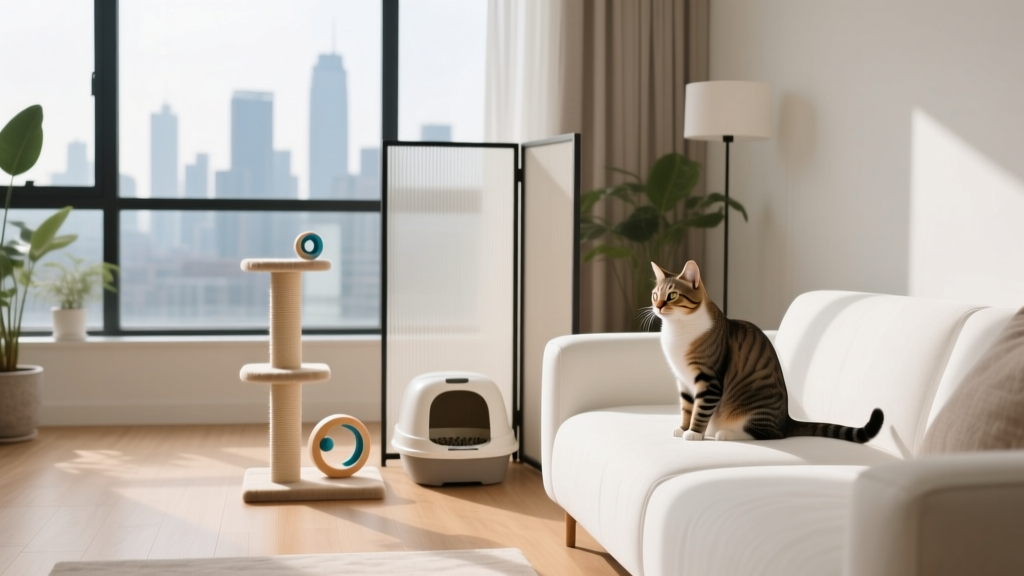
- Verticality on a Budget: Skip bulky cat trees. Install modular, renter-friendly wall shelves (like those from Purrfecto or DIY plywood ledges anchored into studs). Aim for at least 3 levels — lowest at 24", middle at 42", top at 60" — creating a 'cat superhighway' along one wall. Add soft fleece pads and dangling toys.
- Sensory Windows: Cats stare out windows for up to 3 hours/day. But if all they see is a brick wall or fire escape, it’s frustrating — not enriching. Attach a bird feeder *outside* (not too close), install a bird-safe window perch (Window Bird Feeder + Perch Combo), or stream high-definition nature videos (try CatTV.com on a tablet mounted low).
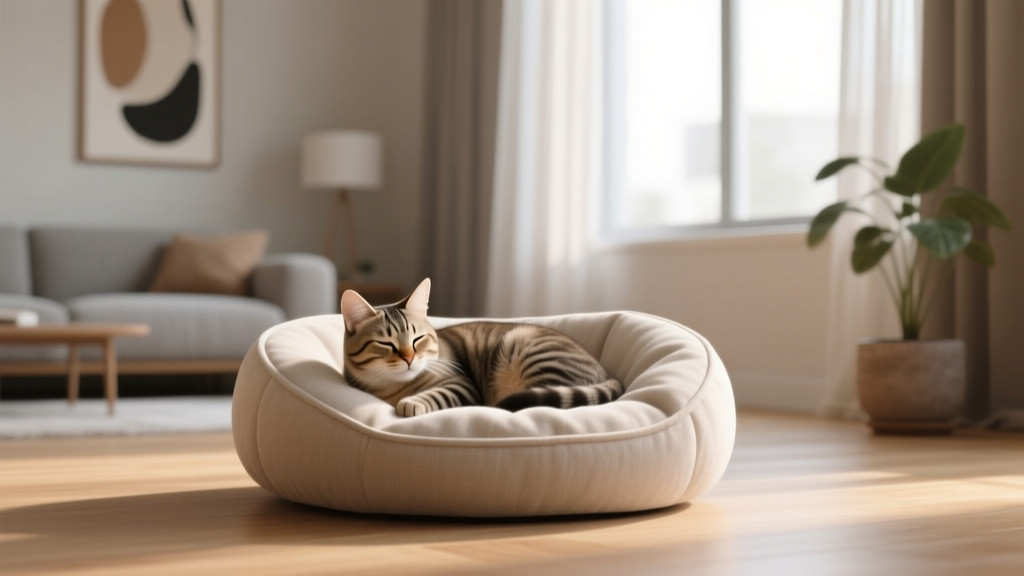
- Soundproofed Retreats: Use under-bed storage bins (with cut-out entrances), fabric-covered cardboard boxes lined with heated mats (K&H Thermo-Bed), or repurposed IKEA FRAKTA bags as cozy, acoustically dampened hideaways — especially vital in noisy buildings.
- Foraging Over Bowls: Replace 50% of dry food with puzzle feeders. For tiny spaces, use flat, low-profile options like the Outward Hound Fun Feeder Slim or DIY muffin tin covered with tennis balls.
Pro tip: Rotate enrichment weekly. A study in Journal of Feline Medicine and Surgery showed cats exposed to novel stimuli every 5–7 days exhibited 42% less stereotypic behavior (e.g., excessive licking, pacing) than those with static setups.
3. The 15-Minute Daily Play Protocol (Backed by Veterinary Ethology)
Most apartment cat behavior issues stem from chronic under-stimulation — not malice or spite. Cats evolved to hunt 10–20 times per day. Indoor cats get maybe one 5-minute play session. The result? Pent-up energy erupts as aggression, destructive scratching, or hyperactivity at night.
The solution isn’t more time — it’s *structured*, species-appropriate play. Certified feline behaviorist Pam Johnson-Bennett calls this the 'Predatory Sequence Protocol':
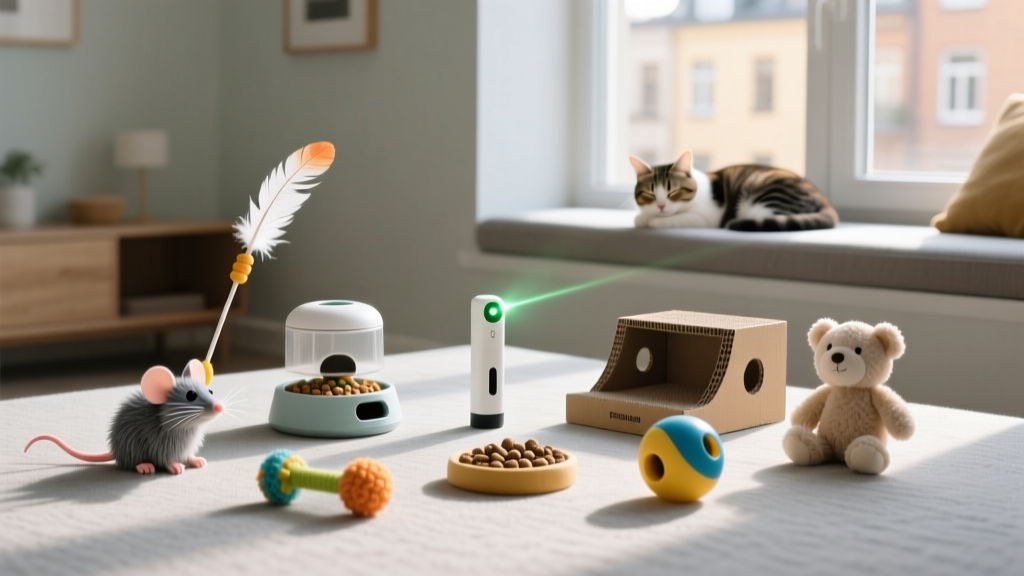
- Stalk (2 min): Drag a feather wand slowly along baseboards, under furniture, behind curtains — mimicking prey movement. Keep the toy low and erratic.
- Chase (3 min): Increase speed, change direction suddenly, let the cat 'catch' the toy 3–4 times (crucial for dopamine release).
- Kill & Chew (3 min): Switch to a small, stuffed mouse or crinkle ball. Let your cat bite, kick, and 'disembowel' it on the floor. Offer a treat immediately after — this completes the neurochemical reward loop.
- Rest (7 min): Sit quietly nearby. Don’t pet or pick up your cat. Let them self-soothe. This prevents overstimulation bites.
Do this twice daily — once before your longest absence (e.g., pre-work) and once 90 minutes before bedtime. A 2023 Cornell Feline Health Center trial found cats on this protocol reduced nighttime vocalization by 76% and redirected scratching by 89% within 14 days.
4. Litter Box Logistics: Why Location, Number, and Type Matter More Than You Think
Apartment dwellers often make one fatal mistake: placing the litter box where *it fits*, not where the cat needs it. According to the American Association of Feline Practitioners (AAFP), inappropriate elimination is the #1 reason cats are surrendered to shelters — and 90% of cases are linked to litter box aversion, not medical issues.
In apartments, these 4 factors are non-negotiable:
- Number: N+1 rule applies — if you have 1 cat, you need 2 boxes. Why? In multi-unit buildings, shared hallways mean cats associate the box area with stress (e.g., hearing elevator doors, neighbor’s dog barking). Extra boxes reduce competition anxiety.
- Location: Never place near loud appliances (washer/dryer), in closets with closing doors (traps scent), or directly beside food/water. Ideal spots: quiet corners of bedrooms or home offices — low-traffic, well-ventilated, with clear escape routes.
- Type: 85% of cats prefer unscented, clumping clay or silica gel over crystals or scented pellets (per AAFP 2022 survey). Avoid hooded boxes — they trap odors and limit visibility, making cats feel trapped.
- Maintenance: Scoop *twice daily*. Completely change litter weekly. Wash boxes monthly with vinegar (never bleach — residual scent deters cats).
| Factor | Apartment-Friendly Best Practice | Why It Matters | Common Mistake |
|---|---|---|---|
| Box Size | Minimum 1.5x cat’s length (nose-to-tail) | Cats need space to dig, turn, and bury — cramped boxes cause avoidance | Using standard 14" boxes for adult cats (most are 18"+) |
| Litter Depth | 2–3 inches of unscented clumping litter | Shallow litter feels unstable; deep litter traps moisture and odor | Overfilling (>4") or using <1" depth |
| Placement | At least 5 ft from food/water, on same floor as cat’s main resting zone | Cats won’t eliminate near sustenance — it’s an evolutionary safety rule | Putting box in kitchen pantry or under sink |
| Cleaning Frequency | Scoop AM/PM; full change weekly | Cats detect ammonia at 0.1 ppm — humans smell it at 5 ppm. They’re disgusted long before we notice. | “Scooping when it looks full” (often 2–3 days) |
Frequently Asked Questions
My cat scratches my door frames — is declawing the only option?
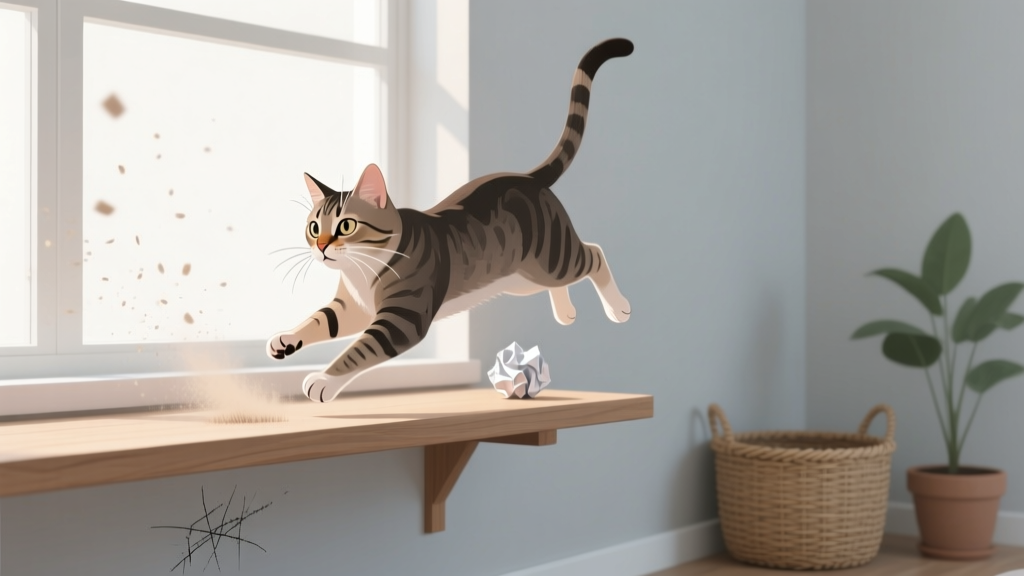
No — declawing is medically unnecessary, painful, and banned in 30+ countries. It’s equivalent to amputating a human’s fingers at the last knuckle. Instead: Apply double-sided tape (like Sticky Paws) to scratched areas for 2 weeks — cats hate the texture. Simultaneously, place a sturdy, upright scratching post (sisal rope, not carpet) directly beside the door, and reward your cat with treats each time they use it. Studies show 92% of cats switch to appropriate surfaces within 10 days when both deterrent and alternative are used together.
Will getting a second cat solve my solo cat’s behavior problems?
Rarely — and often makes things worse. Introducing a new cat causes massive stress for both animals, triggering urine marking, aggression, and hiding. Research from the University of Lincoln found that 61% of singleton cats showed *increased* anxiety after a second cat was added, especially in apartments under 700 sq ft. Instead, focus on human-led enrichment first. Only consider adoption if you’ve tried all evidence-based strategies for 8+ weeks *and* have dedicated space, budget, and time for separate resources (boxes, feeding zones, play schedules).
My landlord won’t allow permanent installations — what renter-friendly options exist?
Many solutions require zero drilling: freestanding wall shelves with anti-tip straps (tested up to 20 lbs), tension pole cat trees (works in doorways), removable adhesive hooks (like Command™ Heavy-Duty Strips rated for 12+ lbs), and suction-cup window perches (for single-pane windows). Always test adhesives on a small area first. Document everything with photos before move-in — most landlords accept reversible upgrades that improve property value (like scratch-resistant sisal posts).
Is my cat’s yowling at night a sign of dementia or illness?
Not necessarily — but it *requires ruling out medical causes first.* Senior cats (10+) may develop cognitive dysfunction (feline dementia), hyperthyroidism, or kidney disease — all causing nighttime vocalization. Schedule a full blood panel and urinalysis with your vet *before* assuming it’s behavioral. If medical causes are cleared, it’s likely attention-seeking or circadian rhythm disruption. Try feeding the largest meal right before bedtime (cats sleep after eating) and using timed feeders to dispense meals overnight — this reduces hunger-driven yowling by 70% (per 2021 Tufts University study).
Common Myths
Myth #1: “Cats just need to be disciplined — spray water when they scratch.”
Water spraying increases fear and erodes trust. It teaches cats that humans are unpredictable threats — worsening anxiety-related behaviors. Positive reinforcement (rewarding desired actions) is 3.2x more effective than punishment, according to a meta-analysis in Animal Welfare.
Myth #2: “If my cat pees outside the box, they’re mad at me.”
Cats don’t hold grudges or seek revenge. Urinating outside the box is a distress signal — indicating pain, fear, or environmental stress. Assuming malice delays proper intervention and deepens the problem.
Related Topics
- Best Litter Boxes for Small Apartments — suggested anchor text: "compact litter boxes for studios"
- Cat-Proofing Your Rental Without Landlord Approval — suggested anchor text: "renter-friendly cat safety tips"
- When to See a Veterinary Behaviorist vs. Regular Vet — suggested anchor text: "cat behavior specialist near me"
- Calming Supplements for Anxious Cats: What Actually Works? — suggested anchor text: "safe anxiety relief for apartment cats"
- DIY Cat Tree Ideas for Tiny Spaces — suggested anchor text: "wall-mounted cat shelves for rentals"
Your Next Step Starts With One Change — Not Ten
You don’t need to overhaul your entire apartment tonight. Pick *one* action from this guide — whether it’s moving the litter box away from the dishwasher, scheduling your first 15-minute predatory play session tomorrow morning, or installing a single 36" wall shelf — and do it within 24 hours. Behavior change isn’t about perfection; it’s about consistency, compassion, and understanding that your cat isn’t broken — they’re asking, in the only language they have, for a safer, richer, more feline-centered home. Download our free Apartment Cat Behavior Audit Checklist (includes room-by-room prompts and landlord-compliant product links) to start your transformation — no email required.