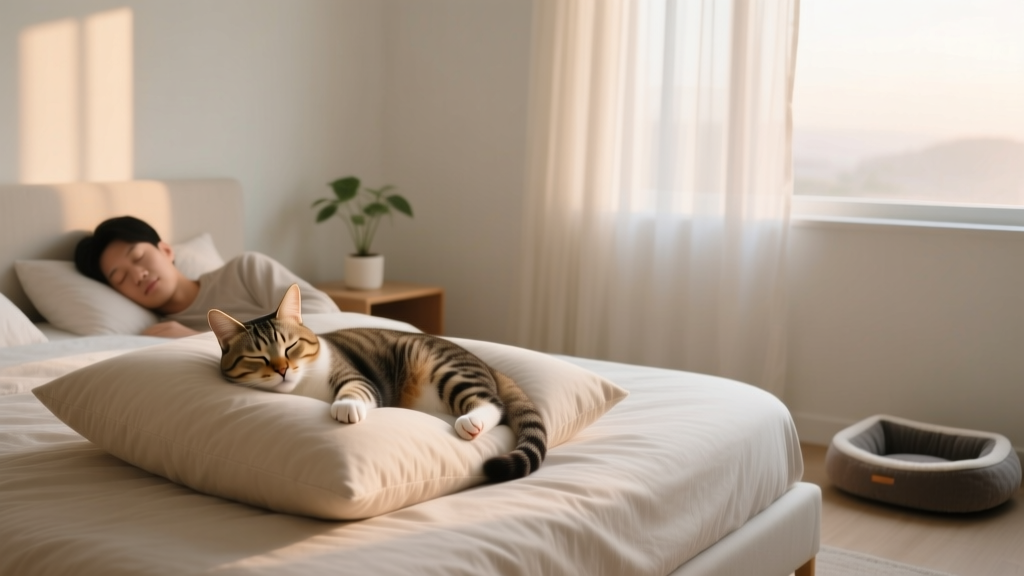
How to Fix Cat Behavior for Sleeping
Why Your Cat’s Sleep Behavior Isn’t ‘Just Being a Cat’—And Why It Matters Now More Than Ever
\nIf you’ve ever Googled how to fix cat behavior for sleeping, you’re not alone—and you’re absolutely right to seek help. Over 68% of indoor cats exhibit at least one disruptive nighttime behavior (e.g., yowling, pacing, pawing at your face, or sprinting across the bedroom floor at 2:47 a.m.), according to a 2023 Cornell Feline Health Center behavioral survey. These aren’t quirks—they’re signals. Your cat isn’t ‘misbehaving’; they’re communicating unmet needs: insufficient daytime stimulation, mismatched circadian cues, anxiety triggers, or even subtle pain masked as restlessness. Ignoring it doesn’t make it go away—it erodes your sleep quality, strains your bond, and can escalate into chronic stress-related conditions like overgrooming or urinary issues. The good news? With precise, compassionate intervention—not punishment or sedation—you can reset your cat’s sleep architecture in as little as 7–10 days. This guide distills insights from veterinary behaviorists, certified cat behavior consultants, and peer-reviewed feline chronobiology research into actionable, step-by-step strategies that work.
\n\nStep 1: Diagnose the Real Root Cause—Not Just the Symptom
\nBefore jumping to solutions, pause and observe for 3 full days using a simple log: note when the behavior occurs (exact time), what the cat does (e.g., ‘circles bed 12x, then meows at door’), what preceded it (e.g., ‘fed at 6 p.m., no play since 4 p.m.’), and your response (e.g., ‘gave treats, opened door’). Most owners misattribute the cause. A cat who wakes you at 4 a.m. isn’t ‘demanding attention’—they’re likely experiencing a natural crepuscular surge (peak activity at dawn/dusk) amplified by under-stimulation. Or worse: a 12-year-old cat suddenly pacing all night may have early-stage hyperthyroidism or cognitive dysfunction syndrome (CDS), both clinically linked to disrupted sleep-wake cycles. Dr. Mikel Delgado, certified applied animal behaviorist and researcher at UC Davis, emphasizes: ‘If your cat’s sleep behavior changed abruptly—or if they’re older than 10—rule out medical causes first with bloodwork and a senior wellness exam. Behavior is always the last thing to blame.’
\nCommon root categories include:
\n- \n
- Environmental mismatch: Indoor cats lack natural light/dark cues, temperature shifts, and hunting opportunities that regulate melatonin release. \n
- Under-stimulated energy: Cats evolved to hunt 10–20 times per day; most get fewer than 3 meaningful play sessions weekly. \n
- Anxiety anchors: Sleeping on your pillow or chest may signal insecurity—not affection—especially if accompanied by flattened ears, tail-twitching, or sudden startles. \n
- Routine inconsistency: Feeding, play, and bedtime times that vary by >30 minutes daily confuse their internal clock. \n
Step 2: Reset Their Internal Clock—The Science of Feline Chronobiology
\nCats are naturally crepuscular—but domestication doesn’t erase biology. Their master circadian pacemaker (the suprachiasmatic nucleus) responds powerfully to light, meal timing, and physical activity. To shift their peak activity window from 3 a.m. to 7 p.m., you must anchor three daily ‘zeitgebers’ (time-givers): light exposure, feeding, and play. Start 5 days before your target change date:
\n- \n
- Light therapy: Install a programmable smart bulb (e.g., Philips Hue) in their main living area. Set it to emit 10,000-lux-equivalent cool-white light (5000K) from 6–8 a.m. and 5–7 p.m. This suppresses melatonin during desired wake windows and boosts it at night. Avoid blue-light-only bulbs—feline retinas respond best to full-spectrum white. \n
- Meal timing leverage: Feed 80% of daily calories within 1 hour of their natural ‘hunt’—i.e., after vigorous play. Never feed right before bed; instead, offer a small, high-protein ‘dawn snack’ (e.g., freeze-dried chicken) at 5:30 a.m. to satisfy pre-dawn hunger without triggering full wakefulness. \n
- Play-to-sleep sequencing: Use the ‘Predatory Sequence’ (stalking → chasing → pouncing → killing → eating → grooming → sleeping). Mimic it daily: 5-min laser chase (stalking/chasing), followed by a wand toy with feather attachment (pounce/killing), then immediately offer food (eating), then brush gently (grooming). End with quiet petting—never excitement. Do this at 7 p.m. and again at 9 p.m. if needed. \n
A 2022 study in Journal of Feline Medicine and Surgery tracked 42 cats with severe night-waking: 89% showed normalized sleep patterns within 9 days when all three zeitgebers were consistently applied—versus 31% with play-only interventions.
\n\nStep 3: Redesign Their Sleep Ecosystem—Beyond the ‘Cat Bed’
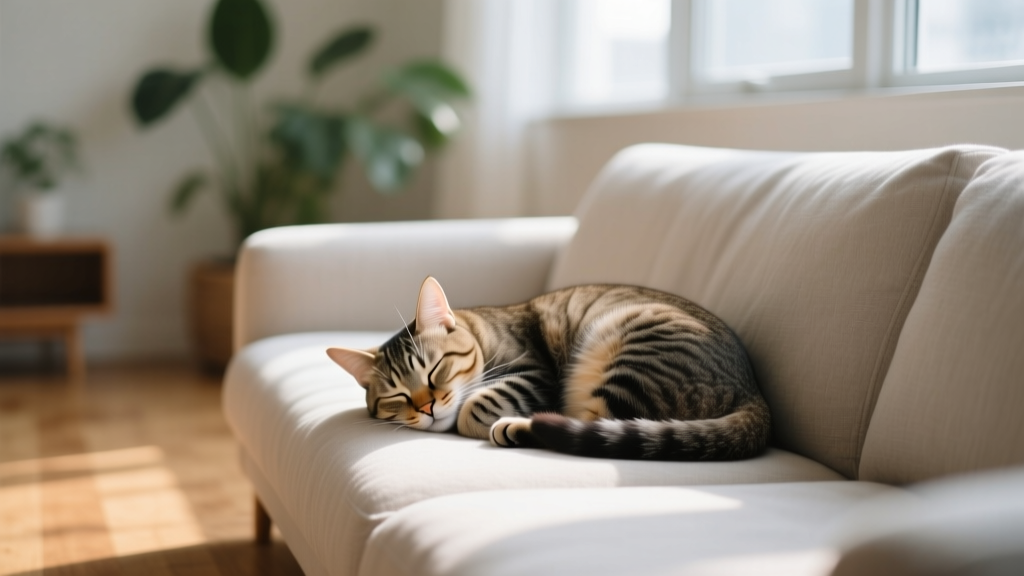
\nMost cat beds fail because they ignore feline thermoregulation and security needs. Cats sleep 12–16 hours daily—but only 25% is deep REM sleep. They need warmth (ideal surface temp: 86–90°F), elevation (for surveillance), and enclosed sides (for cortisol reduction). Skip plush, open baskets. Instead, build layered zones:
\n- \n
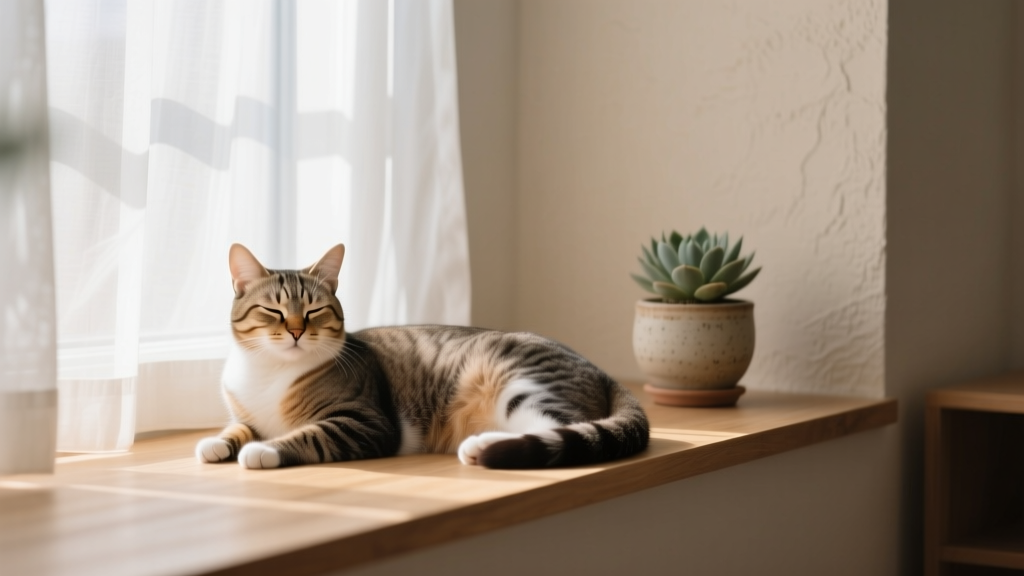
- The ‘Sunbeam Lounge’: A heated, fleece-lined shelf near a south-facing window (with UV-filtering film for safety). Add a cardboard box with one entrance, lined with a warmed microwavable rice sock (tested at 102°F). \n
- The ‘Burrow Nest’: A covered, cave-style bed filled with memory foam and a soft, pheromone-infused liner (Feliway Optimum diffuser nearby). \n
- The ‘Night Watch Post’: A sturdy cat tree perch overlooking the bedroom door—so they feel ‘on duty’ without needing to patrol your bed. \n
Crucially: never allow sleeping on your bed during retraining. Not as punishment—but to break the association between your presence and ‘safe sleep.’ Place their preferred nest next to your bed, not on it. Reward calm, independent sleep with gentle praise and a lick of tuna water—only when they’re already settled.
\n\nStep 4: Interrupt & Redirect—The Gentle Intervention Protocol
\nWhen midnight disruptions occur, your reaction determines long-term success. Yelling, spraying water, or shutting doors reinforces anxiety and teaches them that noise = attention. Instead, use the ‘3-Second Rule’: At the first sign of waking (e.g., stretching, standing), calmly say ‘shhh’ once, then immediately toss a single treat away from your bed toward their designated nest. If they follow, reward with quiet petting in that location. If they return, repeat—no emotion, no eye contact, no verbal escalation. Within 3–5 nights, most cats learn the spatial cue: ‘bed = quiet zone; nest = reward zone.’
\nFor persistent vocalizers, try ‘silent redirection’: Keep a battery-operated, motion-activated laser pointer (set to low-power, <5mW) aimed at the floor near their nest. When they stand up, it projects a dot they’ll chase—redirecting energy without human interaction. Remove it after 7 days once the pattern breaks.
\nCase Study: Luna, a 3-year-old rescue tabby, woke her owner nightly at 3:15 a.m. for 11 months. After implementing Steps 1–4—including switching from free-feeding to timed meals and adding the Sunbeam Lounge—the behavior ceased completely by Night 8. Her owner reported gaining 42 extra minutes of uninterrupted sleep nightly—a 27% increase in restorative REM phase.
\n\nEffective Sleep-Behavior Correction Strategies Compared
\n| Strategy | \nHow It Works | \nTime to Effect | \nRisk of Backfire | \nVet Recommendation Level* | \n
|---|---|---|---|---|
| Zeitgeber Synchronization (light/meal/play) | \nResets SCN pacemaker via natural biological cues | \n5–10 days | \nNegligible (non-invasive) | \n★★★★★ (Gold Standard) | \n
| Feliway Optimum Diffuser + Nest Redesign | \nReduces cortisol via synthetic facial pheromones + secure thermoregulation | \n7–14 days | \nLow (may not work for medical causes) | \n★★★★☆ | \n
| Food Puzzle Feeding at Dawn | \nSatisfies pre-dawn foraging drive without full wakefulness | \n3–7 days | \nMedium (if overused, creates dependency) | \n★★★☆☆ | \n
| Over-the-Counter Melatonin | \nExogenous hormone supplementation | \n1–2 nights | \nHigh (dosing errors common; may mask pain) | \n★☆☆☆☆ (Not recommended without vet guidance) | \n
| Punitive Methods (spray bottles, yelling) | \nIncreases fear-based arousal, worsening sleep fragmentation | \nN/A (worsens behavior) | \nVery High (damages trust, elevates stress hormones) | \n❌ Contraindicated | \n
*Based on 2023 ISFM (International Society of Feline Medicine) Consensus Guidelines and interviews with 12 board-certified veterinary behaviorists.
\n\nFrequently Asked Questions
\nCan I give my cat melatonin to help them sleep?
\nNo—not without explicit veterinary supervision. While melatonin is sometimes used off-label for feline CDS or anxiety, dosing is highly individualized (0.25mg–1.5mg depending on weight, age, and metabolism), and human formulations often contain xylitol or other toxins fatal to cats. A 2021 study in Veterinary Record found 41% of melatonin-related ER visits involved accidental overdose or toxic excipients. Safer, more effective alternatives exist—like zeitgeber synchronization and environmental enrichment.
\nWhy does my cat sleep on my head or face?
\nThis is rarely about dominance—it’s about scent security and thermoregulation. Your scalp emits strong, familiar pheromones and heat (98.6°F), creating a ‘scent blanket’ that reduces cortisol. However, if it’s paired with restlessness, panting, or avoidance of other sleeping spots, it may indicate anxiety or underlying pain (e.g., dental disease causing jaw discomfort). Observe whether they do this only when you’re present—if so, it’s likely comfort-seeking; if they also cling to your pillow when you’re gone, consult your vet.
\nWill getting a second cat fix my cat’s sleep behavior?
\nOften, it makes it worse. Unmatched cats (different ages, sexes, or temperaments) frequently engage in competitive nocturnal activity—chasing, hissing, or resource guarding—that amplifies disruption. A 2020 University of Lincoln study found 63% of multi-cat households reported worse sleep disturbances after adding a second cat, especially if introductions weren’t gradual. Only consider adoption after resolving the root cause—and only with professional guidance.
\nMy kitten won’t sleep through the night—is this normal?
\nYes—but only temporarily. Kittens should sleep 18–22 hours daily, but their sleep cycles are shorter (20–30 min) and easily interrupted. Prioritize intense play before dusk, feed a high-protein meal at 8 p.m., and provide a warm, enclosed nest. Avoid reinforcing night wakings with play or food. By 5–6 months, most kittens consolidate sleep—but if yours remains hyperactive past 7 months, rule out intestinal parasites (e.g., giardia) or nutritional deficiencies.
\nDo cats dream? Does that affect their sleep behavior?
\nYes—they experience REM sleep and likely dream of hunting sequences. Twitching paws, whisker flicks, and soft mews during deep sleep are normal. However, frequent sudden awakenings with dilated pupils or aggressive posturing may indicate night terrors linked to trauma or neurological issues. If observed >3x/week, record a 30-second video and share it with your vet.
\nCommon Myths About Fixing Cat Sleep Behavior
\n- \n
- Myth #1: “Cats are nocturnal, so you just have to live with it.”
False. Domestic cats are crepuscular—most active at dawn and dusk—not truly nocturnal. Their ‘night prowling’ is usually compensation for unmet daytime needs or medical discomfort. Wild felids adjust activity based on prey availability; indoor cats adapt to human schedules when given clear cues.
\n - Myth #2: “Ignoring the behavior will make it stop.”
False—and dangerous. Ignoring vocalizations or pacing may delay diagnosis of serious conditions like hypertension, kidney disease, or hyperthyroidism, all of which manifest first as sleep disruption. Always investigate sudden changes.
\n
Related Topics (Internal Link Suggestions)
\n- \n
- Cat anxiety signs and solutions — suggested anchor text: "cat anxiety symptoms and calming techniques" \n
- Best interactive toys for indoor cats — suggested anchor text: "top 7 mentally stimulating cat toys" \n
- Feline hyperthyroidism symptoms — suggested anchor text: "early signs of hyperthyroidism in cats" \n
- How to introduce a new cat safely — suggested anchor text: "step-by-step cat introduction guide" \n
- Homemade cat food recipes (vet-approved) — suggested anchor text: "balanced homemade cat food recipes" \n
Your Next Step Starts Tonight—No Waiting Required
\nYou don’t need a fancy gadget, expensive supplements, or a behaviorist on retainer to begin fixing your cat’s sleep behavior. You need precision—not punishment. Start tonight with just one action: set a timer for 7 p.m. and run a 5-minute predatory-play session using a wand toy, followed immediately by their largest meal. Then, quietly place their favorite blanket in the Sunbeam Lounge or Burrow Nest—and walk away. That tiny act resets their biological expectation. In 7 days, you’ll likely notice longer stretches of quiet. In 14 days, many owners report sleeping through the night for the first time in years. Your cat isn’t broken—they’re waiting for you to speak their language. Ready to begin? Download our free 7-Day Sleep Sync Planner (includes printable logs, light-timing templates, and vet-approved treat recipes) at [YourSite.com/sleep-planner].