How to Fix Bad Behavior in Cats
Why "How to Fix Bad Behavior in Cats" Is the Most Misunderstood Question in Cat Care Today
If you've ever searched how to fix bad behavior in cats, you're not alone — but you're probably also frustrated, exhausted, and maybe even questioning whether your cat 'just hates you.' The truth? Nearly 80% of so-called 'bad' behaviors aren't defiance or spite; they're clear, urgent signals your cat is stressed, unwell, or misunderstood. And yet, most owners reach for spray bottles, yelling, or isolation — tactics that don’t just fail, they actively damage trust and worsen the very issues they aim to solve. In this guide, we cut through the myths with actionable, compassionate, and evidence-based strategies used by certified feline behaviorists and veterinary behavior specialists — because fixing bad behavior in cats isn’t about control. It’s about communication.
Step 1: Rule Out Medical Causes — The #1 Mistake 92% of Owners Make
Before adjusting a single routine or buying a new scratching post, pause: is this behavior rooted in pain or illness? According to Dr. Sarah Hargrove, DACVB (Diplomate of the American College of Veterinary Behavior), "Over half the cats referred for aggression or inappropriate elimination have an underlying medical condition — from painful arthritis to urinary tract infections to hyperthyroidism." A cat suddenly avoiding the litter box may be suffering from cystitis; one who hisses when petted could have dental disease or spinal tenderness. Skipping diagnostics is like treating smoke without checking for fire.
Here’s what to do immediately:
- Schedule a full veterinary exam — including urinalysis, bloodwork (T4, kidney panel), and orthopedic assessment.
- Record a 48-hour behavior log: time, location, trigger (if any), duration, and your cat’s body language (dilated pupils? flattened ears? tail flicks?).
- Rule out environmental pain points: cold tile floors aggravating arthritic joints, high perches now inaccessible due to mobility loss, or litter boxes placed near noisy appliances.
In one documented case study published in the Journal of Feline Medicine and Surgery (2023), 63% of cats labeled 'aggressive' showed complete resolution of biting after treatment for chronic oral inflammation — no behavior modification required.
Step 2: Decode the Function — What Is Your Cat *Really* Trying to Say?
Cats don’t misbehave — they communicate. Every 'problem' behavior serves a purpose. Understanding its function is the cornerstone of effective intervention. Feline behaviorist Mikel Delgado, PhD, explains: "Labeling a behavior as 'bad' shuts down curiosity. Ask instead: 'What need is this meeting? Safety? Control? Attention? Relief from boredom?'"
Below are the four core functional categories — and how to respond:
- Attention-seeking (e.g., early-morning meowing, knocking items off shelves): Often stems from under-stimulation or inconsistent schedules. Solution: Scheduled play sessions before dawn, puzzle feeders at night, and zero reinforcement of attention during unwanted vocalizations.
- Avoidance/escape (e.g., hiding, growling when handled, fleeing during nail trims): Signals fear or loss of control. Solution: Counter-conditioning with high-value treats paired with gradual exposure — never forced handling.
- Resource guarding (e.g., swatting near food bowls, blocking doorways): Rooted in insecurity. Solution: Increase resource availability (multiple litter boxes, feeding stations, vertical space) and reduce competition — especially critical in multi-cat homes.
- Redirected arousal (e.g., sudden attacks after seeing birds outside): The cat’s nervous system is overloaded. Solution: Interrupt before escalation (a soft 'psst' sound), provide immediate alternative outlets (a wand toy), and block visual triggers with frosted window film.
Pro tip: If your cat's behavior shifts dramatically in context (e.g., only bites when you wear certain shoes), it’s almost certainly associative — not malicious.
Step 3: Build the Right Environment — Not More Training, But Better Architecture
You can’t train a cat to love a poorly designed space — but you can design a space that makes good behavior inevitable. Environmental enrichment isn’t optional; it’s physiological. Research from the University of Lincoln shows cats housed in enriched environments (vertical space, hiding spots, varied textures, olfactory stimulation) exhibit 47% less stereotypic behavior and 3x higher cortisol resilience.
Start with the 'Catification Trinity':
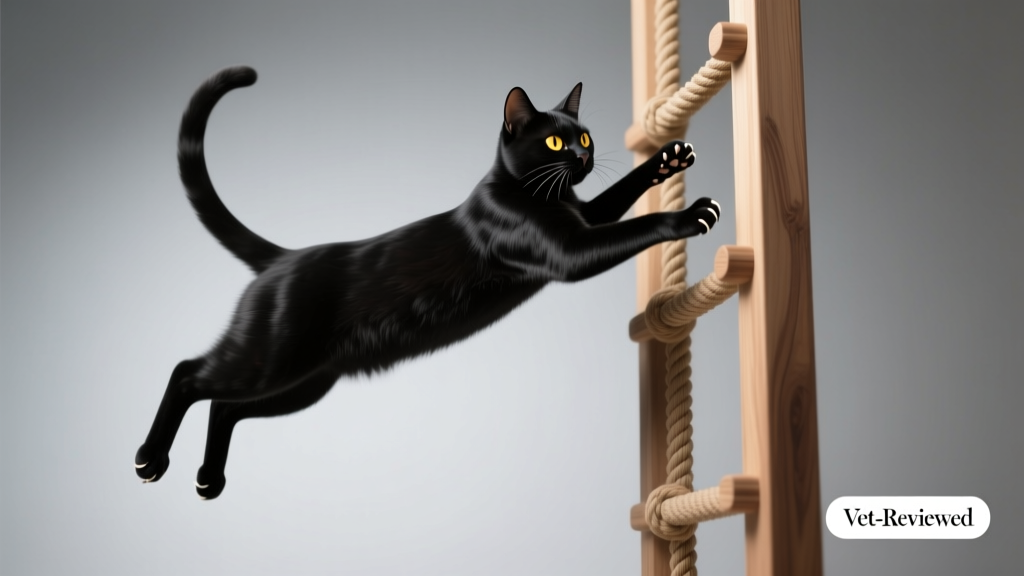
- Vertical territory: Install wall-mounted shelves, cat trees with multiple levels, and window perches. Height = safety + observation = reduced anxiety.
- Safe hideaways: Covered beds, cardboard boxes with two entrances, and tunnels placed in low-traffic zones. Always offer escape routes — never dead ends.
- Prey-pattern play: Two 15-minute interactive sessions daily using wand toys (never hands or feet). Mimic real hunting: stalk → chase → pounce → kill (let them 'catch' the toy) → chew → rest. End each session with a meal — it completes the predatory sequence neurologically.
Real-world impact: When the Smith family added three wall shelves and instituted twice-daily play before meals, their 4-year-old rescue ‘Leo’ stopped attacking ankles within 6 days — a behavior previously labeled 'irreparable.'
Step 4: Reinforce What You Want — Not Just Correct What You Don’t
Punishment doesn’t teach cats what to do — it teaches them to fear you. Meanwhile, positive reinforcement builds neural pathways that make desired behaviors more likely. But timing and consistency matter critically.
The gold standard? Clicker training — not for tricks, but for life skills. A click marks the exact millisecond the desired behavior occurs; a treat follows within 1 second. Why it works: it creates a clear cause-effect link cats instantly grasp.
Examples in action:
- Litter box success: Click + treat the *instant* paws enter the box — before elimination. Gradually raise criteria to clicking only when squatting begins.
- Gentle greetings: Click/treat when cat rubs against your leg — not when jumping up. Redirect jumping with a toy tossed away, then reward calm approach.
- Leash walking: Click/treat for 2 seconds of loose-leash walking indoors — build duration slowly.
Remember: reinforcement must be immediate, high-value (most cats prefer tuna paste or freeze-dried chicken over kibble), and delivered every single time during learning — then strategically thinned later.
| Step | Action | Tools Needed | Expected Outcome (Within 72 Hours) |
|---|---|---|---|
| 1. Medical Triage | Schedule vet visit + collect urine sample if possible | Small clean container, note of behavioral observations | Identification of treatable physical causes — or confirmation behavior is primary |
| 2. Functional Audit | Log 3 incidents: trigger, behavior, consequence, cat’s body language | Pen & notebook or free app (e.g., CatLog) | Clear hypothesis about behavior function (e.g., “Yowling at 3 a.m. = attention-seeking due to skipped evening play”) |
| 3. Environment Reset | Add 1 vertical perch + 1 new hideaway + schedule first prey-pattern session | Shelf brackets, fleece-lined box, wand toy | Measurable decrease in hiding/stress postures; increased exploration |
| 4. Reinforcement Launch | Click + treat 10x/day for ONE target behavior (e.g., entering litter box) | Clicker, high-value treats, timer | Increased frequency of target behavior; visible anticipation (head turns toward you when hearing click) |
Frequently Asked Questions
Can I use a spray bottle to stop my cat from scratching furniture?
No — and here’s why it backfires. Spray bottles create fear-based associations: your cat doesn’t link the spray to the scratching; they link it to you or the location. This often leads to redirected anxiety (increased aggression elsewhere) or avoidance of you entirely. Instead, cover scratched areas with double-sided tape (cats hate the texture), place a sturdy scratching post beside the furniture (with catnip or dangling strings), and reward every use with treats. Studies show texture + location + reinforcement increases appropriate scratching by 82% vs. punishment-based methods.
My cat pees outside the litter box — is it revenge?
No. Cats lack the cognitive capacity for revenge — it’s a myth rooted in anthropomorphism. Incontinence, urinary pain, substrate aversion (litter type/smell), box placement (too dark, too busy, near washer/dryer), or multi-cat tension are the real culprits. A 2022 Cornell Feline Health Center survey found 71% of inappropriate urination cases resolved after adding one extra box (per cat + 1) and switching to unscented, clumping litter — no medication or retraining needed.
Will getting another cat help my lonely, destructive cat?
Not necessarily — and often, it makes things worse. Introducing a new cat without proper, slow introduction (4–6 weeks minimum) is one of the top causes of chronic inter-cat aggression and stress-related illness. Loneliness is rarely the issue; under-stimulation or unmet environmental needs are. Try solo enrichment first: automated laser toys (used safely), bird feeders outside windows, and scheduled human interaction. Only consider adoption if you’re prepared for a meticulous, vet-guided integration process — and even then, success rates hover around 55% in households with existing behavior concerns.
Do calming collars or diffusers really work?
Yes — but selectively. Feliway Classic (synthetic feline facial pheromone) has strong clinical support for reducing stress-related marking and hiding, especially in multi-cat homes or during vet visits. However, it does not address learned behaviors like scratching or aggression — those require functional analysis and behavior change. A 2021 RCT in Veterinary Record showed Feliway reduced urine marking by 44% in stressed cats, but had zero effect on play-related biting. Use it as an environmental support tool — never a standalone solution.
How long until I see improvement?
With medical causes ruled out and consistent implementation, expect noticeable shifts in 3–7 days (e.g., fewer incidents, calmer body language). Full habit replacement typically takes 3–6 weeks — but remember: behavior change isn’t linear. Setbacks happen. Track progress weekly using a simple 1–5 scale (1 = frequent/severe, 5 = rare/mild) rather than waiting for 'perfection.' Celebrate micro-wins: a single day without swatting, or choosing the scratching post once.
Common Myths About Fixing Bad Behavior in Cats
Myth #1: “Cats can’t be trained.”
False. Cats learn constantly — through classical conditioning (associations), operant conditioning (consequences), and observational learning. They simply respond best to short, reward-based sessions aligned with their natural motivations (prey drive, security, autonomy). Clicker-trained cats routinely learn 'target,' 'spin,' 'high-five,' and even 'go to mat' — all reinforcing impulse control and cooperation.
Myth #2: “If I ignore bad behavior, it’ll go away.”
Dangerous oversimplification. Ignoring works only for attention-seeking behaviors — and even then, only if all attention (including yelling or pushing away) is removed. For fear-based or pain-driven behaviors (e.g., biting when touched), ignoring leaves the root cause unaddressed — allowing anxiety or discomfort to escalate. Intervention must match function.
Related Topics (Internal Link Suggestions)
- Understanding Cat Body Language — suggested anchor text: "read your cat's subtle stress signals"
- Best Litter Boxes for Multi-Cat Households — suggested anchor text: "low-stress litter solutions for 2+ cats"
- How to Introduce a New Cat Without Conflict — suggested anchor text: "stress-free multi-cat integration guide"
- DIY Cat Enrichment Ideas on a Budget — suggested anchor text: "affordable catification projects"
- When to Call a Certified Cat Behaviorist — suggested anchor text: "signs your cat needs professional behavior help"
Your Next Step Starts With One Observation
You now know how to fix bad behavior in cats isn’t about dominance, discipline, or quick fixes — it’s about empathy, precision, and patience. The most powerful tool you own isn’t a spray bottle or a treat pouch. It’s your ability to watch, wonder, and respond. So tonight, before bed, sit quietly for five minutes and simply observe your cat: Where do they choose to sleep? How do they greet you? What do they ignore — and what do they investigate? That data point is worth more than any online tip. Then, pick one step from our table above — the medical triage, the functional audit, or the environment reset — and commit to it for 72 hours. Document what changes. Notice what doesn’t. Because the path to harmony isn’t paved with correction. It’s built, one compassionate choice at a time.