Cat Paw Holding the Blanket Edge: Kneading Memory
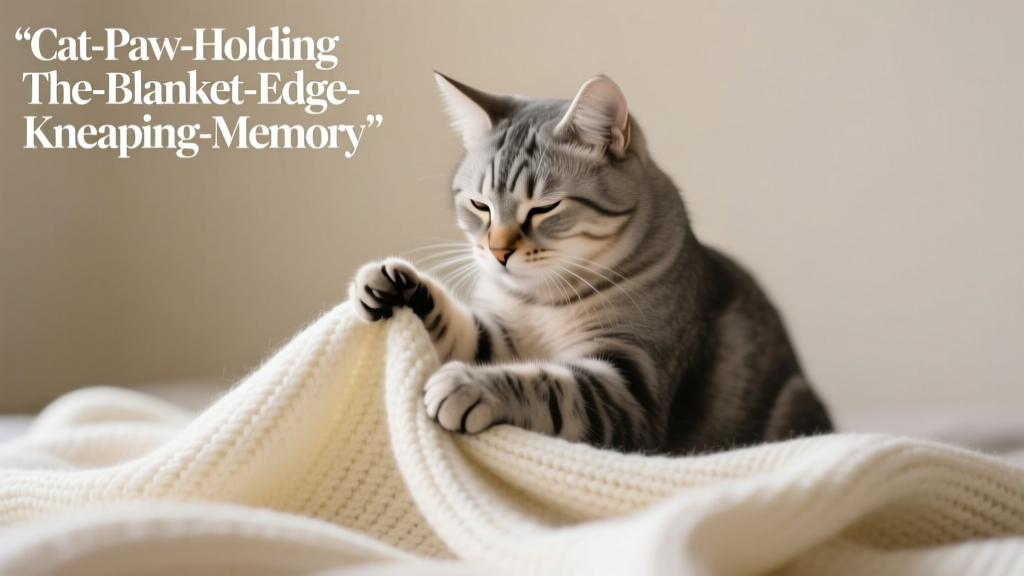
You’re settling into bed, the lights are low, and your cat hops up like they own the place (because, honestly, they do). They circle once, maybe twice, then—there it is. One paw pins the edge of your blanket like a tiny hand holding onto a ledge, while the other paw starts that rhythmic press-press-press. Sometimes both paws knead. Sometimes they knead and hold. Sometimes they drag the blanket edge toward their chest with intense focus, as if they’re tucking themselves in. And you’re left thinking: “Is this normal? Is this… adorable? Is my cat trying to make a tiny bed? Or summoning ancient feline magic?”
This “paw-holding-the-blanket-edge” move is a classic, and it’s one of those behaviors that feels deeply emotional even when it’s completely instinctive. It’s part comfort ritual, part muscle memory, and part cat being a cat.
The Scientific (and Evolutionary) Why Behind Blanket-Edge Kneading
Kneading is one of the most recognizable cat comfort behaviors. Kittens knead their mother’s belly while nursing—those alternating paw presses stimulate milk flow and keep the kitten anchored in place. That’s the earliest version of the behavior, and for many cats, the motion sticks around into adulthood as a self-soothing habit.
But what about the blanket edge grip? That’s where a few instincts overlap:
- Anchoring and stability: Kneading requires a steady surface. Holding the blanket edge gives traction—like bracing yourself while fluffing a pillow. It keeps the fabric from sliding and helps your cat maintain a comfortable kneading rhythm.
- Nesting behavior: In the wild, cats and their close relatives often paw and manipulate soft ground to create a more comfortable resting spot. Dragging or pinning fabric resembles that “make the bed just right” instinct.
- Scent communication: Cats have scent glands in their paws. When they knead, they may be depositing pheromones—subtle scent signals that mark the spot as familiar and safe. Holding the edge and kneading a particular patch can be extra “this is mine” energy.
- Comfort memory: The sensory combination—soft fabric, warmth, gentle resistance—echoes kittenhood. It’s not that your adult cat is confused about being a kitten; it’s more like their nervous system remembers how calming that motion feels.
So yes: it’s behavioral nostalgia, but the kind built into the body rather than the brain telling a story.
A Detailed Breakdown: Different Contexts You’ll Notice
Not all blanket-edge paw holding is the same. The context matters, and it can tell you a lot about what your cat is trying to accomplish.
1) Bedtime “Tuck-In” Kneading
Scenario: Your cat hops onto the bed, grips the blanket edge, kneads intensely for 30 seconds to several minutes, then flops down with a sigh that feels theatrical.
What’s happening: This is comfort nesting plus relaxation. Your cat is getting their body ready to rest—lowering stress, settling nerves, and creating a familiar pre-sleep ritual.
2) The “Claiming the Spot” Grip
Scenario: You shift the blanket, and your cat immediately clamps the edge with one paw like, “Absolutely not.” The kneading resumes with purpose.
What’s happening: Mild resource claiming, but usually in a harmless way. Your cat is scent-marking and reinforcing that this spot is safe and “theirs,” especially if it’s a favorite nap zone.
3) Greeting Kneads (a.k.a. Love in Paw Form)
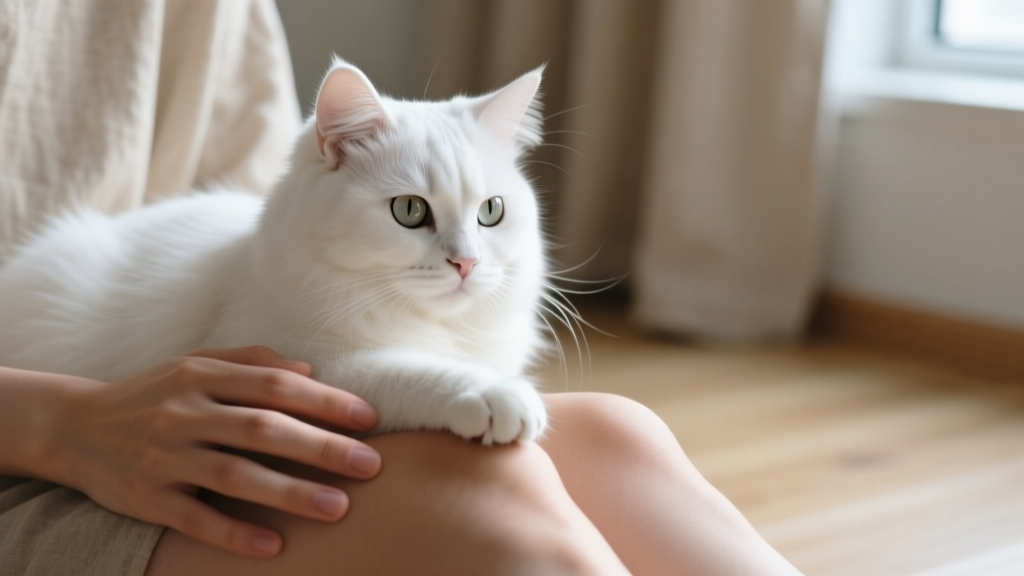
Scenario: You come home, sit on the couch, and your cat climbs onto your lap, grabs the throw blanket edge, and kneads while purring.
What’s happening: Social bonding + self-soothing. Your presence is comforting, and the kneading helps regulate excitement. Many cats knead when they feel secure and affectionate.
4) Stress-Relief Kneading
Scenario: After visitors, vacuuming, or a schedule change, your cat retreats to a blanket and kneads with a tight grip, sometimes longer than usual.
What’s happening: The blanket edge becomes an emotional handhold. Kneading can function like a calming routine—similar to how humans fidget or rub their hands when nervous.
5) “Making Biscuits” With Extras: Suckling or Drooling
Scenario: Your cat grips the blanket edge, kneads, and then starts suckling the fabric. Or they drool while purring hard.
What’s happening: A stronger comfort regression response. This is common in cats weaned early, but it can also occur in cats who simply find it soothing. Drooling can happen when a cat is extremely relaxed.
What This Behavior Says About Your Cat’s Mood and Feelings
Think of blanket-edge kneading as a mood amplifier. It tends to show up when emotions run warm—comfort, affection, anticipation, or stress relief.
- Soft eyes + slow blinks: Contentment, trust, and feeling safe.
- Purring + relaxed posture: Deep comfort. (Purring can also happen during stress, but paired with kneading and relaxation, it’s usually positive.)
- Intense focus + stiff shoulders: More arousal—could be excitement, mild stress, or a strong need to self-soothe.
- Ears neutral, tail still or gently wrapped: Calm and settled.
- Sudden bite or bunny-kick at the blanket: Overstimulation. Some cats can flip from soothing to amped-up quickly, especially if petting is added.
If your cat holds the blanket edge like it’s precious, that’s often a sign the blanket (and what it represents—warmth, safety, you) is part of their comfort map.
Related Behaviors You Might Also Notice
Blanket-edge kneading rarely travels alone. You may also see:
- Circling before lying down: Nest-prep behavior.
- Blanket “digging” with front paws: Adjusting the surface to the preferred texture and temperature.
- Face rubbing on the fabric: Scent marking with cheek glands.
- Head-butting you mid-knead: Social bonding—your cat is mixing comfort with connection.
- Making a “blanket tent”: Some cats push under the edge for warmth and security.
- Carrying a soft item (sock, small blanket): Comfort object behavior, especially in sensitive or easily startled cats.
When It’s Normal (Most of the Time) vs. When to Be Concerned
In most households, blanket-edge kneading is a wholesome sign of comfort. Still, there are a few situations where it’s worth paying closer attention.
Totally Normal
- Kneading happens during relaxed times (bedtime, cuddles, naps).
- Your cat can be interrupted without panicking or becoming aggressive.
- The behavior is consistent with your cat’s personality and routine.
- Claws may be out, but your cat isn’t hurting themselves or damaging their paws.
Potential Concern
- Compulsive intensity: Kneading for long periods repeatedly, seeming unable to stop, especially if paired with pacing or agitation.
- Sudden new behavior: A cat who never kneaded starts doing it constantly—consider stress, environmental changes, or discomfort.
- Skin or paw issues: Licking paws raw, limping, or signs of pain while kneading.
- Suckling that leads to ingestion: If your cat chews and swallows fabric fibers, it can become a medical emergency (intestinal blockage risk).
- Drooling plus other symptoms: Occasional “happy drool” can be normal, but drooling with bad breath, pawing at the mouth, or appetite changes needs a vet check.
If you’re unsure, a quick video of the behavior can help your vet or a cat behavior professional assess what’s normal for your individual cat.
How to Respond (and How to Encourage It Safely)
You don’t need to stop this behavior unless it’s causing harm. Most of the time, your best response is simply to protect your cat’s comfort and your skin.
- Offer a designated “kneading blanket”: A thick fleece throw works well. If your cat loves the bed blanket edge, place a similar throw on top so they can grip and knead without snagging your nicest bedding.
- Trim nails regularly: Not because kneading is “bad,” but because biscuit-making with needle claws is an intense experience for human thighs.
- Use a barrier on your lap: A folded blanket or pillow on your legs gives your cat a satisfying surface and saves you from accidental punctures.
- Pet strategically: Some cats love gentle head and cheek strokes while kneading; others get overstimulated and bite. If you see skin twitching, tail flicking, or sudden tension, pause petting and let them knead in peace.
- Support stressy kneaders: If kneading increases after changes, add predictability—routine play sessions, quiet hideaways, and calming enrichment (food puzzles, window perches).
- Discourage fabric-eating gently: If your cat chews blankets, swap to tighter-weave fabrics, supervise kneading time, and redirect with a safe chew alternative (ask your vet for recommendations) and more interactive play.
The goal is to keep kneading a healthy self-soothing tool—not a habit that damages claws, fabric, or digestion.
Fun Facts and Research Nuggets About Kneading
- Paw pheromones are real: Cats have scent glands between their toes. Kneading can leave behind a subtle “this is safe” message—especially meaningful in multi-cat homes.
- Kneading is a comfort ritual, not a dominance move: People sometimes interpret it as “claiming you.” It can include possession-like marking, but the emotional tone is typically security, not control.
- Some cats knead only certain textures: Fleece, шерpa, and plush fabrics provide resistance similar to fur and soft ground—perfect for the press-and-release rhythm.
- The blanket edge is a built-in handle: Many cats knead the edge because it provides tension. If you’ve ever watched your cat pull the fabric closer before kneading, they’re literally engineering their preferred kneading surface.
FAQ: Cat Paw Holding the Blanket Edge
Why does my cat hold the blanket edge with one paw while kneading?
It’s usually for stability and comfort. The “hold” anchors the fabric so the kneading motion feels more satisfying. It can also be part of nesting behavior—your cat is manipulating the blanket into the perfect nap setup.
Does kneading mean my cat is happy?
Often, yes—especially when paired with relaxed body language and purring. But kneading can also be a stress-relief behavior. Look at the whole cat: posture, ears, tail, and whether they seem calm or tense.
My cat kneads and drools. Should I worry?
Some cats drool when extremely relaxed, and it can be normal. If drooling is new, heavy, or accompanied by bad breath, mouth pawing, or appetite changes, schedule a vet check to rule out dental or mouth issues.
Why does my cat knead my blanket but not other fabrics?
Cats have strong texture preferences. Plush fabrics offer resistance and warmth, which can trigger comfort memory. The blanket may also smell like you, which adds an emotional “safe zone” factor.
How do I stop kneading from hurting me?
Use a lap barrier (folded blanket), keep nails trimmed, and redirect your cat to a designated kneading throw. Avoid pushing your cat away mid-knead if they’re relaxed—gentle repositioning works better than sudden rejection.
Is blanket suckling the same as kneading?
They’re related comfort behaviors and often appear together. Suckling is more common in cats weaned early, but it can occur in any cat. The key concern is whether your cat is ingesting fabric—if yes, intervene and talk to your vet.
That tiny paw gripping the blanket edge isn’t just quirky—it’s a window into your cat’s comfort rituals, scent world, and emotional self-care. If your cat has a signature kneading style (the one-paw “blanket clamp,” the slow-motion biscuits, the dramatic pre-nap routine), we want to hear about it. Share your cat’s funniest or sweetest kneading story with the Cat Lovers Base community at catloversbase.com.