Cat Head Bunting: Scent Marking You as Family
You’re standing in the kitchen, half-awake, waiting for the coffee to do its life-saving work. Your cat strolls in like they own the place (they do), looks up at you, and gently thunks their forehead into your shin. Then they drag their cheek along your leg like they’re trying to erase you. If you bend down, they’ll happily bonk your face, your hand, your phone—whatever is closest.
It’s adorable, a little odd, and somehow deeply personal. That head bump (often called head bunting) isn’t random affection or your cat “being weird.” It’s a social, scent-based behavior with real meaning: your cat is marking you as safe, familiar, and part of their inner circle.
The science (and evolution) behind the head bonk
Cats experience the world through scent the way we experience it through sight and conversation. Smell is their social media, their family tree, their neighborhood watch, and their comfort blanket all rolled into one.
On a cat’s head are scent glands that produce chemical signals called pheromones. The main “bunting zones” include:
- Forehead (between the eyes)
- Cheeks (especially the area in front of the ears)
- Chin (often used on furniture edges and hands)
- Base of the tail (more in full-body rubs than head bunts)
In feline social life, scent is how “friend” gets defined. Cats that live together (or are bonded) gradually develop a shared group scent—sometimes called “colony scent.” They do this by rubbing on each other, grooming, sleeping in the same spots, and yes, head bunting. It’s part greeting, part relationship maintenance, part “you belong with me.”
Evolutionarily, this makes a lot of sense. Cats are both predators and potential prey. Anything unfamiliar can equal danger. By spreading familiar scent around, a cat creates a predictable, safe-feeling environment. And by putting their scent on you, they’re essentially saying: “You’re not a stranger. You’re my person.”
What head bunting looks like (and the different contexts)
“Head bunting” can be subtle or dramatic depending on the cat. Here are common versions you might recognize—and what’s usually going on.
1) The gentle shin bump
Scenario: You’re walking past, and your cat softly taps your leg with their forehead, then keeps moving.
Meaning: This is often a casual “hello” plus a quick scent refresh. Think of it like a friendly wave that also updates your membership card in the family club.
2) The cheek drag (with bonus purrs)
Scenario: Your cat rubs their cheek along your ankle or hand, sometimes with loud purring and half-closed eyes.
Meaning: Affection and comfort. Cheek rubs are heavy on the “you are safe” messaging. Many cats do this when they’re relaxed and socially open.
3) The full-face bonk
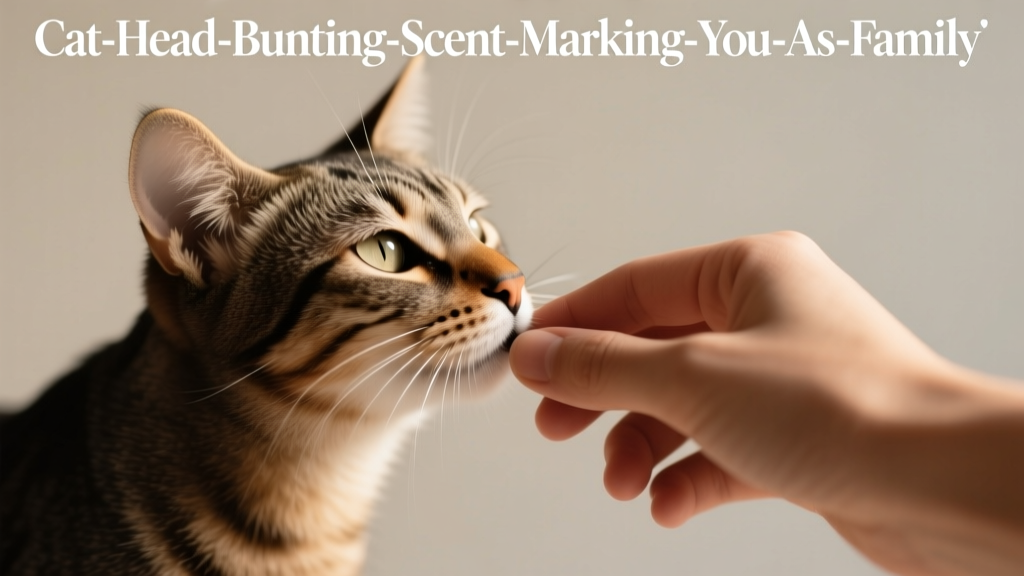
Scenario: You crouch down, and your cat confidently bumps your forehead or nose with theirs.
Meaning: High trust. Face-to-face contact puts your cat’s sensitive whiskers and eyes close to you—cats don’t do that with someone they consider unpredictable.
4) The “I’ve missed you” bunting spree
Scenario: You come home, and your cat circles your legs, bunting repeatedly like they’re stamping you with approval.
Meaning: Reconnection and reassurance. Your scent has “changed” after being out in the world. Your cat is re-establishing the familiar household scent profile—and getting comfort from it.
5) The object bunting (then back to you)
Scenario: Your cat bunts the couch corner, the doorframe, your shoes… then rubs on you.
Meaning: Environmental security. Cats often mark routes and key items in their territory. Adding you to that route can be a social “you’re part of home base” statement.
6) The strategic bunting before dinner
Scenario: Your cat bumps you, purrs, stares at the bowl, bumps you again, and strolls toward the kitchen like they’re guiding a very slow employee.
Meaning: Sometimes affection, sometimes negotiation. Cats learn that friendly contact gets results. It can still be genuine—just conveniently timed.
What head bunting says about your cat’s mood
Head bunting is usually a “green light” social signal, but the exact flavor depends on your cat’s body language. Here’s a quick translator.
- Relaxed and happy: Soft eyes, slow blinks, gentle bunts, upright tail with a curved tip, purring.
- Affection-seeking: Repeated bunts plus lingering, leaning into you, rolling to the side, presenting the cheek for rubs.
- Excited/socially energized: Quick bunts, circling your legs, tail upright, maybe a little chirp or trill.
- Needing reassurance: Bunting paired with clinginess, following you room to room, extra rubbing on furniture (often after changes like visitors, a new pet, or moving).
- Overstimulated (less common, but possible): Bunting followed by sudden swishing tail, ears turning sideways, skin twitching, or a quick nip if you pet too long.
The key is to read the whole cat, not just the forehead. A bunting cat is typically friendly, but even friendly cats have boundaries.
Related behaviors that often come with bunting
If your cat is a dedicated head-bunter, you may also notice these “scent and social” cousins:
- Allorubbing: Rubbing their body along your legs or another cat, often in a figure-eight pattern.
- Allogrooming: Licking you (or another cat) as a social bonding behavior—sometimes sweet, sometimes a little possessive.
- Slow blinking: A calm “I trust you” signal that often happens during close, friendly contact.
- Kneading: Pressing paws rhythmically on you or blankets; often tied to comfort and security.
- Tail-up greetings: Approaching with tail vertical, sometimes with a hook at the tip—classic friendly hello.
- Face-rubbing on objects: Marking doorframes, chair legs, and corners, especially in high-traffic areas.
When head bunting is normal… and when it might be a concern
Most of the time, head bunting is a perfectly normal, healthy social behavior. That said, any behavior can raise questions if it changes suddenly or comes with other symptoms.
Normal patterns
- Frequent bunting during greetings, feeding routines, or cuddly moments
- More bunting after you’ve been away
- Bunting paired with relaxed body language
Possible red flags (call your vet if you notice these)
- Head pressing: This is different from bunting. Head pressing looks like a cat pushing their head hard against a wall or furniture and holding it there, often with a “not quite present” demeanor. It can signal neurological issues and needs prompt veterinary attention.
- Sudden increase in rubbing plus anxiety signs: If your cat is pacing, hiding, startling easily, or overgrooming, increased scent marking may reflect stress.
- Pain signs: If bunting is new but your cat also seems sensitive around the face, avoids being touched, has changes in appetite, drools, or paws at the mouth, consider dental pain or discomfort.
- Disorientation or balance changes: Any wobbliness, circling, or unusual pupils along with odd head behavior is vet territory.
If you’re unsure whether you’re seeing affectionate bunting or something concerning, record a short video and show it to your veterinarian. The context and intensity matter.
How to respond (and encourage a healthy “family scent” bond)
If your cat head-bunts you, you’re being invited into their social circle. Here’s how to answer in a way cats truly appreciate.
- Pause and let them complete the rub. Many cats prefer to initiate and control contact. Holding still for two seconds is surprisingly meaningful in cat language.
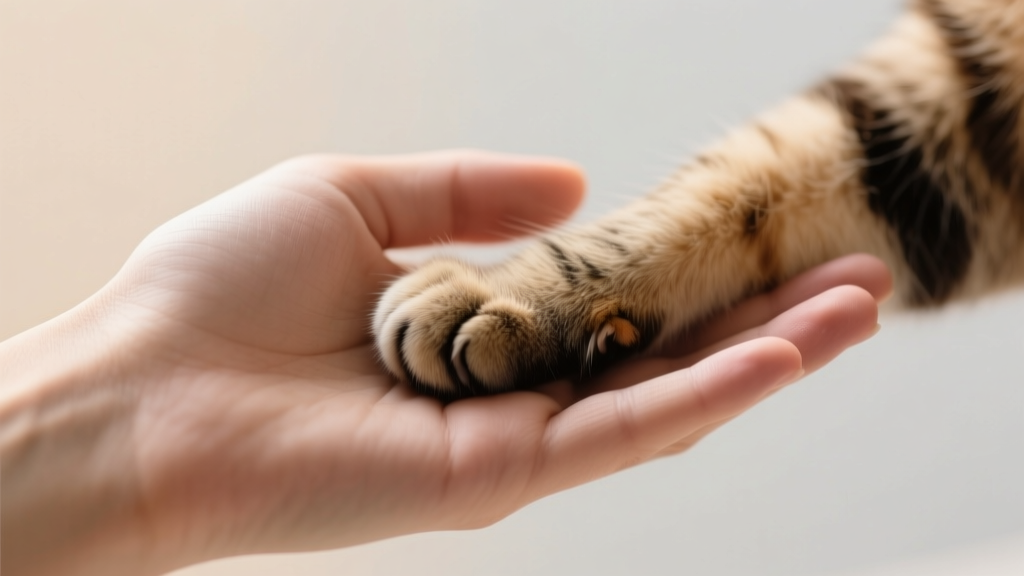
- Offer a hand for cheek rubs. Present your knuckles or the side of your fingers at nose height and let your cat choose to rub. (This is also a polite greeting for cats who don’t like direct petting.)
- Pet “safe zones” first. Most cats enjoy gentle strokes around the cheeks, under the chin, and behind the ears—right where the social scent glands are.
- Try a slow blink. If your cat bunts, then looks at you, soften your eyes and slow blink. Many cats blink back, and it reinforces the calm vibe.
- Respect the exit. If bunting ends and your cat steps away, let them go. Trust grows when cats learn their “no thanks” is honored.
- Support with a stable environment. If your cat is bunting excessively due to stress, predictable routines, safe hiding spots, and vertical territory (cat trees, shelves) can help.
Want to encourage more friendly bunting? Reinforce it quietly: gentle praise, a brief cheek scratch, or even a treat after greetings can teach your cat that affectionate check-ins are rewarding.
Fun facts and fascinating findings
- Cats create a “scent map” of home. Many cats rub on corners and doorways because these are traffic hubs—perfect spots for leaving social information.
- Friendly cats share scent on purpose. In multi-cat homes, cats that are bonded often rub faces and bodies to blend their scents, helping reduce “stranger danger” reactions within the group.
- Some feline pheromones are associated with calm. Facial pheromones (the kind deposited during cheek rubbing) are commonly linked with familiarity and security—one reason cats rub when they’re settling in or after changes.
- Your cat is customizing you. After you shower, change laundry detergent, or come home smelling like another animal, don’t be surprised if your cat schedules an urgent bunting appointment.
FAQ: Cat head bunting
Is head bunting the same as head pressing?
No. Head bunting is a social rub—usually gentle, mobile, and paired with normal behavior. Head pressing is when a cat pushes their head firmly into a surface and holds it there, often looking unwell or disoriented. Head pressing can be serious and deserves a prompt vet call.
Why does my cat head-butt me and then bite?
Often it’s overstimulation. Your cat starts in a friendly, affectionate place, but too much petting (or petting sensitive areas like the belly or lower back) can flip their nervous system from “enjoying” to “had enough.” Watch for tail swishing, skin twitching, ears turning sideways, or sudden tension—those are your cues to stop sooner.
Does head bunting mean my cat loves me?
It’s a strong sign of trust, comfort, and social bonding. Cats don’t “say love” exactly the way humans do, but bunting is one of the clearest signals that you’re in the cat’s safe inner group.
My cat only head-bunts one person. Why?
Cats are selective. Your cat may prefer someone who moves calmly, respects boundaries, has a predictable routine, or responds in a way the cat finds rewarding (like the perfect cheek scratch). Scent also plays a role—cats can have surprisingly strong preferences about what “smells right.”
Why does my cat head-bunt my phone or laptop?
Because those objects steal your attention and carry interesting scents—your hands, your face, the world outside. Your cat may also be marking the item as “part of us,” or gently nudging it out of the way to reconnect with you.
Can I train my cat to head-bunt?
You can encourage it, but you can’t force it. Offer your hand for a voluntary cheek rub, reward calm greetings, and avoid reaching over your cat’s head (which many cats dislike). If your cat is naturally bunty, they’ll likely do more of it when they feel safe and respected.
Head bunting is one of those small cat gestures that carries a lot of meaning. It’s scent, social bonding, reassurance, and affection wrapped into a tiny forehead thump—your cat’s way of saying, “You’re with me.”
Does your cat have a signature head-bunt style—gentle shin taps, full-speed bonks, or the dramatic cheek drag that nearly trips you? Share your stories (and the funniest “marked as family” moments) with the community at catloversbase.com.