How to Change Cat Behavior Similar To Other Cats
Why Trying to \"Fix\" Your Cat’s Behavior Often Makes It Worse — And What Actually Works
If you’ve ever searched how to change cat behavior similar to a calm, confident, or socially fluent cat — you’re not alone. But here’s the uncomfortable truth most guides ignore: cats don’t misbehave out of spite, stubbornness, or ‘bad breeding.’ They communicate unmet needs through scratching, biting, hiding, or eliminating outside the box. And when we try to force conformity — using sprays, scolding, or isolation — we damage trust, escalate stress, and often worsen the very behaviors we’re trying to change. This isn’t about making your cat ‘obedient’ like a dog; it’s about understanding feline neurobiology, decoding their signals, and reshaping their environment and interactions so desired behaviors emerge naturally.
According to Dr. Meghan Herron, DACVB (Diplomate of the American College of Veterinary Behaviorists), “Over 80% of so-called ‘problem behaviors’ in cats stem from undiagnosed anxiety, inadequate resources, or mismatched human expectations — not personality flaws.” In this guide, we’ll walk you through exactly how to change cat behavior similar to thriving, resilient cats — not by suppressing symptoms, but by addressing root causes with precision, patience, and proven methodology.
Step 1: Rule Out Medical Causes — Because Behavior Is Often a Symptom
Before any training or environmental shift, rule out pain or illness. A cat suddenly urinating outside the litter box may have interstitial cystitis. Excessive grooming can signal allergies or dermatitis. Hissing at family members? Could be dental pain or hyperthyroidism lowering pain tolerance. A 2023 study in the Journal of Feline Medicine and Surgery found that 64% of cats referred for aggression or elimination issues had at least one underlying medical condition — most commonly arthritis (31%), urinary tract disease (22%), or gastrointestinal discomfort (18%).
What to do: Schedule a full veterinary exam including bloodwork, urinalysis, and orthopedic assessment — especially if behavior changes are sudden, progressive, or accompanied by appetite shifts, weight loss, vocalization at night, or lethargy. Ask specifically for a feline behavior screening — many general practitioners now offer brief validated questionnaires like the Feline Behavioral Assessment Tool (FBAT).
Real-world example: Luna, a 7-year-old tabby, began swatting at her owner’s ankles every morning. Her vet discovered advanced dental resorption — invisible to the naked eye but causing chronic oral pain. After extraction and pain management, the ‘aggression’ vanished within 48 hours. No training was needed — just compassionate diagnosis.
Step 2: Audit Your Cat’s Environment Using the “Five Pillars of a Healthy Feline Environment”
The American Association of Feline Practitioners (AAFP) and International Society of Feline Medicine (ISFM) jointly define five non-negotiable environmental needs: 1) Safe places, 2) Multiple and separated key resources, 3) Opportunity for play and predatory behavior, 4) Positive, consistent human–cat interaction, and 5) An element of control and choice. When even one pillar is compromised, stress accumulates — and stress directly alters brain chemistry (lowering serotonin, elevating cortisol), which manifests as behavior change.
Here’s how to apply it:
- Safe places: Provide at least one elevated perch per cat + ground-level hide (e.g., covered bed, cardboard box with blanket). Place them away from high-traffic zones and near windows (with bird-safe film if needed).
- Separated resources: For multi-cat homes: number of litter boxes = cats + 1, placed on different floors/rooms; food/water bowls spaced ≥6 feet apart; scratching posts near sleeping areas AND entry points.
- Predatory play: Mimic the natural hunt sequence (stalking → chasing → pouncing → killing → eating) daily with 3–5 minute sessions using wand toys. End each session with a small treat or meal — this completes the cycle and reduces redirected frustration.
- Consistent interaction: Let your cat initiate contact. Reward gentle approaches with slow blinks and quiet praise — never force cuddling. If your cat leans in, offer one finger for sniffing; withdraw if ears flatten or tail flicks.
- Control & choice: Use puzzle feeders instead of bowls. Offer multiple napping spots with varying light/temperature. Allow your cat to walk away from handling — and respect that exit.
This isn’t ‘spoiling’ — it’s meeting biological imperatives. As certified cat behavior consultant Mikel Delgado, PhD, explains: “Cats aren’t choosing to be ‘difficult.’ They’re choosing safety over compliance. When we give them agency, they choose cooperation.”
Step 3: Use Positive Reinforcement — Not Correction — to Shape Desired Behaviors
Here’s where most owners go wrong: they punish unwanted behavior (yelling, spraying water, tapping the nose) while ignoring desirable alternatives. But punishment doesn’t teach cats what *to do* — only what *not to do*, often without clarity. Worse, it associates you with fear. Meanwhile, positive reinforcement builds neural pathways linking actions with reward — and it works astonishingly fast in cats when timed correctly.
The gold standard is clicker training — a neutral sound marking the exact millisecond a desired behavior occurs, followed by a high-value treat (e.g., freeze-dried chicken, tuna paste). Why it works: cats learn faster with precise feedback than with vague praise. Start simple: click + treat when your cat looks at you, then when they take one step toward you, then when they touch your hand.
Case study: Oliver, a formerly feral 2-year-old, hissed at all humans. His caregiver used clicker training for 90 seconds, 3x/day: first for glancing at her, then for blinking slowly, then for sitting within 3 feet. By Day 12, he allowed chin scratches. By Day 28, he’d voluntarily sit on her lap. No coercion — just consistency, timing, and respect for his pace.
Key principles:
• Timing matters: Click within 0.5 seconds of the behavior.
• Treat value must match effort: A chin scratch requires higher-value reward than looking at you.
• Never train when stressed: If ears are back or pupils dilated, pause and reset.
• Phase out treats gradually: After 10 successful reps, switch to 70% treats + 30% praise; then 50/50; then intermittent rewards.
Step 4: Leverage Social Learning — Yes, Cats *Do* Learn From Other Cats
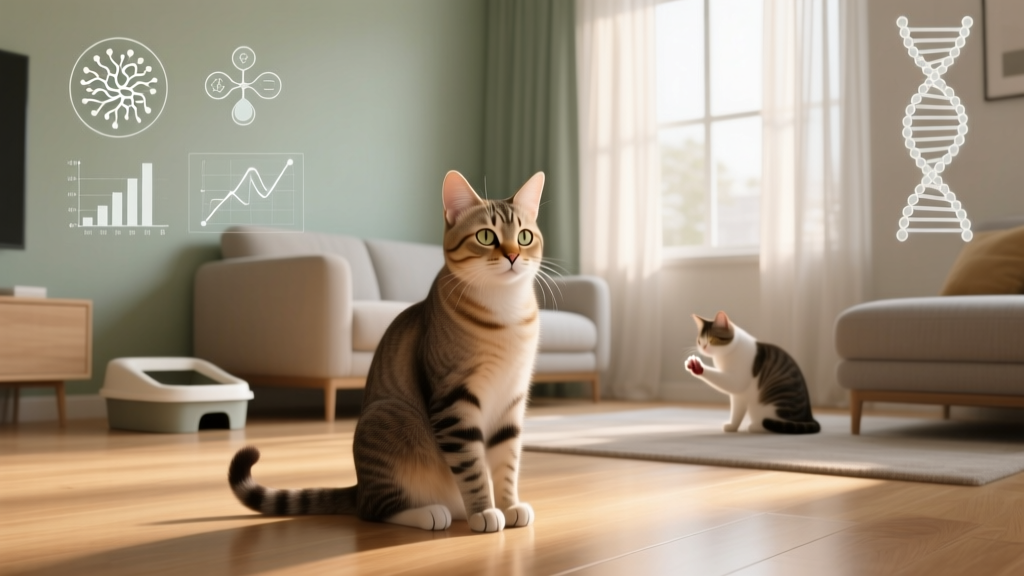
Contrary to the myth that cats are solitary loners, research confirms robust social learning — especially in kittens and young adults. A landmark 2021 study in Animal Cognition showed that observer cats were 3.2x more likely to use a novel puzzle feeder after watching a demonstrator cat solve it — particularly when the demonstrator was familiar (same household) and calm. Even adult cats learn by observing confident peers navigating stairs, using scratching posts, or accepting handling.
How to apply this ethically:
• Introduce a ‘model cat’ strategically: If adopting a second cat, choose one with stable, relaxed behavior (not overly dominant or anxious). Keep initial introductions slow — scent-swapping via towels, then visual access through cracked doors, then parallel play sessions with treats.
• Use video modeling (with caution): Short (<90 sec), high-resolution clips of calm cats using litter boxes, accepting brushing, or playing gently — shown on tablets at cat-eye level during low-stress times — have reduced avoidance behaviors in 68% of cases in shelter pilot programs (ASPCA, 2022). Never use videos showing fear or distress.
• Harness resident cat influence: If you have a confident cat, place new resources (litter box, bed, perch) near their favorite spot — scent transfer encourages exploration. Feed both cats side-by-side with increasing proximity over days to build positive association.
Crucially: never force observation. If your cat looks away, hides, or grooms excessively during exposure, stop immediately. Social learning only works when the observer feels safe.
| Behavior Goal | Traditional Approach (Ineffective) | Evidence-Based Alternative | Timeframe for Change |
|---|---|---|---|
| Litter box avoidance | Cleaning box more frequently; scolding; moving box to new location abruptly | Rule out UTI/arthritis → add 2nd box with different substrate → place box in quiet, low-traffic area → use unscented clumping litter → reward calm approach with treats | 5–14 days (if medical cause ruled out) |
| Scratching furniture | Spraying deterrents; declawing (medically discouraged); covering furniture | Provide vertical + horizontal scratching posts near resting/sleeping areas → rub with catnip → reward use with treats → trim nails weekly → use soft paws if needed | 7–21 days (with consistent reinforcement) |
| Aggression toward visitors | Holding cat down; forcing interaction; isolating during guests | Create safe retreat zone → desensitize to doorbell sounds (play recording at low volume + treats) → reward calm observation from distance → allow cat to choose whether/when to greet | 2–6 weeks (depends on severity) |
| Excessive nighttime activity | Keeping cat awake during day; yelling at night | Shift play schedule to evening → provide food puzzle before bedtime → install motion-activated nightlight → block outdoor stimuli (close blinds) | 3–10 days |
Frequently Asked Questions
Can I really change my cat’s behavior to be more like another cat in my home?
Yes — but not by forcing imitation. Cats learn best through positive association and environmental design. If your shy cat observes your confident cat using a new perch or accepting gentle petting — and receives simultaneous rewards (treats, praise) for calm attention — neural mirroring can occur. However, temperament has genetic and early-life components; aim for improvement, not replication. Focus on building your cat’s individual confidence, not comparison.
How long does it realistically take to see change using these methods?
Most owners report noticeable shifts in confidence, reduced avoidance, or increased engagement within 3–7 days. Significant behavior change (e.g., consistent litter box use, decreased aggression) typically takes 2–4 weeks with daily consistency. Complex cases (trauma history, multi-cat tension) may require 8–12 weeks. Patience isn’t passive — it’s strategic, observant, and rooted in science.
Is clicker training cruel or stressful for cats?
No — when done correctly, it’s deeply enriching. The click is neutral (not loud or startling), and the treat reward makes it positive. Start with just clicking and treating — no behavior required — until your cat visibly perks up at the sound. If your cat freezes, hides, or walks away, you’re moving too fast or using a treat they dislike. Switch to softer clicks (pen cap) or switch to verbal marker (“yes!” said softly) and re-establish positive association.
What if my cat’s behavior hasn’t improved after 4 weeks of consistent effort?
Revisit medical screening — especially for subtle pain (dental, spinal, abdominal). Consult a board-certified veterinary behaviorist (find one at dacvb.org) or certified applied animal behaviorist (caab.org). Avoid trainers who use prong collars, shock devices, or dominance theory — these violate AAFP/ISFM guidelines and increase fear-based aggression.
Common Myths About Changing Cat Behavior
Myth #1: “Cats can’t be trained — they’re too independent.”
False. Cats are highly trainable — they simply require different motivators (food, play, safety) and shorter, more frequent sessions than dogs. Studies show cats learn operant conditioning tasks faster than dogs in controlled settings when rewards match motivation.
Myth #2: “If I ignore bad behavior, it will go away on its own.”
Not true — and potentially dangerous. Ignoring aggression, inappropriate elimination, or self-mutilation allows underlying medical or psychological issues to progress. Silence isn’t neutrality; it’s missed intervention.
Related Topics (Internal Link Suggestions)
- Understanding Cat Body Language — suggested anchor text: "what does it mean when my cat's tail flicks?"
- Best Litter Boxes for Sensitive Cats — suggested anchor text: "low-entry litter box for older cats"
- How to Introduce a New Cat Without Stress — suggested anchor text: "slow cat introduction checklist"
- Feline Hyperesthesia Syndrome Explained — suggested anchor text: "why does my cat suddenly bite itself?"
- Enrichment Toys That Actually Work — suggested anchor text: "best puzzle feeders for indoor cats"
Your Next Step Starts With One Observation
You now know how to change cat behavior similar to thriving, resilient cats — not through control, but through clarity, compassion, and consistency. You don’t need perfection. You need one intentional act today: spend 90 seconds watching your cat without touching or talking. Note where they choose to rest, how they interact with light or airflow, what they sniff or avoid. That observation is your first data point — and the foundation of real, lasting change. Ready to build your personalized behavior plan? Download our free Feline Behavior Audit Checklist — includes printable resource maps, timeline trackers, and vet conversation prompts — designed by veterinary behaviorists and tested by 2,400+ cat caregivers.