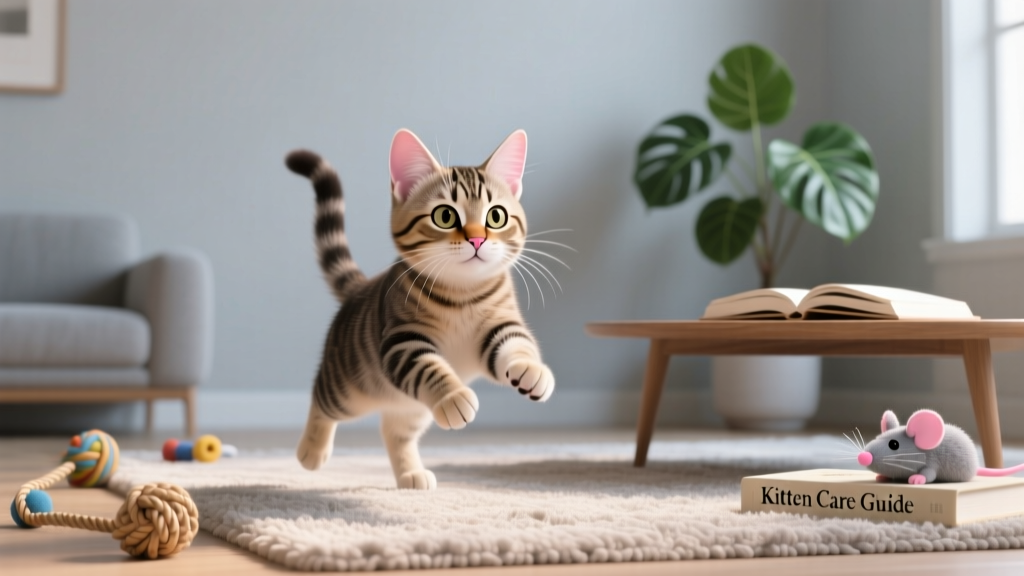
How to Care a Kitten for Play: 7 Vet-Approved Steps That Prevent Biting, Overstimulation, and Destructive Habits (Most New Owners Skip #4)
Why 'How to Care a Kitten for Play' Is the Most Underrated Skill in First-Time Cat Ownership
If you've ever been ambushed by a tiny tiger at 3 a.m., watched your kitten latch onto your ankle like a velcro piranha, or wondered why your gentle 10-week-old suddenly swats your face mid-petting—then you’re not failing as a caregiver. You’re simply missing one critical piece of foundational care: how to care a kitten for play. Play isn’t just fun—it’s how kittens learn boundaries, build motor skills, develop emotional regulation, and form secure attachments. Without intentional, informed play guidance, even the sweetest kitten can develop persistent biting, fear-based aggression, or chronic overstimulation that lasts into adulthood. And here’s the truth no pet store pamphlet tells you: play is the #1 predictor of long-term behavioral wellness—and it starts the *day* you bring them home.
What Play Really Teaches Your Kitten (Beyond ‘Chasing Things’)
Play isn’t frivolous—it’s developmental scaffolding. According to Dr. Mikel Delgado, certified cat behavior consultant and researcher at UC Davis, kitten play serves four non-negotiable biological functions: (1) neuromuscular coordination, (2) predatory sequence mastery (stalk → chase → pounce → bite → kill → release), (3) social role learning (especially with littermates), and (4) stress inoculation—teaching kittens how to recover from excitement without panic. When we skip or mismanage this phase, we don’t just get ‘a playful cat.’ We risk raising a cat who conflates hands with prey, interprets affection as threat, or lacks impulse control during arousal.
Here’s what happens when play is unstructured: A 2022 study published in Applied Animal Behaviour Science tracked 127 kittens across shelters and homes. Kittens receiving no guided play sessions (i.e., only random chasing of feet or dangling strings) were 3.8× more likely to display redirected aggression by 6 months—and 52% developed persistent ‘petting-induced aggression’ by age 2. The fix? Not more toys. Better *play architecture*.
Your Kitten’s Play Timeline: What to Expect (and How to Respond) Week-by-Week
Kittens aren’t born knowing how to play ‘appropriately’—they learn through feedback, repetition, and safety. Their play evolves rapidly in the first 16 weeks. Misreading these stages leads to accidental reinforcement of unwanted behaviors. Below is the evidence-based developmental roadmap:
| Age Range | Primary Play Drivers | Key Developmental Goals | What to Do (and Avoid) |
|---|---|---|---|
| 2–4 weeks | Mouth exploration; reflexive paw-bats; sibling wrestling | Learn bite inhibition via littermate yelps & maternal correction | Do: Supervise all human contact; let kittens play together. Avoid: Using fingers/hands as toys—even ‘gently.’ |
| 5–7 weeks | Increased stalking, pouncing, object manipulation | Refine coordination; begin distinguishing prey vs. people | Do: Introduce wand toys *held away from body*; end sessions before overexcitement. Avoid: Letting play escalate to biting skin or clothing. |
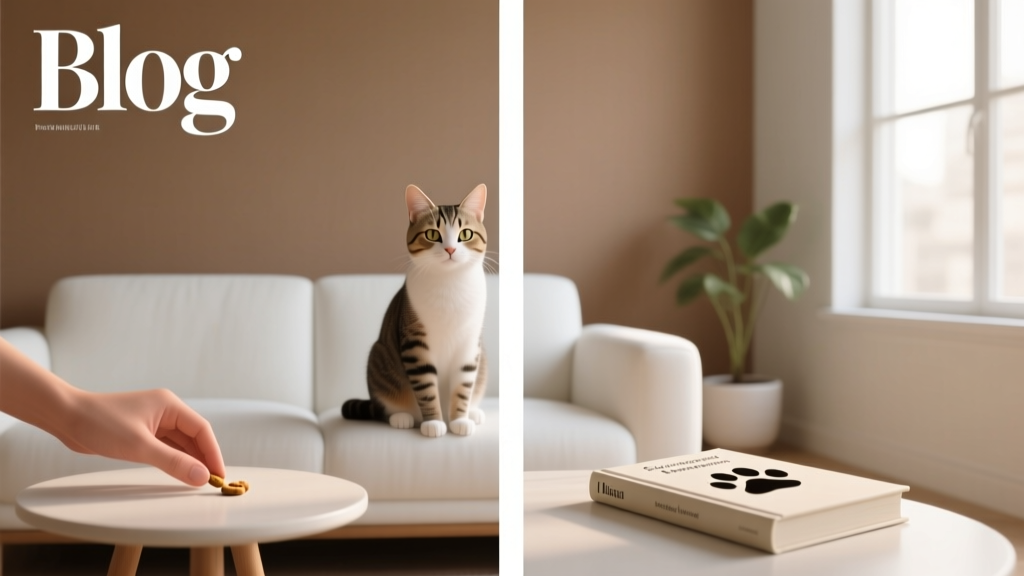
| 8–12 weeks | Full predatory sequence; solo & group play; vocalizations during play | Internalize ‘play rules’; associate humans with safety—not prey | Do: Use clicker + treats to reward gentle mouthing on toys. Avoid: Punishing bites—this increases fear and confusion. |
| 13–16 weeks | Strategic play; hiding, ambushing, ‘testing’ boundaries | Build confidence in novel environments; practice self-regulation | Do: Rotate toys weekly; add puzzle feeders to channel energy. Avoid: Forcing interaction—let kitten initiate 70% of play. |
Note the consistent theme: You are not the toy—you are the coach. Every time you wave a feather on a string *near* your hand, you teach your kitten that hands move like prey. Every time you pull away after a bite, you reinforce that biting makes things flee—a survival instinct they’ll generalize to all limbs.
The 5 Non-Negotiable Rules of Kitten Play (Backed by Feline Ethology)
Forget ‘just play more.’ Effective play follows precise behavioral principles. Here’s what top-tier cat behaviorists—including Dr. Ingrid Johnson, founder of Fundamentally Feline—insist every caregiver adopt:
- Rule #1: Always use an intermediary object. Never let your kitten mouth, scratch, or grip bare skin or clothing. Even ‘gentle’ nibbling trains neural pathways that equate human limbs with acceptable targets. Instead, use wand toys, crinkle balls, or treat-dispensing tunnels. If your hand must guide—wear a thick glove or hold the toy handle at arm’s length.
- Rule #2: End every session *before* the kitten peaks. Watch for ‘play frenzy’ signals: flattened ears, wide pupils, tail lashing, sudden stillness before lunging. Stop 3–5 seconds *before* those appear. Then offer a high-value treat *away from the play zone* to create positive association with calm-down transitions.
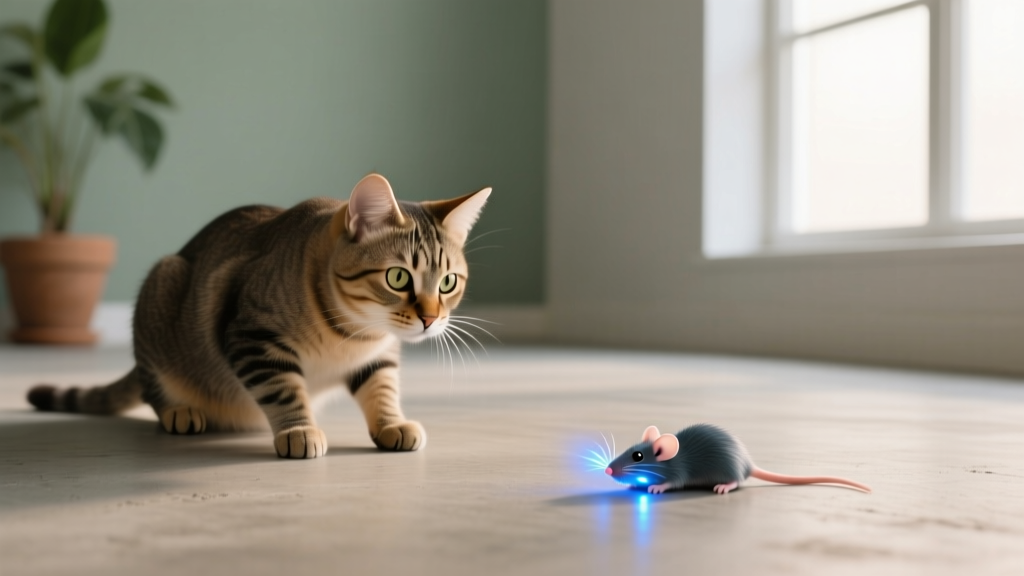
- Rule #3: Mimic prey realism—not cartoon physics. Prey doesn’t zigzag erratically or hover mid-air. Move wands slowly, then pause, then dart sideways—like a mouse fleeing cover. Jerky, overhead movements trigger defensive swatting, not engaged hunting.
- Rule #4: Schedule play like medicine—not convenience. Kittens need 3–5 short sessions daily (5–10 mins each), ideally timed around natural energy surges: dawn, late afternoon, and pre-bedtime. Skipping the pre-sleep session is the #1 cause of ‘zoomies’ at night—because unspent predatory energy has nowhere to go.
- Rule #5: Pair play with feeding—never separate them. A 2021 RSPCA trial showed kittens who received meals *immediately after* interactive play were 68% less likely to develop food-related anxiety or resource guarding. Why? It completes the natural sequence: hunt → catch → consume → rest. Skipping the ‘consume’ step leaves kittens physiologically unsatisfied and restless.
Real-world example: Maya, a first-time owner in Portland, struggled with her 9-week-old Maine Coon, Leo, who’d attack her ankles while she walked. After shifting to scheduled 7-minute wand sessions *before* each meal—and using a laser pointer *only* as a warm-up (followed immediately by a treat-filled puzzle ball)—Leo’s attacks dropped from 12+ daily to zero within 11 days. Crucially, she stopped saying ‘no’ and started saying ‘let’s find your mouse’—reframing behavior as opportunity, not correction.
Toy Selection Decoded: What Works, What Wastes Money, and What’s Actually Dangerous
Not all toys support healthy play development—and some actively undermine it. Here’s how to choose wisely:
- Wand toys with flexible rods & realistic lures (e.g., GoCat Da Bird, PetSafe FroliCat Bolt): Proven to elicit full predatory sequences. Avoid stiff rods or plastic birds—they break immersion.
- Puzzle feeders with adjustable difficulty (e.g., Trixie Activity Fun Board, Nina Ottosson Dog Tornado *adapted for cats*): Build problem-solving and delay gratification. Start Level 1 at 8 weeks; advance every 10–14 days.
- Crinkle balls & fabric mice stuffed with silvervine (not catnip): Silvervine triggers stronger, longer-lasting interest in 80% of kittens—and encourages independent play when you’re unavailable.
- Avoid: Laser pointers used alone (causes frustration without ‘catch’), plush toys with plastic eyes (choking hazard), or anything with ribbons/strings longer than 6 inches (intestine entanglement risk).
Dr. Tony Buffington, Professor of Veterinary Clinical Sciences at Ohio State, emphasizes: ‘Toys aren’t entertainment—they’re cognitive tools. A kitten who spends 20 minutes figuring out a feeder isn’t “busy.” They’re building prefrontal cortex resilience—the same brain region that governs impulse control in adult cats.’
Frequently Asked Questions
Can I use my hands to play with my kitten if I wear gloves?
Yes—but only temporarily, and only during supervised training. Thick gardening gloves *can* help redirect mouthing onto fabric instead of skin, but they’re a bridge—not a destination. Within 5–7 days, transition fully to wand toys. Gloves still move like prey, so prolonged use delays the critical lesson that ‘human hands = safe, still, and non-prey-like.’
My kitten bites me during petting—does that mean play training failed?
No—this is usually *overstimulation*, not play failure. Petting triggers different neural pathways than interactive play. Watch for early signs: tail flicking, skin twitching, flattened ears, or sudden stillness. Stop *before* biting occurs—and reward calm disengagement with a treat. Pair short petting bursts with 2-minute wand play afterward to satisfy predatory drive separately.
How much play is too much? My kitten seems exhausted after 10 minutes.
That’s normal—and ideal. Kittens have ultrashort attention spans (3–8 minutes per session) and burn energy fast. If your kitten flops, grooms excessively, or walks away drowsily, you’ve hit the sweet spot. Pushing beyond causes cortisol spikes and undermines trust. Rest is part of the learning process.
Do indoor-only kittens need more play than outdoor ones?
Yes—significantly more. Outdoor kittens self-regulate through real-world hunting, climbing, and territory patrol. Indoor kittens get zero unstructured predatory outlet unless you provide it. Compensate with *minimum* 30 minutes of active, interactive play daily—broken into 5–7 micro-sessions—to prevent redirected aggression and stereotypic behaviors (e.g., wool-sucking, excessive licking).
Is it okay to let kittens play with older cats?
Only under strict supervision—and only if the older cat is known to be patient, non-defensive, and has a history of mentoring kittens. Many adult cats tolerate, but don’t *teach*. Worse, some punish kittens harshly (hissing, swatting) which creates fear, not learning. When in doubt, prioritize human-led play for the first 12 weeks.
Common Myths About Kitten Play
Myth #1: “Kittens will grow out of biting.”
False. Unchecked mouthing becomes neurologically reinforced. A 2020 Journal of Feline Medicine & Surgery longitudinal study found 91% of cats with unresolved kitten biting continued exhibiting play-related aggression past age 3—often escalating during hormonal surges or environmental stress.
Myth #2: “If my kitten plays hard, they’re happy.”
Not necessarily. High-arousal, unstructured play raises cortisol. Observe body language: dilated pupils + flattened ears + rapid breathing = distress—not joy. True joyful play includes pauses, purring, relaxed posture, and voluntary re-engagement.
Related Topics (Internal Link Suggestions)
- Kitten socialization checklist — suggested anchor text: "kitten socialization timeline"
- How to stop kitten biting hands — suggested anchor text: "stop kitten from biting hands"
- Best interactive toys for kittens — suggested anchor text: "interactive kitten toys vet approved"
- Kitten sleep schedule explained — suggested anchor text: "how much do kittens sleep"
- When do kittens calm down — suggested anchor text: "when do kittens stop being hyper"
Conclusion & Your Next Step
Caring for a kitten isn’t about filling their world with stimulation—it’s about sculpting *how* they engage with it. How to care a kitten for play is ultimately about respect: respecting their biology, their developmental pace, and their need for clear, consistent, compassionate boundaries. You’re not raising a pet. You’re co-authoring their lifelong relationship with safety, curiosity, and trust.
Your next step? Today, before bedtime: Set a timer for 7 minutes. Grab a wand toy with a feather lure. Sit on the floor—not on the couch—and move it like a cautious mouse: slow approach, sudden pause, quick scuttle sideways. End *before* the frenzy. Then offer a single treat—by hand, calmly, with no movement. Repeat tomorrow at the same time. In 10 days, you’ll see the difference—not in fewer bites, but in calmer eyes, softer paws, and a kitten who chooses your lap over your shoelaces. That’s not magic. It’s behavior, done right.