Why Cats Hide When Sick or in Pain
You’re doing a normal headcount at home: keys on the hook, phone on the charger, cat… missing. You check the windowsill. Not there. The couch? Empty. You shake the treat bag—usually a guaranteed summoning spell—and still nothing. Then you find them: tucked behind the guest room curtains, curled into a tight cinnamon roll, staring at you like you’ve interrupted a top-secret meeting.
If you’ve ever thought, “Are you being dramatic… or are you actually not okay?” you’re in good company. Cats are masters of acting fine until they’re really not, and hiding is one of their most common “something’s off” behaviors. It can feel confusing (and honestly a little rude), but from your cat’s point of view, it makes perfect sense.
The evolutionary reason: hiding is a survival strategy
Domestic cats may lounge like royalty, but their instincts come straight from a world where staying alive meant staying unnoticed. In nature, a cat that looks weak becomes a target. Predators pick off the vulnerable. Other cats may bully or challenge them. Even prey animals can fight back if they sense weakness.
So cats evolved a simple rule: Don’t advertise pain. When a cat feels unwell, their body and brain lean toward behaviors that reduce risk:
- Seek concealment (so no one can spot them easily)
- Stay still (less movement = less attention and less pain)
- Keep control of space (a small hiding spot feels easier to defend)
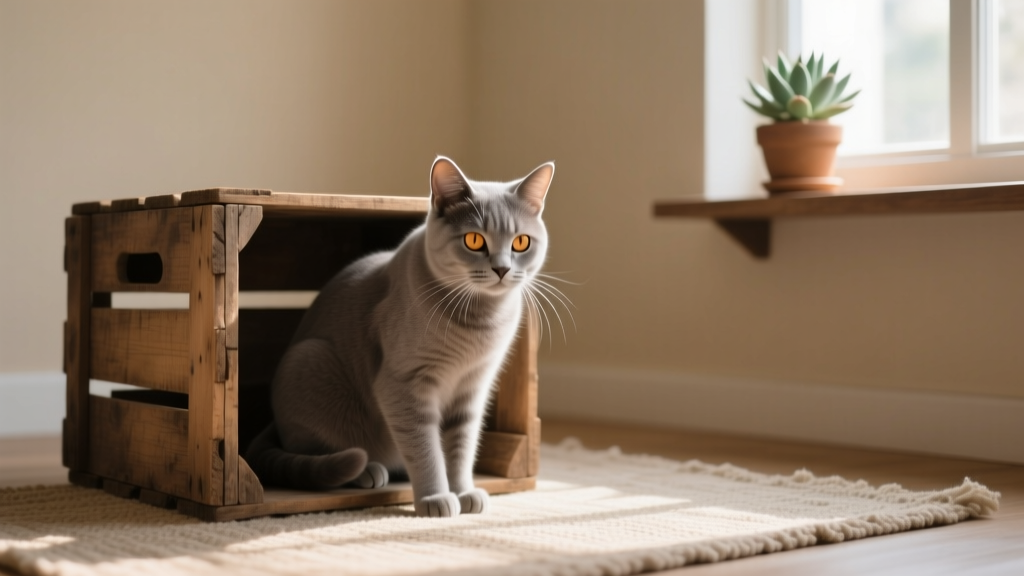
That’s also why cats often choose tight, enclosed spots—under beds, in closets, behind furniture, inside boxes. These places provide what behaviorists call “cover.” Cover lowers stress because it reduces visual exposure and helps a cat feel protected.
Even in a safe home, that ancient program is still running in the background. When your cat feels sick, hiding isn’t them being aloof. It’s them doing what cats have done for thousands of years: managing vulnerability.
How hiding looks in real life: different contexts and what they can mean
Not all hiding is the same. The context—what happened before, where they hide, and how they act once found—matters a lot.
1) The “I don’t feel good” hide
This is the classic scenario: a cat who’s normally social suddenly disappears for hours. You might find them in a quiet room they don’t usually use, or wedged in a deeper-than-usual spot.
Common clues: less interest in food, slower movements, a “tucked” posture, half-closed eyes, or reluctance to be touched.
2) The “pain management” hide
Pain changes how cats use their bodies. Jumping hurts, turning hurts, being handled hurts. Hiding becomes a way to avoid movement and avoid people (even beloved people) who might accidentally bump a sore area.
Common clues: stiffness, unusual crouching, avoiding stairs, not jumping to favorite high spots, or a flinch when you pet certain areas.
3) The “nauseous or upset stomach” hide
Many cats seek solitude when they feel nauseated—much like humans who want to lie down and be left alone. You may notice your cat hiding near cool surfaces (bathroom tile) or staying close to water.
Common clues: lip-licking, drooling, swallowing repeatedly, decreased appetite, or hiding after eating.
4) The “I’m scared, not sick” hide (and why it gets mixed up)
Hiding is also a go-to response for stress: visitors, construction noise, a new pet, a move, or even a schedule change. This can look very similar to illness-related hiding.
Common clues: hiding immediately after a scary event, hypervigilant ears, wide eyes, startle responses, and coming out when the house is quiet again.
5) The “I’m a senior cat with less resilience” hide
Older cats often hide more because they have less tolerance for discomfort and change. Arthritis, dental pain, and chronic conditions can make a cat more withdrawn long before you notice obvious “sick” symptoms.
Common clues: gradual increase in hiding over weeks, less grooming, changes in litter box habits, and reduced play.
What hiding tells you about your cat’s mood and feelings
When cats hide due to sickness or pain, the emotions underneath are usually a mix of:
- Vulnerability: “I don’t feel strong right now.”
- Self-protection: “If I’m not seen, I’m safer.”
- Overwhelm: “Everything feels like too much—noise, touch, movement.”
- Control-seeking: “In my hiding place, I control who approaches me.”
It’s tempting to interpret hiding as a snub—especially if your cat normally follows you around like a furry assistant. But behaviorally, hiding is often a sign they’re trying to cope. Your job is to read the whole picture: hiding plus changes in appetite, energy, grooming, litter box use, posture, and sociability.
Related behaviors you might notice alongside hiding
Hiding rarely shows up alone. Cats tend to “whisper” their symptoms through subtle changes. Watch for these common companions:
- Less eating or picky eating: Even a small drop in appetite can matter for cats.
- Reduced grooming or “unkempt” coat: Pain or nausea makes grooming less appealing.
- Overgrooming one spot: Licking a painful area can look like obsessive grooming.
- Changes in litter box habits: Straining, going more often, accidents, or avoiding the box.
- Sleep position shifts: Curling tighter, hunching, or sleeping with paws tucked.
- Grumpiness or avoidant behavior: Hissing, growling, or leaving when approached.
- Quiet vocalizing: Some cats get more silent; others may do low meows or yowls.
One of the most important (and overlooked) signs is a change in “where” your cat rests. A cat who always naps in the living room but suddenly chooses the back of the closet is telling you something.
Normal vs. concerning: when hiding should raise your eyebrows
Some hiding is perfectly normal. Many cats have a favorite “alone time” spot and use it daily. The key is change: change in frequency, duration, and intensity.
Hiding can be normal when:
- Your cat hides for short periods and comes out to eat, drink, use the litter box, and interact as usual.
- There’s an obvious stress trigger (guests, loud noise), and your cat returns to baseline afterward.
- Your cat has always been a shy personality and still shows normal appetite and routines.
Hiding is more concerning when:
- It’s sudden and out of character—especially in a normally social cat.
- Your cat won’t come out for food or skips meals.
- You see breathing changes (open-mouth breathing, rapid breaths at rest, obvious effort).
- There’s vomiting, diarrhea, or straining in the litter box.
- Your cat seems painful to touch, hunched, or reluctant to move.
- They’re hiding and also “not themselves”—dull eyes, withdrawn, or unusually reactive.
Important note: If your cat is straining to urinate, crying in the litter box, producing only small drops, or not urinating at all, treat that as an emergency—especially for male cats. Hiding plus urinary signs can signal a blockage, which is urgent.
How to respond: supporting your cat without making it worse
When a cat hides, our human instinct is to pull them out, cuddle them, and reassure them. For many cats, that feels like being cornered when they already feel awful. Support works best when it respects their need for safety and control.
Do this instead:
- Approach calmly and softly. Slow movements, quiet voice, and no looming over them.
- Offer, don’t force. Sit nearby and let them decide whether to come closer.
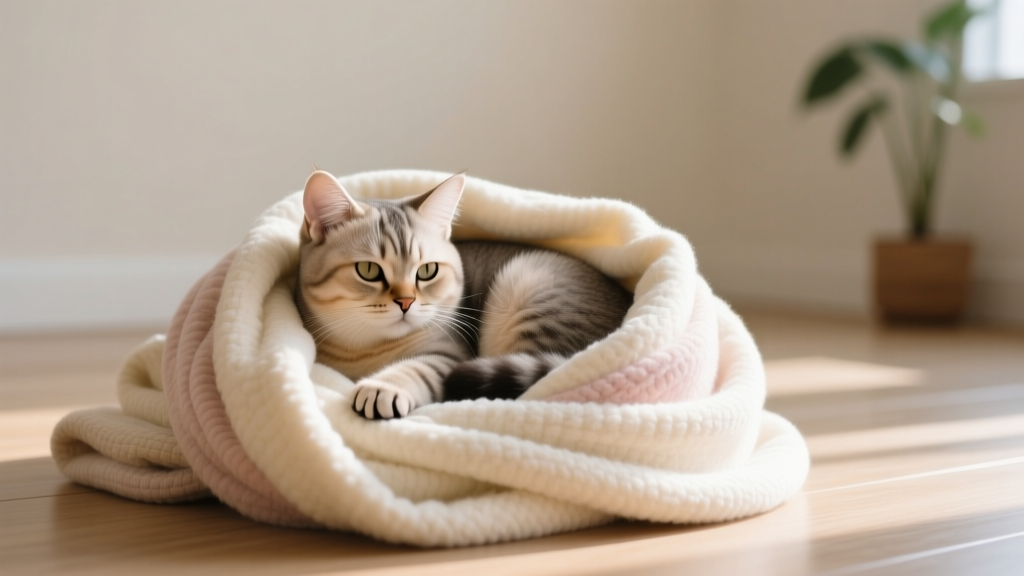
- Make the hiding spot “safe” rather than “off-limits.” If it’s a safe location, allow it temporarily and bring comfort to them (water nearby, a soft blanket, dim lighting).
- Track the basics. Note eating, drinking, litter box output, vomiting/diarrhea, and energy level. This is gold for your veterinarian.
- Reduce household stress. Keep things quiet, maintain routine, and limit handling by kids or other pets.
- Create a recovery zone. A cozy, easily accessible room with food, water, litter box, and a hiding bed can help a sick cat feel secure without disappearing into unreachable places.
Avoid these common missteps:
- Dragging your cat out of hiding. It can increase stress and even lead to defensive bites or scratches.
- Assuming it’s “just mood.” Cats often hide illness until it’s advanced.
- Giving human pain meds. Many are toxic to cats. Always consult a veterinarian.
If you suspect illness or pain, a vet visit is the kindest move—even if your cat would prefer to remain a mysterious blanket lump. The earlier you catch a problem, the easier it is to treat.
Fun facts and research-flavored tidbits about hiding
- “Sickness behavior” is real. Across many species, illness triggers a suite of behaviors—resting more, withdrawing, eating less—that help conserve energy for immune function. Cats are classic practitioners.
- Enclosed spaces lower stress for many cats. Studies on shelters and home environments have found that access to hiding spots can reduce stress signals and support better adjustment—one reason boxes are basically feline therapy tools.
- Cats are subtle communicators by design. Compared to some animals, cats often show smaller, quieter changes when they’re unwell. That’s not stubbornness; it’s survival wiring.
FAQ: common questions cat owners ask about hiding
Is my cat hiding because they’re mad at me?
Cats can avoid people after a scary or stressful event (like being pilled or put in a carrier), but “mad” usually isn’t the main driver. If hiding is paired with reduced appetite, low energy, or other changes, think discomfort or stress first.
How long is too long for a cat to hide?
If your cat is hiding and also not eating, not drinking, or not using the litter box normally, don’t wait it out. If they’re simply taking quiet time but still doing normal cat things, it may be fine. When in doubt, call your vet and describe the behavior changes.
Should I block off hiding places so I can monitor them?
Blocking every hiding spot can backfire by raising stress. A better compromise is to provide “approved” hiding options that are easy for you to access—like a covered bed, a box with a blanket, or a cat tent in a quiet room—while limiting truly inaccessible or dangerous areas.
My cat hides during storms or when guests come over. Is that the same thing?
Same behavior, different cause. Fear-based hiding is common and normal, especially in sensitive cats. The big difference is that once the trigger is gone, your cat should return to normal routines fairly quickly.
Why does my cat hide and then act normal at the vet?
Adrenaline can temporarily mask pain and change behavior. Many cats “freeze” or go very quiet in unfamiliar places. That’s why your observations at home matter so much—take notes or even short videos if it’s safe to do so.
Can a cat hide just because they’re getting older?
Yes, aging can bring lower tolerance for noise, change, and physical discomfort. But increased hiding in a senior cat is still worth discussing with your vet—arthritis, dental disease, kidney issues, and other conditions can be involved.
A final thought: hiding is communication, not rejection
When your cat disappears under the bed or wedges themselves behind the laundry basket, they’re not giving you the cold shoulder. They’re speaking Cat: “I don’t feel safe in my body right now.” The most supportive response is a mix of gentle respect and good detective work—protect their peace, notice the details, and get help early if something seems off.
Has your cat ever chosen a particularly ridiculous hiding spot when they weren’t feeling well—or when they just wanted the world to stop existing for a while? Share your story with the Cat Lovers Base community at catloversbase.com. Your cat’s quirks might be exactly what another worried cat parent needs to read today.