How to Discourage Cat Behavior for Anxiety Without...
Why 'Discouraging' Anxious Cat Behavior Isn’t About Correction—It’s About Compassionate Intervention
If you're searching for how to discourage cat behavior for anxiety, you're likely exhausted: your cat hides for hours, over-grooms until patches of skin show, yowls at 3 a.m., or suddenly attacks your ankles without warning—and every time you try to 'stop' it, the behavior escalates. Here’s the uncomfortable truth most pet owners miss: anxious behaviors aren’t defiance—they’re distress signals. Punishing them doesn’t fix the root cause; it deepens fear, erodes trust, and can trigger learned helplessness or redirected aggression. In fact, a 2023 study published in Frontiers in Veterinary Science found that cats subjected to punishment-based interventions for anxiety-related behaviors showed a 68% increase in cortisol levels and were 3.2× more likely to develop chronic avoidance behaviors within 4 weeks. This article walks you through what truly works—not quick fixes, but sustainable, vet-validated strategies rooted in feline ethology, neuroscience, and clinical behavior medicine.
Understanding the Anxiety-Behavior Loop: What Your Cat Is Really Trying to Say
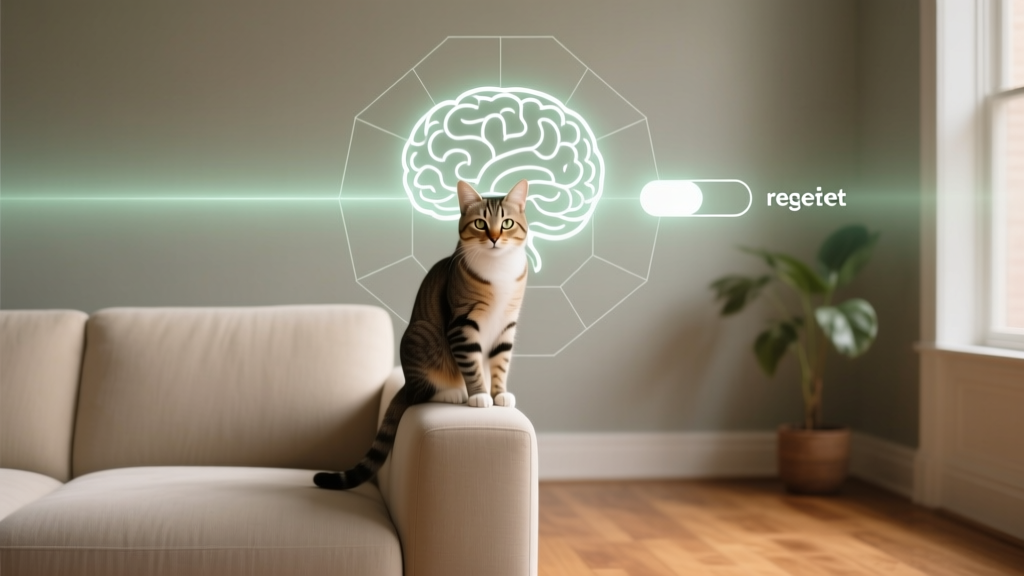
Cats don’t experience anxiety like humans do—but they feel it just as intensely. Their nervous systems evolved for survival in high-stakes environments: sudden noises, unfamiliar scents, territorial threats, or even inconsistent routines can activate the amygdala-driven fight-flight-freeze-fawn response. When unaddressed, this becomes a self-reinforcing loop: anxiety → maladaptive behavior (e.g., urine marking, destructive scratching) → owner frustration → punitive response → increased anxiety. The key isn’t suppressing the symptom—it’s decoding the signal.
Dr. Sarah Wooten, DVM and certified veterinary behaviorist with the American College of Veterinary Behaviorists, explains: “A cat who scratches the couch when left alone isn’t ‘being bad’—they’re attempting self-soothing through tactile stimulation and scent-marking. Discouraging that behavior without offering an equally reinforcing, species-appropriate alternative is like telling a human to stop biting their nails without giving them stress balls or breathing techniques.”
Common anxiety-driven behaviors—and their likely underlying triggers—include:
- Excessive vocalization (especially at night): Often linked to separation anxiety, cognitive decline in seniors, or unmet social needs.
- Over-grooming or hair loss: A displacement behavior indicating chronic stress; may progress to psychogenic alopecia.
- Urine spraying outside the litter box: Not a house-training failure—typically a territorial or insecurity response, especially after moving, new pets, or household changes.
- Aggression toward people or other pets: Frequently mislabeled as ‘dominance’ but almost always fear-based or pain-adjacent (e.g., undiagnosed arthritis making handling painful).
- Hiding, freezing, or flattened ears during routine interactions: Early-stage stress signals many owners overlook until escalation occurs.
Before intervening, rule out medical causes. Up to 40% of cats presenting with ‘behavioral’ issues have concurrent, undiagnosed conditions—hyperthyroidism, dental disease, urinary tract inflammation, or osteoarthritis. A full geriatric panel (including bloodwork, urinalysis, and orthopedic exam) is non-negotiable for cats over age 7 showing sudden behavior shifts.
The 4 Pillars of Anxiety-Sensitive Behavior Support
Effective intervention rests on four interdependent pillars—each supported by peer-reviewed research and clinical practice. Skipping any one undermines the entire approach.
Pillar 1: Environmental Enrichment—Designing a Low-Stress Territory
Cats are obligate territory-holders. Their sense of safety depends on predictable access to resources (food, water, litter, resting spots, escape routes) and control over their environment. A landmark 2022 University of Lincoln study tracked 127 indoor cats across 18 months and found that cats with ≥5 vertical resting spaces, ≥3 separate litter boxes in quiet locations, and daily interactive play sessions showed 71% fewer anxiety-related behaviors than controls.
Actionable steps:
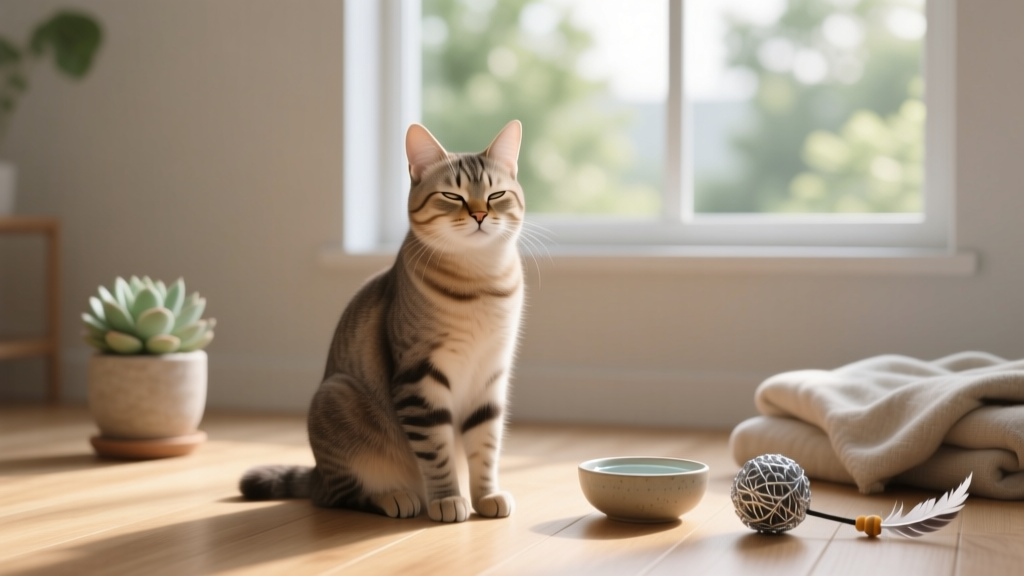
- Implement the “5-3-1 Rule”: Minimum 5 resting places (elevated + hidden), 3 litter boxes (1 per cat + 1 extra), and 1 daily 15-minute interactive play session using wand toys that mimic prey movement.
- Install scent-safe zones: Use Feliway Optimum diffusers (clinically proven to reduce stress-related marking by 57% in multi-cat homes) in high-traffic or conflict-prone areas—but avoid placing near food/water, as cats avoid eating where pheromones concentrate.
- Create ‘escape architecture’: Add covered cat beds under furniture, tunnel-style hideaways, and window perches with bird feeders outside (for visual enrichment without predation stress).
Pillar 2: Predictable Routine & Positive Reinforcement Training
Cats thrive on predictability. Random feeding times, spontaneous vacuuming, or inconsistent handling teach them the world is unsafe. But training? Yes—even cats respond powerfully to reward-based learning. Dr. Mikel Delgado, feline behavior researcher and founder of Feline Minds, emphasizes: “Clicker training isn’t about tricks—it’s about building confidence. Teaching a cat to target a stick or enter a carrier on cue gives them agency, which directly counters helplessness—the core emotion in anxiety.”
Start with ‘default behaviors’: rewarding calm sitting, voluntary proximity, or relaxed blinking. Never use food lures to force interaction—instead, toss treats *away* from you to build positive associations with your presence. For cats who freeze or flee, begin conditioning at a distance where they remain loosely attentive (‘threshold distance’) and gradually decrease space only when they offer voluntary engagement.
Pillar 3: Desensitization & Counterconditioning (DS/CC) Done Right
This gold-standard technique rewires fear responses—but it’s widely misapplied. DS/CC requires precise timing, controlled exposure, and pairing triggers with high-value rewards *before* anxiety spikes. Example: For a cat terrified of the vacuum, don’t turn it on first. Instead, place it unplugged in the room for 5 minutes while offering chicken broth from a syringe. Next session, move it 1 foot closer. Only introduce sound once the cat consistently approaches it voluntarily. Rushing this—or exposing during panic—creates negative associations that worsen trauma.
A real-world case: Luna, a 3-year-old rescue with thunderstorm anxiety, began hiding for 48+ hours post-storm. Her owner implemented DS/CC using recorded storm sounds at 10% volume played during mealtime. Over 12 weeks, volume increased incrementally only when Luna ate calmly. By week 10, she napped beside the speaker during playback. No medication required.
Pillar 4: Medical & Nutritional Support—When Behavioral Work Isn’t Enough
For moderate-to-severe anxiety, behavioral modification alone may be insufficient. FDA-approved medications like fluoxetine (Reconcile®) and clomipramine (Clomicalm®) have robust efficacy data in cats, with 62–79% of cases showing significant improvement when combined with environmental management. Natural options like L-theanine (found in Suntheanine®) and alpha-casozepine (a milk protein derivative in Zylkène®) show mild-moderate benefit in clinical trials—but never replace veterinary guidance. Crucially, avoid over-the-counter CBD products: a 2024 UC Davis study found 73% of retail CBD oils for pets contained inaccurate labeling, THC contamination, or zero detectable cannabinoids.
Step-by-Step Intervention Timeline: What to Do When, and Why
Consistency matters—but so does sequencing. Jumping to medication before optimizing environment wastes resources and delays resolution. Use this evidence-informed timeline:
| Week | Action | Tools/Supplies Needed | Expected Outcome |
|---|---|---|---|
| Week 1 | Complete full veterinary workup; implement 5-3-1 resource mapping; install Feliway Optimum in 2 key zones | Vet visit, measuring tape, litter boxes, vertical platforms, Feliway diffusers | Baseline reduction in acute stress signs (e.g., less panting, reduced hiding duration) |
| Week 2–3 | Begin daily 15-min play sessions; start clicker training for ‘touch’ command; initiate DS/CC for 1 primary trigger at threshold intensity | Wand toy, clicker, high-value treats (e.g., freeze-dried salmon), audio recordings | Cat initiates brief eye contact or approaches during play; tolerates trigger at low intensity without freezing |
| Week 4–6 | Add puzzle feeders; rotate enrichment items weekly; extend DS/CC exposure; consult board-certified veterinary behaviorist if no improvement | Food puzzles, cardboard boxes, tunnels, behaviorist referral | Decreased frequency of target behavior by ≥40%; increased resting time in open areas |
| Week 7+ | Introduce nutritional support (e.g., Zylkène) or prescribe medication if indicated; refine training goals (e.g., carrier loading, vet visit prep) | Veterinary prescription, supplements, carrier, treats | Sustained calm during previously triggering events; improved owner confidence in managing episodes |
Frequently Asked Questions
Can I use spray bottles or loud noises to stop my anxious cat’s behavior?
No—absolutely not. Spray bottles, hissing, clapping, or shouting trigger acute fear, damage your bond, and teach your cat that *you* are part of the threat. Research shows punishment increases avoidance and redirects aggression toward vulnerable targets (like children or other pets). Instead, interrupt unwanted behavior with a gentle environmental distraction (e.g., toss a toy away from the area) and immediately reinforce an incompatible calm behavior (e.g., sitting on a mat) with high-value treats.
My cat only acts anxious when I leave—is this separation anxiety? How is it treated?
Yes—separation-related distress affects ~13% of indoor cats, per a 2021 Cornell Feline Health Center survey. Signs include vocalizing within 15 minutes of departure, destructive scratching at doors/windows, excessive grooming, or inappropriate elimination. Treatment combines departure desensitization (practice leaving for 5 seconds, returning calmly before cat panics), departure cues extinction (pick up keys/bag randomly without leaving), and safe confinement alternatives (never crate punishment—use a cozy, enriched ‘safe room’ with food, water, litter, and toys).
Will getting another cat help my anxious cat feel less stressed?
Rarely—and often makes things worse. Introducing a second cat without careful, slow, scent-based integration (6–8 weeks minimum) is one of the top causes of chronic inter-cat aggression and anxiety. Cats are facultatively social, not pack animals. If companionship is desired, adopt a kitten under 6 months old *only* if your resident cat has a documented history of friendly, playful interactions with kittens—and supervise all contact for 3+ months.
How long does it take to see improvement using these methods?
Most owners report subtle shifts (e.g., longer rest periods, softer body language) within 2–3 weeks. Meaningful reduction in target behaviors typically takes 6–12 weeks of consistent implementation. Severe cases involving trauma or medical comorbidities may require 4–6 months. Patience isn’t passive—it’s active, observant, and data-driven. Track behaviors in a simple log: date, time, duration, intensity (1–5 scale), and antecedent (what happened right before). Patterns emerge fast.
Are there specific breeds more prone to anxiety-related behaviors?
While individual temperament varies more than breed averages, Siamese, Oriental Shorthairs, and Birmans show higher rates of vocalization and social dependency in shelter studies—traits that can manifest as anxiety when needs aren’t met. However, mixed-breed cats constitute >95% of the pet population and represent the vast majority of anxiety cases seen clinically. Focus on your cat’s unique history and signals—not breed stereotypes.
Debunking Common Myths
Myth #1: “Cats don’t get anxiety—they’re just stubborn.”
False. Neuroimaging confirms cats possess homologous limbic structures (amygdala, hippocampus) that process fear and threat. Chronic stress alters gene expression related to neurotransmitter regulation—proven in feline models since 2017. Dismissing anxiety as ‘personality’ delays life-improving care.
Myth #2: “Ignoring anxious behavior will make it go away.”
Dangerous. Unaddressed anxiety often escalates into physical illness: stress-induced cystitis (FIC), gastrointestinal dysbiosis, or immune suppression. A 2020 Journal of Feline Medicine and Surgery study linked untreated anxiety to a 3.8× higher risk of recurrent urinary blockages in male cats.
Related Topics (Internal Link Suggestions)
- Recognizing subtle signs of cat stress — suggested anchor text: "early cat stress signals you're missing"
- Best calming supplements for cats backed by research — suggested anchor text: "vet-approved cat anxiety supplements"
- How to introduce a new pet to an anxious cat — suggested anchor text: "stress-free multi-cat introduction guide"
- DIY cat enrichment ideas on a budget — suggested anchor text: "low-cost cat enrichment that actually works"
- When to see a veterinary behaviorist vs. trainer — suggested anchor text: "cat behavior specialist vs. trainer differences"
Your Next Step: Start Small, Start Today
You don’t need to overhaul your home overnight. Pick *one* action from Week 1 of the timeline—whether it’s scheduling that vet visit, counting your current litter boxes, or placing a single cardboard box in a quiet corner—and do it within the next 24 hours. Anxiety didn’t develop in a day, and healing won’t either—but every compassionate choice rebuilds safety, neuron by neuron. Download our free Anxiety Behavior Tracker (with printable logs and video guides) to document progress and spot patterns. Because your cat isn’t broken. They’re communicating—in the only language they know. And now, you understand it.