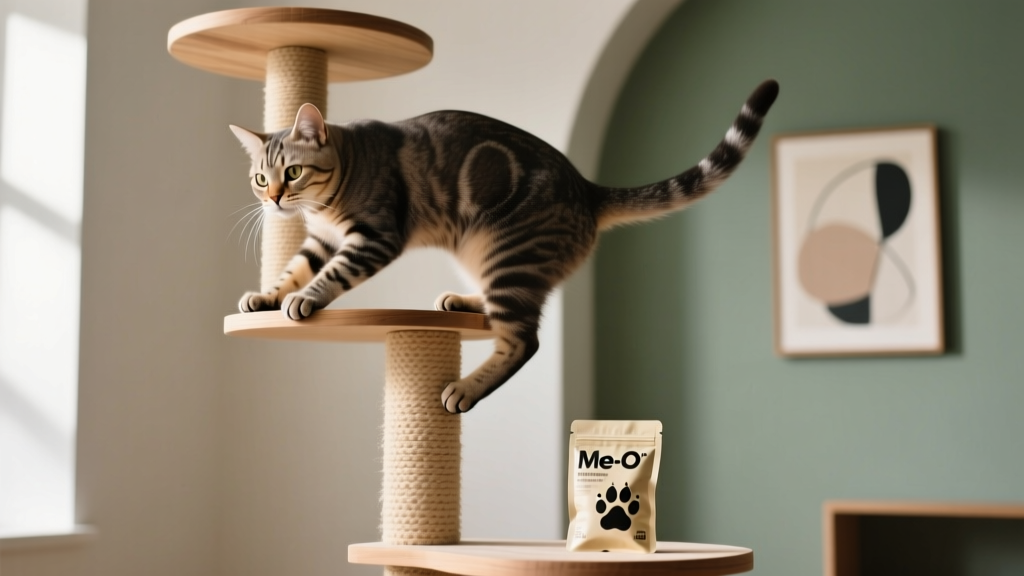
How to Correct Behavior in Cats Without Punishment
Why 'How to Correct Behavior in Cats' Is One of the Most Misunderstood Questions in Pet Care
If you've ever searched how to correct behavior in cats, you're not alone—but you may have also encountered outdated, fear-based advice that does more harm than good. Unlike dogs, cats don’t respond to dominance hierarchies, punishment, or correction-based training. Their behaviors—from midnight zoomies to aggressive swatting or inappropriate elimination—are rarely 'bad habits' and almost always communication signals about stress, unmet needs, or underlying health issues. In fact, a 2023 study published in Journal of Feline Medicine and Surgery found that 82% of cats referred for 'aggression' or 'litter box avoidance' had at least one undiagnosed medical condition—and 67% showed immediate behavioral improvement after simple environmental enrichment was introduced. So before reaching for the spray bottle or scolding voice, pause: your cat isn’t misbehaving—they’re trying to tell you something urgent.
Step 1: Rule Out Medical Causes First—Every Time
It’s the golden rule every certified feline behaviorist repeats: no behavior modification should begin until medical causes are ruled out. Cats are masters of masking pain and illness. What looks like 'territorial spraying' could be cystitis; 'biting when petted' may signal hyperesthesia syndrome or dental disease; 'sudden litter box avoidance' is statistically more likely linked to urinary tract discomfort than 'spite' or 'revenge.' According to Dr. Sarah H. Heath, a European Board-Certified Veterinary Behaviourist, 'Assuming a behavioral diagnosis without a full physical exam—including urinalysis, bloodwork, and orthopedic assessment—is clinically irresponsible and often leads to escalation.'
Start with a vet visit that includes:
- A thorough physical exam (pay special attention to joints, teeth, ears, and skin)
- Urinalysis and urine culture (especially for inappropriate elimination)
- Thyroid panel (hyperthyroidism commonly presents as agitation or aggression in senior cats)
- Pain assessment using the Glasgow Composite Measure Pain Scale—feline version
Only once medical red flags are cleared should you move to environmental and behavioral interventions. Skipping this step doesn’t just delay resolution—it risks worsening anxiety and eroding your bond.
Step 2: Decode the 'Why' Behind the Behavior (Not Just the 'What')
Cats don’t act randomly. Every behavior serves a function: seeking safety, securing resources, reducing uncertainty, or expressing overstimulation. Instead of asking 'How do I stop my cat from scratching the couch?', ask 'What need is this meeting—and what alternative can fulfill it better?'
Here’s how to map common behaviors to their root drivers:
- Scratching furniture → Marking territory + stretching muscles + shedding claw sheaths. Not destruction—it’s biological maintenance.
- Biting during petting → Overstimulation threshold exceeded (often signaled by tail flicking, flattened ears, or skin twitching). Not rejection—it’s a neurological limit.
- Waking you at 4 a.m. → Natural crepuscular rhythm + hunger or boredom. Not manipulation—it’s instinctual timing.
- Spraying walls or belongings → Perceived threat (new pet, construction noise, unfamiliar scent) + lack of safe vertical space. Not 'marking dominance'—it’s an anxiety response.
A real-world example: Luna, a 3-year-old rescue tabby, began urinating on her owner’s laundry after a new puppy arrived. Her vet found no UTI—but a certified cat behavior consultant observed Luna avoiding high perches near the puppy’s crate and hiding behind the dryer. Within 48 hours of installing a ‘safe zone’ with elevated shelves, Feliway diffusers, and scheduled puppy-free quiet time, the behavior ceased. The issue wasn’t 'poor training'—it was compromised security.
Step 3: Apply Positive Reinforcement & Environmental Enrichment—Not Correction
Traditional 'correction'—shouting, clapping, water sprays, or physical restraint—triggers fear, increases cortisol, and damages your cat’s sense of safety. Research from the University of Lincoln’s Feline Wellbeing Group shows cats subjected to aversive techniques are 3.2x more likely to develop chronic stress-related conditions (e.g., idiopathic cystitis, overgrooming) and show reduced willingness to interact with humans long-term.
Instead, use these proven, low-stress strategies:
- Redirect & Reward: When your cat scratches the sofa, calmly guide them to a nearby scratching post *before* they sink claws in—and reward with a treat or play session immediately after use.
- Clicker Training Basics: Yes—cats learn with clickers! Start with targeting (touching a stick with their nose), then shape behaviors like 'go to mat' or 'enter carrier.' Each successful repetition builds confidence and trust.
- Enrichment Scheduling: Divide daily food into 5–7 small meals using puzzle feeders, snuffle mats, or timed dispensers. This mimics natural hunting patterns and reduces boredom-driven behaviors.
- Vertical Territory Expansion: Add shelves, wall-mounted perches, or cat trees near windows. A 2022 Cornell Feline Health Center survey found homes with ≥3 vertical zones saw 68% fewer inter-cat conflicts and 52% less destructive scratching.
Remember: reinforcement must be immediate, consistent, and high-value. Low-motivation treats won’t cut it. Try freeze-dried chicken, tuna flakes, or catnip-infused paste—and always pair with calm praise, never excited tones (which can overstimulate).
Step 4: Manage Triggers With Proactive Planning
Behavior change isn’t about waiting for problems to arise—it’s about designing your home and routine to prevent them. Think like an architect of feline well-being:
- For litter box issues: Follow the 'N+1 Rule'—provide one box per cat, plus one extra. Place boxes in quiet, low-traffic areas (never next to washing machines or litter boxes). Scoop twice daily; completely replace litter weekly. Use unscented, clumping clay or soft paper-based litter—90% of cats reject crystal or scented varieties (per International Cat Care survey).
- For nighttime activity: Shift play sessions to 30 minutes before bedtime using wand toys that mimic prey movement. Follow with a meal—this triggers post-prandial drowsiness. Keep bedroom doors closed if needed, but provide an enriched alternative space (bed, window perch, food puzzle).
- For inter-cat tension: Separate resources (food bowls, water stations, beds, boxes) by ≥6 feet. Introduce new cats via scent-swapping (rubbing towels on cheeks, then placing near sleeping areas) for 7–10 days before visual contact.
Pro tip: Record a 3-day behavior log. Note time, location, duration, antecedent (what happened right before), and consequence (what you did). Patterns emerge fast—and often reveal surprising triggers (e.g., vacuuming at 3 p.m. correlates with 4 p.m. aggression).
| Step | Action | Tools/Supplies Needed | Expected Outcome Timeline |
|---|---|---|---|
| 1. Medical Screening | Schedule comprehensive vet exam including urinalysis, bloodwork, and pain evaluation | Vet appointment, basic lab panel ($120–$280) | Immediate—rule out or treat underlying cause within 1–2 weeks |
| 2. Environmental Audit | Map all resources (boxes, beds, perches, food/water) and identify conflict zones or scarcity points | Notebook, measuring tape, phone camera | 1–2 days to complete; adjustments begin same day |
| 3. Enrichment Rollout | Introduce 1 new enrichment element every 48 hours (e.g., puzzle feeder → window perch → interactive toy) | Puzzle feeder ($12–$35), wall shelf kit ($25–$60), feather wand ($8–$22) | Noticeable reduction in redirected behaviors in 5–10 days |
| 4. Positive Reinforcement Loop | Identify 2 target behaviors to reinforce daily (e.g., using scratching post, entering carrier); reward within 2 seconds | High-value treats, clicker or verbal marker ('yes!'), timer app | Consistent performance within 2–3 weeks; generalization to new contexts by Week 5 |
| 5. Professional Support | Consult a certified cat behaviorist (IAABC or ACVB) if no improvement after 3 weeks—or if aggression poses safety risk | Referral, video consultation ($120–$250), behavior assessment form | Personalized plan delivered in ≤5 business days |
Frequently Asked Questions
Can I train my cat to stop biting during petting?
Yes—but not by withdrawing or punishing. Biting during petting is almost always a clear 'overstimulation signal.' Watch for early cues: tail thumping, ear rotation backward, skin rippling, or sudden stillness. Stop petting before the bite occurs—even mid-stroke—and reward calm disengagement with a treat. Gradually increase tolerance by adding just 1–2 seconds per session, always ending on a positive note. Consistency here builds predictability and safety.
Is spraying the same as urinating outside the litter box?
No—they’re neurologically and motivationally distinct. Urinating involves squatting, leaving a puddle, and usually occurs on horizontal surfaces (carpet, bed). Spraying is a standing, tail-quivering, backward-spray posture targeting vertical surfaces (walls, doors, furniture) to deposit pheromones. While both can stem from stress, spraying is almost exclusively tied to perceived threats or social instability. A vet visit is essential to differentiate—and rule out painful conditions like FLUTD that may cause both.
Will getting another cat fix my lonely cat’s destructive behavior?
Rarely—and often makes things worse. Cats are facultatively social, not pack animals. Introducing a second cat without proper, slow, scent-based introduction (6–8 weeks minimum) frequently triggers territorial aggression, resource guarding, or chronic stress. Instead, enrich your current cat’s environment with vertical space, novel scents (catnip, silvervine), and solo play. If companionship is truly desired, adopt a kitten under 6 months from the same litter as your resident cat—or consult a behaviorist first.
Do ultrasonic deterrents or citrus sprays work for stopping scratching?
Evidence strongly says no—and they carry real risks. Citrus oils can cause dermatitis or liver toxicity if licked; ultrasonic devices emit frequencies that may induce anxiety or hearing damage in sensitive cats. A 2021 study in Applied Animal Behaviour Science found 94% of cats exposed to commercial deterrent sprays showed increased vigilance and decreased resting time. Far more effective: make the target surface unappealing (double-sided tape, aluminum foil) while making alternatives irresistible (rope-wrapped posts near the couch, catnip rub, daily play sessions beside it).
How long does it take to see improvement using positive methods?
Most owners notice subtle shifts—like longer calm petting sessions or reduced frequency of incidents—within 5–7 days. Significant, consistent improvement typically emerges in 2–4 weeks with daily practice. Complex cases (multi-cat households, trauma histories, or medical comorbidities) may require 8–12 weeks. Patience isn’t passive—it’s active, observant, and rooted in understanding feline neurology.
Common Myths About Correcting Cat Behavior
Myth #1: “Cats can’t be trained—they’re too independent.”
False. Cats are highly trainable—but on their own terms. They learn fastest through positive reinforcement tied to survival needs (food, safety, play). Clicker-trained cats routinely perform complex sequences like turning on lights or retrieving objects. Their 'independence' reflects selective engagement—not inability.
Myth #2: “If I ignore bad behavior, it will go away on its own.”
Also false—and potentially dangerous. Ignoring behaviors like inappropriate elimination or aggression doesn’t extinguish them; it often allows underlying stress or medical issues to worsen. What appears 'ignored' is usually being reinforced unintentionally (e.g., giving attention after biting, cleaning accidents with ammonia-based cleaners that smell like urine).
Related Topics (Internal Link Suggestions)
- Understanding Cat Body Language — suggested anchor text: "what your cat's tail flick really means"
- Best Litter Boxes for Multi-Cat Households — suggested anchor text: "low-tracking, high-capacity litter boxes"
- How to Introduce a New Cat Safely — suggested anchor text: "step-by-step cat introduction guide"
- Calming Supplements for Anxious Cats — suggested anchor text: "vet-approved calming aids for cats"
- DIY Cat Enrichment Ideas on a Budget — suggested anchor text: "10-dollar enrichment projects that work"
Your Next Step Starts With Observation—Not Intervention
You now know that how to correct behavior in cats isn’t about control—it’s about compassion, clarity, and co-regulation. The most powerful tool you have isn’t a spray bottle or a treat pouch—it’s your ability to pause, observe, and ask, 'What is my cat trying to tell me?' Start today: grab a notebook and track one behavior for 48 hours—not to judge, but to understand. Notice patterns. Identify one small environmental tweak you can make tomorrow (a new perch, moving a food bowl, swapping litter). Then celebrate the tiny wins: the first time your cat chooses the scratching post, the first calm 5-minute petting session, the first night without 4 a.m. yowling. These aren’t milestones toward 'obedience'—they’re moments of deepening mutual trust. And that, more than any quick fix, is the foundation of a joyful, lifelong bond.