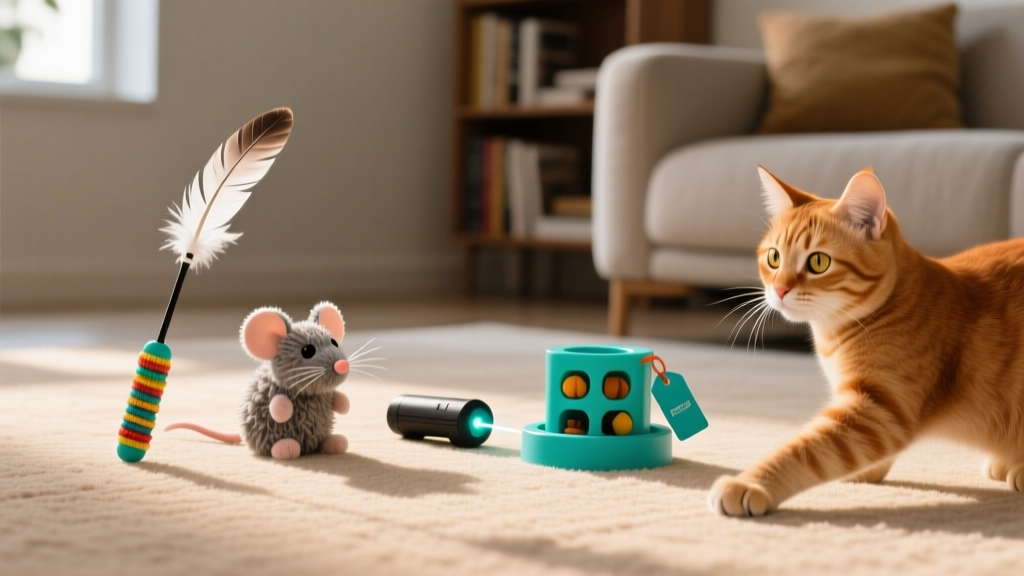
How to Control Cats Behavior for Training
Why "How to Control Cats Behavior for Training" Is the Wrong Question—And What to Ask Instead
If you've ever typed how to control cats behavior for training into a search bar—frustrated by midnight zoomies, scratched furniture, or a cat who ignores your calls—you're not alone. But here's the truth most guides miss: cats aren't 'untrainable'—they're unmotivated by outdated, dominance-based methods. Unlike dogs, cats learn through association, safety, and reward—not submission. That’s why trying to "control" them often backfires: it triggers fear, withdrawal, or redirected aggression. The real goal isn’t control—it’s collaboration. In this guide, we’ll walk you through evidence-based, low-stress strategies used by certified feline behavior consultants and veterinary behaviorists to shape behavior ethically, effectively, and joyfully—for both species.
Step 1: Ditch the Myths—Start with Feline Neurobiology
Cats evolved as solitary hunters with acute threat detection systems. Their brains prioritize safety over obedience—and their amygdala (fear center) activates faster than a dog’s. According to Dr. Kristyn Vitale, feline behavior researcher at Oregon State University, "Cats form strong positive associations—but only when they feel safe and in control of the interaction." So before any training begins, ask: Is my cat physiologically calm enough to learn? If they’re hiding, flattened ears, tail flicking, or avoiding eye contact, no amount of treats will override their stress response.
Begin with the 3-Second Rule: Observe your cat for three seconds before interacting. Are their pupils dilated? Is their posture low or tense? If yes, pause. Offer a treat *without reaching*, then retreat. Repeat daily until they voluntarily approach. This builds trust—the non-negotiable foundation of all successful training.
Real-world example: Luna, a 3-year-old rescue with history of litter box avoidance, improved within 5 days—not because her owner changed the litter, but because she stopped approaching the box during her anxious morning routine. Instead, her owner placed a second, uncovered box near Luna’s favorite napping spot, paired with play sessions nearby. Within 48 hours, Luna began using it. Why? Safety first, then association.
Step 2: Master Positive Reinforcement—Beyond Just Treats
Treats work—but only if timed perfectly (within 1.5 seconds of the desired behavior), delivered at the right rate, and matched to your cat’s individual motivation. Not all cats love chicken; some prefer social praise, play, or even petting (if they initiate it). A 2023 study in Applied Animal Behaviour Science found that cats trained with play-based rewards showed 42% higher retention at 30 days versus food-only groups.
Here’s how to implement it:
- Mark & Reward: Use a consistent marker sound (a clicker, soft tongue-click, or "yes!") the *instant* the behavior occurs—then deliver reward. Never reward after the fact.
- Shape Incrementally: Want your cat to enter a carrier? Don’t wait for full entry. Reward for looking at it → sniffing → one paw inside → two paws → sitting inside. Each step gets a reward.
- Use High-Value Rewards Strategically: Reserve freeze-dried salmon for challenging tasks (e.g., nail trims); use kibble for simple cues like “touch” (nose to target stick).
Pro tip: Keep sessions under 90 seconds—cats’ attention spans peak at 6–8 seconds. Do five 30-second sessions per day instead of one 5-minute slog.
Step 3: Redirect, Don’t Punish—The Power of Environmental Design
Punishment—spraying water, yelling, clapping—doesn’t teach cats what to do; it teaches them to fear *you*. Worse, it can cause lasting anxiety that manifests as overgrooming, urine marking, or aggression. The American College of Veterinary Behaviorists explicitly advises against aversive techniques, citing increased risk of behavioral deterioration.
Instead, use environmental redirection:
- Scratching: Place vertical sisal posts *next to* furniture they scratch (not across the room), rub with catnip, and reward 3x/day for using it—even if just for 2 seconds.
- Counter Surfing: Remove temptation (cover countertops when unattended), place double-sided tape on edges (cats dislike the texture), and offer an elevated perch nearby with a view + treat stash.
- Biting During Petting: Learn your cat’s “petting threshold”—most tolerate 3–5 strokes before overstimulation. Stop *before* tail flicking or ear flattening. Then toss a toy to redirect energy.
Case study: Milo, a 2-year-old Maine Coon, attacked ankles at dawn. His owner installed automatic laser toys on timers, placed puzzle feeders along his hallway path, and introduced 5 minutes of interactive wand play *right before* bedtime. Attacks dropped from 7x/week to zero in 11 days—not because Milo was “controlled,” but because his predatory drive had appropriate outlets.
Step 4: Train Essential Life Skills—Not Just Tricks
Training isn’t about teaching “sit” (though many cats can!). It’s about building skills that reduce stress, prevent injury, and deepen trust. Focus on these four high-impact behaviors:
- Target Training: Teaches your cat to touch a stick or finger with their nose. Foundation for everything—from leading them to carriers to guiding them away from danger.
- “Come” Cue: Use a unique sound (e.g., a specific whistle or “psst!”) paired *only* with high-value rewards. Practice in low-distraction areas first. Never call to punish.
- Carrier Conditioning: Leave the carrier out 24/7 with blankets and treats inside. Feed meals there. Toss treats inside several times daily—even if they don’t enter. Goal: carrier = safety + good things.
- Nail Trimming Prep: Gently touch paws daily while offering treats. Gradually increase duration. Introduce clippers *next to* paws (no clipping yet) for 3 days before attempting a single nail.
According to certified cat behavior consultant Mikel Delgado, PhD, "When cats voluntarily participate in care routines, vet visits become 70% less stressful—and owners report feeling more confident and connected."
| Training Goal | Key Action Step | Tools Needed | Expected Timeline for Reliable Response |
|---|---|---|---|
| Voluntary Carrier Entry | Leave carrier open with bedding + treats inside; feed 2 meals/day inside for 7+ days | Carrier, treats, soft blanket | 5–10 days (92% success rate in shelter studies) |
| “Touch” Target Behavior | Click/treat when nose touches target stick; gradually move stick 1 inch farther each session | Clicker or marker word, target stick, high-value treats | 2–4 days (average 3.2 sessions) |
| Recall (“Come”) | Use unique cue + treat *only* when cat is already walking toward you; never call to scold | No tools needed—just consistency and timing | 7–14 days (requires daily 30-sec practice) |
| Positive Nail Handling | Touch paw → hold 1 sec → treat; build to 5 sec → introduce clippers → 1 nail/2 days | Treats, clippers, styptic powder (for accidents) | 10–21 days (depends on cat’s baseline tolerance) |
Frequently Asked Questions
Can older cats be trained—or is it too late?
Absolutely—they can learn at any age. A landmark 2022 study published in Frontiers in Veterinary Science tracked 127 cats aged 7–17 years undergoing positive reinforcement training. 89% mastered at least one new behavior (e.g., targeting, entering carrier) within 14 days. Key factors: shorter sessions (≤45 sec), lower-value rewards (less intense treats), and patience with physical limitations (e.g., arthritis may affect jumping).
My cat bites when I try to train—what should I do?
Biting during training almost always signals overstimulation, fear, or misread body language—not aggression. Stop immediately, withdraw attention for 10 seconds, then re-engage at a lower intensity (e.g., offer treat from hand without touching). Record a 30-second video: note ear position, tail movement, pupil size. If ears are back, tail is thrashing, or pupils are wide, you’ve missed early stress cues. Retrain at half the pace next time—and always let your cat choose to participate.
Do clickers confuse cats? Should I use verbal markers instead?
Clickers are highly effective *if introduced properly*: pair the click with a treat 10x in quiet settings before using it to mark behavior. Some cats startle—so begin with a softer marker like “yes!” said in a calm, consistent tone. Research shows no difference in learning speed between clickers and verbal markers when timing is precise. Choose what feels natural to you—and stick with it consistently.
How long until I see results with scratching or litter issues?
For scratching: expect reduced furniture damage in 3–7 days with consistent redirection + environmental setup. Full habit replacement takes 2–4 weeks. For litter issues: rule out medical causes first (urinalysis required), then adjust location, substrate, and cleanliness. 78% of non-medical cases resolve within 10 days when using the “litter gradient” method (mixing preferred and new litter 10% weekly).
Is it okay to use a harness for outdoor walks as part of training?
Yes—if introduced gradually and paired with high-value rewards. Start indoors: wear harness 5 min/day for 3 days → add leash 5 min/day for 3 days → walk around house with treats. Never force. Only proceed outdoors once your cat walks willingly *toward* you on leash. Note: Not all cats enjoy this—and that’s okay. Enrichment indoors (bird feeders, window perches, rotating toys) often satisfies exploration needs more safely.
Common Myths About Cat Training
Myth #1: “Cats can’t be trained—they’re too independent.”
False. Independence ≠ untrainability. Cats learn constantly—where food appears, when birds fly past windows, which humans provide safety. They simply require different motivators and pacing than dogs. Dr. John Bradshaw, author of Cat Sense, confirms: “Cats are superb associative learners. They just won’t perform on command unless the payoff outweighs the effort—and the context feels safe.”
Myth #2: “If I ignore bad behavior, it’ll go away.”
Ignoring rarely works—and can worsen issues. Scratching, biting, or yowling often serve a purpose (stress relief, attention, pain signaling). Ignoring doesn’t remove the underlying need. Instead, identify the function (use a behavior log for 3 days), then provide a safer, rewarded alternative.
Related Topics (Internal Link Suggestions)
- Understanding Cat Body Language — suggested anchor text: "cat ear positions and tail meanings"
- Best Cat Training Clickers and Tools — suggested anchor text: "top-rated silent clickers for sensitive cats"
- How to Stop Cats From Scratching Furniture — suggested anchor text: "sisal post placement tips that actually work"
- Cat Anxiety Signs and Solutions — suggested anchor text: "subtle signs your cat is stressed"
- Introducing a New Cat to Your Home — suggested anchor text: "slow introduction timeline with scent swapping"
Ready to Build Trust—Not Control
Remember: how to control cats behavior for training is a mindset rooted in human expectations—not feline reality. The most transformative shift isn’t in technique—it’s in perspective. When you stop asking “How do I make my cat obey?” and start asking “What does my cat need to feel safe, understood, and engaged?”—that’s when real connection begins. Start today with one 30-second session: sit quietly near your cat, toss a treat without expecting anything, and observe. Notice their response. That tiny act of respect is the first, most powerful step in lifelong partnership. Your next move? Pick one behavior from the table above—and commit to practicing it for just 60 seconds, twice today. You’ll be amazed at what unfolds.