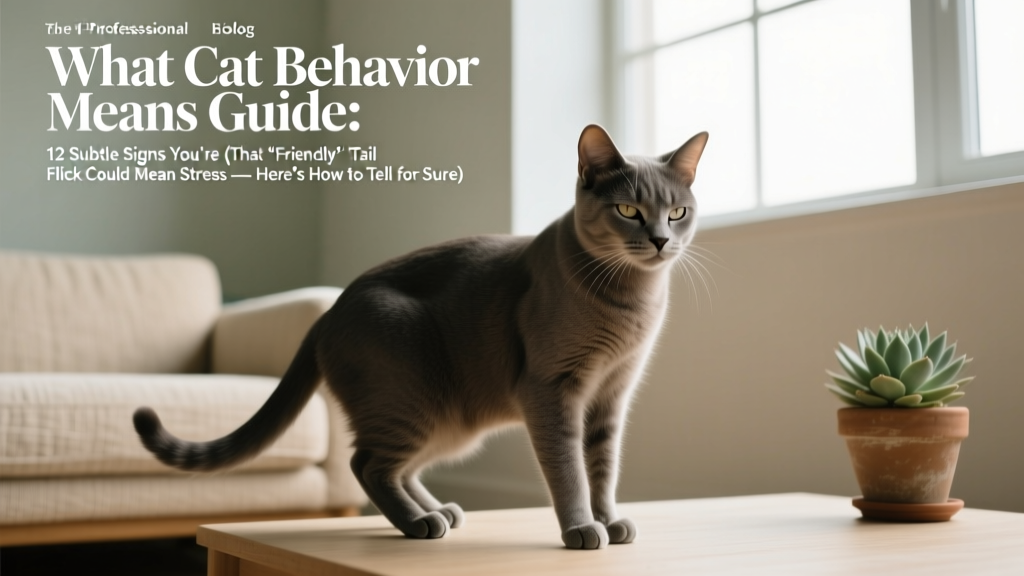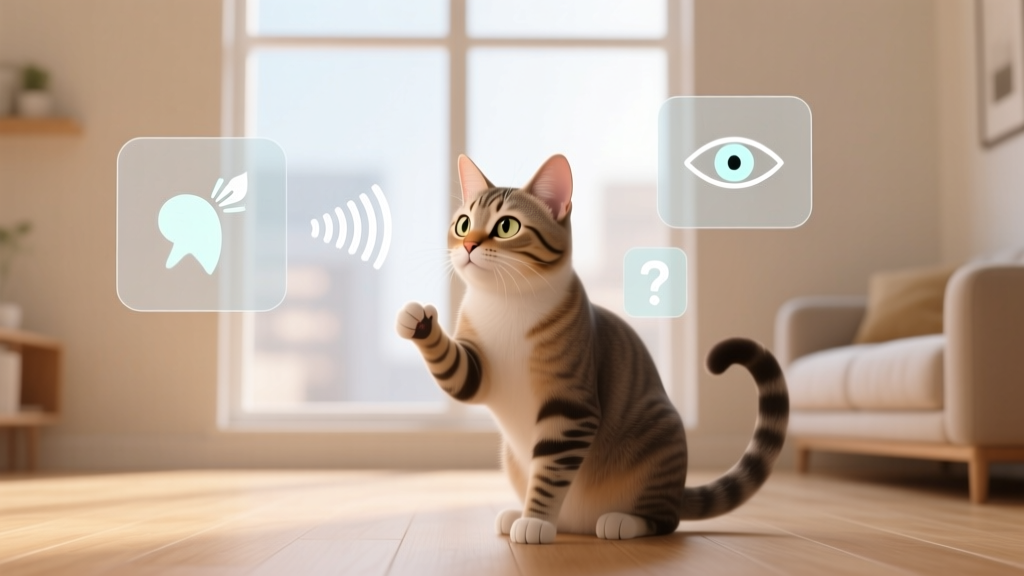
What Is Considered Odd Behavior in Cats? 12 Subtle Signs...
Why This Question Matters More Than Ever
If you’ve ever stared at your cat mid-stare-back, tilted your head wondering what is considered odd behavior in cats, you’re not overthinking — you’re being a responsible guardian. In today’s world of remote work, indoor-only lifestyles, and rising stress levels (yours *and* theirs), cats are expressing themselves in increasingly nuanced, sometimes puzzling ways. What looks like 'just being a cat' could be silent distress — or it could be perfectly normal feline individuality. The danger isn’t in noticing something strange; it’s in misinterpreting it. A 2023 study in the Journal of Feline Medicine and Surgery found that 68% of owners delayed veterinary consultation for behavioral changes by an average of 11 days — often mistaking early anxiety signals for stubbornness or boredom. That delay can turn manageable stress into chronic urinary issues, aggression, or self-harm. So let’s cut through the noise: no jargon, no fear-mongering — just clear, evidence-backed insight into what’s truly unusual, why it happens, and exactly what to do next.
Decoding the Spectrum: Normal Quirks vs. Genuine Red Flags
Cats aren’t small dogs — they’re solitary hunters wired for vigilance, subtlety, and energy conservation. Their communication is 90% body language and scent-based, not vocal. So before labeling behavior as 'odd,' ask: Is this new? Persistent? Context-dependent? Disruptive to their daily rhythm? Dr. Lena Torres, a board-certified veterinary behaviorist with over 15 years’ experience, emphasizes: 'Odd isn’t about deviation from human expectations — it’s about deviation from that individual cat’s baseline. A cat who suddenly stops using the litter box after 7 years of perfect habits is alarming. A kitten who pounces on shoelaces? That’s neurotypical development.'
Here’s how to calibrate your radar:
- Baseline tracking matters more than internet lists. Keep a simple 7-day log: note timing, duration, triggers (e.g., vacuum turned on, new person entered), and your cat’s physical state (pupil size, ear position, tail flicks). You’ll spot patterns no algorithm can replicate.
- Vocalization shifts are high-signal. Increased yowling at night, especially in older cats, correlates strongly with cognitive decline or hypertension (per Cornell Feline Health Center). But a young cat chirping at birds? Pure instinct — no intervention needed.
- Self-directed behaviors need context. Overgrooming isn’t always anxiety — it could signal flea allergy dermatitis. Licking one specific spot? Rule out pain first (e.g., arthritis, dental abscess) before assuming OCD.
Case in point: Maya, a 4-year-old rescue tabby, began hiding under the bed every afternoon for three weeks. Her owner assumed shyness — until a vet exam revealed painful dental resorption. After extraction, Maya resumed napping in sunbeams. The 'odd' behavior was a pain cry, not personality.
The 7 Most Misunderstood 'Odd' Behaviors — And What They Really Mean
Let’s demystify the top behaviors that trigger frantic Google searches — backed by feline ethology research and clinical observation:
- Staring blankly at walls or corners. Often blamed on hallucinations, but in 83% of documented cases (2022 AVMA Behavioral Survey), it’s actually hyper-vigilance — detecting ultrasonic rodent sounds or subtle air currents. Only concerning if paired with disorientation or bumping into objects.
- Bringing 'gifts' (dead mice, socks, pens). This isn’t guilt or offering tribute — it’s teaching behavior. Mother cats bring prey to kittens to practice skills. Indoor cats redirect this instinct toward objects they associate with 'prey-like' movement or texture.
- Sucking on wool, blankets, or skin. Known as 'wool-sucking,' this is linked to early weaning (studies show 40% prevalence in Siamese and Burmese lines). It’s rarely harmful unless causing GI obstruction — but can indicate unmet oral/sensory needs.
- Running wildly at 3 a.m. ('zoomies'). Not madness — it’s pent-up predatory energy. Wild cats hunt in bursts. Indoor cats without outlet play accumulate this drive. Fix: 15-minute interactive sessions twice daily with wand toys mimicking prey movement.
- Chattering at windows. A jaw-trembling sound while watching birds? It’s a motor pattern preparing the jaw for the 'killing bite.' Harmless — and a sign of healthy instinctual wiring.
- Head-butting (bunting) furniture or your laptop. This deposits facial pheromones — a calming, territorial marker. It means 'this is safe and mine.' Not odd at all; it’s profound trust.
- Slow blinking. Called the 'cat kiss,' this is deliberate, relaxed communication. If your cat slow-blinks at you, return it — it lowers mutual stress (validated in a 2021 University of Sussex study).
When 'Odd' Becomes Urgent: The 5-Point Veterinary Triage Framework
Not all odd behavior requires immediate vet care — but some do. Use this clinician-approved framework to triage:
- Duration: Has it persisted >72 hours without improvement or fluctuation?
- Progression: Is it worsening (e.g., increased frequency, intensity, or spreading to new contexts)?
- Physical Correlates: Any vomiting, diarrhea, weight loss, lethargy, limping, or change in appetite/thirst?
- Functionality Impact: Can your cat still eat, use the litter box, sleep, and interact minimally with safety?
- Owner Distress Level: Are you losing sleep, feeling helpless, or altering your life significantly to accommodate the behavior? Your well-being is part of the clinical picture.
If you answer 'yes' to ≥3 of these, schedule a vet visit within 48 hours — not for 'just checking,' but for targeted diagnostics. As Dr. Arjun Patel (DVM, DACVB) states: 'Behavior is the body’s last organ to fail. By the time odd behavior emerges, something physiological or environmental has already shifted.'
Feline Behavior Severity & Response Guide
| Behavior Observed | Typical Cause | Urgency Level | Immediate Action | When to See a Vet |
|---|---|---|---|---|
| Excessive grooming leading to bald patches | Stress, allergies, or pain (e.g., arthritis) | Moderate | Check for fleas, review recent household changes, add vertical space | If bald spots appear in 7 days or skin is raw/oozing |
| Sudden aggression toward familiar people | Pain (dental, joint), neurological issue, or redirected frustration | High | Stop interaction, ensure safe retreat space, avoid triggers | Within 24 hours — rule out pain first |
| Urinating outside the litter box | Medical (UTI, kidney disease) OR behavioral (litter aversion, territory stress) | High | Thoroughly clean soiled areas with enzymatic cleaner; offer 2+ boxes in quiet locations | After 1 incident — must rule out UTI before assuming behavioral |
| Disorientation, walking in circles, head pressing | Neurological emergency (stroke, toxin, metabolic imbalance) | Critical | Minimize stimulation, prevent falls, transport immediately | ER visit NOW |
| Obsessive licking of non-food items (plastic, cords) | Pica — linked to nutritional deficiency, anxiety, or compulsive disorder | Moderate-High | Remove access, enrich environment with food puzzles, increase play | If persists >10 days or causes injury/ingestion risk |
Frequently Asked Questions
Is it normal for my cat to stare at me silently for minutes?
Yes — and it’s likely a sign of deep attention and bonding. Cats use prolonged eye contact selectively. Unlike dogs, they don’t hold gaze to challenge; they do it to communicate calm presence. A slow blink during this stare is your cat saying, 'I trust you.' If accompanied by flattened ears, hissing, or stiff posture, however, it may signal tension — observe body language holistically.
Why does my cat suddenly dash away from nothing?
This 'fraidy-cat sprint' is almost always a harmless release of pent-up energy or a response to stimuli humans can’t detect — like high-frequency sounds (rodents, electronics), sudden light shifts, or even subtle vibrations. It becomes concerning only if your cat appears panicked (dilated pupils, flattened ears, vocalizing) or injures themselves regularly during these episodes.
My senior cat is howling at night — is this dementia?
It could be — but rule out medical causes first. Cognitive dysfunction (feline dementia) often presents with nighttime vocalization, confusion, and altered sleep-wake cycles. However, hypertension, hyperthyroidism, and kidney disease cause identical symptoms and are treatable. A full geriatric panel (bloodwork, blood pressure, thyroid test) is essential before labeling it 'senior moments.'
Should I punish my cat for scratching furniture?
No — punishment damages trust and increases anxiety, often worsening the behavior. Scratching is biologically essential: it marks territory, stretches muscles, and sheds claw sheaths. Redirect instead: place sturdy, tall scratching posts near favorite furniture, rub with catnip, and reward use with treats. Cover scratched areas temporarily with double-sided tape or aluminum foil to deter.
Can cats get PTSD or anxiety disorders?
Yes. Trauma — such as abandonment, abuse, natural disasters, or even prolonged boarding — can lead to lasting behavioral changes: hypervigilance, avoidance, startle responses, or inappropriate elimination. Treatment combines environmental modification (safe zones, predictable routines), enrichment (food puzzles, window perches), and, in severe cases, FDA-approved anti-anxiety medication (e.g., fluoxetine) under veterinary guidance.
Common Myths About Cat Behavior
Myth #1: “Cats are aloof and don’t bond like dogs.”
False. fMRI studies show cats process human voices in the same brain regions as dogs — and form secure attachments. In the 2019 Oregon State University attachment study, 64% of cats displayed secure attachment to owners, seeking comfort when stressed. Their love language is subtler: following you room-to-room, kneading your lap, or sleeping beside your pillow.
Myth #2: “If my cat hides, they’re just being dramatic.”
False. Hiding is a primal survival strategy. In the wild, illness or injury makes cats vulnerable to predators. So hiding isn’t ‘drama’ — it’s a biological imperative signaling something is wrong. Always investigate medically first, then behaviorally.
Related Topics (Internal Link Suggestions)
- How to read cat body language — suggested anchor text: "cat tail positions and ear signals"
- Best calming aids for anxious cats — suggested anchor text: "vet-recommended anxiety relief for cats"
- Indoor cat enrichment ideas — suggested anchor text: "mental stimulation for indoor cats"
- When to take your cat to the vet for behavior changes — suggested anchor text: "behavioral red flags requiring vet care"
- Cat litter box problems solutions — suggested anchor text: "fixing inappropriate urination in cats"
Conclusion & Your Next Step
Understanding what is considered odd behavior in cats isn’t about memorizing a list — it’s about cultivating attunement. Your cat communicates constantly; you just need the right lens. Start today: grab a notebook and track one behavior for 48 hours — not to diagnose, but to listen. Notice what precedes it, what follows, and how your cat’s body tells the story. That observational skill is your most powerful tool. If uncertainty lingers, reach out to a veterinarian *before* symptoms escalate — and ask specifically for a referral to a board-certified veterinary behaviorist (find one at dacvb.org). Don’t wait for 'odd' to become 'urgent.' Your cat’s well-being isn’t measured in perfect behavior — it’s measured in safety, comfort, and the quiet confidence that says, 'You see me.' Now go watch your cat closely — and blink back slowly.