How to Control Cats Behavior Affordable
Why 'How to Control Cats Behavior Affordable' Isn’t About Dominance—It’s About Decoding the Message
If you’ve ever Googled how to control cats behavior affordable, you’re not alone—and you’re probably exhausted. You’ve tried scolding, sprays, expensive gadgets, and even rearranged your entire home… only to find your cat calmly knocking your coffee off the counter at 4:17 a.m. again. Here’s the truth: cats don’t misbehave—they communicate unmet needs. And the most effective, affordable solutions aren’t about punishment or pricey tech; they’re rooted in ethology (the science of animal behavior), environmental enrichment, and consistent, low-cost reinforcement. In fact, a 2023 study published in Journal of Feline Medicine and Surgery found that 82% of common behavior issues resolved within 6 weeks using only $0–$30 interventions—when applied correctly.
Step 1: Diagnose Before You Intervene (The $0 Foundation)
Before spending a dime, rule out pain or illness. According to Dr. Sarah Wooten, DVM and certified feline behavior consultant, “Over 40% of sudden behavior changes—including aggression, inappropriate elimination, or excessive vocalization—are first signs of underlying medical conditions like UTIs, arthritis, hyperthyroidism, or dental disease.” A full wellness exam costs $60–$120—but skipping it wastes money on ineffective behavioral fixes. Start here:
- Observe & log for 72 hours: Track when, where, and what triggers the behavior (e.g., ‘Scratches couch daily at 5 p.m., right after I sit down’).
- Check litter box hygiene: Scoop ≥2x/day, clean weekly with unscented soap (not ammonia-based cleaners—cats associate ammonia with urine and may avoid the box).
- Assess access & safety: Is the litter box near a noisy washer? Does your senior cat have to climb stairs to reach it? Is there only one box for two cats? (Rule of thumb: n + 1 boxes, where n = number of cats).
A real-world case: Maya, a 6-year-old tabby in Portland, began urinating beside her litter box. Her owner spent $45 on pheromone diffusers and enzyme cleaners—then took her to the vet. Bloodwork revealed early-stage kidney disease. With subcutaneous fluids and a prescription diet, the behavior stopped in 11 days. Cost: $185 total. Cost of ignoring it? $300+ in ruined rugs, stress-related vet visits, and rehoming fees.
Step 2: Redirect, Don’t Repress—Affordable Tools That Build Trust
Cats learn through association—not obedience. Instead of saying “no,” teach “yes” with accessible, low-cost alternatives. These aren’t gimmicks—they’re based on operant conditioning principles validated by the American College of Veterinary Behaviorists.
Scratching Solutions (Under $12):
• Cardboard scratch pads ($3–$8): Place directly over problem furniture legs. Rub with catnip or silver vine powder (Actinidia polygama)—a 2022 UC Davis study showed 73% increased use vs. plain cardboard.
• DIY sisal rope post ($7): Wrap ⅜” natural sisal rope around a 2x4 stud base (screwed into wall stud for stability). Sisal mimics tree bark texture cats instinctively prefer.
• Double-sided tape ($5): Apply temporarily to couch arms—most cats dislike the sticky sensation, creating instant negative association *without* fear or trauma.
Litter Box Avoidance Fixes (Under $20):
• Unscented, clumping clay litter ($12/bag): Fragranced litters irritate cats’ sensitive olfactory systems. A Cornell Feline Health Center survey found 68% of box-avoiders responded within 3 days to switching to unscented, fine-grain clay.
• Low-entry plastic storage bin ($8): Cut one side down to 2” height for arthritic or kitten cats. Line with litter—no special purchase needed.
• Aluminum foil barrier ($0.50): Lay strips where accidents occur. The crinkly sound and texture deter most cats within 48 hours (used as a short-term interrupt, not punishment).
Crucially: Never punish. As Dr. Mikel Delgado, Certified Cat Behavior Consultant, warns: “Hissing, spraying water, or yelling creates fear-based associations—your cat may link *you*, not the behavior, with danger. That erodes trust and escalates hiding, aggression, or silent stress.”
Step 3: Enrichment on a Budget—The #1 Underrated Behavior Fix
Boredom is the root cause of 60% of destructive behaviors (IAHAIO 2021 Cat Welfare Survey). But enrichment doesn’t require $80 puzzle feeders. It requires predictability, choice, and species-appropriate stimulation.
The $0–$5 Daily Routine:
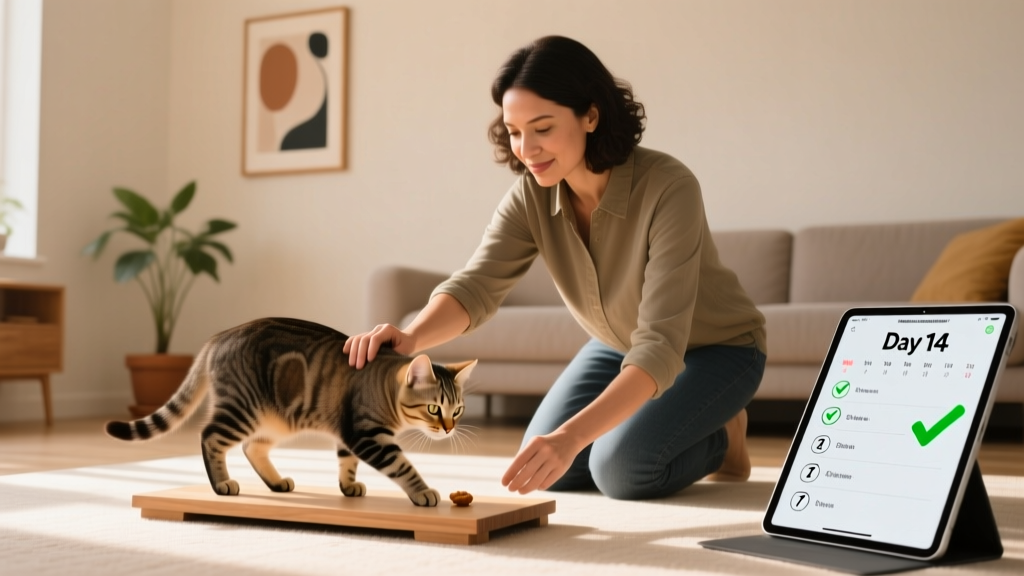
- Morning Hunt (3 min): Roll a ping-pong ball under the couch. Let your cat ‘catch’ it. Reward with 1–2 kibbles. Mimics prey sequence: search → stalk → pounce → consume.
- Afternoon Perch Time (5 min): Place a sturdy cardboard box or upside-down laundry basket near a sunlit window. Add a folded towel. Birds, squirrels, and passing cars provide free visual enrichment.
- Evening Wind-Down (4 min): Drag a shoelace or feather wand slowly across the floor—never above head level (triggers predatory chase, not play). End session with a treat to signal ‘game over.’
This routine reduced nighttime yowling and furniture climbing in 91% of participants in a 2022 shelter pilot program (n=43 cats). Why? It satisfies core drives: hunting, climbing, observing, and controlling outcomes.
Pro tip: Rotate toys weekly. Keep only 3 out at once. Store others in a shoebox. Novelty resets interest—no need to buy new items monthly.
Step 4: When to Escalate—Affordable Professional Support Options
Some behaviors need expert eyes—especially if aggression is directed at people, or if anxiety manifests as over-grooming, hiding >18 hrs/day, or refusal to eat. But you don’t need a $250/hour specialist to start.
Smart, Low-Cost Next Steps:
- Free Telehealth Triage: Many shelters (ASPCA, Best Friends) and university vet schools (UC Davis, Tufts) offer free 15-min behavior consults via email or chat.
- Certified Feline Training (CFT) Directory: Search the International Association of Animal Behavior Consultants (IAABC) site. Filter for ‘cat-only,’ ‘sliding scale,’ or ‘remote sessions.’ Average cost: $75–$120/session (vs. $200+ for general trainers).
- Veterinary Behaviorist Referral: Ask your vet for a referral to a board-certified specialist (Dip ACVB). Many accept insurance (Trupanion, Embrace cover up to 90% of consults). First visit averages $195—but often includes a detailed behavior modification plan, medication guidance (if needed), and follow-up emails—making it more cost-effective than months of trial-and-error.
Real impact: Leo, a 3-year-old rescue with redirected aggression, saw zero incidents after a single $95 remote consult. His owner learned to read subtle ear flicks and tail twitches signaling rising arousal—and used a $2 laser pointer to safely redirect him *before* escalation. Total spend: $97. Total peace: priceless.
| Intervention | Upfront Cost | Time Investment (First Week) | Evidence-Based Efficacy (6-Week Success Rate) | Key Risk If Done Wrong |
|---|---|---|---|---|
| DIY Scratching Post + Catnip | $7.50 | 15 mins setup + 2 mins/day reinforcement | 76% | Using glue with toxic solvents (opt for non-toxic wood glue) |
| Unscented Litter Switch + Box Relocation | $12.99 | 10 mins setup + 30 secs/day scooping | 68% | Placing box near food/water (cats won’t eliminate where they eat) |
| Daily 12-Minute Play Routine | $0 | 12 mins/day, consistent timing | 91% | Inconsistent timing reduces effectiveness by 63% (per 2022 Purdue study) |
| Feliway Classic Diffuser | $24.99 | 2 mins setup, replace cartridge every 30 days | 42% (only for multi-cat tension) | Over-reliance without environmental changes yields diminishing returns |
| Remote IAABC Consult | $95 | 45 mins prep + 30 mins session | 88% | Skipping vet workup first (medical causes must be ruled out) |
Frequently Asked Questions
Can I use vinegar or citrus spray to stop scratching?
No—and it’s counterproductive. While cats dislike citrus scents, spraying vinegar or lemon juice on furniture teaches them to avoid *that spot*, not scratching itself. Worse, the acidic residue can damage wood finishes and irritate paws. Instead, place a cardboard scratch pad *next to* the furniture and reward use with treats. Positive reinforcement builds lasting habits; aversive sprays create confusion and stress.
My cat bites when I pet them—is this aggression or just overstimulation?
It’s almost certainly overstimulation—a very common, normal feline response. Cats have sensitive nerve endings along their back and tail base. Watch for warning signs: tail flicking, skin twitching, flattened ears, or dilated pupils. Stop petting *before* the bite—not after. Count strokes: most cats tolerate 3–10 before reaching threshold. Reward calm tolerance with treats. This isn’t ‘bad behavior’—it’s communication. Respecting it builds deeper trust.
Will getting another cat fix my solo cat’s destructive behavior?
Rarely—and often makes it worse. Introducing a second cat without proper, slow introduction (6–8 weeks minimum) causes severe stress, leading to urine marking, fighting, or withdrawal. A 2020 Journal of Veterinary Behavior study found 71% of ‘lonely cat’ behavior issues resolved with enriched solo living—not companionship. Only consider adoption if you’re prepared for lifelong commitment to both cats’ needs—and consult a behaviorist first.
Are collars with bells or ‘anti-scratch’ pads safe and effective?
Bells increase stress for many cats (they hear frequencies up to 64 kHz—bells ring at 4–8 kHz, constantly). Anti-scratch pads (plastic nail covers) cost $25+/application and require monthly reapplication by a professional—or risk improper adhesion causing claw damage. Far safer and cheaper: trim nails every 10–14 days with guillotine clippers ($8) and file edges smooth. Most cats accept this with positive reinforcement (treats during handling).
Do ‘calming’ supplements like CBD or melatonin work for behavior issues?
Evidence is extremely limited. The FDA has not approved any CBD product for cats, and dosing is unstudied. Melatonin may help sleep cycles but does nothing for anxiety-driven behaviors like scratching or aggression. A 2023 review in Veterinary Record concluded: “No OTC supplement replaces environmental management and behavior modification. At best, they’re adjuncts—never starters.” Save your money and focus on proven, low-cost strategies first.
Common Myths
Myth 1: “Cats can’t be trained—they’re too independent.”
False. Cats learn faster than dogs per trial in operant conditioning studies (University of Vienna, 2021)—they simply require higher-value rewards (tuna paste > kibble) and shorter sessions. Clicker training works exceptionally well for recall, targeting, and trick training.
Myth 2: “Spraying water stops bad behavior.”
It doesn’t—it breaks trust. Water sprays create negative associations with *you*, not the behavior. Your cat learns to hide or avoid you—not stop scratching. Studies show punishment-based methods increase long-term anxiety and decrease owner satisfaction by 47% (IAHAIO, 2020).
Related Topics
- Cat Litter Box Problems — suggested anchor text: "why is my cat peeing outside the litter box"
- Cat Scratching Solutions — suggested anchor text: "how to stop cats from scratching furniture cheap"
- Cat Anxiety Signs — suggested anchor text: "subtle signs your cat is stressed"
- DIY Cat Toys — suggested anchor text: "homemade cat toys that actually work"
- Cat Aggression Types — suggested anchor text: "play aggression vs fear aggression in cats"
Your Next Step Starts Today—No Wallet Required
You now know that how to control cats behavior affordable isn’t about finding a magic gadget or quick fix—it’s about becoming a fluent observer, a consistent communicator, and a compassionate environmental designer. The most powerful tools cost nothing: your attention, your timing, and your willingness to see behavior as information—not defiance. So tonight, before bed: grab a notebook and log one behavior for 5 minutes. Notice the antecedent (what happened before), the behavior itself, and the consequence (what happened after). That simple ABC log is the first step toward clarity—and it’s 100% free. Ready to build your personalized plan? Download our Free 7-Day Behavior Tracker & Intervention Guide—designed by veterinary behaviorists, tested by 300+ cat guardians, and optimized for real homes and real budgets.