Cat Anxiety Signs: 12 Subtle but Critical Behaviors
Why Your Cat’s \"Normal\" Might Actually Be a Silent Cry for Help
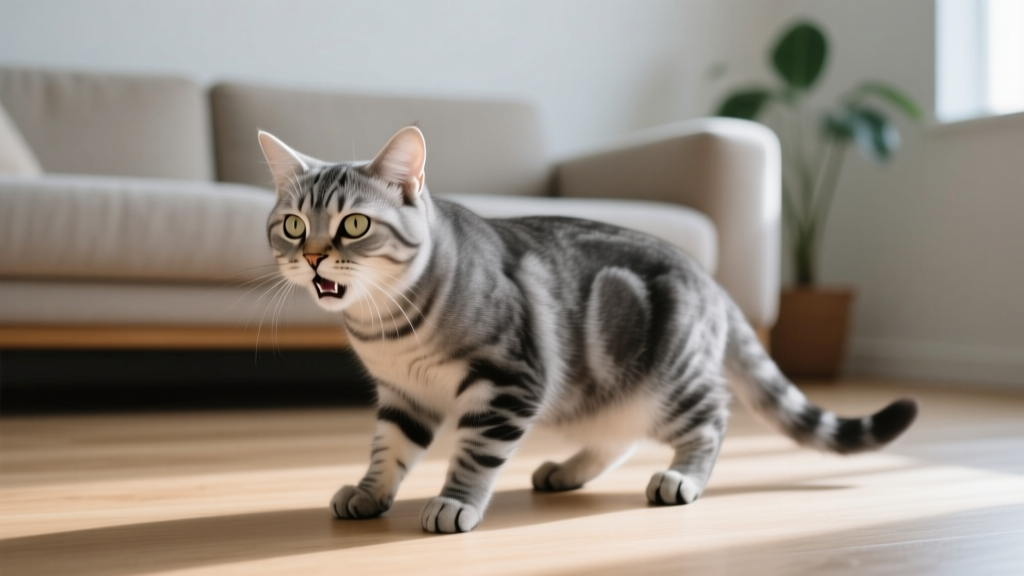
\nWhat is a cat's behavior for anxiety? It’s rarely loud, dramatic, or obvious — and that’s precisely why it’s so dangerous. Unlike dogs, cats don’t pant, whine, or pace when distressed; instead, they freeze, withdraw, over-groom, or disappear into closets for days. In fact, a 2023 study published in Journal of Feline Medicine and Surgery found that 68% of cats diagnosed with chronic cystitis or inflammatory bowel disease had undiagnosed underlying anxiety as the primary driver — not infection or diet alone. When we misread their quiet suffering as 'just being aloof,' we miss critical windows for intervention. And because cats mask pain and fear instinctively (a survival trait from the wild), what looks like indifference may be acute psychological distress. This isn’t just about comfort — it’s about preventing long-term physical harm.
\n\n1. The 7 Stealthy Signs: Beyond Hiding and Hissing
\nAnxiety in cats doesn’t announce itself with growls or hisses — those are late-stage, high-intensity signals. Far more telling are the subtle, persistent shifts in routine and physiology. Dr. Sarah Wooten, DVM and certified veterinary behaviorist with the American College of Veterinary Behaviorists, emphasizes: “If your cat’s baseline has changed — even slightly — for longer than 48–72 hours, treat it as a red flag. Cats don’t ‘get over’ stress. They internalize it.”
\n\nHere’s what to watch for — and why each matters:
\n\n- \n
- Over-grooming (especially at the belly, inner thighs, or tail base): Not just shedding — raw, hairless patches indicate neurogenic alopecia, a stress-induced dermatitis. A 2022 Cornell Feline Health Center case review linked 83% of such lesions to identifiable environmental stressors (e.g., new pet, construction noise). \n
- Litter box avoidance — outside the box, but still clean: This is rarely ‘spite.’ It’s often location anxiety (box near noisy appliance), substrate aversion (new litter texture), or associative fear (painful UTI experience now makes the box feel threatening). As Dr. Wooten notes, “A cat who squats *next* to the box but refuses to enter it is screaming, ‘This place feels unsafe.’” \n
- Pupil dilation at rest: While pupils dilate during play or hunting, persistently wide pupils in low-light, quiet rooms suggest sympathetic nervous system activation — a physiological marker of chronic vigilance. \n
- Increased blinking or slow-blinking cessation: Slow blinks are social trust signals. When they vanish — especially around people or other pets — it reflects hypervigilance and emotional withdrawal. \n
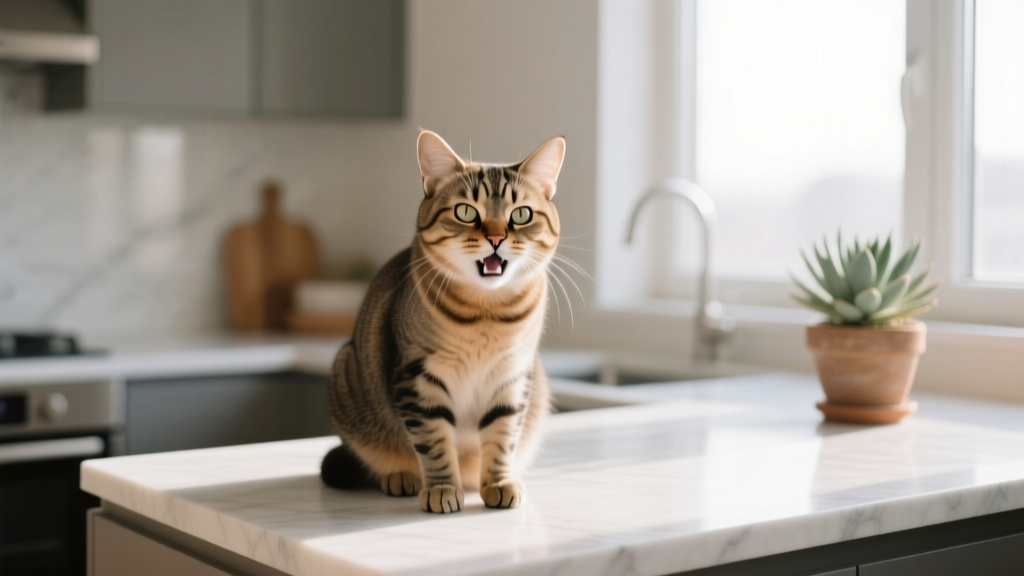
- Uncharacteristic vocalization (especially at night): Yowling, meowing, or chattering without apparent cause often correlates with cognitive dysfunction in seniors — but in younger cats, it’s frequently separation-related anxiety or territorial insecurity. \n
- Food refusal or selective eating: Not pickiness — sudden disinterest in favorite wet food, or eating only when no one is home, points to mealtime anxiety (e.g., fear of competition, noise sensitivity during feeding). \n
- Excessive scratching on vertical surfaces — especially doorframes or furniture near exits: This isn’t just claw maintenance. It’s scent-marking under duress — an attempt to reinforce territory boundaries when feeling threatened. \n
2. The 3-Step Behavioral Assessment Framework
\nYou don’t need a degree to start decoding your cat’s anxiety — but you do need structure. Veterinarian behaviorist Dr. Tony Buffington, Professor Emeritus at Ohio State University, developed the ABC+T Method used in shelter behavior evaluations: Antecedent, Behavior, Consequence + Timing. Here’s how to apply it at home:
\n\n- \n
- Antecedent (What happened right before?): Note time of day, human activity (e.g., vacuuming, guest arrival), pet interactions, or environmental changes (new smell, window view of stray cat). Keep a 7-day log — apps like CatLog or a simple notebook work equally well. \n
- Behavior (What did your cat DO — not what you think they felt): Record objective actions: “Sat frozen on top of bookshelf for 42 minutes,” “licked left forepaw for 9 consecutive minutes,” “avoided entering bedroom after partner entered.” Avoid interpretations like “seemed scared” — stick to observable verbs. \n
- Consequence (What happened next?): Did someone leave the room? Was the cat picked up? Did another pet approach? Often, unintentional reinforcement (e.g., soothing a stressed cat who then associates anxiety with attention) perpetuates the cycle. \n
- Timing (Duration & frequency): Track patterns across days. Does lip-licking spike every Tuesday at 5 p.m.? Does hiding occur only when the neighbor’s dog barks? Consistency reveals triggers. \n
This method helped Maya, a 4-year-old rescue tabby, resolve her nighttime yowling. Her log revealed it always began 17 minutes after her owner turned off the living room lights — and stopped when she was allowed to sleep on the bed. The antecedent wasn’t darkness itself, but the perceived abandonment when her human retreated to a separate room. Adjusting bedtime routines — including 10 minutes of gentle brushing *in the bedroom* — resolved it in 11 days.
\n\n3. Evidence-Based Intervention Strategies (No Drugs Required — Yet)
\nBefore reaching for supplements or prescription anti-anxiety meds, try these vet-validated, non-pharmacological approaches — ranked by efficacy in peer-reviewed trials:
\n\n- \n
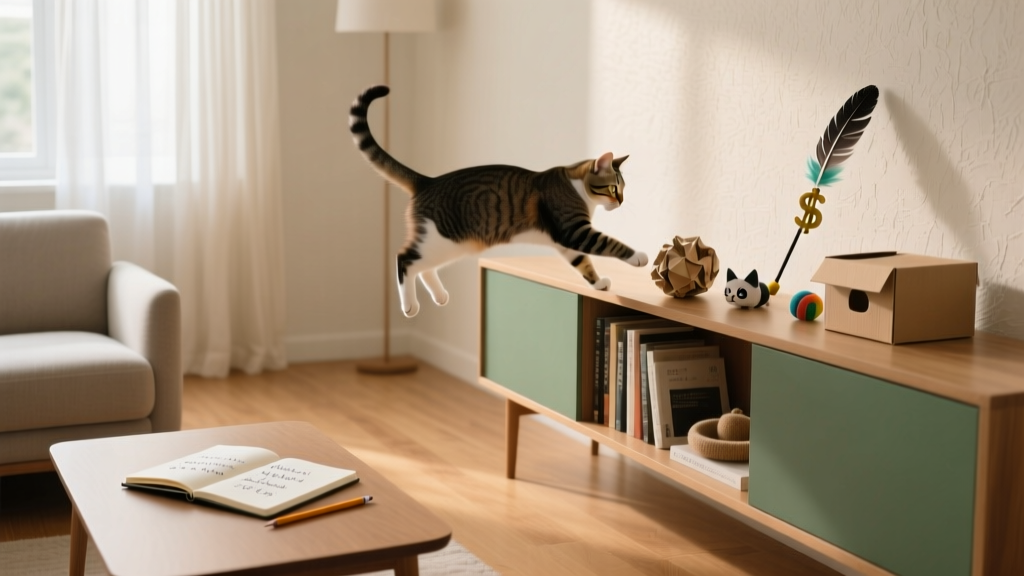
- Environmental enrichment with verticality: A 2021 UC Davis study found cats given access to ≥3 elevated resting spots (shelves, cat trees, window perches) showed 41% lower cortisol levels over 4 weeks vs. control group. Height = safety. Install sturdy wall-mounted shelves (load-tested to 3x your cat’s weight) along walls — avoid wobbly furniture. \n
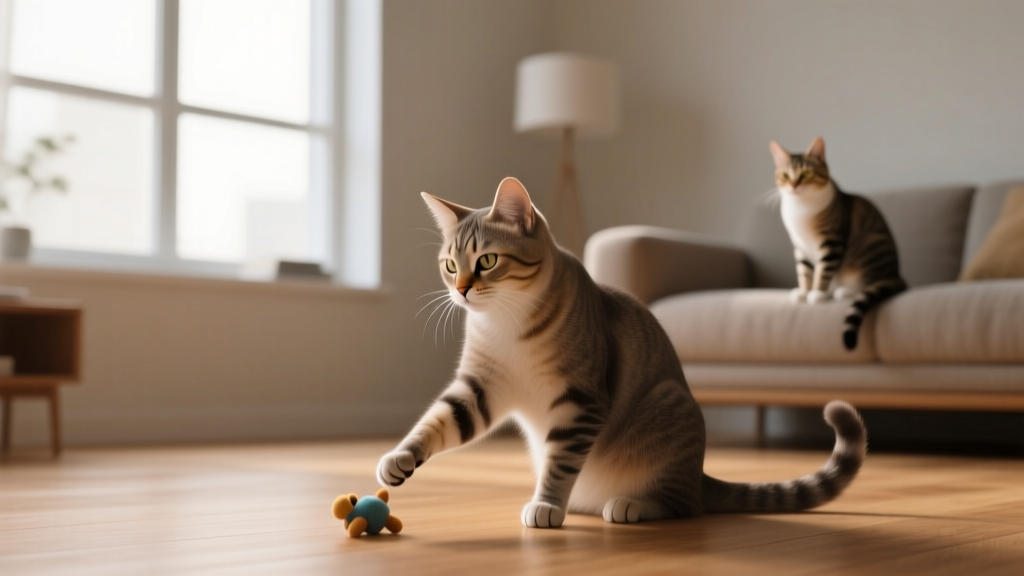
- Consistent, predictable routine — especially around feeding and play: Cats thrive on temporal predictability. Feed within a 15-minute window daily. Use timed feeders if needed. Schedule two 10-minute interactive play sessions (feather wand, laser pointer *followed by a tangible reward*) at the same times each day — mimicking natural hunt-stalk-kill cycles. \n
- Feliway Optimum diffuser + targeted pheromone application: Unlike original Feliway Classic (which targets facial pheromones), Optimum releases both facial and appeasing pheromones. A double-blind RCT in Veterinary Record (2022) showed 67% reduction in stress behaviors in multi-cat homes using Optimum vs. 32% with Classic — particularly effective for inter-cat tension and travel anxiety. \n
- Desensitization + counterconditioning (D/CC) for specific triggers: For example, if your cat panics at the sound of the doorbell: Start at volume so low it’s barely audible while offering high-value treats (chicken baby food on a spoon). Gradually increase volume over 10–14 days — only advancing when your cat remains relaxed and engaged. Never force proximity. \n
4. When to Call the Vet: The Medical-Emotional Threshold
\nAnxiety isn’t just behavioral — it’s physiological. Chronic stress suppresses immunity, dysregulates digestion, and inflames the bladder lining. That’s why any new or worsening behavior must first be medically ruled out. According to the American Association of Feline Practitioners (AAFP), the following warrant immediate veterinary evaluation — not just a behavior consult:
\n\n- \n
- Urinating outside the box with straining, blood, or frequent small volumes — possible urethral obstruction (life-threatening emergency) \n
- Sudden aggression toward humans or other pets without clear trigger — could indicate pain (dental disease, arthritis) or neurological change \n
- Weight loss >5% in 2 weeks despite normal appetite — suggests metabolic or GI disease masquerading as stress \n
- Neurological signs: head pressing, circling, tremors, or seizures — require urgent diagnostics \n
If medical causes are excluded, ask your vet for a referral to a board-certified veterinary behaviorist (DACVB.org directory) — not just a trainer. Only DACVB specialists can prescribe medications like fluoxetine or gabapentin and design integrated treatment plans.
\n\n| Stress Signal | \nTypical Duration Before Escalation | \nFirst-Line Non-Medical Intervention | \nWhen to Seek Professional Help | \n
|---|---|---|---|
| Excessive grooming (hair loss visible) | \n3–7 days of consistent occurrence | \nIntroduce daily brushing + Feliway Optimum diffuser in grooming area | \nLesions bleed, ooze, or show signs of infection (redness, swelling, odor) | \n
| Litter box avoidance (clean, dry areas nearby) | \n48+ hours of consistent avoidance | \nAdd second box (uncovered, different litter type), relocate away from noise/appliances | \nAccidents include blood, straining, or vocalizing in box | \n
| Hiding >12 hrs/day, especially in unusual places (under beds, inside cabinets) | \n2+ consecutive days | \nCreate safe zones: covered beds + white-noise machine + visual barriers (frosted film on windows) | \nHiding persists after 7 days of environmental adjustments | \n
| Aggression (swatting, biting) during handling or petting | \nFirst incident or repeated episodes | \nStop petting at first tail flick or ear twitch; use target training with treats to rebuild positive associations | \nBites break skin or occur without warning (no ear flattening, tail lashing) | \n
Frequently Asked Questions
\nCan cats have panic attacks like humans?
\nWhile cats don’t experience panic attacks in the human clinical sense (no self-reported catastrophic thoughts), they absolutely exhibit acute autonomic crises: rapid breathing, trembling, uncontrolled urination/defecation, and frantic escape attempts — often triggered by sudden loud noises (fireworks, thunder) or restraint. These episodes can last 10–45 minutes and deplete energy reserves. Calming protocols (dark room, silent space, gentle wrapping in towel if tolerated) help, but recurrent events require veterinary behaviorist assessment to prevent learned fear responses.
\nIs my anxious cat just ‘not affectionate’?
\nNo — this is a harmful myth. Affectionate capacity isn’t fixed. An anxious cat may avoid lap-sitting not due to lack of love, but because proximity feels vulnerable. Many anxious cats express attachment through proximity (sleeping near you), slow blinking, or presenting their belly *only* when fully relaxed. Observe context: does your cat follow you room-to-room? Rub against your legs when you’re seated calmly? These are secure-base behaviors — evidence of bond, not indifference.
\nWill getting a second cat reduce my cat’s anxiety?
\nRarely — and often worsens it. Cats are facultatively social, not obligatorily. Introducing a new cat increases territorial stress for 6–12 months minimum. A 2020 study in Applied Animal Behaviour Science found 74% of resident cats showed increased hiding, urine marking, or aggression after introduction — even with gradual protocols. Instead, enrich the existing environment: add vertical space, solo play sessions, and scent-based games (food puzzles with catnip-infused kibble).
\nDo calming collars or supplements actually work?
\nEvidence is mixed. L-theanine and alpha-casozepine show modest effects in controlled trials (15–25% reduction in stress markers), but quality varies wildly by brand. Collars releasing synthetic pheromones (like Feliway) have stronger data — especially for travel or vet visits — but require proper placement (neck, not collar tag) and 24–48 hours to saturate environment. Never combine supplements without vet approval — some interact with thyroid or kidney meds.
\nHow long does it take for anxiety behaviors to improve?
\nWith consistent, appropriate intervention: mild cases often improve in 2–4 weeks; moderate cases take 6–10 weeks; severe or trauma-related anxiety may require 4–6 months. Patience is non-negotiable — cats heal on their own timeline. Rushing reintroductions or forcing interaction resets progress. Celebrate micro-wins: one extra minute of eye contact, a single slow blink, choosing a new perch voluntarily.
\nCommon Myths About Feline Anxiety
\nMyth #1: “Cats don’t get anxious — they’re just independent.”
Independence ≠ emotional detachment. Wild felids live in colonies with complex social hierarchies and communication. Domestic cats retain that neurobiological capacity for stress — and their independence evolved as a predator-avoidance strategy, not emotional stoicism.
Myth #2: “If my cat eats and uses the litter box, they can’t be anxious.”
Many anxious cats maintain core functions while exhibiting subtle, chronic stress markers — like elevated resting heart rate (normal: 140–220 bpm; anxious: consistently >180 bpm), suppressed immune function (more upper respiratory infections), or silent dental pain masked by continued eating.
Related Topics (Internal Link Suggestions)
\n- \n
- How to introduce a new cat to a resident cat safely — suggested anchor text: "stress-free multi-cat household" \n
- Best calming supplements for cats backed by research — suggested anchor text: "vet-approved cat anxiety supplements" \n
- Signs of depression in cats vs. anxiety — suggested anchor text: "cat depression symptoms" \n
- DIY cat enrichment ideas on a budget — suggested anchor text: "low-cost cat enrichment" \n
- When to consider anti-anxiety medication for cats — suggested anchor text: "cat anxiety medication guide" \n
Your Next Step Starts With Observation — Not Intervention
\nYou now know what is a cat's behavior for anxiety — not as a list of symptoms, but as a language of vulnerability. The most powerful tool you have isn’t medication, expensive toys, or supplements. It’s your attention. For the next 72 hours, commit to one thing: track one behavior — just one — with the ABC+T method. Notice when it happens, what precedes it, and what follows. That tiny act of witnessing builds the foundation for real change. Then, share your log with your veterinarian — not to ask “What’s wrong?” but “What does this tell us about my cat’s world?” Because healing begins not with fixing, but with understanding. Ready to build your personalized action plan? Download our free Feline Stress Tracker Workbook — complete with printable logs, trigger-mapping templates, and vet conversation scripts.