How to Control a Cat’s Behavior the Right Way
Why 'How to Control a Cat’s Behavior' Is the Wrong Question — And What to Ask Instead
If you’ve ever typed how to control a cats behavior into a search bar—frustrated by midnight zoomies, scratching your couch instead of the post, or hissing at guests—you’re not alone. But here’s the truth most guides skip: cats aren’t disobedient; they’re communicating unmet needs. Trying to ‘control’ them like a dog—or worse, through fear or coercion—doesn’t just fail; it damages trust, triggers anxiety, and can escalate into aggression or urinary stress syndrome. The real goal isn’t control—it’s compassionate co-regulation: understanding feline motivation, meeting biological needs, and guiding choices with consistency and kindness.
This guide distills over a decade of clinical feline behavior consultation, veterinary behavioral medicine research (including findings from the American College of Veterinary Behaviorists), and real-world case studies from shelters and multi-cat homes. You’ll learn not just *what* to do—but *why* it works, when to seek expert help, and how to spot subtle signs of stress before behavior erupts.
Step 1: Decode the 'Why' Behind the Behavior — Not Just the 'What'
Cats don’t misbehave—they respond. Every action is rooted in instinct, environment, physiology, or emotion. Before reaching for sprays, collars, or correction, pause and ask: What is my cat trying to tell me?
Dr. Sarah Heath, a European Diplomate in Veterinary Behavioral Medicine, emphasizes: “A cat who bites during petting isn’t ‘spiteful’—they’re signaling sensory overload. A cat who urinates outside the box isn’t ‘marking territory’—they may be experiencing pain, litter aversion, or social stress.”
Start with a full veterinary exam—even seemingly behavioral issues (like sudden aggression or inappropriate elimination) can stem from hidden pain (e.g., arthritis, dental disease, hyperthyroidism) or neurological changes. Once medical causes are ruled out, use this quick diagnostic framework:
- Observe timing & context: Does biting happen only during belly rubs? Does scratching spike after you vacuum? Note patterns for 3–5 days.
- Map resources: Are food, water, litter boxes, perches, and hiding spots distributed equitably (especially in multi-cat homes)? The IAAH (International Association of Animal Hospice & Palliative Care) recommends ≥1 litter box per cat + 1, placed on different floors and away from noisy appliances.
- Assess environmental enrichment: Does your cat have vertical space (cat trees, shelves), interactive play (not just dangling toys), and safe outdoor access (catios, leashed walks)? A 2022 study in Applied Animal Behaviour Science found cats with ≥3 types of daily enrichment showed 68% fewer stress-related behaviors.
Remember: There’s no universal ‘fix.’ A 3-year-old rescue with trauma history needs different support than a 12-week-old kitten testing boundaries. Patience isn’t passive—it’s strategic observation.
Step 2: Build Trust Through Predictable Routines & Positive Reinforcement
Cats thrive on predictability—not because they’re rigid, but because it reduces cognitive load and perceived threat. When routines feel safe, learning accelerates. Here’s how to structure it:
- Anchor daily interactions to feeding times: Use meals as training windows. Feed 80% of daily calories via puzzle feeders or treat-dispensing toys—not bowls. This mimics natural hunting sequences and builds focus.
- Pair new experiences with high-value rewards: Introduce carriers, nail trims, or vet visits using tuna paste or freeze-dried chicken—not force. Sit beside the carrier with treats for 5 minutes daily for 1 week before travel. Reward calm sniffing, then entering, then closing the door—only if your cat stays relaxed.
- Clicker train for cooperation (not obedience): Yes—cats clicker-train! Start with targeting (touching a stick with their nose), then build to ‘sit’, ‘come’, or ‘enter carrier’. Keep sessions under 90 seconds, 2–3x/day. Reward only desired actions—never punish mistakes.
Case in point: Luna, a 4-year-old Siamese mix adopted after shelter overcrowding, would flee and hiss when approached. Her owner used ‘treat-and-retreat’: tossing salmon treats while backing away, never forcing proximity. In 11 days, Luna began approaching the owner’s hand voluntarily. No commands. No pressure. Just safety, choice, and reward.
Step 3: Redirect, Don’t Repress — Harness Instincts With Purpose
Scratching, chewing, pouncing, and vocalizing aren’t problems—they’re evolutionary imperatives. The solution isn’t suppression; it’s redirection toward appropriate outlets that satisfy the underlying drive.
For example:
- Scratching: Cats scratch to mark territory (via scent glands in paws), stretch muscles, and shed claw sheaths. Cover furniture temporarily with double-sided tape or aluminum foil while offering tall, sturdy posts covered in sisal rope (not carpet)—place them near sleeping areas and where scratching currently occurs.
- Chewing cords/plants: Often signals oral fixation or boredom. Provide safe alternatives: frozen green beans, cat grass, or chew toys infused with catnip or silver vine. Rule out nutritional deficiencies with your vet—though rare, pica can link to anemia or GI issues.
- Midnight activity: Cats are crepuscular (most active at dawn/dusk), not nocturnal. Shift their energy cycle by scheduling 3–5 intense 5-minute play sessions with wand toys before your bedtime—and end each with a ‘kill sequence’ (letting them ‘catch’ the toy, followed by a meal).
Crucially: Never use punishment—spraying water, yelling, or tapping the nose. A 2021 review in Frontiers in Veterinary Science concluded punishment increases fear-based aggression and erodes human-animal bonds. It teaches cats to avoid you, not the behavior.
Step 4: Manage Multi-Cat Dynamics With Space, Scent, and Social Architecture
Over 60% of U.S. cat households have >1 cat—and inter-cat tension is the #1 reason for behavior referrals to veterinary behaviorists. ‘Controlling’ one cat’s behavior often means adjusting the entire social ecosystem.
Key principles:
- Resource separation is non-negotiable: Litter boxes, food bowls, water stations, and resting spots must be spread across zones—not clustered. Cats perceive shared resources as competition, triggering stress even without overt fighting.
- Scent matters more than sight: Rubbing cheeks releases calming pheromones. Swap bedding between cats gradually (start with 10 minutes, increase daily) to blend scents. Avoid strong cleaners—use enzymatic cleaners for accidents, and skip citrus or pine scents, which many cats find aversive.
- Use vertical space strategically: Install wall-mounted shelves, window perches, and bridges to create layered territories. This allows lower-status cats to retreat without confrontation—a critical stress buffer.
When introducing a new cat, follow the ‘3-3-3 rule’: 3 days confined to one room with all resources, 3 days with door cracked for scent exchange, 3 days with supervised, brief visual contact—only progressing when both cats show relaxed body language (slow blinks, tail up, grooming).
| Behavior Challenge | Science-Backed Strategy | Tools/Supplies Needed | Expected Timeline for Improvement |
|---|---|---|---|
| Scratching furniture | Provide multiple tall, stable scratching posts in high-traffic areas + apply Feliway Classic spray to furniture edges | Sisal rope posts (≥32" tall), Feliway Classic diffuser or spray, double-sided tape | Reduction in 7–14 days; full redirection in 3–6 weeks with consistency |
| Inappropriate urination | Rule out UTI/kidney disease → optimize litter box setup (unscented clumping litter, open box, low entry, quiet location) | Veterinary exam, 1+ extra litter boxes, unscented clumping litter, shallow box for seniors | Medical resolution immediate; behavioral improvement in 2–8 weeks |
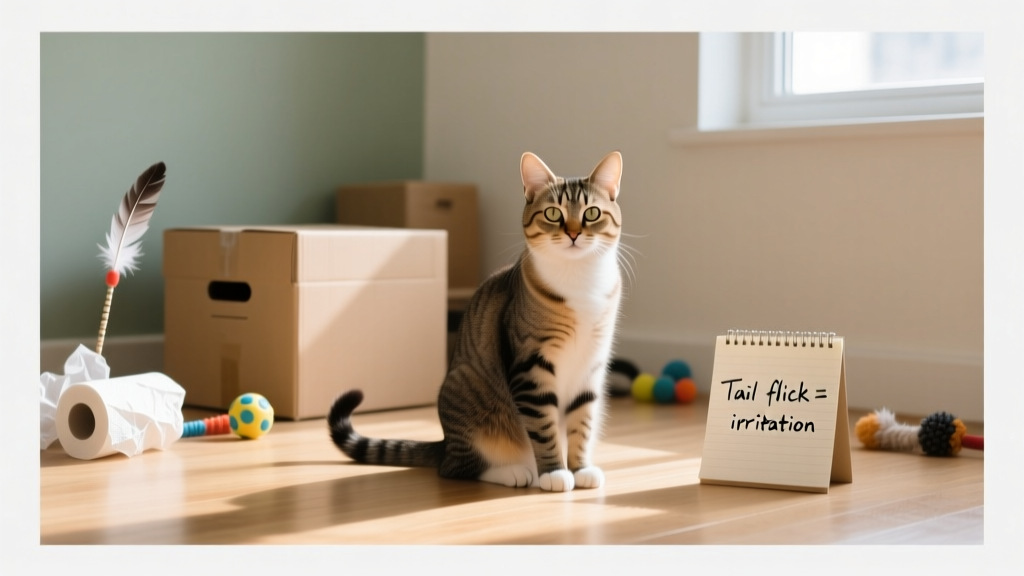
| Aggression toward people | Identify trigger (petting, handling, surprise approach) → teach ‘consent checks’ (stop if ears flatten/tail flicks) → use target training for voluntary cooperation | Clicker or marker word, high-value treats (chicken/tuna), target stick | Reduced reactivity in 10–21 days; reliable consent cues in 4–12 weeks |
| Excessive vocalization at night | Shift activity cycle: 3x daily play sessions ending with ‘hunt-catch-eat’ sequence + overnight food puzzle | Wand toy, timed feeder or puzzle ball, high-protein meal before bed | Noticeable decrease in 3–7 nights; sustained quiet in 2–4 weeks |
Frequently Asked Questions
Can I train my cat to stop meowing for attention?
Yes—but not by ignoring them entirely. Cats meow primarily to communicate with humans (they rarely meow at other cats). If your cat meows for food or pets, first ensure their basic needs are met (litter clean? water fresh? playtime scheduled?). Then, use differential reinforcement: reward quiet behavior with attention/treats only when they’re silent, and briefly walk away if they meow. Consistency is key—every accidental reward (giving in after 2 minutes of yowling) reinforces the behavior. Most cats learn within 1–3 weeks.
Is it ever okay to use a spray bottle or citronella collar?
No—these are strongly discouraged by the American Veterinary Society of Animal Behavior (AVSAB). Spray bottles cause fear and erode trust; citronella collars deliver unpredictable, aversive stimuli that increase anxiety and can worsen redirected aggression. Positive reinforcement and environmental modification are consistently more effective and humane, with zero risk of learned helplessness or trauma.
My cat suddenly started biting—what could cause this?
Sudden aggression is almost always medical or environmental. First, schedule a vet visit to rule out pain (dental disease, arthritis, hyperthyroidism), neurological issues, or metabolic imbalances. If medical causes are cleared, assess recent changes: new pet, construction noise, visitor stress, or even a shift in your routine. Also check for overstimulation—many cats bite when petting exceeds their tolerance threshold (often signaled by tail twitching, skin rippling, or flattened ears). Stop before those signs appear.
Do calming supplements or pheromone diffusers actually work?
Evidence is mixed but promising for specific cases. Feliway Classic (synthetic feline facial pheromone) shows ~60–70% efficacy in reducing stress-related marking and hiding in controlled studies (Journal of Feline Medicine and Surgery, 2020). Supplements like Solliquin or Zylkène may help mild anxiety but aren’t substitutes for environmental enrichment or behavior modification. Always consult your vet before use—some interact with medications or mask underlying issues.
How long does it take to see real change in cat behavior?
It depends on the behavior’s root cause and duration. Simple habit shifts (e.g., using a new scratching post) often improve in 1–3 weeks. Complex issues—like fear-based aggression or multi-cat tension—require 2–6 months of consistent, compassionate intervention. Remember: progress isn’t linear. Celebrate micro-wins (a longer blink, a step closer, a relaxed posture) as evidence of deepening trust.
Common Myths About Cat Behavior
Myth #1: “Cats can’t be trained—they’re too independent.”
Reality: Cats are highly trainable—but on their terms. They respond best to short, reward-based sessions tied to intrinsic motivation (hunting, exploring, social bonding). Clicker training success rates rival dogs’ when methods match feline cognition.
Myth #2: “If I ignore bad behavior, it will go away.”
Reality: Ignoring often backfires. Unaddressed stressors (e.g., litter box aversion, resource competition) intensify. Passive neglect doesn’t resolve the underlying need—it may amplify it into destructive or aggressive outlets.
Related Topics (Internal Link Suggestions)
- Understanding cat body language — suggested anchor text: "what your cat's tail flick really means"
- Best cat scratching posts for large cats — suggested anchor text: "sturdy sisal scratching posts that won't tip"
- How to introduce a new cat to resident cats — suggested anchor text: "stress-free multi-cat introduction checklist"
- Signs of cat anxiety and stress — suggested anchor text: "subtle cat stress signals most owners miss"
- DIY cat enrichment ideas on a budget — suggested anchor text: "10-dollar cat enrichment hacks that work"
Your Next Step: Start Small, Stay Consistent, and Celebrate Connection
You now know that how to control a cats behavior isn’t about dominance or discipline—it’s about empathy, ecology, and evidence. The most powerful tool you own isn’t a spray bottle or a collar. It’s your ability to observe, adapt, and respond with patience.
So tonight, pick one behavior you’d like to gently guide—maybe adding a second litter box, swapping out that flimsy scratching post, or scheduling three 90-second play sessions. Track what happens for 5 days. Notice the tiny shifts: a slower blink, a head-butt against your hand, a nap in the same room as you. Those aren’t ‘results’—they’re relationships deepening.
If behavior feels overwhelming, dangerous, or persists beyond 4–6 weeks of consistent effort, consult a board-certified veterinary behaviorist—not just a trainer. They combine medical expertise with behavioral science to create personalized, ethical plans. Your cat isn’t broken. They’re asking, in the only language they know, for safety, clarity, and care. And you—armed with knowledge and compassion—are exactly who they need.