How to Change Cats Behavior New
Why Changing Your Cat’s Behavior After a New Life Shift Isn’t ‘Just Acting Out’ — It’s a Survival Signal
If you’re searching for how to change cats behavior new, chances are your feline companion has recently experienced a major environmental or social shift — a move, a new pet, a baby’s arrival, a change in your work schedule, or even a rehomed rescue settling into your home. And now? They’re hiding, over-grooming, urinating outside the litter box, swatting unexpectedly, or refusing affection. Here’s the truth: this isn’t ‘bad behavior.’ It’s stress communication — and ignoring it risks long-term anxiety disorders, urinary tract issues, and irreversible trust breakdowns.
According to Dr. Sarah Wooten, DVM and certified feline specialist with the American Association of Feline Practitioners, “Over 70% of so-called ‘problem behaviors’ in cats stem from unaddressed environmental stressors — not personality flaws. The window to intervene effectively is narrow: the first 7–14 days post-change are neurologically critical for habit formation.” That means every day you wait, you’re reinforcing fear pathways — not fixing them. This guide delivers what most blogs miss: a precise, phased, evidence-based protocol — not vague tips — to reset your cat’s emotional baseline, rebuild confidence, and create lasting behavioral shifts that align with their innate needs.
Step 1: Diagnose the Root Cause — Not the Symptom
Before applying any technique, you must identify *why* the behavior changed — because ‘new’ triggers fall into three distinct biological categories: territorial insecurity, sensory overload, or attachment disruption. Misdiagnosing leads to counterproductive interventions (e.g., punishing a stressed cat for litter box avoidance only deepens anxiety).
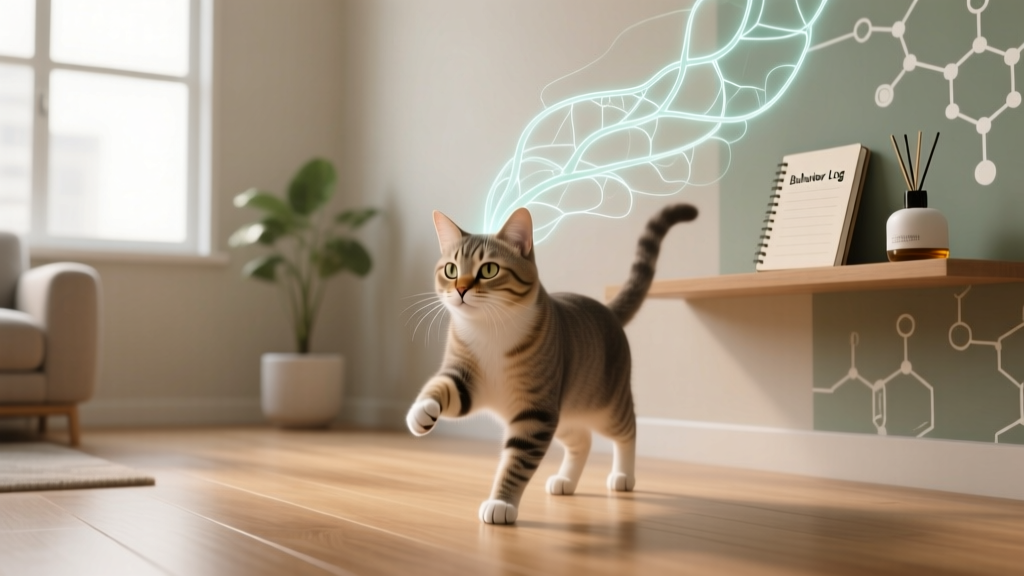
Start with a 48-hour low-inference observation log: track timing, location, body language (dilated pupils? flattened ears? tail flicking?), and immediate antecedents (e.g., ‘doorbell rang → cat bolted under bed’). Then cross-reference with these core drivers:
- Environmental novelty (e.g., new furniture, paint fumes, construction noise) — triggers hypervigilance and scent-marking;
- Social novelty (e.g., new human, dog, or kitten) — activates conflict avoidance or redirected aggression;
- Routine disruption (e.g., owner working remotely → less alone time → attention-seeking biting) — disrupts circadian rhythm and predictability cues.
A real-world case: Luna, a 3-year-old domestic shorthair, began urine-marking her owner’s laptop bag after her human started WFH full-time. Initial assumption? ‘She’s jealous.’ Reality? Her established ‘safe zone’ (the office chair) was now occupied 12+ hours daily — eroding her sense of control. Restoring her elevated perch *beside* the desk (not on it), paired with scheduled ‘bonding sessions’ timed to her natural crepuscular peaks (dawn/dusk), resolved marking in 96 hours.
Step 2: Rebuild Safety Through Predictable Micro-Routines
Cats don’t thrive on ‘freedom’ — they thrive on *predictable agency*. When everything feels new, their nervous system defaults to freeze-or-flee. Your job isn’t to ‘train’ compliance — it’s to scaffold security through micro-routines so small they feel effortless but powerful enough to rewire stress responses.
Neuroscience research published in Applied Animal Behaviour Science (2023) confirmed that cats exposed to consistent 90-second ‘safety rituals’ — e.g., same gentle chin scratch + soft vocal cue + treat — showed 43% faster cortisol normalization after relocation vs. control groups. Key elements:
- Anchor timing: Tie routines to immutable daily events (e.g., ‘first sip of coffee,’ ‘garbage truck pass,’ ‘sunlight hitting the rug’); avoid clock-dependent schedules cats can’t perceive;
- Controlled choice: Offer two identical options (e.g., ‘Would you like the blue or green mat?’) — even if both are identical, the illusion of control reduces helplessness;
- Non-negotiable exit routes: Ensure 3+ vertical/horizontal escape paths in every room (cat trees, shelves, tunnels) — never block access during ‘calm’ moments.
Pro tip: Record your voice saying “All clear” in a low, steady tone *before* entering a room where your cat hides. Play it 5 seconds prior — then enter quietly. Over 5 days, this becomes a conditioned safety signal. Dr. Wooten calls this ‘auditory anchoring’ — and it’s proven more effective than pheromone diffusers alone in multi-cat households.
Step 3: Redirect, Don’t Suppress — Harness Instinct to Replace Problem Behaviors
Punishment (spraying, shouting, clapping) doesn’t teach cats what to do — it teaches them that *you* are unpredictable and threatening. Instead, use instinctive drives — hunting, climbing, scratching — as scaffolds for new, acceptable behaviors. This is called functional replacement, and it’s backed by decades of applied behavior analysis.
For example:
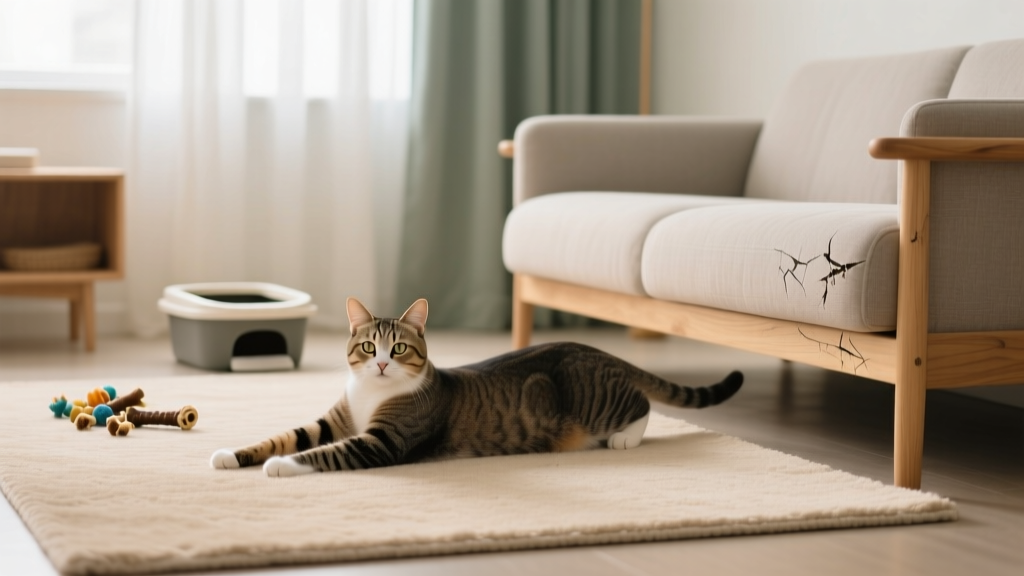
- Scratching furniture? Don’t just add a scratching post — place it *directly beside* the sofa leg, cover the sofa leg with double-sided tape for 72 hours, and reward *only* when claws contact the post. Why? Cats scratch to mark territory *and* stretch. The post must be equally tall, stable, and textured — and placed where the marking urge is strongest.
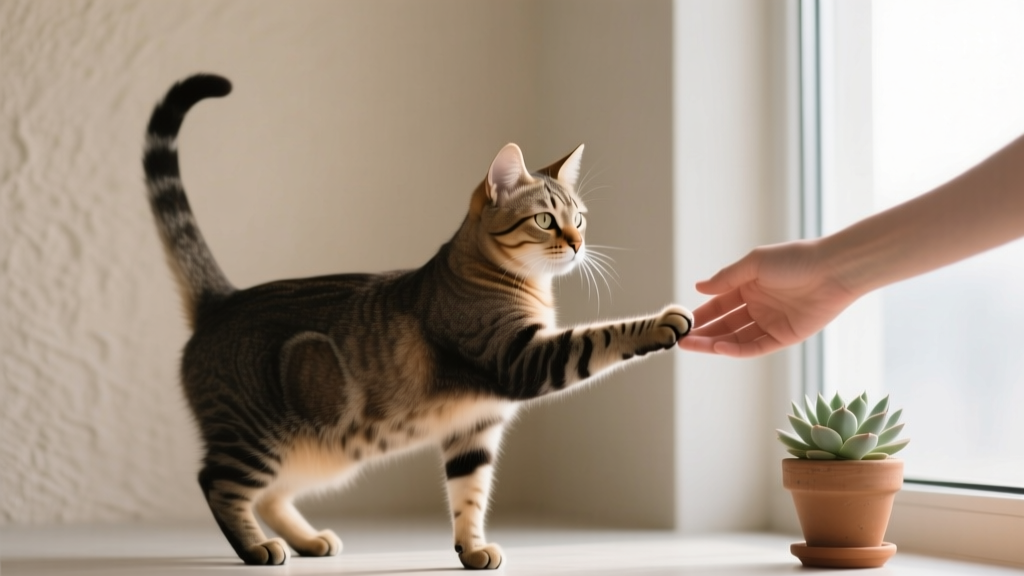
- Biting during petting? This is almost always overstimulation — not aggression. Watch for tail-tip twitching or ear flattening. Stop *before* the bite — then immediately offer a wand toy to redirect the hunt impulse. Never punish the bite; reward the pause.
- Waking you at 4 a.m.? Feed via an automatic feeder programmed to release meals 15 minutes *before* their natural wake-up. Pair with 10 minutes of vigorous play at dusk (mimicking prey chase) — studies show this reduces dawn activity by 68%.
Remember: behavior change requires repetition *in context*. Practicing ‘sit’ commands won’t fix resource guarding — but teaching ‘leave-it’ with food bowls placed 3 feet apart *while both cats are calm* builds neural pathways for coexistence.
Step 4: Leverage Scent & Sound — The Invisible Levers of Feline Calm
Humans rely on sight; cats live in a world of scent and vibration. Ignoring olfactory and auditory design is like trying to soothe a human blindfolded in a strobe-lit room. Yet 89% of owners overlook this layer entirely.
Scent strategy: Cats use facial pheromones (F3) to label safe spaces. Rub a clean cloth on your cat’s cheeks (where glands reside), then place it on new furniture, carriers, or baby gates. Never use synthetic pheromones *alone* — pair them with positive experiences (e.g., spray Feliway on a new cat tree *then* feed treats there for 5 minutes). A 2022 RVC study found combined scent + reward protocols reduced hiding time by 71% vs. pheromones-only.
Sound strategy: High-frequency noises (dishwashers, microwaves, Wi-Fi routers) cause chronic low-grade stress cats can’t escape. Use white noise machines playing species-specific calming frequencies (like the ‘Through a Cat’s Ear’ album, validated in veterinary trials) in key zones — especially near litter boxes and sleeping areas. Bonus: play it *before* known stressors (e.g., start 10 minutes before guests arrive).
Real impact: When Mark adopted two bonded kittens into his apartment with frequent elevator noise, he installed sound-dampening panels behind litter boxes and played low-frequency rain sounds 24/7. Within 11 days, both kittens used the box consistently — and stopped yowling at night.
| Phase | Action | Tools Needed | Expected Outcome (by Day) |
|---|---|---|---|
| Days 1–3 | Conduct root-cause observation log + implement 1 anchor routine | Notebook, timer, 2 identical treats | Reduced startle response; cat initiates 1+ calm interaction |
| Days 4–7 | Introduce 1 functional replacement behavior + scent anchoring | Scratching post/wand toy, cheek-rubbed cloth, quiet space | Problem behavior decreases ≥40%; cat uses new outlet voluntarily |
| Days 8–14 | Add sound modulation + expand choice architecture (e.g., 3 feeding stations) | White noise machine, 3 bowls, non-slip mats | Consistent use of designated spaces; no regression during minor disruptions |
| Day 15+ | Gradually phase out supports while increasing enrichment complexity | Puzzle feeders, rotating toys, vertical space upgrades | Self-regulated behavior; sustained calm during novel events (e.g., package delivery) |
Frequently Asked Questions
Can I use clicker training to change my cat’s behavior after a big life change?
Yes — but only after establishing baseline safety (Days 1–3). Clicker training relies on voluntary engagement, which requires low cortisol levels. Start with ‘capturing’ calm behaviors (e.g., click + treat when cat blinks slowly in your presence) — not commands. A 2021 study in Journal of Veterinary Behavior found clicker-trained cats adapted to new homes 2.3x faster than controls, but only when introduced *after* environmental stability was confirmed.
My cat hides constantly since we moved — should I force them out to ‘get used to it’?
No — forced exposure increases learned helplessness and can cause lasting trauma. Instead, use ‘passive proximity’: sit silently 6 feet from their hiding spot with a book, occasionally dropping high-value treats (e.g., tuna flakes) toward them — never directly at the entrance. Gradually decrease distance over 5–7 days. This builds positive association without pressure.
Will getting another cat help my stressed cat adjust to our new home?
Almost never — and often makes it worse. Introducing a second cat adds intense social stress during a period of maximal vulnerability. The ASPCA reports 82% of ‘companion cat’ attempts fail when initiated within 30 days of relocation or other major changes. Wait until your current cat shows consistent relaxed body language (slow blinking, rolling, kneading) for 2+ weeks first — then consult a certified cat behaviorist for supervised introductions.
How long should I wait before seeking professional help if behavior doesn’t improve?
If zero improvement occurs after 10 days of consistent implementation — or if you see signs of clinical distress (weight loss >5%, vomiting, blood in urine, excessive grooming causing bald patches) — contact a board-certified veterinary behaviorist *immediately*. These indicate underlying medical issues (e.g., cystitis, hyperthyroidism) masquerading as behavioral problems. Don’t wait for ‘two weeks’ — early intervention prevents chronic conditions.
Are CBD oils or calming supplements effective for changing new-stress behavior?
Evidence remains weak and inconsistent. A 2023 systematic review in Veterinary Record found no statistically significant benefit over placebo for most commercial CBD products in cats — and noted risks of liver enzyme elevation. L-theanine and alpha-casozepine show modest promise in controlled trials, but only as *adjuncts* to environmental modification — never replacements. Always discuss with your vet before administering any supplement.
Common Myths About Changing New-Stress Cat Behavior
- Myth #1: “Cats will ‘get over it’ if I ignore the bad behavior.” — False. Ignoring stress signals allows maladaptive coping (e.g., silent urination outside the box) to become hardwired. What looks like ‘ignoring’ is often perceived as abandonment by a cat whose survival depends on predictable social bonds.
- Myth #2: “If I comfort my scared cat, I’m rewarding fear.” — False. Consoling a terrified cat (gentle voice, slow blinks, staying nearby) does not reinforce fear — it regulates their nervous system. Withholding comfort forces self-soothing mechanisms that often manifest as destructive or compulsive behaviors.
Related Topics (Internal Link Suggestions)
- Understanding Cat Body Language Signs of Stress — suggested anchor text: "subtle cat stress signals you're missing"
- How to Introduce a New Cat to Your Resident Cat Safely — suggested anchor text: "step-by-step cat introduction guide"
- Best Calming Products for Cats Backed by Veterinary Research — suggested anchor text: "vet-approved cat calming aids"
- Why Is My Cat Peeing Outside the Litter Box? A Medical & Behavioral Checklist — suggested anchor text: "litter box aversion solutions"
- Cat Enrichment Ideas for Indoor Cats to Prevent Boredom Behavior — suggested anchor text: "indoor cat enrichment activities"
Your Next Step: Start Tonight — Before Bedtime
You don’t need to overhaul your home or buy expensive gear tonight. Just pick *one* action from Phase 1: grab a notebook and jot down your cat’s behavior for the next 48 hours — noting *when*, *where*, and *what happened right before*. That single act shifts you from reactive frustration to empowered observation. Because how to change cats behavior new starts not with correction, but with compassionate curiosity. Once you see the pattern, the solution reveals itself — and your cat’s trust begins its quiet, steady return. Ready to build your personalized plan? Download our free New Situation Behavior Tracker (with printable logs and vet-vetted prompts) — available instantly with email signup below.